
Myrmica eidmanni
- Nom. sci.
- Myrmica eidmanni
- Tribù
- Myrmicini
- Sottofamiglia
- Myrmicinae
- Autore
- Menozzi, 1930
- Distribuzione
- Trovata in 0 paesi
Introduzione
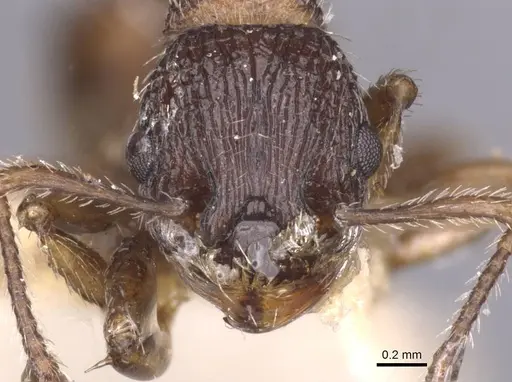
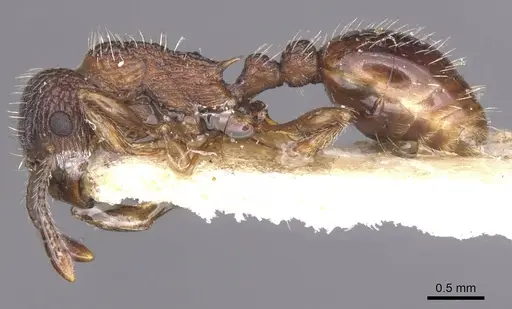
Myrmica eidmanni is a small reddish-brown ant native to the Palaearctic region, ranging from Siberia across Mongolia to the Russian Far East and Korean Peninsula. Workers measure 5.3mm with a distinctive strongly-bent antennal scape featuring a lobe at the base, and they have relatively long propodeal spines. The head and gaster are reddish-brown while the mesosoma and waist are orange-brown, with legs and antennae a deep yellow . This species belongs to the lobicornis-complex and is closely related to Myrmica jessensis, from which it differs in having a wider frons and less extended frontal lobes . What makes M. eidmanni interesting is its adaptability to human-modified landscapes. Unlike many forest-dwelling Myrmica species, it thrives in grasslands, forest clearings, roadsides, and even peat bogs, often nesting under stones or in soil mounds . It tolerates a wide elevation range from 600 to 2400 meters and is one of the few ant species that thrives in both subtaiga-forest-steppe and bog ecosystems .
Quick Summary
- Difficulty: Easy
- Origin & Habitat: South Siberia (Altai Mountains), Mongolia, Russian Far East, Korean Peninsula, and NE China. This species avoids dense forests and prefers open anthropogenic environments like grasslands, forest clearings, roadsides, riverbanks, sandy lakeshores, and peat bogs. It also inhabits sparse pine and larch forests and their edges, nesting in soil often under stones and in soil or moss mounds [3].
- Colony Type: Moderately polygynous, colonies contain 1-5 queens working together, with an average of around 500 workers [3].
- Size & Growth:
- Queen: Approximately 5-6mm (estimated based on worker size and genus patterns)
- Worker: 5.3mm [1]
- Colony: Up to 500 workers on average [3]
- Growth: Moderate
- Development: 6-10 weeks (estimated based on typical Myrmica development patterns) (Development time depends on temperature, warmer conditions within the acceptable range accelerate development)
- Antkeeping:
- Temperature: Keep at room temperature, ideally 20-24°C. As a temperate species from southern Siberia and Mongolia, they can tolerate cooler conditions but grow best in a mild temperature range. A slight gradient allowing workers to choose their preferred warmth is beneficial.
- Humidity: Moderate humidity around 50-70%. These ants prefer somewhat damp nest conditions but not waterlogged. Keep the nest substrate moist but allow some drying between waterings. They do well with the occasional misting or water reservoir.
- Diapause: Yes, this temperate species requires a winter dormancy period. Reduce temperature to 5-10°C for 3-4 months during winter (roughly October-March in the Northern Hemisphere). This mimics their natural cycle in the Taiga Zone and is essential for colony health and sexual production [3].
- Nesting: Use a naturalistic setup with soil or a gypsum/plaster nest. They nest in soil in the wild, often under stones, so a nest with a soil chamber or compact dirt area works well. Test tube setups work for founding colonies but transfer to a more naturalistic setup as the colony grows. They do well in formicariums with moderate moisture-retaining substrate.
- Behavior: Myrmica eidmanni has a typical Myrmica temperament, they are not aggressive but will defend their nest if threatened. Workers are moderately active and forage for protein (insects) and sugar sources. They are not particularly escape-prone but standard containment measures should still be used. These ants are day-active foragers that benefit from a clear day-night cycle. They are moderately polygynous, meaning multiple queens can coexist in established colonies.
- Common Issues: queen loss during founding is common if humidity drops or the colony is disturbed, hibernation failure if temperatures don't drop sufficiently or if the colony is disturbed during dormancy, mold in overly wet nests, balance moisture carefully, slow initial growth can lead to keeper impatience and overfeeding, which causes mold problems, wild-caught colonies may contain parasites that can devastate captive populations
Nest Preferences and Setup
In the wild, Myrmica eidmanni nests in soil, often under stones, and in soil and moss mounds in grassland and forest edge habitats [3]. For captive care, a naturalistic setup with a soil chamber works best, this allows the ants to create their own tunnels and chambers just as they would in nature. You can use a formicarium with a dirt section or a hybrid setup that combines a clear viewing area with soil for nesting.
For founding colonies, a standard test tube setup works well. Keep the tube dark (wrap with foil or place in a dark container) and maintain humidity by ensuring the water reservoir doesn't dry out. Once the colony reaches 10-20 workers, you can transfer to a more naturalistic formicarium with moist soil. The nest should have areas of varying moisture, slightly damp for the brood chambers and drier areas for food storage. Avoid completely dry conditions as these ants prefer moderate humidity.
A small outworld (foraging area) connected to the nest allows you to feed and observe the colony. Use a barrier like fluon on the edges to prevent escapes, though these ants are not particularly prone to climbing smooth surfaces like some arboreal species.
Feeding and Diet
Myrmica eidmanni is a typical Myrmica ant, they are omnivorous with a preference for protein. In the wild, they forage for small insects and other arthropods, and they also collect honeydew from aphids and scale insects. For captive colonies, offer a varied diet:
Protein sources: Small live or dead insects work best. Flightless fruit flies, small crickets, mealworms, and waxworms are all appropriate. Feed protein 2-3 times per week, adjusting based on colony size. Remove uneaten prey after 24-48 hours to prevent mold.
Sugar sources: Myrmica ants readily accept sugar water, honey, or diluted maple syrup. Offer a small amount of sugar water on a cotton ball or in a shallow container 2-3 times per week. Sugar is especially important during brood production when the colony needs extra energy.
Fresh water should always be available, a small water tube with a cotton plug works well.
Avoid overfeeding, the biggest mistake keepers make is offering too much food, which leads to mold growth in the nest. Only offer what the colony can consume within a day or two.
Temperature and Seasonal Care
As a temperate species from southern Siberia and Mongolia, Myrmica eidmanni is adapted to seasonal temperature changes. Keep the colony at room temperature, ideally in the range of 20-24°C. They can tolerate temperatures slightly outside this range but growth and activity will slow at cooler temperatures.
During the summer active season (roughly May through September), normal room temperature is fine. You can create a slight temperature gradient by placing a heating cable on one side of the nest, this allows workers to regulate their own temperature by moving between warmer and cooler areas.
Winter dormancy is essential for this species. From roughly October through March, reduce temperatures to 5-10°C. This can be achieved by moving the colony to a cool basement, garage, or refrigerator (not freezer). During hibernation, the colony will be largely inactive, this is normal. Do not feed during hibernation but ensure the nest remains slightly moist. The cold period is necessary for colony health and triggers the production of sexual forms (males and queens) [3].
If you skip hibernation, the colony may become stressed and fail to produce healthy sexuals, though it can still survive for several years without proper dormancy.
Behavior and Colony Dynamics
Myrmica eidmanni is a moderately polygynous species, meaning established colonies typically have multiple queens (1-5) working together [3]. This is different from many ant species where multiple queens result in fighting, in M. eidmanni, the queens cooperate and share reproductive duties. This makes the colony more resilient to queen loss and allows for faster colony growth.
Workers are not particularly aggressive but will defend the nest if threatened. Unlike some Myrmica species that have painful stings, these ants are less aggressive and their sting is mild (though individual reactions vary). They are moderate foragers and will send workers out to collect food in the outworld.
The colony grows at a moderate pace, expect 6-12 months from founding to the first workers (nanitics), and another year or two to reach moderate size (100-300 workers). Maximum colony size is around 500 workers. Sexual production (males and new queens) typically occurs in late summer, with nuptial flights in August-September [3].
When introducing new queens to an existing colony, proceed with caution. Unlike some polygynous species, M. eidmanni queens may fight if introduced improperly. However, established multi-queen colonies are generally peaceful.
Frequently Asked Questions
How long does it take for Myrmica eidmanni to go from egg to worker?
Based on typical Myrmica development patterns, expect 6-10 weeks from egg to first worker (nanitic) at optimal temperature (around 22-24°C). Development is temperature-dependent, cooler temperatures slow development while warmer temperatures within the acceptable range speed it up.
Do Myrmica eidmanni ants need hibernation?
Yes, this temperate species requires a winter dormancy period. Reduce temperatures to 5-10°C for 3-4 months during winter (roughly October-March). This is essential for colony health and triggers the production of sexual forms (males and queens). Skipping hibernation can stress the colony and prevent proper sexual development.
What do Myrmica eidmanni ants eat?
They are omnivorous with a preference for protein. Feed small insects (fruit flies, small crickets, mealworms) 2-3 times per week, and offer sugar water, honey, or diluted syrup 2-3 times per week. Always provide fresh water. Remove uneaten food promptly to prevent mold.
Can I keep multiple Myrmica eidmanni queens together?
Yes, this species is naturally polygynous with 1-5 queens per colony in the wild. Established colonies typically have multiple cooperating queens. However, if you are introducing an unrelated queen to an existing colony, do so gradually and monitor for aggression.
Are Myrmica eidmanni good for beginners?
Yes, this is a good species for beginners. They are moderately easy to care for, don't require exotic setups, and are forgiving of minor husbandry mistakes. They are more flexible about nesting conditions than some species and tolerate room-temperature housing well. The main requirement is providing proper hibernation each winter.
How big do Myrmica eidmanni colonies get?
Colonies typically reach around 500 workers on average [3]. This is a moderate colony size, larger than tiny tropical ants but not as massive as some Camponotus species. Growth is moderate, taking several years to reach maximum size.
What temperature should I keep Myrmica eidmanni at?
Keep them at room temperature, ideally 20-24°C. They can tolerate slightly cooler or warmer conditions but growth is best in this range. A slight temperature gradient allowing workers to choose their preferred area is beneficial. During hibernation, temperatures should drop to 5-10°C.
Do Myrmica eidmanni ants sting?
Myrmica ants have stingers but their sting is generally mild compared to some other ants. These ants are not particularly aggressive and will only sting if severely threatened or handled roughly. Most keepers report minimal reaction to their sting.
When should I move Myrmica eidmanni from a test tube to a formicarium?
Move the colony when the test tube becomes crowded or when you see workers actively exploring beyond the water chamber. This is typically when the colony has 20-50 workers. A naturalistic formicarium with soil works well for this species.
Why are my Myrmica eidmanni dying?
Common causes include: improper humidity (too dry or too wet), lack of hibernation, stress from disturbance during dormancy, mold from overfeeding, or parasites from wild-caught colonies. Check each of these factors and adjust care accordingly. Wild-caught colonies often contain parasites that can be fatal, quarantine and observe new colonies carefully.
Report an Issue
The current care sheet is based fully on literature. See inconsistencies, or something that's incorrect? Please , it will be resolved after review from an admin. Contributing to the blogs tab also helps providing information, to make us be able to further improve the caresheets. Thank you for your support!
References

Questa scheda di allevamento è concessa in licenza con CC BY-SA 4.0 .
Blog della comunità
CASENT0913080
Visualizza su AntWeb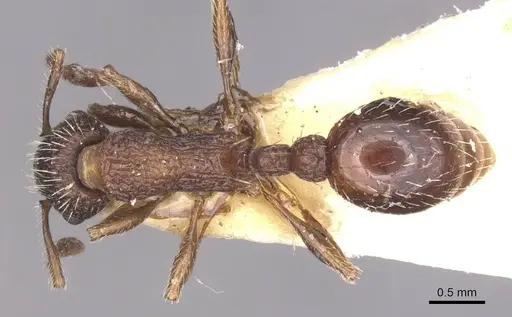
Letteratura
Caricamento mappa di distribuzione...Caricamento prodotti...