
Mycetagroicus urbanus
- Nom. sci.
- Mycetagroicus urbanus
- Tribù
- Attini
- Sottofamiglia
- Myrmicinae
- Autore
- Brandão & Mayhé-Nunes, 2001
- Distribuzione
- Trovata in 0 paesi
Introduzione
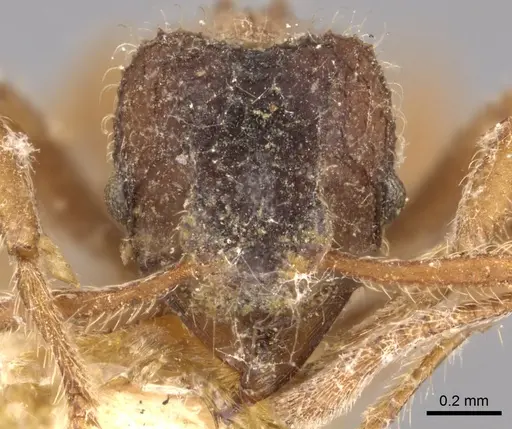
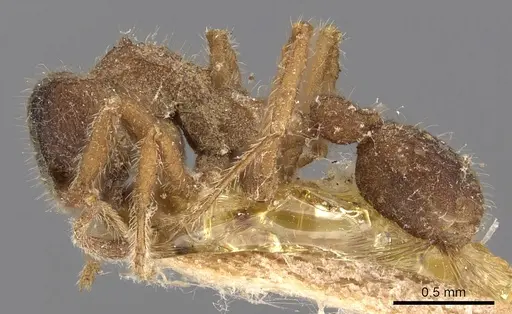
Mycetagroicus urbanus is an extremely rare fungus-farming ant species from the Attini tribe, known only from southeastern Brazil. Workers measure 2.64mm total length with a medium brown body and darker gaster and frons. They have distinctive morphological features including two short median spines on the pronotum and a high conical projection on the mesonotum. Unlike related species, they lack lateral clypeal teeth and have rounded frontal lobes with their widest point posterior to the antennal insertions. This species is known only from a few workers collected in Ibirapuera Park, São Paulo, making it one of the rarest ants in the world. As an Attini ant, they cultivate fungus for food, though the specific fungal symbiont remains unknown .
Quick Summary
- Difficulty: Expert
- Origin & Habitat: Known only from Ibirapuera Park in São Paulo, Brazil, an urban park environment within the city. The species has been collected from Cerrado localities in southeastern Brazil. Nests are found in soil with narrow entrances surrounded by low mounds made of fine earth grains [2][1].
- Colony Type: Colony structure is unconfirmed. Only workers have been described, sexuals (queens and males) remain unknown in scientific collections. Specimens were collected during what appears to be a nuptial flight dispersion event in October [1].
- Size & Growth:
- Queen: Unknown, queens have not been described or collected [1]
- Worker: 2.64mm total length [1]
- Colony: Unknown, only 6-7 workers have ever been collected
- Growth: Unknown
- Development: Unknown, no development data exists for this species (No development studies have been conducted. Related Attini species typically take 6-10 weeks at warm temperatures, but this is a rough estimate only.)
- Antkeeping:
- Temperature: Likely needs warm conditions similar to other Brazilian Attini. Start around 24-28°C and observe colony activity. Adjust based on behavior, if workers cluster, increase slightly, if they avoid heated areas, reduce temperature.
- Humidity: Keep nest substrate moderately moist. Being a ground-nesting species from São Paulo, they likely prefer conditions that are damp but not waterlogged. Provide a moisture gradient so ants can choose their preferred zone.
- Diapause: Unknown, São Paulo has mild winters, so a true diapause may not be required. Consider reducing temperatures slightly during winter months rather than a full hibernation.
- Nesting: Natural nesting is in soil with narrow entrances and low mounds of fine earth grains. In captivity, a small test tube setup or Y-tong (AAC) nest with fine substrate would be appropriate. Given their tiny size, escape prevention must be excellent, use fine mesh and tight-fitting barriers.
- Behavior: Behavior is essentially unstudied. As Attini ants, they are fungus farmers and likely have specialized dietary needs. Workers are very small at 2.64mm, making escape a significant concern. Temperament is unknown but likely docile given the small colony sizes observed. Foraging style is unconfirmed.
- Common Issues: this species has never been kept in captivity, there is no established care protocol., tiny size means escape prevention is critical, they can squeeze through standard barrier materials., as fungus farmers, they have specialized dietary needs that are difficult to meet., only a handful of specimens have ever been collected, wild colonies may be extremely rare., no information exists on what fungus they cultivate or how to cultivate it in captivity.
Species Overview and Rarity
Mycetagroicus urbanus is one of the rarest ant species in the world, known only from a single collection in Ibirapuera Park, São Paulo, Brazil. The entire scientific knowledge of this species comes from just 6-7 workers collected in 1943 and 1968. This makes it essentially unavailable for antkeeping, no living colonies have ever been documented in captivity. The species was described in 2001 by Brandão and Mayhé-Nunes, who noted its distinctive features including the absence of lateral clypeal teeth (which its relatives have) and two median pronotal projections. The genus Mycetagroicus contains only a few species, all from Brazil, and all are poorly studied. The species name 'urbanus' was chosen because the only known sample was collected at the main public park within São Paulo city [2][3][1].
Fungus-Farming Biology
As a member of the tribe Attini, Mycetagroicus urbanus is a fungus-farming ant. This means they don't eat seeds, insects, or honey directly like many other ants. Instead, they cultivate a mutualistic fungus that serves as their primary food source. The queen carries a fungal pellet (a fragment of the parent colony's fungus garden) when she founds a new colony. She tends the fungus until the first workers emerge, after which the workers take over fungus cultivation duties. However, the specific fungus species that M. urbanus cultivates is completely unknown, it may be a specialized symbiont that has never been identified. This represents the biggest challenge for anyone attempting to keep this species: we don't know what fungus to provide or how to grow it [1].
Why This Species Is Not Recommended for Keeping
There are several critical reasons why Mycetagroicus urbanus should not be kept, even by experienced antkeepers. First, no living colonies exist in the antkeeping hobby, the species is known from fewer than 10 museum specimens total. Second, we have no information about what they eat beyond knowing they're fungus farmers. Third, their colony size, social structure, and basic biology remain completely unknown. Fourth, they may be locally extinct in the wild due to urbanization of São Paulo, Ibirapuera Park has been heavily developed since the 1940s. Rather than pursuing this species, antkeepers interested in Attini ants should consider more accessible fungus-farming species like those in the genus Mycetosoritis or other Attini that have established captive protocols. Many Cyphomyrmex species are available and well-documented in the hobby [1].
Related Species as Alternatives
For antkeepers interested in fungus-farming ants, several related genera have established captive populations. Species in the genus Cyphomyrmex are small Attini ants that are more commonly available and have documented care requirements. Mycetosoritis species are also fungus farmers and may be more accessible. These related species allow antkeepers to experience the fascinating behavior of fungus cultivation without the extreme uncertainty surrounding M. urbanus. If you're specifically interested in the genus Mycetagroicus, consider supporting ant taxonomy research or museum collections instead, helping document these rare species in the wild is more valuable than attempting to keep them in captivity [1].
Frequently Asked Questions
Can I keep Mycetagroicus urbanus ants?
No. This species has never been kept in captivity and no living colonies exist in the antkeeping hobby. The entire scientific knowledge of this species comes from 6-7 workers collected in the 1940s. There is no established care protocol, and we don't even know what fungus they cultivate for food.
What do Mycetagroicus urbanus eat?
As an Attini ant, they are fungus farmers and eat the fungus they cultivate, not conventional ant foods. The specific fungus species is unknown and likely undescribed. This makes their dietary requirements impossible to meet in captivity.
How big do Mycetagroicus urbanus colonies get?
Unknown. Only 6-7 workers have ever been collected. The maximum colony size is completely unstudied.
Where does Mycetagroicus urbanus live?
Only known from Ibirapuera Park in São Paulo, Brazil. The species was collected in 1943 and 1968,and may be locally extinct due to urban development.
Do Mycetagroicus urbanus queens exist?
No queens have ever been described or collected. The species is known only from workers, making colony founding behavior completely unknown.
What temperature do Mycetagroicus urbanus need?
Unknown. As a species from São Paulo, Brazil, they likely prefer warm conditions similar to other Brazilian Attini (around 24-28°C), but no specific data exists.
Are Mycetagroicus urbanus dangerous?
No. Workers are tiny at 2.64mm. As members of the subfamily Myrmicinae, they possess a stinger, but their small size makes any sting harmless to humans.
What is the closest alternative to Mycetagroicus urbanus?
Consider keeping Cyphomyrmex species or other Attini ants that have established captive protocols. These fungus-farming ants are more accessible and their care is well-documented.
How long do Mycetagroicus urbanus live?
Unknown. No lifecycle or longevity data exists for this species.
Can I find Mycetagroicus urbanus in the wild?
Extremely unlikely. They are known from only a single location (Ibirapuera Park, São Paulo) that has been heavily urbanized since the 1940s. The species may already be extinct in the wild.
Report an Issue
The current care sheet is based fully on literature. See inconsistencies, or something that's incorrect? Please , it will be resolved after review from an admin. Contributing to the blogs tab also helps providing information, to make us be able to further improve the caresheets. Thank you for your support!
References

Questa scheda di allevamento è concessa in licenza con CC BY-SA 4.0 .
Blog della comunità
CASENT0901689
Visualizza su AntWeb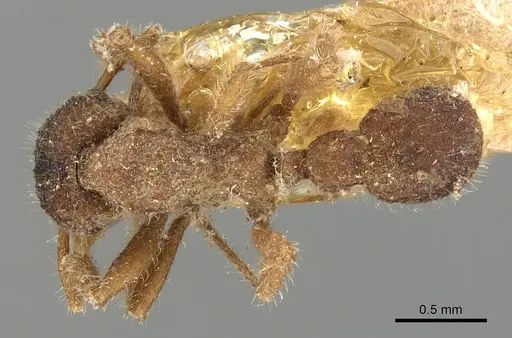
Letteratura
Caricamento mappa di distribuzione...Caricamento prodotti...