
Monomorium hanaqe
- Nom. sci.
- Monomorium hanaqe
- Tribù
- Solenopsidini
- Sottofamiglia
- Myrmicinae
- Autore
- Collingwood & Agosti, 1996
- Distribuzione
- Trovata in 0 paesi
Introduzione
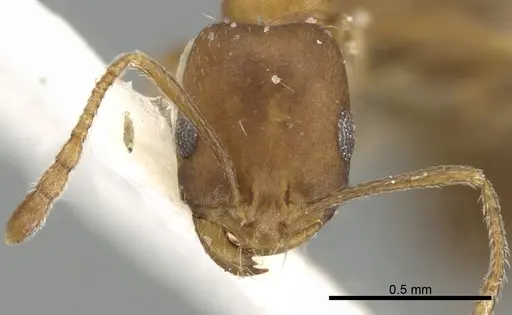
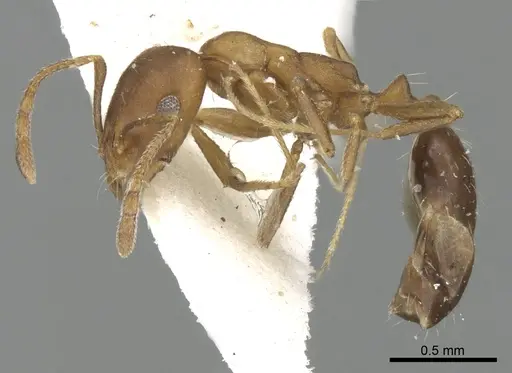
Monomorium hanaqe is a small ant species endemic to the Arabian Peninsula, found in Saudi Arabia, Yemen, Oman, and the United Arab Emirates. Workers measure approximately 3mm in total length with a distinctive color pattern: the head and mesosoma are dull red, while the gaster is brown rather than black. They have relatively long antennae that reach the back of the head when laid back, and notably large eyes. Queens are significantly larger at approximately 6.5mm. This species belongs to the Monomorium genus within the Salomonis species group.
Quick Summary
- Difficulty: Unknown
- Origin & Habitat: Arabian Peninsula, found in Saudi Arabia, Yemen, Oman, and United Arab Emirates. Type specimens were collected from wadi (dry river valley) habitats in Saudi Arabia and Yemen [1][2][3].
- Colony Type: Unconfirmed, colony structure has not been documented in scientific literature.
- Size & Growth:
- Antkeeping:
- Temperature: Unknown, no thermal studies exist. Based on its Arabian Peninsula origin, it likely tolerates warm conditions. Start around 24-28°C and observe colony activity.
- Humidity: Unknown, no humidity data exists. Arabian Peninsula species typically tolerate drier conditions. Provide a moisture gradient with a damp test tube or nest chamber alongside dry areas.
- Diapause: Unknown, no seasonal data exists. Arabian populations may have reduced activity during extreme heat rather than cold hibernation.
- Nesting: Unknown natural nesting preferences. Most Monomorium species nest in soil or under stones in arid environments. A standard test tube setup or Y-tong nest works well as a starting point.
- Behavior: Behavior is unstudied in this species. Based on typical Monomorium patterns, they are likely generalist foragers that search for sugar and protein sources. Their small size means escape prevention should be taken seriously, use fine mesh and tight-fitting barriers. This species has a sting (subfamily Myrmicinae, tribe Solenopsidini), though given their tiny 3mm size, any sting would be minimal.
- Common Issues: biology is completely unstudied, this is one of the least documented ant species in the hobby, so all care is essentially experimental, no confirmed colony structure data, whether they are single-queen or multi-queen is unknown, escape prevention is important due to small worker size, no development data means you cannot predict growth timelines accurately, extreme heat tolerance is unknown, be cautious with heating elements
Species Identification and Appearance
Monomorium hanaqe is a small ant with workers measuring approximately 3mm in total length. The species has a distinctive color pattern: the head and mesosoma are dull red, while the gaster is brown rather than the black seen in many related species. The antennae are relatively long and reach the posterior margin of the head when laid back. The eyes are notably large compared to similar species. The queen is significantly larger at approximately 6.5mm. These identification features help distinguish M. hanaqe from other Monomorium species in the Arabian Peninsula region [5][4].
Distribution and Habitat
This species is endemic to the Arabian Peninsula, meaning it is found nowhere else in the world. The original type specimens were collected from Saudi Arabia (Wadi Hanaq and Abu Arish) and Yemen (Wadi Surdud). Later surveys confirmed its presence in the United Arab Emirates and Oman. The type localities are wadi habitats, these are dry river valleys in the desert that may hold water seasonally. Specimens have been collected in various months including January, March, April, and December, suggesting the species is active during cooler parts of the year in these hot desert environments [1][2][3].
Current State of Knowledge
It is important to be upfront: almost nothing is known about the biology of Monomorium hanaqe. The original description covers only the physical appearance of workers and one queen, and subsequent papers have only added distribution records. There is no published information on colony structure, founding behavior, diet, development time, temperature preferences, or any other aspects of their biology. This makes M. hanaqe one of the least documented ant species available in the ant-keeping hobby. Any care advice must be considered experimental and based on genus-level patterns rather than species-specific research.
Housing and Nesting
Since natural nesting preferences are unknown, you will need to experiment to find what works best. Start with a standard test tube setup, a water reservoir plugged with cotton provides humidity that the ants can regulate by moving closer or farther from the water. A Y-tong nest also works well for small Monomorium species. Provide a moisture gradient by having one area of the nest damp and another dry, allowing the colony to choose. The small worker size means escape prevention is important, use fine mesh on any outworld and ensure connections between nest and outworld are secure.
Feeding and Diet
Diet preferences are unconfirmed for this species. Most Monomorium species are generalist feeders that accept both sugar sources and protein. Based on typical genus behavior, offer a constant sugar source and regular protein such as small crickets, mealworms, or fruit flies. Remove uneaten protein after 24-48 hours to prevent mold. Start with small amounts and observe what the colony actually takes.
Temperature and Seasonal Care
No specific temperature requirements have been documented. The species originates from the Arabian Peninsula, which experiences extreme heat in summer but cooler winters. Based on collection dates spanning January through April, they appear active during the cooler months. Start with temperatures in the mid-range (24-26°C) and observe colony behavior. If workers are very active and the colony is growing, the temperature is likely suitable. If they cluster away from heat sources, try slightly cooler conditions. During winter, room temperature is probably adequate.
Frequently Asked Questions
How long does it take for Monomorium hanaqe to develop from egg to worker?
This is unconfirmed, no development data exists for this species.
What do Monomorium hanaqe ants eat?
Diet is unconfirmed for this specific species. Based on typical Monomorium behavior, they likely accept both sugar sources and protein. Offer a constant sugar source and protein 2-3 times per week. Remove uneaten food promptly.
Are Monomorium hanaqe good for beginners?
This species is NOT recommended for beginners. Almost nothing is known about their biology, colony structure, founding behavior, temperature and humidity preferences, and development timelines are all unconfirmed. Keeping this species requires significant experimentation and patience. Consider starting with better-documented species.
What temperature should I keep Monomorium hanaqe at?
Temperature requirements are unconfirmed. Based on their Arabian Peninsula origin, start around 24-26°C and observe your colony. Provide a temperature gradient so ants can choose their preferred zone.
Do Monomorium hanaqe ants sting?
This species belongs to the Myrmicinae subfamily which has a sting. Given their tiny 3mm size, any sting would be minimal and unlikely to penetrate human skin.
How big do Monomorium hanaqe colonies get?
Maximum colony size is unknown, no colony size data exists for this species.
Can I keep multiple Monomorium hanaqe queens together?
Colony structure is unconfirmed. The number of queens a colony can have has not been documented. Do not combine unrelated foundress queens without documented evidence that they tolerate this.
What is the best nest type for Monomorium hanaqe?
Natural nesting is unknown. A test tube setup with a water reservoir provides a humidity gradient the ants can regulate. Y-tong nests also work well for small Myrmicinae ants.
Where is Monomorium hanaqe found in the wild?
This species is endemic to the Arabian Peninsula, found only in Saudi Arabia, Yemen, Oman, and the United Arab Emirates. Type specimens came from wadi habitats in Saudi Arabia and Yemen [1][2].
Does Monomorium hanaqe need hibernation?
Diapause requirements are unknown. Based on the hot climate of their origin, they likely reduce activity during extreme heat rather than cold. Monitor your colony for seasonal slowdowns and adjust care accordingly.
Report an Issue
The current care sheet is based fully on literature. See inconsistencies, or something that's incorrect? Please , it will be resolved after review from an admin. Contributing to the blogs tab also helps providing information, to make us be able to further improve the caresheets. Thank you for your support!
References

Questa scheda di allevamento è concessa in licenza con CC BY-SA 4.0 .
Blog della comunità
CASENT0249834
Visualizza su AntWeb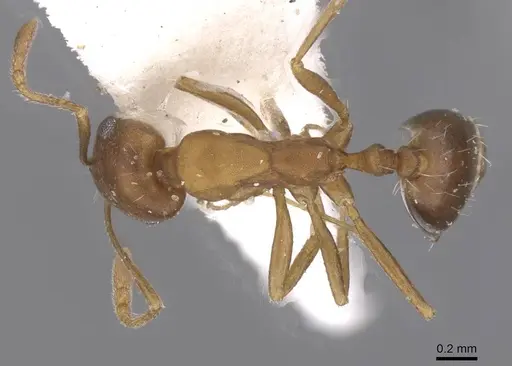
Letteratura
Caricamento mappa di distribuzione...Caricamento prodotti...