
Monomorium gallagheri
- Nom. sci.
- Monomorium gallagheri
- Tribù
- Solenopsidini
- Sottofamiglia
- Myrmicinae
- Autore
- Collingwood & Agosti, 1996
- Distribuzione
- Trovata in 0 paesi
Introduzione
Monomorium gallagheri is a tiny desert ant endemic to the Arabian Peninsula, specifically found in Oman, Saudi Arabia, and Yemen. Workers measure 2.4-2.7mm in total length, making them one of the smaller ant species in the region . They have a uniformly medium brown coloration with a dull, finely punctate head and alitrunk, while the gaster appears shinier with faint reticulation. The species belongs to the Monomorium salomonis species group and was described in 1996. It closely resembles Monomorium delagoense but can be distinguished by its smaller size and notably larger eyes. Nothing is known about the biology of this species in the wild.
Quick Summary
- Difficulty: Unknown
- Origin & Habitat: Endemic to the Arabian Peninsula, found in arid desert regions of Oman, Saudi Arabia, and Yemen [2][1]. The type locality is Qarhat Muammar in Oman, collected in February 1986.
- Colony Type: Colony structure is unconfirmed.
- Size & Growth:
- Antkeeping:
- Temperature: Based on their origin in Oman and Saudi Arabia, these ants likely prefer warm conditions. Start around 24-28°C and observe colony activity. Avoid temperatures below 20°C.
- Humidity: As desert ants from an arid region, they likely prefer drier conditions. Keep nest substrate moderately dry to slightly moist, with some dry areas available.
- Diapause: Unknown, desert species may have reduced activity during extreme heat rather than cold-induced diapause.
- Nesting: Natural nesting is unconfirmed. Based on desert Monomorium patterns, they likely nest in soil or under stones in arid habitats. A test tube setup works well for their tiny size. Keep nesting area dry.
- Behavior: Behavior is unconfirmed. Based on genus patterns, they are likely generalist foragers that scavenge for small insects and honeydew. Their tiny size means excellent escape prevention is critical, they can squeeze through the smallest gaps. Handle with care as they are very small and easily crushed.
- Common Issues: no biological data exists, all care is inferred from genus patterns, tiny size makes them difficult to house and observe properly, escape prevention is critical due to their minute size, queen has never been described, founding behavior unknown, colony may fail due to incorrect temperature or humidity guesses
Discovery and Identification
Monomorium gallagheri was described in 1996 by Collingwood and Agosti based on worker specimens collected from Oman and Saudi Arabia. The holotype worker was collected from Qarhat Muammar in Oman on February 1,1986,by M.D. Gallagher (the species is named after this collector). Paratype workers came from both Oman and Wadi Awsat in Saudi Arabia, collected in December 1974 by W. Buttiker. The species belongs to the Monomorium salomonis species group, which contains several similar-looking small brown ants. It can be distinguished from the similar Monomorium delagoense by its smaller overall size and significantly larger eyes. [2][1]
Distribution and Habitat
This species is endemic to the Arabian Peninsula, known only from Oman, Saudi Arabia, and Yemen [2]. The type localities are in arid regions, Qarhat Muammar in Oman and Wadi Awsat in Saudi Arabia. These areas experience extremely hot, dry conditions with temperatures regularly exceeding 40°C in summer. Nothing is known about its specific microhabitat preferences or nesting sites in the wild.
Known Physical Characteristics
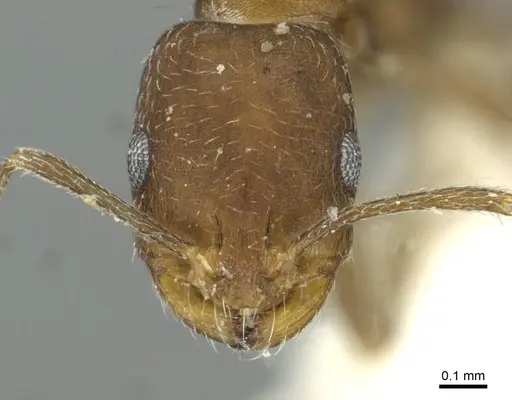
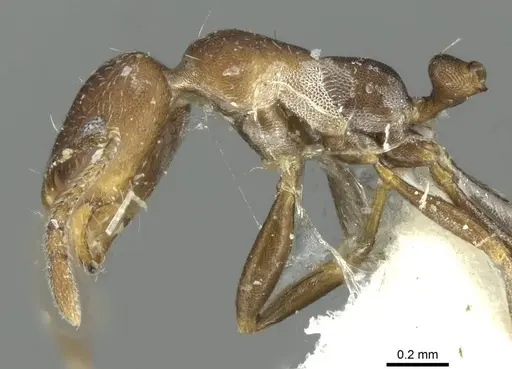
Workers measure 2.4-2.7mm in total length, making them very small ants [1]. The head is finely and densely punctate, giving it a dull appearance. The clypeal border is feebly concave to straight with a very small median notch or sometimes none at all. In profile, the mesonotum is straight, meeting the propodeum at an oblique angle. The propodeal furrow is distinct with well-defined side margins. The petiole node appears as a rounded triangle when viewed from the side. Body coloration is uniformly medium brown. Key identifying features include the large eyes and the lack of hairs on the underside of the head away from the maxillae.
Keeping This Species - What We Don't Know
This is one of the least-studied ant species in the hobby. Literally nothing has been published about its biology, we do not know what it eats, how it nests, whether it has one queen or many, when it produces alates, or how fast it develops. All care recommendations are educated guesses based on what is known about other Monomorium species from similar habitats. This makes M. gallagheri a species for advanced antkeepers who enjoy experimentation and careful observation. Start with standard Monomorium care: a small test tube setup, temperatures in the low-to-mid 20s°C, and a diet of small insects and sugar water. Be prepared to adjust based on what the colony does. Document observations carefully, as any information gathered would be valuable to the antkeeping community.
Inferred Care from Genus Patterns
Based on typical Monomorium genus behavior and the species desert origin, here are educated guesses for care: Temperature likely needs to be warm (24-28°C) to match their hot native habitat. Humidity should be on the drier side, desert ants often struggle with excess moisture. Nesting likely prefers soil or small cavities under stones. Diet probably includes small insects, nectar, and honeydew like other Monomorium species. Colony size is unknown but likely modest given their tiny worker size.
Frequently Asked Questions
How long does it take for Monomorium gallagheri to go from egg to worker?
This is unknown, no development data exists for this species.
What do Monomorium gallagheri ants eat?
This has not been documented. Based on genus patterns, they likely accept small insects and sugar sources. Start with small live prey and sugar water, then adjust based on what they accept.
Are Monomorium gallagheri good for beginners?
No, this species cannot be recommended for beginners. Nothing is known about its biology, so all care is guesswork. It requires an advanced keeper willing to experiment and document observations.
Can I keep multiple queens together?
This is unknown, colony structure has not been documented for this species. Do not attempt combining unrelated queens without data to support it.
What temperature should I keep Monomorium gallagheri at?
Based on their origin in Oman and Saudi Arabia, they likely prefer warm conditions. Start around 24-28°C and observe colony behavior. Avoid temperatures below 20°C.
How big do Monomorium gallagheri colonies get?
This is unknown, no colony size data exists. Based on their tiny worker size, colonies are likely modest.
Do Monomorium gallagheri need hibernation?
This is unknown. As a desert species from a hot climate, they may have reduced activity during extreme heat rather than cold-induced diapause.
What is the best nest type for Monomorium gallagheri?
Natural nesting is unconfirmed. For their tiny size, a small test tube setup works well. Keep the nesting area dry to moderately moist.
Where is Monomorium gallagheri found in the wild?
This species is endemic to the Arabian Peninsula, known only from Oman, Saudi Arabia, and Yemen.
Report an Issue
The current care sheet is based fully on literature. See inconsistencies, or something that's incorrect? Please , it will be resolved after review from an admin. Contributing to the blogs tab also helps providing information, to make us be able to further improve the caresheets. Thank you for your support!
References

Questa scheda di allevamento è concessa in licenza con CC BY-SA 4.0 .
Blog della comunità
CASENT0913582
Visualizza su AntWeb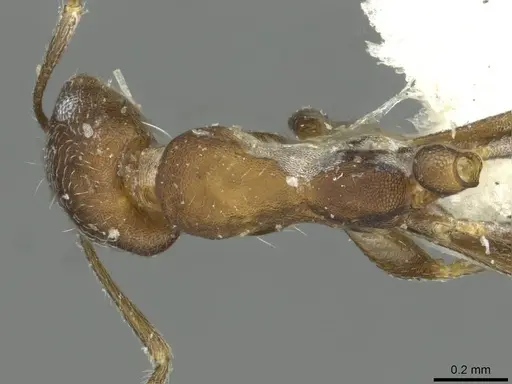
Letteratura
Caricamento mappa di distribuzione...Caricamento prodotti...