
Leptogenys andritantely
- Nom. sci.
- Leptogenys andritantely
- Tribù
- Ponerini
- Sottofamiglia
- Ponerinae
- Autore
- Rakotonirina & Fisher, 2014
- Distribuzione
- Trovata in 0 paesi
Introduzione
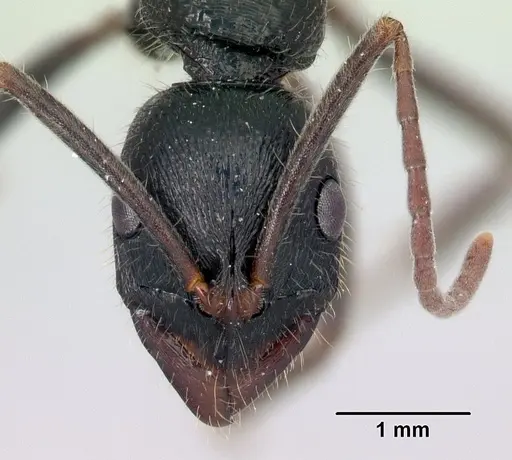
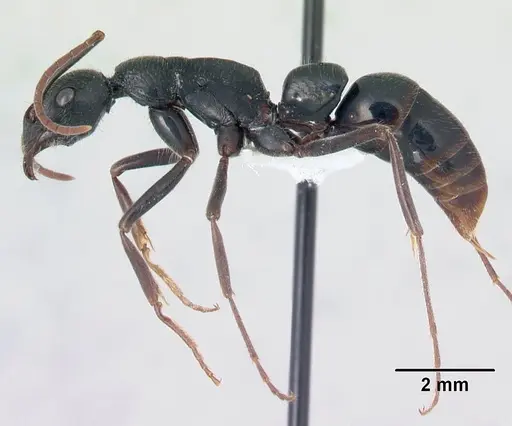
Leptogenys andritantely is a large predatory ant species that lives only in the rainforests of eastern Madagascar. Workers are relatively large for the genus, but total body length has not been measured . The species was described in 2014 from a single worker collected in Andriantantely at 530 meters elevation, nesting in a rotten log . It belongs to the saussurei group and can be told apart from similar species by the ridged (costulate) sculpture on the sides of its head and the transverse wrinkles (rugulae) on the pronotum and mesonotum . The mandibles have only two teeth (one apical and one preapical), which is different from related species like Leptogenys vatovavy, which has three . This is a very rare ant - only one specimen has ever been collected, so almost everything about their life in captivity is guesswork. As a Leptogenys species, they are hunters that likely eat small bugs. Their forest-floor home suggests they need humid, shaded, and warm conditions.
Quick Summary
- Difficulty: Unknown, too little data to assess
- Origin & Habitat: Eastern Madagascar, rainforest in Andriantantely at 530 m elevation [1][2]. The only known worker was taken from a rotten log, meaning they probably nest in damp, decaying wood on the forest floor.
- Colony Type: Unknown, only a single worker has ever been collected. Based on common Leptogenys patterns, likely single-queen (monogyne) colonies, but this is not confirmed.
- Size & Growth:
- Queen: Unknown, no queens have been collected or described
- Worker: Unknown, total length not recorded, head measurements suggest it is one of the larger species in the genus [1]
- Colony: Unknown, only one worker known
- Growth: Unknown
- Development: Unconfirmed, no development data exists. Based on typical predatory Ponerines, very roughly 8-12 weeks at optimal temperature, but this is highly speculative. (No direct colony observations exist. All estimates are based on genus-level patterns.)
- Antkeeping:
- Temperature: Inferred from habitat: keep around 22-26°C. This is a mid-elevation tropical rainforest species, so stable warmth without extremes is best. Provide a gradient so ants can choose [1].
- Humidity: Inferred from habitat: high humidity needed, they come from a rainforest rotten log. Keep the nest substrate consistently moist but not waterlogged. Aim for 70-85% relative humidity in the nesting area [1].
- Diapause: Unknown, no seasonal data. As a tropical rainforest species from eastern Madagascar, they probably do not need true hibernation, but might slow down during cooler or drier spells.
- Nesting: Inferred: natural nesting in rotten logs suggests they like moist, dark cavities in decaying wood. In captivity, try a well-humidified plaster or Y-tong nest, or a naturalistic setup with damp soil and wood. They appear to be ground-nesting forest floor ants [1].
- Behavior: Based on genus-level knowledge, Leptogenys are active hunters that chase down small bugs. Workers are probably fast and may be good at escaping given their size. They likely form moderate-sized colonies. No direct observations exist for this species. As a Ponerine ant, it has a functional stinger, but pain level for humans is unknown. Their large eyes suggest they rely on vision while hunting.
- Common Issues: extremely limited availability, this species has never been kept in captivity and may not be available in the antkeeping hobby at all, no established care guidelines exist, all recommendations are speculative and based on genus patterns, the single known specimen means colony structure, founding, and queen biology are completely unknown, strict humidity needs, rainforest ants often die in dry captive setups, predatory diet, need a steady supply of small live prey like fruit flies or pinhead crickets
Species Discovery and Rarity
Leptogenys andritantely was described in 2014 by Rakotonirina and Fisher from a single worker collected in December 1998 at Andriantantely in eastern Madagascar [1]. This makes it one of the rarest ant species in the hobby, no colonies have ever been seen, and no additional specimens have been found since that first collection. The species name comes from the type locality. Because only one specimen exists, we know almost nothing about colony structure, founding, diet, or development. All care tips must be guessed from what we know about the genus and the habitat.
Identification and Distinguishing Features
This is a relatively large Leptogenys species. The most distinctive features are the ridged (costulate) sculpture on the sides of the head and the transverse wrinkles (rugulae) on the pronotum and mesonotum [1]. The mandibles are short and strong, with only two teeth, one at the tip and one just before it. This helps tell it apart from similar species like Leptogenys vatovavy (which has three teeth on the mandible) and Leptogenys ralipra (which is smaller and has different surface texture) [1]. The eyes are large, bigger across than the widest part of the antennal scape [1]. The front edge of the clypeus sticks out in a broad triangular lobe with a semi-see-through border.
Natural Habitat and Distribution
Leptogenys andritantely is known only from the Andriantantely forest in eastern Madagascar, at 530 meters above sea level [1][2]. This is rainforest, so it lives in warm, humid, shaded conditions. The one specimen was found in a rotten log, which means these ants nest in damp, decaying wood on the forest floor [1]. Eastern Madagascar at this height has a tropical rainforest climate with high humidity year-round. This habitat information is what we use to guess their care needs, they probably need high humidity and stable temperatures in the low-to-mid 20s Celsius.
Inferred Care Requirements
Since no one has kept this species, all care advice is an educated guess based on the genus and where it lives. Because the specimen came from a rainforest rotten log [1], give them a humid setup, keep the nest substrate moist (but not soaking) and aim for 70-85% humidity. Temperatures around 22-26°C should work, avoiding any big swings. As a predatory Ponerine ant, they will probably need a regular supply of small live prey such as fruit flies, pinhead crickets, or small mealworms. Sugar water might or might not be accepted, offer it occasionally but don't rely on it. A naturalistic tank with damp soil or a well-humidified plaster or Y-tong nest would be best. Keep the nest dark and disturb them as little as possible, since they are secretive forest-floor ants.
Predatory Nature and Feeding
Leptogenys ants are hunters that use their large eyes and fast movement to catch prey. We don't know exactly what Leptogenys andritantely eats, but related species go after small bugs including springtails, mites, and tiny insects. In captivity, offer small live prey that are easy to catch, fruit flies, small crickets, mealworms, and other small bugs should work. Feed every 2-3 days and remove leftovers to stop mold. If you ever get a founding queen, note that the semi-claustral pattern common in Leptogenys means the queen needs to hunt during founding, so live food must be available from the start.
Frequently Asked Questions
Is Leptogenys andritantely available for purchase?
Extremely unlikely. This species is known from a single specimen collected in 1998 and has never been seen in captivity. It would be extraordinarily rare to find in the hobby, if it is ever available at all.
How do I care for Leptogenys andritantely ants?
No established care guidelines exist since this species has never been kept in captivity. Based on its rainforest habitat, guessed care: keep at 22-26°C with high humidity (70-85%), provide moist nesting substrate in a dark spot, and feed small live prey [1]. This is all speculative.
What do Leptogenys andritantely ants eat?
Based on genus patterns, they are hunters of small bugs. Offer live prey such as fruit flies, pinhead crickets, or small mealworms. Whether they accept sugar is unknown.
How big do Leptogenys andritantely colonies get?
Unknown, only one worker has ever been collected. Based on related species, colonies probably reach 100-200 workers at maturity, but that is a guess.
What is the egg to worker development time?
Unconfirmed, no development data exists for this species. Based on typical Leptogenys and related Ponerines, very roughly 8-12 weeks at optimal temperature, but this is highly speculative.
Do they need hibernation or diapause?
Unknown, no seasonal data exists. As a tropical rainforest species from eastern Madagascar, they likely do not require true hibernation but may slow down during cooler periods.
Can I keep multiple queens together?
Not documented. Colony structure is completely unknown for this species. Do not try to combine unrelated queens without evidence that they can found colonies together.
Are Leptogenys andritantely good for beginners?
No, this species is not recommended for any level of keeper. They have never been kept in captivity, no care guidelines exist, and they may not even be available. There are many better-documented species to start with.
What type of nest should I use?
Inferred from natural nesting in rotten logs [1]: provide a naturalistic setup with damp soil and wood, or a well-humidified plaster or Y-tong nest. They likely prefer dark, humid cavities like those found in decaying forest-floor wood.
Report an Issue
The current care sheet is based fully on literature. See inconsistencies, or something that's incorrect? Please , it will be resolved after review from an admin. Contributing to the blogs tab also helps providing information, to make us be able to further improve the caresheets. Thank you for your support!
References

Questa scheda di allevamento è concessa in licenza con CC BY-SA 4.0 .
Blog della comunità
CASENT0175412
Visualizza su AntWeb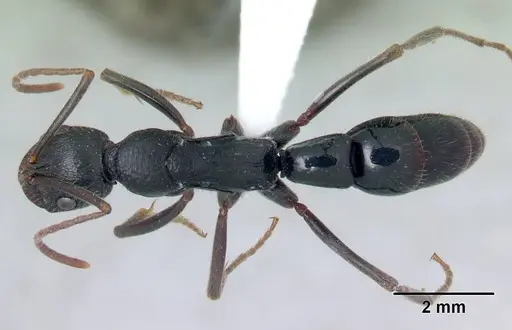
Letteratura
Caricamento mappa di distribuzione...Caricamento prodotti...