
Leptogenys ambo
- Nom. sci.
- Leptogenys ambo
- Tribù
- Ponerini
- Sottofamiglia
- Ponerinae
- Autore
- Rakotonirina & Fisher, 2014
- Distribuzione
- Trovata in 0 paesi
Introduzione
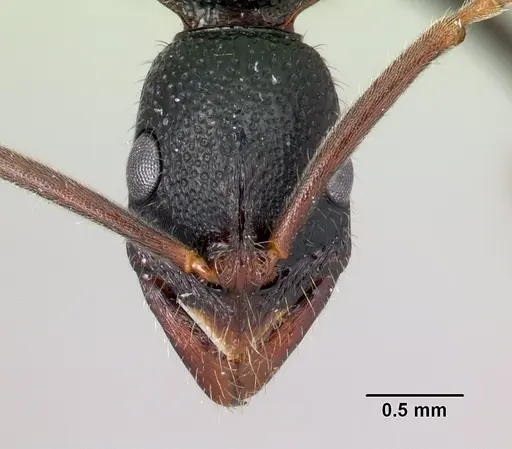
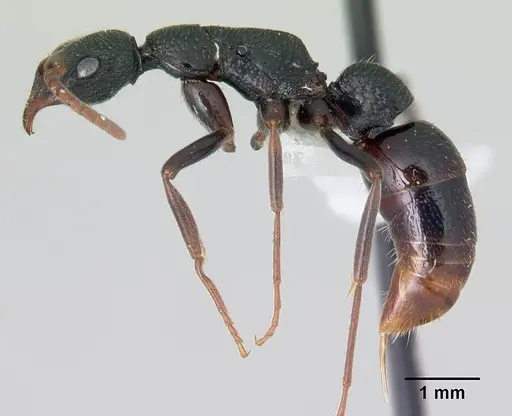
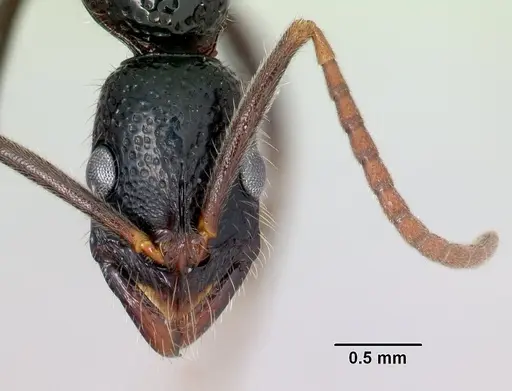
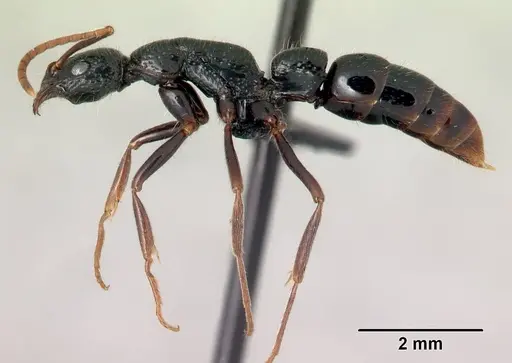
Leptogenys ambo is a small predatory ant species native to the montane rainforests of northern Madagascar. Workers are approximately 4-6mm in total length, making them relatively small among the Ponerine ants. They have distinctive features including large eyes, a distinctly sculptured head and mesosoma, and a petiolar node with a straight posterior margin. This species belongs to the saussurei species group and is known only from a handful of specimens collected in Anjanaharibe-Sud, Marojejy, and RS Manongarivo.
Quick Summary
- Difficulty: Medium
- Origin & Habitat: Montane rainforests in northern Madagascar, specifically Anjanaharibe-Sud, Marojejy, and RS Manongarivo at elevations around 1175m. In the wild, they have been found nesting in rotten logs and foraging on the forest floor. [1][2]
- Colony Type: Unknown, only a few individual workers have been collected, so colony structure has not been documented in scientific literature.
- Size & Growth:
- Queen: Size data unavailable, no queens have been described in scientific literature
- Worker: Approximately 4-6mm total length, inferred from Leptogenys genus patterns [1]
- Colony: Unknown, only single workers have ever been collected in the wild
- Growth: Unknown, likely moderate based on related species
- Development: Estimate 6-10 weeks at optimal temperature, based on typical Ponerine development patterns (Development timeline is unconfirmed for this species.)
- Antkeeping:
- Temperature: Keep around 20-24°C. As a montane rainforest species from Madagascar, they prefer cooler conditions than tropical lowland ants. A gentle temperature gradient allows them to regulate their own exposure to warmth.
- Humidity: High humidity is essential, these ants come from damp montane forests. Keep nest substrate consistently moist but not waterlogged. Provide a water source and ensure the outworld has some moisture.
- Diapause: Likely required, montane species from Madagascar probably experience seasonal temperature changes. Consider a slight reduction in temperature during winter months, around 16-18°C for 2-3 months.
- Nesting: Based on their natural nesting in rotten logs, they do well in Y-tong nests or naturalistic setups with rotting wood pieces. They prefer tight, enclosed spaces scaled to their small size.
- Behavior: Leptogenys ambo are predatory ants with a generally calm temperament. They are not aggressive toward humans but will defend their nest if threatened. Workers are active foragers on the forest floor, searching for small prey. Their small size means they can squeeze through small gaps, use fine mesh for escape prevention. As Ponerine ants, they possess a stinger but are not known to sting significantly.
- Common Issues: escape prevention is critical due to their small size, use fine mesh barriers, high humidity requirements can lead to mold if ventilation is poor, predatory diet means they need constant access to live small prey, slow colony growth can frustrate beginners who overfeed or disturb the nest, wild-caught colonies may have parasites that cause colony failure in captivity
Housing and Nest Setup
Leptogenys ambo does well in Y-tong nests or naturalistic setups that mimic their natural rotting wood habitat. Since they nest in rotten logs in the wild, adding small pieces of decaying wood to a naturalistic setup helps them feel at home. Keep the nest chambers tight and appropriately scaled to their small worker size. A test tube setup can work for founding colonies, but transfer to a more spacious nest once the colony reaches 10-15 workers. Always use excellent escape prevention, these small ants can squeeze through standard mesh. Use fine mesh on all openings. [1][2]
Feeding and Diet
As predatory Ponerine ants, Leptogenys ambo needs a protein-rich diet consisting primarily of small live prey. Offer small live insects like fruit flies, pinhead crickets, small mealworms, and other tiny arthropods. They are active foragers on the forest floor in the wild, hunting small invertebrates. Feed them prey items 2-3 times per week, adjusting based on colony size and consumption. Remove uneaten prey after 24-48 hours to prevent mold. Sugar sources like honey water may be accepted occasionally but should not be the primary food source, these are primarily predatory ants. [1]
Temperature and Humidity
This montane rainforest species prefers cooler temperatures than typical tropical ants. Keep the nest around 20-24°C during the active season. A heating cable on one side of the nest can create a gentle gradient, but ensure they can escape to cooler areas if needed. High humidity is essential, aim for 70-80% relative humidity. Montane forests are consistently damp, so keep the nest substrate moist but not waterlogged. A water tube or damp cotton in the outworld helps maintain humidity. During winter, consider reducing temperature to around 16-18°C for 2-3 months to simulate their natural seasonal cycle. [1]
Behavior and Colony Care
Leptogenys ambo workers are active foragers that search for prey on the ground. They are not particularly aggressive and will typically flee rather than engage when disturbed. However, they will defend their nest vigorously if cornered. Workers are relatively long-lived compared to many ant species, which is typical of Ponerines. Colonies grow slowly but steadily when well cared for. Avoid disturbing the nest too frequently, especially during the founding stage. Queens should be kept in dark, quiet conditions until workers emerge. Transfer to a larger nest only when the colony shows signs of outgrowing the current space.
Frequently Asked Questions
How long does it take for Leptogenys ambo to produce first workers?
The exact timeline is unknown for this species, but based on related Leptogenys species, expect 6-10 weeks from egg to worker at optimal temperature (around 22°C).
What do Leptogenys ambo ants eat?
They are predatory ants that need small live prey like fruit flies, tiny crickets, and small mealworms. Offer protein-rich foods 2-3 times per week. Sugar water may be accepted but should not be the main food source.
Can I keep Leptogenys ambo in a test tube?
Yes, test tubes work well for founding colonies. Keep the cotton damp but not flooded, and cover the tube with a dark sleeve until workers emerge. Transfer to a larger nest once the colony reaches 10-15 workers.
What temperature do Leptogenys ambo ants need?
Keep them around 20-24°C. As a montane rainforest species from Madagascar, they prefer cooler conditions than typical tropical ants. A gentle temperature gradient is ideal.
Are Leptogenys ambo good for beginners?
They are considered medium difficulty. Their high humidity needs, predatory diet, and small size require some experience with ant keeping. Beginners should ensure they can maintain consistent humidity before starting with this species.
Do Leptogenys ambo need hibernation?
As a montane species, they likely benefit from a slight temperature reduction during winter months (2-3 months at 16-18°C). This mimics their natural seasonal cycle in the highlands of Madagascar.
Why are my Leptogenys ambo dying?
Common causes include: low humidity (they need 70-80%), improper temperature (too hot or too cold), mold from poor ventilation, lack of live prey, or escape through tiny gaps. Check all husbandry parameters and ensure escape prevention is excellent.
How big do Leptogenys ambo colonies get?
The maximum colony size is unknown for this species. Only a few individual workers have ever been collected in the wild.
When should I move Leptogenys ambo to a formicarium?
Move them when the test tube becomes crowded (typically 10-20 workers) or when the water reservoir is depleted. A Y-tong or naturalistic nest with wood chambers works well for this species.
Report an Issue
The current care sheet is based fully on literature. See inconsistencies, or something that's incorrect? Please , it will be resolved after review from an admin. Contributing to the blogs tab also helps providing information, to make us be able to further improve the caresheets. Thank you for your support!
References

Questa scheda di allevamento è concessa in licenza con CC BY-SA 4.0 .
Blog della comunità
CASENT0175328
Visualizza su AntWeb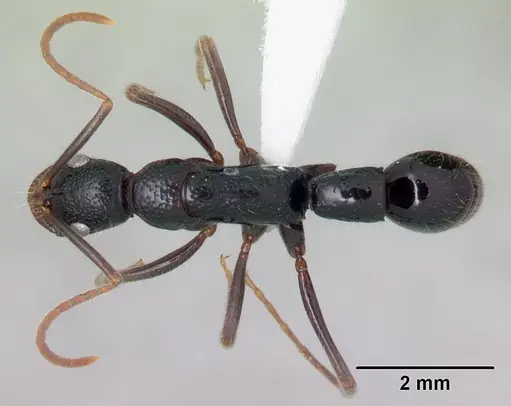
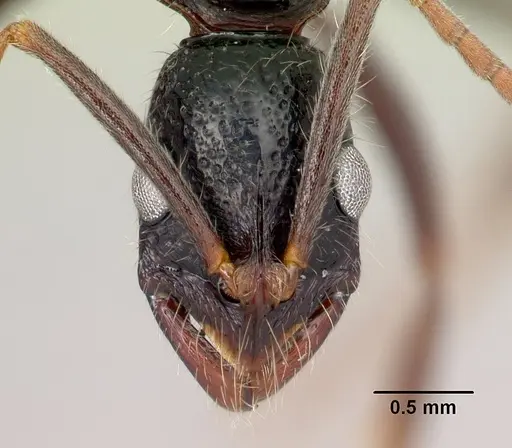
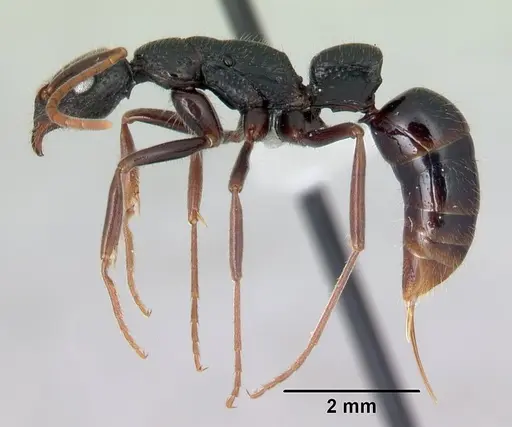
CASENT0175361
Visualizza su AntWeb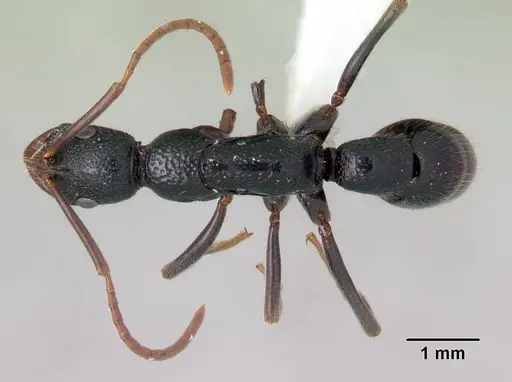
CASENT0499742
Visualizza su AntWeb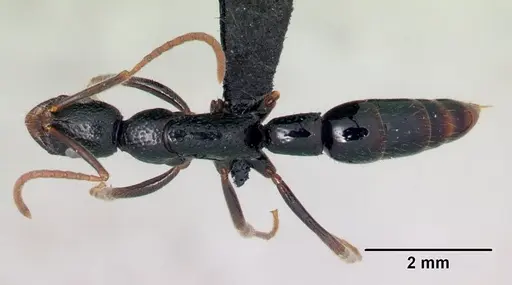
Letteratura
Caricamento mappa di distribuzione...Caricamento prodotti...