
Leptanilla tenuis
- Nom. sci.
- Leptanilla tenuis
- Tribù
- Leptanillini
- Sottofamiglia
- Leptanillinae
- Autore
- Santschi, 1907
- Distribuzione
- Trovata in 0 paesi
Introduzione
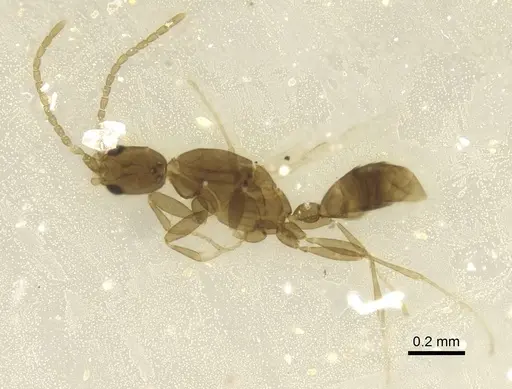
Leptanilla tenuis is one of the most mysterious ant species in the world, known only from male specimens collected in Tunisia over a century ago . Santschi described these males in 1907 from the Kairouan region, and since then, no one has formally described workers, queens, or any living colony . This makes the species essentially invisible to science, we know it exists from taxonomic study of preserved males, but we have never observed how it lives, what it eats, or what its colonies look like. As a member of the genus Leptanilla, these ants likely rank among the smallest in the world, though exact measurements for this species are unavailable. They probably live deep underground in Tunisia's soil, hunting specialized prey. The genus Leptanilla belongs to the subfamily Leptanillinae, a group of ants so cryptic that scientists have described most species from scattered specimens rather than living colonies .
Quick Summary
- Difficulty: Expert
- Origin & Habitat: Tunisia, specifically the Kairouan region in the Palearctic [1][2][4]. The exact habitat is unknown but likely involves deep soil layers.
- Colony Type: Unknown, no colonies have ever been observed or described.
- Size & Growth:
- Queen: Size data unavailable for this species.
- Worker: Size data unavailable for this species, inferred from Leptanilla genus to be among the smallest ants in the world [3].
- Colony: Unknown, no colony has ever been observed.
- Growth: Unknown.
- Development: Unknown. (No data exists on development timing for this species.)
- Antkeeping:
- Temperature: Unknown, no captive observations exist.
- Humidity: Unknown, no captive observations exist.
- Diapause: Unknown, no seasonal data exists for this species.
- Nesting: Unknown, no nest has ever been found or described.
- Behavior: Behavior is unknown, no living colony has ever been observed. Based on genus patterns, likely cryptic and subterranean with minimal surface activity [3].
- Common Issues: this species has never been kept in captivity, no care protocol exists., only male specimens are known, we have never observed a living colony, queen, or worker., the specialized diet of soil centipedes (known from other Leptanilla species) would be nearly impossible to replicate in captivity., subterranean lifestyle requires deep soil setups that are difficult to maintain and observe., extremely small size makes handling and observation nearly impossible without specialized equipment.
Discovery and Taxonomy
We only know Leptanilla tenuis from a few male specimens collected in Tunisia. Santschi collected the original specimen used to describe the species in Kairouan in 1906-1907 [1]. Petersen later examined these specimens and confirmed they represent a distinct species based on the structure of the male genitalia [5]. No one has ever collected workers or queens, so we know nothing about what the colonies look like, how big they get, or how they reproduce [3]. The species remains a taxonomic mystery defined entirely by its male form.
Biology of Related Species
While specific biology of L. tenuis remains unknown, scientists have observed other Leptanilla species in the genus. These ants are among the smallest in the world, though exact measurements for this species are unavailable [3]. They live deep in soil and rarely come to the surface. Unlike most ants that eat a variety of foods, Leptanilla are specialist predators of geophilomorph centipedes, the long, thin soil-dwelling centipedes with many legs. Workers hunt these centipedes underground and drag them back to the nest. Some Leptanilla species produce 'intercastes', special reproductive workers that can lay eggs if the queen dies, but we do not know if L. tenuis has this trait.
Captive Keeping Reality
You cannot currently keep this species. No captive colonies exist anywhere in the world, and the species is not available in the ant trade. We do not even know what the workers look like, let alone how to care for them. The specialized diet of soil centipedes would be nearly impossible to provide consistently, and their subterranean habits require deep soil setups that are difficult to maintain and observe. If you are interested in tiny ants, consider species like Temnothorax or Brachymyrmex instead, which have established care guides and are available through the ant trade.
Frequently Asked Questions
Can I keep Leptanilla tenuis in captivity?
No. This species is not available in the ant trade, and no one has successfully kept it. We only know it from a few male specimens collected in Tunisia over 100 years ago [1][2].
What do Leptanilla tenuis eat?
Unknown for this specific species. Based on other Leptanilla species, they are believed to hunt and eat specific types of soil-dwelling centipedes called geophilomorphs, but this has not been confirmed for L. tenuis [3].
How long until first workers for Leptanilla tenuis?
Unknown. We have no data on colony founding or development time for this species.
Where do Leptanilla tenuis live?
Only known from Kairouan, Tunisia [1][2][4]. They likely live deep underground in soil, but no one has found a nest.
How big are Leptanilla tenuis workers?
Size data unavailable for this species. Based on other Leptanilla species, workers are among the smallest ants in the world, but no measurements exist for L. tenuis [3].
Are Leptanilla tenuis good for beginners?
No. This species is not keepable by anyone at this time due to lack of availability and biological knowledge.
Do Leptanilla tenuis need hibernation?
Unknown. No seasonal data exists for this species.
Why are Leptanilla tenuis so rare?
They are extremely cryptic. Scientists usually collect them only by washing large amounts of soil or through deep soil sampling. They rarely appear on the surface [3].
Report an Issue
The current care sheet is based fully on literature. See inconsistencies, or something that's incorrect? Please , it will be resolved after review from an admin. Contributing to the blogs tab also helps providing information, to make us be able to further improve the caresheets. Thank you for your support!
References

Questa scheda di allevamento è concessa in licenza con CC BY-SA 4.0 .
Blog della comunità
CASENT0911454
Visualizza su AntWeb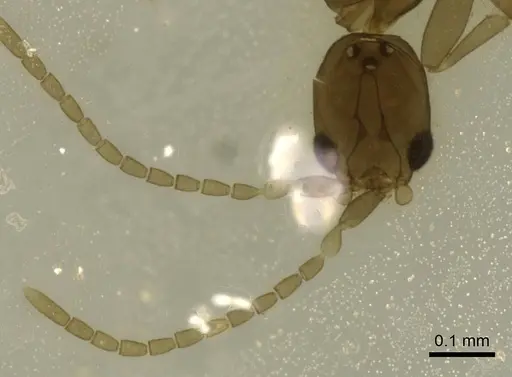
Letteratura
Caricamento mappa di distribuzione...Caricamento prodotti...