
Lachnomyrmex lattkei
- Nom. sci.
- Lachnomyrmex lattkei
- Tribù
- Attini
- Sottofamiglia
- Myrmicinae
- Autore
- Feitosa & Brandão, 2008
- Distribuzione
- Trovata in 0 paesi
Introduzione
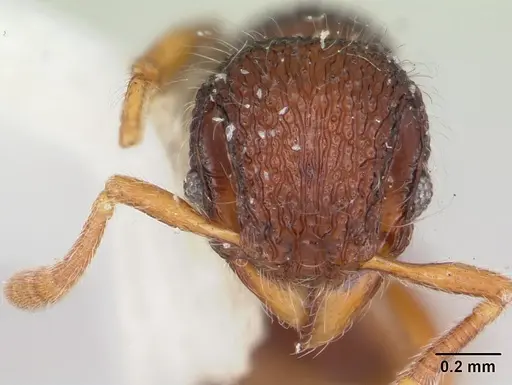
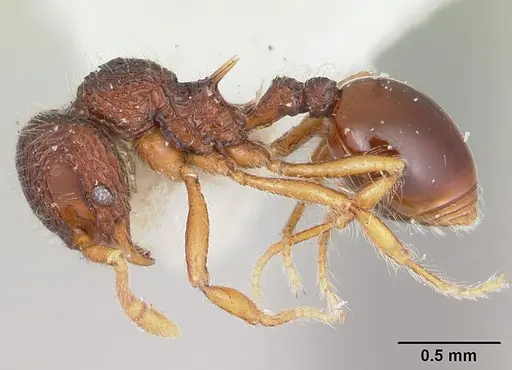
Lachnomyrmex lattkei is an extremely rare Neotropical ant species known only from a single specimen collected in northern Venezuela. Workers are tiny at just 3.4mm total length, with a distinctive rusty brown coloration and lighter appendages. The most recognizable feature is the elevated promesonotum (the middle body section arches prominently above the rear) and the complete absence of long hairs on the upper surface of the first abdominal segment. This species belongs to the tribe Attini within the subfamily Myrmicinae. The genus Lachnomyrmex contains small, cryptic ants that live in forest leaf litter and forage alone rather than in groups .
Quick Summary
- Difficulty: Expert
- Origin & Habitat: Northern Venezuela (Falcón state) at 1180m elevation in submontane wet forest. In the wild, these ants nest in the ground among rotten leaves and inside fallen logs, living in the damp leaf litter layer of humid forest floors [1].
- Colony Type: Apparently monogynic, the genus is described as having relatively small colonies with a single queen [1]. This species is known only from the worker caste, so queen morphology and colony structure specifics are unconfirmed.
- Size & Growth:
- Queen: Unknown, queen has never been documented [2]
- Worker: 3.40mm total length [2]
- Colony: Lachnomyrmex colonies are relatively small in the wild [1]. No specific data for this species.
- Growth: Unknown, no captive breeding data exists
- Development: Unknown, no development data exists for this species (No captive colonies have been established, so development timeline is entirely unstudied)
- Antkeeping:
- Temperature: Unconfirmed. Based on the genus preference for submontane wet forests in the Neotropics, aim for moderate temperatures around 20-24°C with stable humidity. Avoid high heat.
- Humidity: High humidity is essential. These ants live in leaf litter on damp forest floors, so keep the nest substrate consistently moist but not waterlogged. Provide a gradient with a consistently damp area and a slightly drier area for the ants to self-regulate.
- Diapause: Unknown, no data on seasonal behavior. The Venezuelan location near the equator suggests minimal temperature variation, but the 1180m elevation may introduce seasonal cues.
- Nesting: In captivity, provide a naturalistic setup with multiple small chambers filled with moist substrate (soil/leaf litter mix). A Y-tong or plaster nest with small chambers scaled to their tiny size would work. The key is maintaining high humidity while allowing some ventilation to prevent mold.
- Behavior: Workers forage alone on the ground and within leaf litter, they do not recruit nestmates or form pheromone trails [1]. This solitary foraging means they are not aggressive toward colonies of other ants and pose no threat. Their tiny size and cryptic lifestyle make them extremely difficult to spot. Escape prevention must be excellent, at 3.4mm, they can squeeze through remarkably small gaps. As members of the subfamily Myrmicinae, they possess a stinger, though it is less medically significant than fire ants.
- Common Issues: this species has never been kept in captivity, there are no established care protocols or success stories to draw from, the single known specimen means we have no information about queen biology, founding behavior, or colony development, collecting wild colonies is extremely difficult due to their tiny size and cryptic leaf-litter lifestyle, high humidity requirements create mold risk in captive setups, without established captive colonies, there is no way to obtain stock legally, this is not a species you can purchase
Why This Species Is Extremely Difficult to Keep
Lachnomyrmex lattkei presents an extraordinary challenge for antkeepers, it may be one of the most difficult species to keep in captivity. This species is known from a single worker specimen collected in 1982 in northern Venezuela. No queen has ever been documented, no colony has ever been observed, and no captive breeding attempts have been made. The entire global knowledge base consists of one dead ant in a museum collection. There are no established care protocols, no commercial sources, and no experienced keepers to turn to for advice. Even if you could locate a wild colony (which would require specialized leaf-litter extraction techniques in remote Venezuela), the transition to captivity would be entirely experimental with no guarantee of success. This is truly a species for advanced researchers, not hobbyists. [2][1]
Natural History and What We Know
Everything we know about Lachnomyrmex lattkei comes from a single worker specimen described in 2008 by Feitosa and Brandão. The ant was collected using a Berlese funnel, a device that extracts tiny arthropods from leaf litter samples. This tells us the species lives hidden within the forest floor debris, not in obvious nests. The genus Lachnomyrmex as a whole shows specific behaviors: colonies are relatively small, workers forage alone rather than in groups, and they do not recruit nestmates to food sources or leave pheromone trails [1]. The elevated promesonotum and lack of long hairs on the gaster are distinguishing features that separate this species from others in the genus. The dark ferruginous (rusty brown) coloration with lighter appendages is typical for the group.
Genus-Level Care Guidance
Since we have no species-specific data, we can only extrapolate from what is known about the genus Lachnomyrmex as a whole. These are leaf-litter ants found in wet forest environments across the Neotropics, from southern Mexico to northern Argentina [1]. In the wild, they nest in the ground among rotten leaves and inside fallen logs. Workers forage on the ground and within leaf litter, sometimes recorded on tree trunks, but always alone, they never form recruitment trails. This suggests they are generalist foragers, likely eating small invertebrates and possibly honeydew from aphids. The key captive requirement is high humidity mimicking the damp forest floor. Temperature should be moderate (around 20-24°C) given their submontane forest origin. Any setup would need to replicate the complex, humid micro-environment of a forest floor.
Legal and Ethical Considerations
Before considering any attempt to keep this species, you must understand the legal constraints. Lachnomyrmex lattkei is known only from Venezuela, and no established captive populations exist anywhere in the world. Collecting from the wild would require research permits and proper authorization from Venezuelan authorities. Additionally, the species has never been successfully kept in captivity, so any attempt would be purely experimental with near-zero probability of success. For these reasons, Lachnomyrmex lattkei is not a species for hobbyists, it represents a research-level challenge that would require institutional support, field collection expertise, and significant resources. There are no established colonies to purchase, no care guides to follow, and no margin for error. [2][1]
Frequently Asked Questions
Can I keep Lachnomyrmex lattkei as a pet ant?
No. This species has never been kept in captivity and is essentially impossible to obtain. It is known only from a single specimen collected in Venezuela in 1982. No queen has ever been documented, no colonies exist in captivity, and there are no established care protocols. Even if you could collect from the wild (which would require permits and expertise), the species has never been successfully maintained in captivity.
Where can I buy Lachnomyrmex lattkei ants?
You cannot. This species is not available from any commercial ant supplier. There are no captive-bred colonies of Lachnomyrmex lattkei in existence. The entire scientific knowledge base consists of one museum specimen.
What do Lachnomyrmex lattkei ants eat?
We don't know specifically. Based on genus behavior, they are generalist foragers that hunt small invertebrates in leaf litter. They likely eat tiny insects, springtails, and other micro-arthropods, plus possibly honeydew from sap-sucking insects. No captive feeding observations exist.
How big do Lachnomyrmex lattkei colonies get?
The colony size is unconfirmed for this species. The genus Lachnomyrmex is described as having relatively small colonies [1], but we have no specific numbers for L. lattkei. No colony has ever been observed.
What temperature and humidity do Lachnomyrmex lattkei need?
Unconfirmed. Based on the genus preference for submontane wet forests, aim for moderate temperatures around 20-24°C and high humidity. The key is maintaining consistently damp substrate without letting it dry out or become waterlogged.
How long does it take for Lachnomyrmex lattkei to develop from egg to worker?
Unknown, no development data exists for this or any Lachnomyrmex species. No colony has ever been successfully bred in captivity.
Is Lachnomyrmex lattkei a good species for beginners?
Absolutely not. This is an expert-level species that has never been kept in captivity. There are no established care protocols, no source for obtaining colonies, and no margin for error. Even experienced antkeepers would have no guidance to follow. This species is suitable only for professional researchers with institutional support.
Can I keep multiple Lachnomyrmex lattkei queens together?
Unknown. The genus is described as apparently monogynic (single queen) [1], but we have no specific data for this species. More importantly, you cannot obtain this species at all, there are no captive colonies.
Do Lachnomyrmex lattkei need hibernation or diapause?
Unknown. The species is from northern Venezuela at 1180m elevation near the equator, so temperature fluctuations are minimal. However, no research has been done on seasonal behavior or dormancy requirements.
What makes Lachnomyrmex lattkei different from other ants?
This species is distinguished by its elevated promesonotum (the middle body section arches prominently above the rear) and the complete absence of long hairs on the upper surface of the first abdominal segment. It is also one of the rarest ant species in the world, known from a single specimen collected in 1982.
Why is Lachnomyrmex lattkei so rare?
Lachnomyrmex lattkei is not necessarily rare in the wild, it may simply be extremely difficult to find. These tiny ants live hidden within leaf litter and forest floor debris, not in obvious nests. They forage alone rather than in visible groups, making them nearly impossible to detect without specialized extraction techniques like Berlese funnels. The single known specimen was collected by accident during a leaf-litter survey.
Report an Issue
The current care sheet is based fully on literature. See inconsistencies, or something that's incorrect? Please , it will be resolved after review from an admin. Contributing to the blogs tab also helps providing information, to make us be able to further improve the caresheets. Thank you for your support!
References

Questa scheda di allevamento è concessa in licenza con CC BY-SA 4.0 .
Blog della comunità
CASENT0173879
Visualizza su AntWeb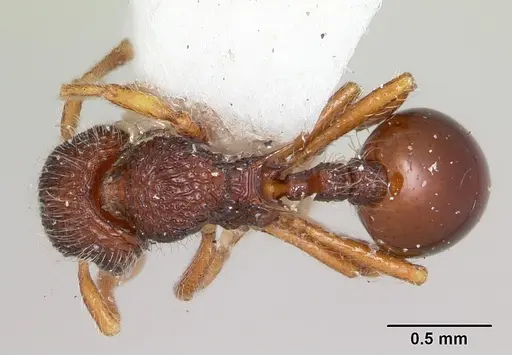
Letteratura
Caricamento mappa di distribuzione...Caricamento prodotti...