
Hypoponera exigua
- Nom. sci.
- Hypoponera exigua
- Tribù
- Ponerini
- Sottofamiglia
- Ponerinae
- Autore
- Bolton & Fisher, 2011
- Distribuzione
- Trovata in 0 paesi
Introduzione
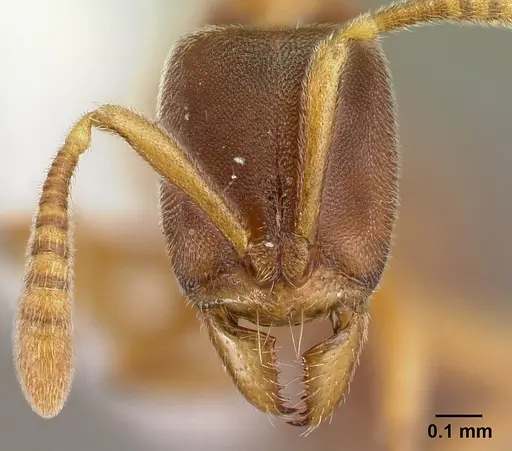
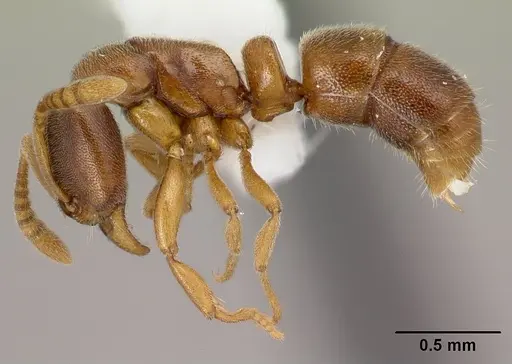
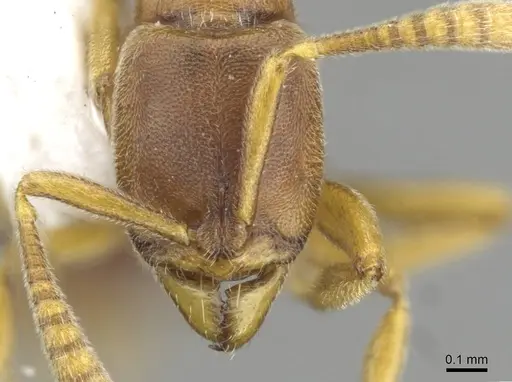
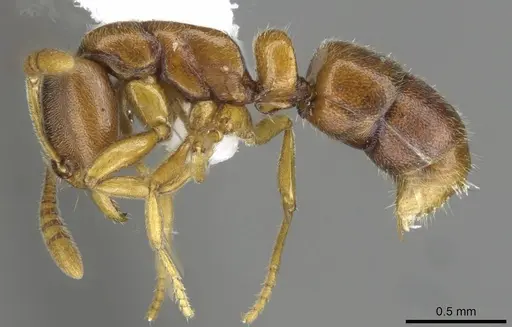
Hypoponera exigua is a tiny ponerine ant species described from Ethiopia's Bale Mountains National Park. Workers are light brown and lack eyes entirely . They belong to the Hypoponera abeillei group and were described in 2011 by Bolton and Fisher . The most distinctive feature is a series of 4-5 cuticular ridges at the base of the petiole node that form a transverse depression topped by a dark carina . This species is known only from the type series collected from forest leaf litter at 2400m elevation in the Harenna Forest .
Quick Summary
- Difficulty: Expert
- Origin & Habitat: Ethiopia, Bale Mountains National Park, Harenna Forest at 2400m elevation. They live in forest leaf litter in high-altitude tropical forest [1].
- Colony Type: Unconfirmed, colony structure has not been documented in the scientific literature
- Size & Growth:
- Queen: Unknown, queen caste has not been described
- Worker: ~2-2.5mm, inferred from Hypoponera genus (no total body length measurements available)
- Colony: Unknown, only known from type series of 30 workers
- Growth: Unknown
- Development: Unknown, no development data exists for this species (Development timeline has not been studied.)
- Antkeeping:
- Temperature: Likely cool-temperate given high elevation origin (2400m). Based on the Ethiopian highlands habitat, aim for 18-22°C. Monitor colony activity and adjust accordingly.
- Humidity: Forest floor species, likely requires high humidity with moist substrate. Keep the nest substrate consistently damp but not waterlogged.
- Diapause: Likely required, high elevation origin suggests a cold season. Provide a winter rest period of 2-3 months at reduced temperatures (10-15°C).
- Nesting: Natural nesting occurs in forest leaf litter. In captivity, a small test tube setup or miniature Y-tong nest with fine chambers works well. The tiny worker size requires tight-fitting escape prevention.
- Behavior: Behavior is unstudied in captivity. Based on genus patterns, Hypoponera are typically slow-moving, cryptic ants that forage individually on the forest floor. They are likely predatory on small soil micro-arthropods. The absence of eyes suggests they rely on chemical and tactile senses. Escape risk is significant due to their tiny size, use fine mesh barriers.
- Common Issues: escape prevention is critical due to their extremely small size., no captive husbandry information exists, this is essentially an unstudied species., high elevation origin means they may not tolerate warm conditions., humidity requirements are unknown and must be carefully monitored., wild-caught colonies may be stressed from collection and difficult to establish.
Species Identification and Distinction
Hypoponera exigua can be distinguished from similar species by several key features. The apex of the scape (antenna) falls just short of reaching the midpoint of the posterior head margin when laid straight back [1]. The most distinctive feature is the posterior surface of the petiole node, which has 4-5 cuticular ridges at its base that radiate upward from the peduncle. These ridges terminate dorsally in a darkly colored, arched transverse rim or carina that marks the upper boundary of a shallow transverse depression [1]. This species is very similar to the South African Hypoponera traegaordhi, but H. exigua is larger and the scape reaches closer to the head's midpoint [1]. The complete absence of eyes is another distinguishing characteristic of this species [1].
Natural Habitat and Distribution
This species is known only from the Bale Mountains National Park in Ethiopia, specifically from the Harenna Forest at an elevation of 2400 meters [1]. This is a high-altitude tropical forest environment in the Ethiopian highlands. The type series was collected from leaf litter, with evidence of bushpig activity in the area [1]. The Bale Mountains represent a biodiversity hotspot in Ethiopia, with unique montane forest ecosystems. The high elevation suggests this species is adapted to cooler temperatures compared to lowland tropical ants. The collection data indicates they live in moist forest floor microhabitats among decomposing leaf material.
Housing and Nest Setup
Due to their extremely small size, Hypoponera exigua requires specialized housing. A small test tube setup works well for founding colonies, with the water reservoir kept small to prevent flooding. For established colonies, a miniature Y-tong style nest with very small chambers is appropriate. The chambers should be scaled to their tiny size, avoid large, open spaces. Escape prevention is critical: use tight-fitting lids and fine mesh barriers. Because they lack eyes and live in leaf litter, they likely prefer dark, humid nest conditions with minimal light exposure. Provide a small outworld area for foraging.
Feeding and Diet
The natural diet of Hypoponera exigua is not documented, but the genus is typically predatory on small soil micro-arthropods. In captivity, offer small live prey such as springtails, micro-mites, or fruit fly larvae. Given their tiny size, prey items should be very small. Sugar sources may or may not be accepted, some Ponerinae species occasionally take honey water, but protein from live prey is likely the primary food. Feed small amounts of live prey 2-3 times per week and remove uneaten prey promptly to prevent mold.
Temperature and Seasonal Care
Based on their high-elevation Ethiopian origin (2400m), these ants likely prefer cool to moderate temperatures. Keep the nest area at approximately 18-22°C. Avoid warm conditions above 25°C, which could stress or kill the colony. A gentle temperature gradient allows the ants to choose their preferred zone. During winter, provide a diapause period of 2-3 months at reduced temperatures (10-15°C) to simulate seasonal conditions. This species is adapted to montane forest conditions with distinct seasonal temperature variations.
Defense Mechanism
As a member of the subfamily Ponerinae, Hypoponera exigua possesses a functional stinger. However, given their extremely small size, any sting would be negligible and unlikely to penetrate human skin. They may attempt to sting if handled roughly, but the effect would be minimal.
Behavior and Observation
Hypoponera ants are typically cryptic, slow-moving foragers that search individually through leaf litter and soil. The complete absence of eyes indicates they navigate using chemical and tactile cues rather than vision [1]. They likely establish small, discreet colonies in natural settings. Workers move deliberately and may be active primarily in the humid microclimate of the forest floor. Observation is challenging due to their tiny size and cryptic habits. Any colony you might obtain would represent one of the first documented captive colonies of this species.
Frequently Asked Questions
How long does it take for Hypoponera exigua to develop from egg to worker?
The development timeline for this species is completely unknown, no scientific study has documented their brood development.
What do Hypoponera exigua ants eat?
Their natural diet is unstudied, but Hypoponera species are typically predatory on small soil micro-arthropods. In captivity, offer small live prey such as springtails, micro-mites, or fruit fly larvae. The tiny worker size means prey must be microscopic. Sugar sources may be occasionally accepted but should not be the primary food.
Can I keep Hypoponera exigua in a test tube?
Yes, a test tube setup is appropriate for this tiny species. Use a small water reservoir and ensure the tube is tightly sealed, their small size makes escape likely without proper barriers. A test tube works well for founding colonies but you may need to upgrade to a small nest as the colony grows.
Do Hypoponera exigua ants sting?
Ponerinae ants have functional stingers, though the sting is usually too weak to penetrate human skin effectively given their tiny size. They may attempt to sting if handled roughly.
Are Hypoponera exigua good for beginners?
No, this species is not suitable for beginners. It is known only from type specimens in Ethiopia, with virtually no captive husbandry information available. Keeping this species would be an experimental endeavor requiring expert-level antkeeping experience and careful documentation.
What temperature do Hypoponera exigua need?
Based on their high-elevation Ethiopian origin, aim for cool to moderate temperatures around 18-22°C. Avoid warm conditions above 25°C. A temperature gradient allows the colony to self-regulate. Winter temperatures of 10-15°C during diapause are likely appropriate.
How big do Hypoponera exigua colonies get?
Colony size is unknown, this species has only been collected once as a type series of about 30 workers. Based on related species, colonies are likely small given their cryptic, leaf-litter dwelling lifestyle.
Do Hypoponera exigua need hibernation?
Likely yes, their origin in the Ethiopian highlands at 2400m elevation suggests they experience seasonal temperature changes. Provide a winter rest period of 2-3 months at reduced temperatures (10-15°C) to mimic natural conditions.
Why is this species so hard to find?
Hypoponera exigua is known only from a single collection in Ethiopia's Bale Mountains. They are extremely small, lack eyes, and live cryptically in forest leaf litter. The species was only described in 2011,and no additional collections have been documented since [1].
Can I keep multiple queens together?
Colony structure is unconfirmed for this species. Combining unrelated queens is not recommended since it has not been studied and could result in aggression. Do not attempt pleometrosis with this species.
Report an Issue
The current care sheet is based fully on literature. See inconsistencies, or something that's incorrect? Please , it will be resolved after review from an admin. Contributing to the blogs tab also helps providing information, to make us be able to further improve the caresheets. Thank you for your support!
References

Questa scheda di allevamento è concessa in licenza con CC BY-SA 4.0 .
Blog della comunità
CASENT0226547
Visualizza su AntWeb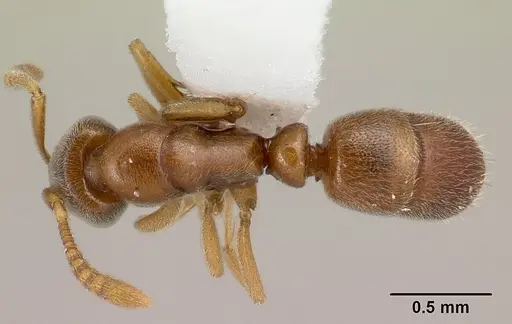
CASENT0911173
Visualizza su AntWeb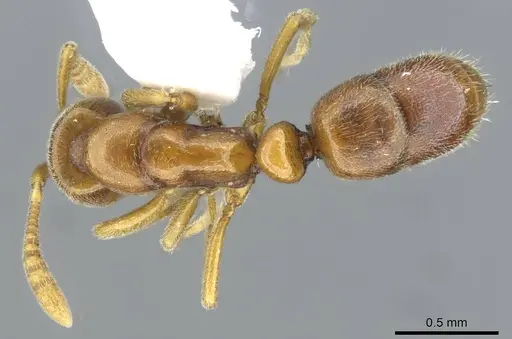
Letteratura
Caricamento mappa di distribuzione...Caricamento prodotti...