
Harpagoxenus zaisanicus
- Nom. sci.
- Harpagoxenus zaisanicus
- Tribù
- Crematogastrini
- Sottofamiglia
- Myrmicinae
- Autore
- Pisarski, 1963
- Distribuzione
- Trovata in 0 paesi
Introduzione
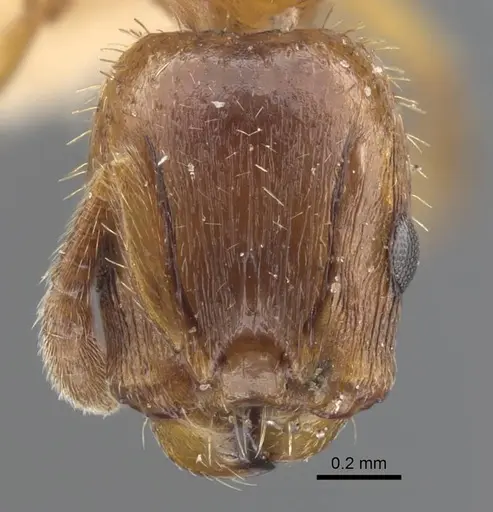
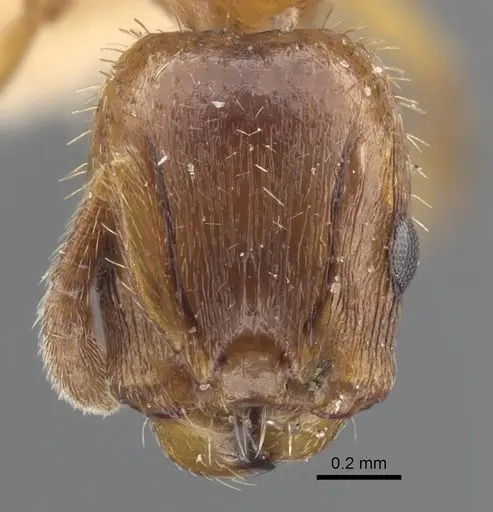
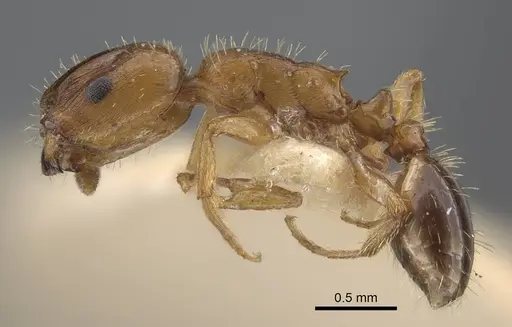
Harpagoxenus zaisanicus is an exceptionally rare slave-making ant endemic to Mongolia - it's the only ant species known to be found nowhere else on Earth . Workers are small, with a distinctive appearance typical of Harpagoxenus: a relatively narrow head and a pronounced petiolar node . This species has a deeply specialized lifestyle as a social parasite - it does not build its own colonies but instead infiltrates nests of its host species, Leptothorax muscorum, where it uses the host workers to raise its own brood . The queens are ergatoid (wingless), which is typical of socially parasitic ants that must enter established host colonies. This species is listed as Vulnerable on the IUCN Red List due to its extremely limited distribution and cryptic nature .
Quick Summary
- Difficulty: Expert
- Origin & Habitat: Mongolia, specifically the Zaïsan Valley near Ulaan Bataar, with records from Khentii, Khangai and Gobi Altai regions. They inhabit dry steppe habitats in central, western and north-western Mongolia [1][3].
- Colony Type: Social parasite, this species does not found colonies independently. Instead, an ergatoid (wingless) queen invades an established Leptothorax muscorum colony, kills or replaces the host queen, and uses the host workers to raise her brood. This is known as temporary social parasitism or dulosis (slave-making).
- Size & Growth:
- Queen: size data unavailable, ergatoid (wingless) queens [1].
- Worker: size data unavailable, inferred as small (~3-4mm) based on genus Harpagoxenus worker morphology [2].
- Colony: Unknown, dependent on host colony size.
- Growth: Unknown, dependent on host resources
- Development: Unknown, development has not been directly studied. (Development is entirely dependent on host worker care, the parasite cannot raise its own brood independently.)
- Antkeeping:
- Temperature: Keep at room temperature around 18-22°C, consistent with Mongolian steppe conditions. Avoid overheating.
- Humidity: Moderate humidity, aim for 50-60% relative humidity. Dry steppe conditions, not damp environments.
- Diapause: Yes, this is a temperate Mongolian species. Provide a winter rest period of 3-4 months at 5-10°C, mimicking the harsh Mongolian winter.
- Nesting: This species cannot be kept independently, it requires a host Leptothorax muscorum colony. The setup would need to maintain both parasite and host, which is extremely challenging. This is not a species for captive breeding.
- Behavior: Extremely cryptic and rarely observed. As a social parasite, they rely entirely on host workers for all colony functions except reproduction. Workers are not aggressive and do not forage independently, they depend on host workers for food and care. Escape risk is low given their dependent lifestyle, but the challenge is maintaining both species.
- Common Issues: This species cannot be kept independently, it requires a host Leptothorax muscorum colony, making captive maintenance extremely difficult., Finding a host colony (Leptothorax muscorum) in captivity is challenging and the two species must be successfully integrated., Even if integrated, the parasite may be killed by host workers if the introduction is not done correctly., The species is listed as Vulnerable, ethical concerns about removing wild colonies of an endemic species., Growth and development are entirely dependent on host workers, without proper host care, the parasite brood will not survive.
Understanding Harpagoxenus zaisanicus
Harpagoxenus zaisanicus is one of the rarest ants in the world, it's the only ant species that is endemic to Mongolia, meaning it's found nowhere else on Earth [1]. This makes it particularly significant from a conservation perspective. The species was first described in 1963 by Bohdan Pisarski from specimens collected in the Zaïsan Valley south of Ulaan Bataar (formerly Ulan Bator) [3]. What makes this ant extraordinary is its lifestyle as a social parasite, it does not build its own colony but instead invades and parasitizes colonies of Leptothorax muscorum, a common small ant in the region [3]. The genus Harpagoxenus is known for being dulotic, meaning these ants raid host colonies to capture brood, which they raise as slaves that then do all the foraging and nest maintenance work. However, H. zaisanicus appears to use a temporary parasitic strategy where the queen kills or replaces the host queen and uses the existing host workers rather than conducting raids.
Why This Species is Not Suitable for Most Antkeepers
Harpagoxenus zaisanicus is absolutely not recommended for captive keeping for several critical reasons. First, this is an obligate social parasite, it cannot survive without a host Leptothorax muscorum colony. The parasite queen cannot found a colony independently, she must invade an established host nest, kill or replace the host queen, and then rely on host workers to raise her brood. Second, even if you could obtain both species, integrating a parasitic queen into a host colony is extremely difficult and success rate is very low. Third, and most importantly, this species is endemic to Mongolia and listed as Vulnerable on the IUCN Red List [1]. Removing colonies from the wild would be ecologically irresponsible for such a rare species. There are no documented cases of successful captive breeding of this species, and the specialized dual-species requirement makes it essentially impossible for hobbyists. If you are interested in slave-making ants, consider more commonly available species like Temnothorax species that are occasionally kept, or focus on non-parasitic ant species that can thrive in captivity.
The Host Species: Leptothorax muscorum
If you were to attempt keeping this species (which is not recommended), you would need to maintain a healthy Leptothorax muscorum colony as the host. Leptothorax muscorum is a small, cryptic ant found across the Holarctic region, Europe, Asia, and North America. Workers are tiny, with a generally dark brown to black coloration. These ants nest in small cavities under stones, in rotting wood, or in soil cracks, typical of litter ants that live in micro-habitats. Colonies are relatively small, usually containing a single queen. They are not aggressive and can be kept in small test tube setups or acrylic nests with appropriate humidity. However, obtaining a wild Leptothorax muscorum colony in Mongolia would be necessary for any attempt, and combining it with the parasitic species would be extremely challenging. The natural history connection between these two species is fascinating, they have co-evolved such that the parasite cannot survive without the host, making separation impossible in captivity. [3][1]
Conservation Status and Ethical Considerations
Harpagoxenus zaisanicus is categorized as Vulnerable on the IUCN Red List, meaning it faces a high risk of extinction in the wild [1]. This is due to several factors: extremely limited distribution (only known from Mongolia), specialized habitat requirements (dry steppe), and its dependence on a specific host species. As the only endemic ant species in Mongolia, it represents a unique conservation priority for the country. For antkeepers, this status carries important ethical implications. You should never attempt to collect or keep this species from the wild. The species extremely cryptic lifestyle means that even finding it would be incredibly difficult, it has been recorded only a handful of times since its discovery in 1963. Instead of seeking this species, antkeepers interested in parasitic ants should consider studying the well-documented biology of related species in the Harpagoxenus genus through scientific literature, or focus on observing wild ant colonies in their natural habitat. Conservation of this species should be left to researchers and conservation biologists working in Mongolia.
Frequently Asked Questions
Can I keep Harpagoxenus zaisanicus as a pet?
No. This species is not suitable for captive keeping. It is an obligate social parasite that requires a host Leptothorax muscorum colony to survive, and it is listed as Vulnerable on the IUCN Red List due to its extremely limited distribution in Mongolia.
How do I care for Harpagoxenus zaisanicus?
You cannot care for this species independently. As a social parasite, it cannot survive without a host colony. Even if you could obtain both species, maintaining a dual-species setup would be extremely challenging and is not recommended. Additionally, this species is endangered and should not be removed from the wild.
What does Harpagoxenus zaisanicus eat?
As a social parasite living within a host colony, it relies entirely on host workers for food. The host Leptothorax muscorum workers forage for honeydew and small insects, and they feed the parasite queen and her brood.
Where does Harpagoxenus zaisanicus live?
This species is endemic to Mongolia, it is found nowhere else on Earth. It has been recorded in the Khentii, Khangai and Gobi Altai regions, particularly in the Zaïsan Valley near Ulaan Bataar. It lives in dry steppe habitats at elevations around the capital city.
Is Harpagoxenus zaisanicus a slave-making ant?
Yes, Harpagoxenus zaisanicus is a dulotic (slave-making) ant species. It invades colonies of Leptothorax muscorum and uses the host workers to raise its own brood. However, it appears to use a temporary parasitic strategy rather than conducting slave raids, the queen takes over the host colony rather than raiding for brood.
How big do Harpagoxenus zaisanicus colonies get?
Colony size is unknown and would be entirely dependent on the host colony. The parasite population within a host colony would likely be small, typically just the queen and a handful of parasite workers.
Does Harpagoxenus zaisanicus need hibernation?
Yes, as a Mongolian species it would require a winter rest period. Mongolia has extremely harsh winters with temperatures well below freezing for months. You would need to provide 3-4 months of cold conditions around 5-10°C, though this has not been specifically studied for this species.
Why is Harpagoxenus zaisanicus so rare?
This species is rare for several reasons: it has an extremely limited distribution (only Mongolia), it is a social parasite requiring a specific host species, it has a cryptic lifestyle, and its habitat in the Mongolian steppe is specialized. It is the only endemic ant species in Mongolia and is listed as Vulnerable on the IUCN Red List.
Can I find Harpagoxenus zaisanicus in the wild?
It would be extremely unlikely to find this species. It has been recorded only a handful of times since 1963,has a very cryptic lifestyle as a nest parasite, and is found in a limited region of Mongolia. Additionally, as a Vulnerable species, any collection would be ethically questionable and likely illegal.
Are there alternative ants to keep that are similar?
If you are interested in parasitic ant behavior, you would be better off studying the well-documented biology of Harpagoxenus species through scientific literature. For keeping ants, focus on non-parasitic species that can thrive in captivity. Many beginner-friendly species like Lasius, Camponotus, or Tetramorium are available and can be kept successfully.
Report an Issue
The current care sheet is based fully on literature. See inconsistencies, or something that's incorrect? Please , it will be resolved after review from an admin. Contributing to the blogs tab also helps providing information, to make us be able to further improve the caresheets. Thank you for your support!
References

Questa scheda di allevamento è concessa in licenza con CC BY-SA 4.0 .
Blog della comunità
CASENT0917214
Visualizza su AntWeb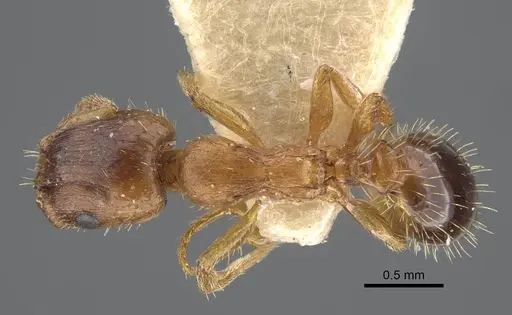
Letteratura
Caricamento mappa di distribuzione...Caricamento prodotti...