
Discothyrea chimera
- Nom. sci.
- Discothyrea chimera
- Tribù
- Proceratiini
- Sottofamiglia
- Proceratiinae
- Autore
- Hita-Garcia & Lieberman, 2019
- Distribuzione
- Trovata in 0 paesi
Introduzione
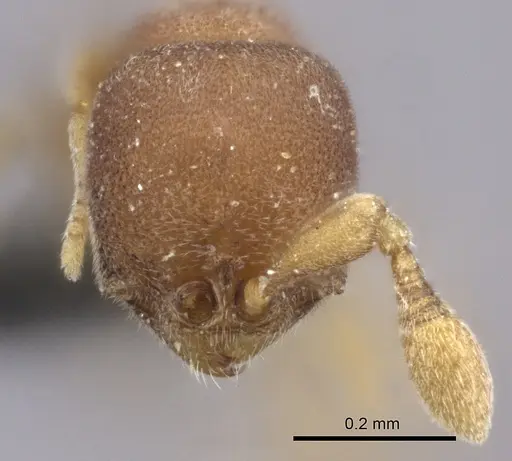
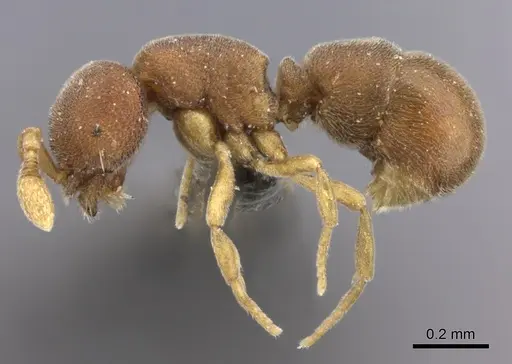
Discothyrea chimera is an extremely tiny ant species, among the smallest ants in the world, with workers measuring approximately 2mm in total length based on genus patterns . They have a distinctive appearance featuring a broad, nearly square head with sharply defined corners, a prominent curved tooth on their mandible, and a very thin, scale-like petiole that makes them look almost squashed from above . The species is known only from a single specimen collected in the Mamiwa-Kisara Forest Reserve in Tanzania at nearly 2000m elevation - a humid montane forest environment . Their body is reddish-brown with dull yellow legs and antennae, and unlike many related species, they lack standing hairs on their upper body surfaces . This species was only described in 2019, making it one of the newest discovered ant species in the hobby.
Quick Summary
- Difficulty: Expert
- Origin & Habitat: Mamiwa-Kisara Forest Reserve, Tanzania, humid montane forest at 1989m elevation, collected from leaf litter [1]
- Colony Type: Unknown colony structure, only a single worker has ever been documented [1]
- Size & Growth:
- Queen: Size data unavailable, no queen has been described
- Worker: Approximately 2mm total length, inferred from Discothyrea genus patterns (partial measurement 0.54mm mesosoma available) [1]
- Colony: Unknown, only one worker known
- Growth: Unknown, no development data exists
- Development: Unknown, no direct observations (No development data exists for this species.)
- Antkeeping:
- Temperature: Likely needs moderate to warm conditions, the humid montane habitat suggests they prefer temperatures in the 20-26°C range, similar to other Discothyrea species. Start around 22-24°C and observe colony activity.
- Humidity: Requires high humidity, their native habitat is a humid montane forest. Keep the nest substrate consistently moist but not waterlogged. Leaf litter environments maintain moderate to high moisture levels.
- Diapause: Unknown, no seasonal data exists. Given the highland African location, they may experience cooler periods but likely do not require true hibernation.
- Nesting: In nature they live in leaf litter and likely nest in small cavities in rotting wood, soil, or under forest debris. In captivity, a small test tube setup or mini Y-tong nest with fine chambers works well. The key is maintaining high humidity while allowing some ventilation.
- Behavior: No behavioral observations exist for this species. Based on related Discothyrea, they are likely slow-moving, cryptic ants that hunt small arthropod prey. Their tiny size means escape prevention is critical, they can squeeze through extremely small gaps. Handle with care as they are fragile.
- Common Issues: this species has never been kept in captivity, no husbandry information exists, only one wild specimen has ever been collected, making even basic biology unknown, their extreme small size means they require expert-level micro-ant keeping skills, no information exists on what they eat or how to feed them, the single known specimen means we cannot confirm typical colony size or structure
Discovery and Rarity
Discothyrea chimera was only described in 2019 and is known from a single specimen collected in Tanzania [1]. This makes it one of the rarest and least-studied ant species in the world. The species name 'chimera' refers to the mythological monster made of different animal parts, it was chosen because this ant has a unique combination of morphological features that set it apart from all other known Discothyrea species [1]. The fact that only one specimen has ever been found suggests either very low population densities, highly specialized habitat requirements, or simply that they have been overlooked due to their tiny size. For antkeepers, this means absolutely no captive husbandry information exists, you would be pioneering keeping this species entirely from scratch.
Size and Morphology
This is an extremely small ant, workers measure approximately 2mm in total length based on genus patterns, with a head width of 0.35mm [1]. To put this in perspective, they are smaller than many springtails and mites that other ants prey upon. Their most distinctive feature is a prominent curved tooth on their mandible (the chewing part of their mouthparts), which helps distinguish them from all other African Discothyrea species [1]. They have relatively large eyes for the genus (OI 6), a very thin and scale-like petiole (the 'waist' segment), and their body lacks the standing hairs seen on many related species [1]. Their reddish-brown coloration with dull yellow appendages is fairly typical for the genus.
Natural Habitat
The only known specimen was collected from leaf litter in a humid montane forest at nearly 2000m elevation in Tanzania [1]. This is a relatively cool, damp environment compared to lowland tropical forests. The high elevation means temperatures are moderate rather than hot, and the montane forest setting provides constant high humidity. In captivity, this suggests they need conditions that stay moist but not stagnant, with temperatures that aren't extreme. The leaf litter collection method indicates they live on the forest floor, likely in small cavities between decomposing leaves or in the top layers of soil.
Keeping This Species
We must be completely honest: keeping Discothyrea chimera would be an extreme challenge requiring expert-level skills. No information exists on their diet, founding behavior, temperature preferences, or any aspect of their captive care. Based on related Discothyrea species, they likely hunt tiny arthropods and may accept small live prey like springtails or pinhead crickets. They almost certainly need very high humidity and probably prefer temperatures in the 20-24°C range. Their tiny size means you would need excellent escape prevention, even standard fine mesh may not contain them. Unless you are an extremely experienced antkeeper willing to experiment extensively, this species is not recommended for captivity. The lack of any baseline husbandry information means colonies would likely fail without significant trial and error.
Frequently Asked Questions
Can I keep Discothyrea chimera as a pet ant?
This species is not recommended for antkeepers. No one has ever kept Discothyrea chimera in captivity, and we have no information about their basic needs like food, temperature, or humidity requirements. They are among the rarest and smallest ants in the world, and keeping them would require extensive experimentation with uncertain results.
How big do Discothyrea chimera colonies get?
We don't know. Only a single worker has ever been documented, so we have no colony size data. Based on similar tiny leaf-litter ants, colonies are probably small.
What do Discothyrea chimera ants eat?
This has not been studied. Based on related Discothyrea species, they are likely predators that hunt small arthropods. They might accept tiny live prey like springtails, but this is entirely speculative.
Where does Discothyrea chimera live?
They are only known from the Mamiwa-Kisara Forest Reserve in Tanzania, at 1989m elevation. This is a humid montane forest environment.
Are Discothyrea chimera ants dangerous?
At around 2mm in length, they are far too small to bite or sting humans in any meaningful way. Their tiny mandibles cannot penetrate human skin.
How do I set up a nest for Discothyrea chimera?
No one knows what setup they would accept. Based on their natural habitat, a small test tube setup or mini Y-tong nest with consistently moist (but not flooded) substrate would be the best starting point for experimentation.
Do Discothyrea chimera need hibernation?
Unknown. The highland Tanzanian location suggests they may experience cooler periods but probably not true hibernation conditions. Do not attempt hibernation without any baseline information.
Why is this species so rare?
Only one specimen has ever been collected, despite extensive ant surveys in Africa. This could be due to extremely low population densities, highly specialized microhabitats that are difficult to sample, or simply that they have been overlooked because of their minute size.
Report an Issue
The current care sheet is based fully on literature. See inconsistencies, or something that's incorrect? Please , it will be resolved after review from an admin. Contributing to the blogs tab also helps providing information, to make us be able to further improve the caresheets. Thank you for your support!
References

Questa scheda di allevamento è concessa in licenza con CC BY-SA 4.0 .
Blog della comunità
CASENT0235471
Visualizza su AntWeb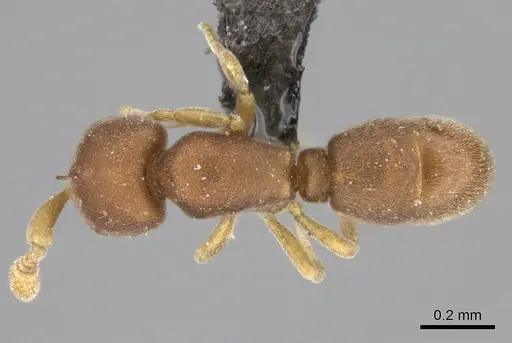
Letteratura
Caricamento mappa di distribuzione...Caricamento prodotti...