
Colobopsis mutilata
- Nom. sci.
- Colobopsis mutilata
- Tribù
- Camponotini
- Sottofamiglia
- Formicinae
- Autore
- Smith, 1859
- Distribuzione
- Trovata in 0 paesi
Introduzione
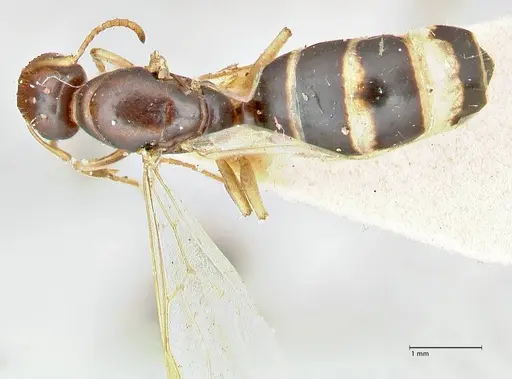
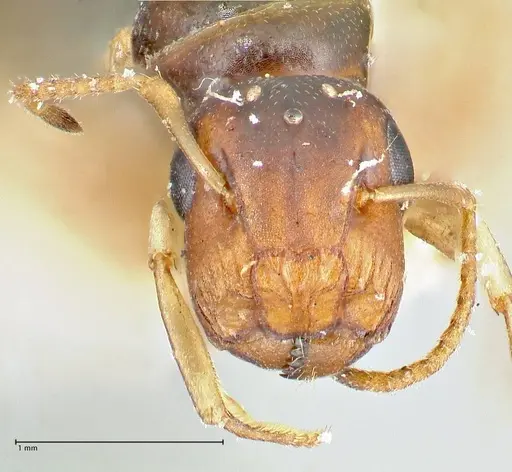
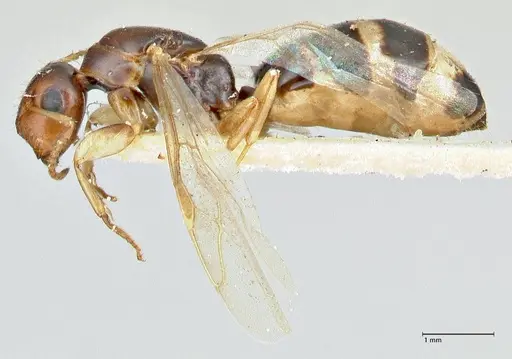
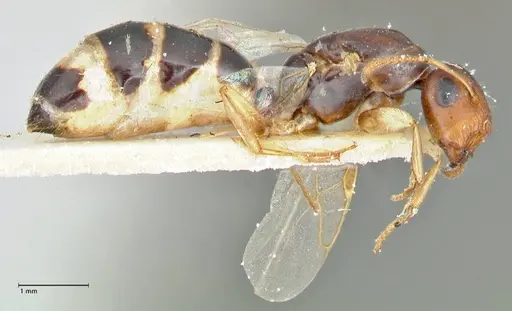
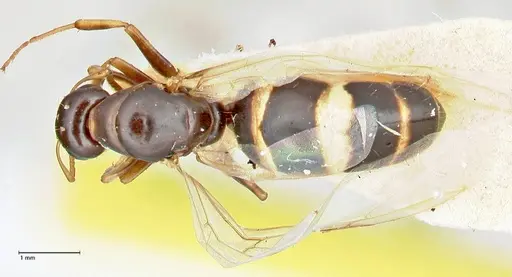
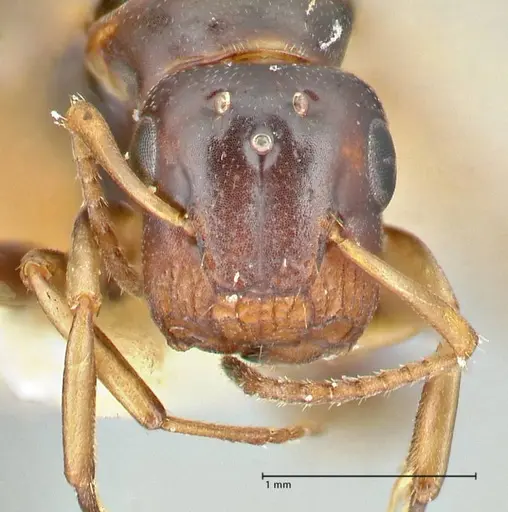
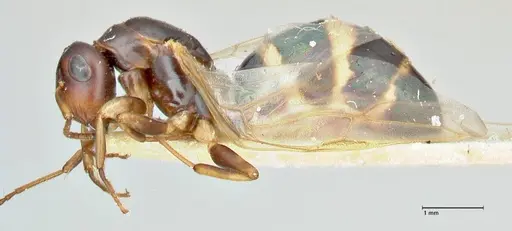
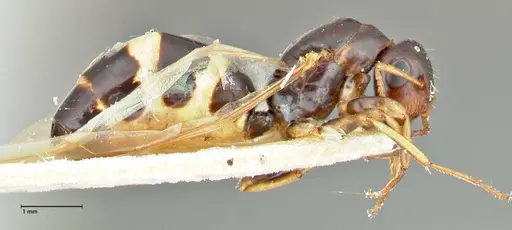
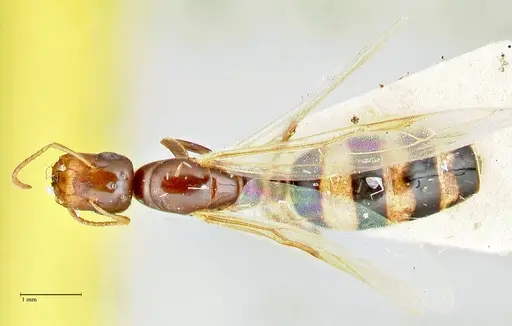
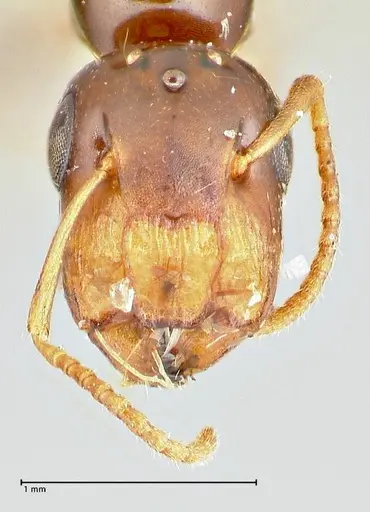
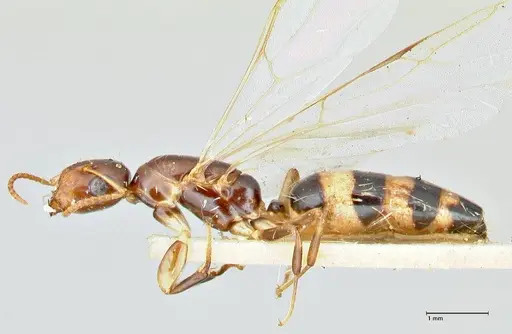
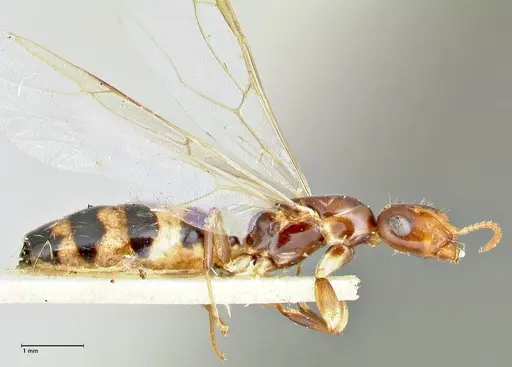
Colobopsis mutilata is a tropical ant species originally described as Camponotus mutilatus, now classified in the genus Colobopsis. The genus is known for 'cork ants' - major workers have enlarged, hard heads used to plug nest entrances . This species is found in the Aru Islands of Indonesia and New Britain in Papua New Guinea . The original description by Forel included the queen, documented in early 20th-century taxonomic work . As a Melanesian tropical species, it likely nests in pre-formed cavities like rotting wood and hollow stems.
Quick Summary
- Difficulty: Unknown, likely Expert due to very limited documented care information
- Origin & Habitat: Aru Islands (Indonesia) and New Britain (Papua New Guinea), tropical Melanesian islands [1][2]
- Colony Type: Colony structure is unconfirmed for this species.
- Size & Growth:
- Queen: Size data unavailable, original description exists but measurements not recorded in available sources [2]
- Worker: Size data unavailable, no measurements recorded in available sources
- Colony: Unknown
- Growth: Unknown
- Development: Unconfirmed (No direct development data available for this species.)
- Antkeeping:
- Temperature: Keep warm. Based on tropical origin, aim for low-to-mid 20s°C and monitor for signs of stress.
- Humidity: Maintain higher humidity consistent with tropical island habitat. Keep nest substrate consistently moist but not waterlogged.
- Diapause: Unlikely, tropical species from consistent climate regions do not typically require hibernation.
- Nesting: In nature, Colobopsis species nest in rotting wood, hollow bamboo, and pre-formed cavities. In captivity, a Y-tong (AAC) nest or naturalistic setup with rotting wood pieces works well.
- Behavior: Behavior is unconfirmed for this specific species. The genus Colobopsis is known for defensive cork-head majors that block nest entrances. Colonies are typically non-aggressive and defensive rather than offensive. Escape risk is moderate, use standard barrier methods.
- Common Issues: limited documentation means care is largely experimental, tropical humidity requirements can lead to mold problems if ventilation is poor, slow growth may frustrate keepers expecting rapid colony development, wild-caught colonies may have parasites or diseases not yet documented, temperature drops below 22°C may cause colony stress or decline
Species Background and Distribution
Colobopsis mutilata is a rarely documented ant species from the Melanesian region. The species was originally described by Forel, with the queen documented in early taxonomic work [2]. Its distribution is limited to the Aru Islands in Indonesia and New Britain in Papua New Guinea [1][2]. These are tropical islands with warm, humid climates year-round. The species was previously classified under Camponotus before being moved to the genus Colobopsis, which contains species known as 'cork ants' due to their major workers developing enlarged, disk-shaped heads used to seal nest entrances.
Nest Preferences and Housing
In the wild, Colobopsis species typically nest in pre-formed cavities such as rotting wood, hollow bamboo, dead stems, and under bark. This makes them cavity-nesting ants that rarely excavate their own tunnels in soil. For captive care, a Y-tong (AAC) nest or a naturalistic setup with rotting wood pieces provides ideal conditions. Avoid dry, airy setups, these ants come from humid tropical environments and need consistent moisture.
Feeding and Diet
Specific dietary preferences for C. mutilata are unconfirmed. Colobopsis species are generally omnivorous like most Formicinae. They likely consume honeydew from aphids and scale insects, plant nectar, and small insects for protein. In captivity, offer sugar water or honey as a constant energy source, and small insects like fruit flies or small mealworms for protein. Feed protein several times per week, removing uneaten prey after 24 hours. Fresh water should always be available.
Temperature and Environmental Conditions
As a tropical species from consistent warm climates, Colobopsis mutilata requires warm conditions year-round. Based on tropical origin, aim for temperatures in the low-to-mid 20s°C range. Avoid temperatures below 22°C for extended periods. A small heating cable or mat placed on one side of the nest can maintain warmth, but ensure it does not dry out the nest too quickly.
Colony Development and Growth
No specific development timeline is documented for this species. Initial colony growth is typically slow, the queen alone must raise the first brood without worker assistance. Once the first workers emerge, growth typically accelerates but remains moderate. Patience is essential with this species given the limited documentation.
Frequently Asked Questions
How long does it take for Colobopsis mutilata to produce first workers?
The exact timeline is unconfirmed for this species. Initial founding is slow, the queen raises the first brood alone using stored energy reserves.
What temperature do Colobopsis mutilata ants need?
Keep them warm. Based on tropical origin from Melanesian islands, aim for low-to-mid 20s°C and avoid temperatures below 22°C.
What do Colobopsis mutilata ants eat?
Specific feeding data is unconfirmed, but Colobopsis are typically omnivorous. Offer sugar water or honey as a constant energy source, and small insects for protein several times weekly.
Is Colobopsis mutilata a good species for beginners?
No, this species is not recommended for beginners due to very limited documented care information. The species has specific tropical humidity and temperature requirements that make it challenging.
Do Colobopsis mutilata ants need hibernation?
No, as a tropical species from consistent warm climates, hibernation is not required or recommended. Maintaining stable warm conditions year-round is best.
How big do Colobopsis mutilata colonies get?
Colony size is unconfirmed for this specific species.
What type of nest is best for Colobopsis mutilata?
A Y-tong (AAC) nest or naturalistic setup with rotting wood pieces works well. These cavity-nesting ants prefer pre-formed tunnels over excavated soil nests. Keep the nest humid and well-ventilated.
Can I keep multiple queens together?
Colony structure is unconfirmed for this species. Based on typical Colobopsis patterns, single-queen colonies are likely. Combining unrelated queens is not recommended without documented evidence of pleometrosis in this species.
Why is there so little information about this ant?
Colobopsis mutilata is a rarely documented tropical species with a limited distribution in remote Melanesian islands. Most ant research focuses on more common or economically significant species, leaving many tropical ants poorly studied.
Report an Issue
The current care sheet is based fully on literature. See inconsistencies, or something that's incorrect? Please , it will be resolved after review from an admin. Contributing to the blogs tab also helps providing information, to make us be able to further improve the caresheets. Thank you for your support!
References

Questa scheda di allevamento è concessa in licenza con CC BY-SA 4.0 .
Blog della comunità
Letteratura
Caricamento mappa di distribuzione...Caricamento prodotti...