
Cephalotes prodigiosus
- Nom. sci.
- Cephalotes prodigiosus
- Tribù
- Attini
- Sottofamiglia
- Myrmicinae
- Autore
- Santschi, 1921
- Distribuzione
- Trovata in 0 paesi
Introduzione
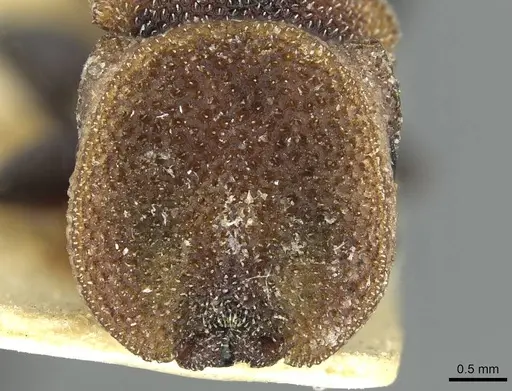
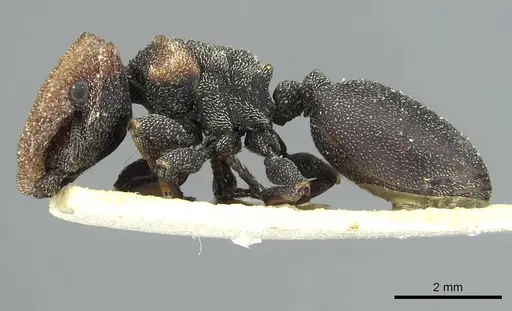
Cephalotes prodigiosus is a Neotropical ant species belonging to the prodigiosus clade, found throughout South America . These are arboreal ants known for their distinctive caste system - workers have unusually large, flattened heads that function as living doorways to protect nest entrances. Soldiers form a specialized caste with massive shield-like heads that block nest entrances against intruders. Their coloration is typically dark brown to black, and they have a characteristic flattened body shape that helps them navigate through arboreal nest sites in hollow twigs and branches. Unlike many Myrmicinae ants, they possess a functional stinger used for defense [AntWiki].
Quick Summary
- Difficulty: Medium
- Origin & Habitat: South America, Neotropical arboreal species found in forest canopies and tropical regions [1]. In the wild, they nest in hollow plant stems, twigs, and tree cavities in humid forest environments.
- Colony Type: Colony structure is not fully documented for this species. Based on typical Cephalotes patterns, likely single-queen colonies with distinct worker castes including minor workers and major workers (soldiers).
- Size & Growth:
- Queen: Size data unavailable, inferred from Cephalotes genus (~8-12mm)
- Worker: Size data unavailable, inferred from Cephalotes genus (4-7mm for minor workers, soldiers larger)
- Colony: Up to several thousand workers at maturity, estimated based on related Cephalotes species
- Growth: Slow, Cephalotes species typically develop slowly
- Development: Development timeline is unconfirmed for this species. Based on typical tropical Cephalotes patterns, expect several months before first workers emerge. (Development is slower than many common ant species. Expect extended founding phase.)
- Antkeeping:
- Temperature: Keep at 24-28°C, they are tropical ants requiring warm, stable conditions. A slight temperature gradient is beneficial.
- Humidity: High humidity is essential, aim for 70-80% relative humidity. These arboreal ants prefer consistently moist conditions similar to forest canopy microclimates.
- Diapause: No, as tropical ants, they do not require hibernation. Maintain warm conditions year-round.
- Nesting: Arboreal specialists, they nest in hollow twigs, plant stems, and small cavities. In captivity, they do well in small test tubes or acrylic nests with narrow chambers that mimic their natural hollow stem nesting sites. Provide some vertical climbing space.
- Behavior: Generally peaceful and non-aggressive. They possess a functional stinger but it is less medically significant to humans than fire ant stings [2]. Their main defense is the soldier caste blocking nest entrances with their large heads. They are relatively slow-moving compared to many ant species. Foraging activity is moderate, they will collect sugar sources and small prey. Escape risk is moderate, ensure standard barrier precautions.
- Common Issues: slow growth can frustrate beginners, colonies take months to establish and years to reach significant sizes, high humidity requirements make them prone to mold in poorly ventilated nests, arboreal nature means they need vertical space and climbing structures, horizontal-only nests are inadequate, wild-caught colonies may have specialized dietary needs and fail to adapt to captive food sources, soldier production is caste-dependent and may not occur until colony reaches moderate size
Housing and Nest Setup
Cephalotes prodigiosus is an arboreal species that naturally nests in hollow twigs, plant stems, and small tree cavities. In captivity, they adapt well to small test tubes with cotton stoppers or acrylic nests designed for small species. The key is providing appropriately sized chambers, too large and they may feel insecure, too small and they cannot move brood effectively. A nest with multiple small chambers connected by narrow tunnels mimics their natural hollow stem habitat. They appreciate some vertical climbing space outside the nest, as they would have in their arboreal environment. Avoid nests with large open spaces since these ants feel safest in tight, enclosed spaces. Some keepers provide small pieces of hollow twig or bamboo as supplemental nesting material.
Feeding and Diet
Like other Cephalotes species, these ants are omnivorous with a preference for sugar sources. Offer sugar water, honey, or diluted maple syrup regularly, this should be available at all times in a small container like a bottle cap. For protein, they accept small insects including fruit flies, pinhead crickets, and small mealworms. In the wild, they forage for nectar and honeydew from aphids and scale insects, so their diet leans toward carbohydrate-heavy sources with occasional protein. Feed protein 2-3 times per week, removing uneaten prey after 24 hours. Observe your colony's preferences, some Cephalotes colonies are pickier than others about accepting certain prey items. Fresh fruit occasionally offered is also sometimes accepted.
Temperature and Humidity
As a Neotropical species from South America, Cephalotes prodigiosus requires warm and humid conditions. Maintain temperatures between 24-28°C consistently, they do not tolerate cool conditions well and may become sluggish below 22°C. A small heat mat placed under one end of the nest can create a beneficial gradient, but always ensure they can move to cooler areas if needed. Humidity should be kept high at 70-80%, this can be achieved by keeping the water reservoir in their test tube or nest well-filled and ensuring the nest area does not dry out. However, balance humidity with adequate ventilation to prevent mold growth, which is a common problem with Cephalotes colonies. Mist the outworld occasionally but avoid waterlogging the substrate.
Colony Development and Growth
Cephalotes colonies grow slowly compared to many common ant species. A newly mated queen will seal herself into a small chamber and lay her first eggs, raising the brood entirely on her stored fat reserves. The founding phase typically takes several months before the first workers (nanitics) emerge. These initial workers are smaller than mature workers and help the colony expand. The development timeline is not specifically documented for this species, but expect it to be longer than many common ants. The soldier caste, one of the most distinctive features of Cephalotes, typically appears once the colony reaches several hundred workers. Patience is essential with this species, a colony may take 2-3 years to reach moderate size, and several more years to reach maturity.
Behavior and Defense
These ants are generally peaceful and not aggressive toward keepers. Their primary defense mechanism is the soldier caste, workers with massively enlarged heads that form a living door to block nest entrances. When threatened, soldiers position themselves at the nest entrance, using their shield-like heads to physically block access. They possess a functional stinger typical of the Myrmicinae subfamily, though it is less medically significant to humans than fire ant stings [2]. Foraging activity is relatively calm, they do not sprint or panic when the nest is disturbed. They communicate primarily through chemical signals and tactile interactions. One interesting behavior is their ability to glide, Cephalotes species can control their fall direction if dislodged from canopy height, though this is rarely observed in captivity. Their slow, deliberate movements make them an engaging species to observe.
Frequently Asked Questions
How long does it take for Cephalotes prodigiosus to produce first workers?
Expect several months from founding until the first nanitic workers emerge. This is slower than many common ant species due to their tropical biology and the time required for the queen to raise brood on stored reserves alone.
Are Cephalotes prodigiosus good for beginners?
They are not ideal for complete beginners due to their slow growth, high humidity requirements, and specific nesting needs. However, they are relatively peaceful and easy to handle once basic arboreal ant care is understood. Intermediate antkeepers with some experience should do well.
What do Cephalotes prodigiosus eat?
They are omnivorous with a sweet tooth. Offer sugar water, honey, or maple syrup constantly. For protein, provide small insects like fruit flies, pinhead crickets, or small mealworms 2-3 times per week.
Do they need hibernation?
No, as a Neotropical species they do not require hibernation. Keep them warm year-round at 24-28°C. Cool temperatures can slow or stop their development.
Can I keep multiple queens together?
This is not recommended. While colony structure is not fully documented for this species, Cephalotes are typically monogyne (single queen). Combining unrelated queens has not been studied and risks fatal aggression.
When should I move them to a formicarium?
Keep them in a test tube setup for the founding phase. Once the colony reaches 20-30 workers and the test tube becomes crowded, you can move them to a small acrylic nest or formicarium designed for small species.
Why are my Cephalotes dying?
Common causes include: low humidity (keep substrate consistently moist), temperatures below 22°C (provide heat), mold from poor ventilation (ensure airflow), or inadequate food (offer constant sugar and regular protein). Wild-caught colonies may also struggle to adapt to captive diets.
How big do colonies get?
Mature colonies can reach up to several thousand workers. This takes several years, Cephalotes are slow-growing ants that require patience. The soldier caste usually appears once the colony is well-established.
What makes Cephalotes prodigiosus different from other ants?
They belong to the distinctive prodigiosus clade and have specialized soldier castes with large shield-like heads used for nest defense. Their arboreal lifestyle and slow development also set them apart from more common ground-nesting ants.
Report an Issue
The current care sheet is based fully on literature. See inconsistencies, or something that's incorrect? Please , it will be resolved after review from an admin. Contributing to the blogs tab also helps providing information, to make us be able to further improve the caresheets. Thank you for your support!
References

Questa scheda di allevamento è concessa in licenza con CC BY-SA 4.0 .
Blog della comunità
CASENT0912616
Visualizza su AntWeb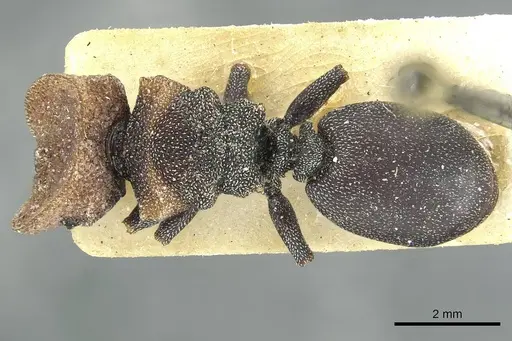
Letteratura
Caricamento mappa di distribuzione...Caricamento prodotti...