
Cardiocondyla schulzi
- Nom. sci.
- Cardiocondyla schulzi
- Tribù
- Crematogastrini
- Sottofamiglia
- Myrmicinae
- Autore
- Seifert, 2023
- Distribuzione
- Trovata in 0 paesi
Introduzione
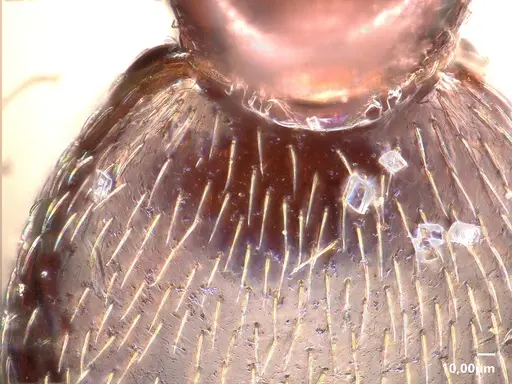
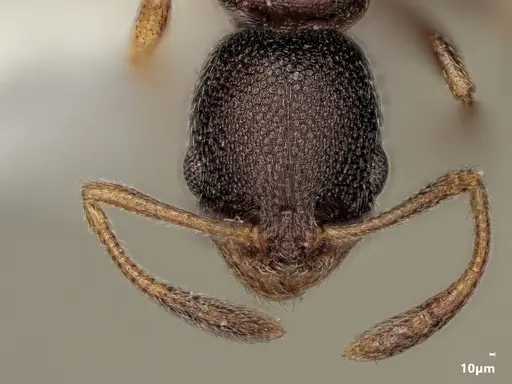
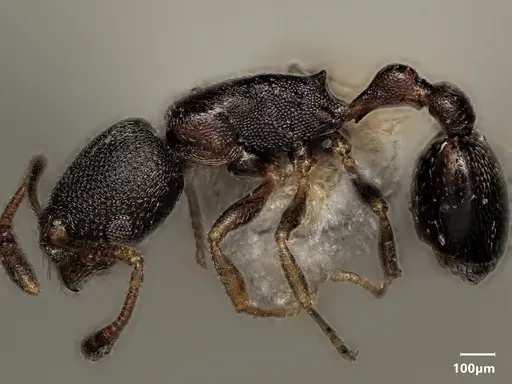
Cardiocondyla schulzi is an extremely tiny ant species, known only from specimens collected in Kerala, India near Thekkady in the Periyar Sanctuary at 500-1000m elevation . Workers are dark brown and belong to the Cardiocondyla minutior species group . The species was formally described in 2022 from specimens originally collected in 1997 . No biological data exists for this species - we have no information on colony structure, behavior, development, or captive care requirements. This is one of the least studied ant species available for antkeeping.
Quick Summary
- Difficulty: Unknown, likely challenging due to tiny size and lack of biological data
- Origin & Habitat: Known only from Kerala, India (approximately 9.60°N, 77.20°E) in the Periyar Sanctuary at 500-1000m elevation [1]. The region is tropical forest.
- Colony Type: Unconfirmed colony structure, no data exists for this species
- Size & Growth:
- Queen: Unknown, no queen specimens have been described [1]
- Worker: Size data unavailable, the species description provides head measurements (CS) but not total body length [1]
- Colony: Unknown, no colony size data exists
- Growth: Unknown
- Development: Unknown, no development data exists for this species (No development data available for this species)
- Antkeeping:
- Temperature: Unknown, no thermal tolerance data exists. Likely needs warm conditions based on tropical origin, but specific requirements are unconfirmed.
- Humidity: Unknown, no humidity data exists for this species. Keep substrate moderately moist and observe colony behavior.
- Diapause: Unknown, no data exists for this species. Tropical origin suggests they may not require strong diapause.
- Nesting: Use very small chambers and narrow passages scaled to their tiny size. Test tubes with fine mesh and tight barriers are essential.
- Behavior: No behavioral data exists for this species. Based on genus patterns, Cardiocondyla species are generally docile and non-aggressive. Their tiny size means excellent escape prevention is critical.
- Common Issues: no biological data exists, all care is speculative, extreme tiny size creates major escape risk, humidity control is critical for survival, lack of documented captive success means no proven protocols
Why This Species Is Challenging
Cardiocondyla schulzi presents unique challenges for antkeepers. First described in 2022 from specimens collected in 1997, no biological research exists on this species in captivity [1]. Every aspect of their care must be inferred from related species rather than proven protocols. Their tiny size creates significant practical challenges: they require specialized housing with chambers and passages scaled to their miniature dimensions, and escape prevention becomes critical since they can squeeze through gaps invisible to the naked eye. If you have experience with other Cardiocondyla species, you may have success with this species, but expect a steep learning curve and be prepared to experiment.
Housing and Escape Prevention
Housing Cardiocondyla schulzi requires attention to scale and security. Their tiny size means standard formicarium chambers will be far too large. Use test tubes with very fine mesh barriers, standard cotton may not stop them. Consider using compressed cotton or additional filter paper layers. Any connection points between the nest and outworld need double barriers. Some keepers use fluon on test tube rims, but its effectiveness on such tiny species is uncertain. The nest itself should have very small chambers. Keep the outworld simple and easy to secure, a small container with tight-fitting lid works better than elaborate setups.
Temperature and Humidity
This species comes from Kerala, India at approximately 500-1000m elevation in a tropical forest sanctuary [1]. The region stays warm year-round. Aim for a nest temperature in the warm range, around 24-28°C is a reasonable starting point, but observe your colony and adjust based on their behavior. For humidity, target moderate to high levels. Keep the substrate consistently moist but not waterlogged. A water tube connected to the test tube works well for maintaining humidity. Monitor condensation as a guide, some condensation should be present but not excessive. Avoid placing the nest near air conditioning or heating vents that could create drying airflows.
Feeding and Diet
No specific feeding data exists for Cardiocondyla schulzi. Based on typical Cardiocondyla diet patterns, they likely feed on small arthropods, honeydew, and nectar. For captive care, offer tiny prey items scaled to their size, springtails, fruit flies, and other micro-arthropods are appropriate. Standard ant feeders like mealworms are likely too large. Sugar water may be accepted, but offer it in very small quantities in a shallow container to prevent drowning. Given their tiny size, even a droplet of sugar water could be a drowning hazard. Observe carefully to see what they accept, and remove any uneaten food promptly to prevent mold.
Colony Development Expectations
Since no captive breeding data exists for this species, colony development expectations are speculative. Based on related Cardiocondyla species, expect slow growth initially. Colony size will likely remain modest given the minute worker size. Founding may take several months, and full colony development could take a year or more. Patience is essential. Monitor for signs of stress such as workers dying outside the nest, queen stopping egg production, or colony abandoning brood. If your colony thrives, you will be contributing novel information to antkeeping knowledge.
Frequently Asked Questions
How long does it take for Cardiocondyla schulzi to produce first workers?
Unknown, no captive development data exists for this species.
Can I keep Cardiocondyla schulzi in a test tube?
Yes, test tubes are likely the best housing option given their tiny size. Use fine mesh for barriers and ensure connections are secure.
What do Cardiocondyla schulzi ants eat?
No specific feeding data exists. Based on genus patterns, they likely accept tiny live prey like springtails and fruit flies, plus sugar water in very small quantities. Remove uneaten food promptly.
Are Cardiocondyla schulzi good for beginners?
No. This species is not recommended for beginners. Almost no biological data exists, their extreme tiny size creates practical challenges, and no proven captive protocols have been developed.
Do Cardiocondyla schulzi ants sting?
Unknown for this specific species. Cardiocondyla species are generally docile and non-aggressive.
How big do Cardiocondyla schulzi colonies get?
Unknown, no colony size data exists for this species.
Do Cardiocondyla schulzi need hibernation?
Unknown. As a tropical species from Kerala, India, they likely do not require a true hibernation. However, some reduction in activity during cooler months may occur.
Why are my Cardiocondyla schulzi escaping?
Their extreme tiny size means they can squeeze through gaps invisible to the human eye. Use fine mesh, double barriers, and check all connection points.
Can I keep multiple Cardiocondyla schulzi queens together?
Unknown, no colony structure data exists for this species.
What temperature should I keep Cardiocondyla schulzi at?
No specific thermal tolerance data exists. A reasonable starting point is 24-28°C based on their tropical origin, but observe colony behavior and adjust if workers seem sluggish or overly active.
Report an Issue
The current care sheet is based fully on literature. See inconsistencies, or something that's incorrect? Please , it will be resolved after review from an admin. Contributing to the blogs tab also helps providing information, to make us be able to further improve the caresheets. Thank you for your support!
References

Questa scheda di allevamento è concessa in licenza con CC BY-SA 4.0 .
Blog della comunità
ANTWEB1048535
Visualizza su AntWeb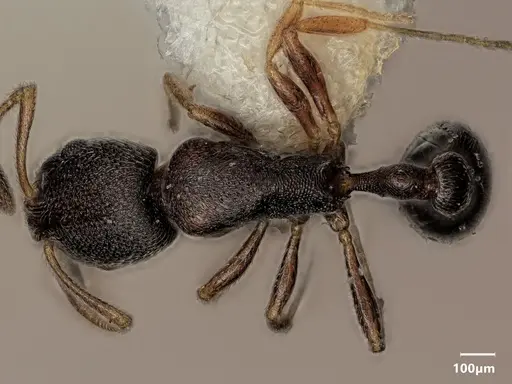
Letteratura
Caricamento mappa di distribuzione...Caricamento prodotti...