
Cardiocondyla parvinoda
- Nom. sci.
- Cardiocondyla parvinoda
- Tribù
- Crematogastrini
- Sottofamiglia
- Myrmicinae
- Autore
- Forel, 1902
- Distribuzione
- Trovata in 0 paesi
Introduzione
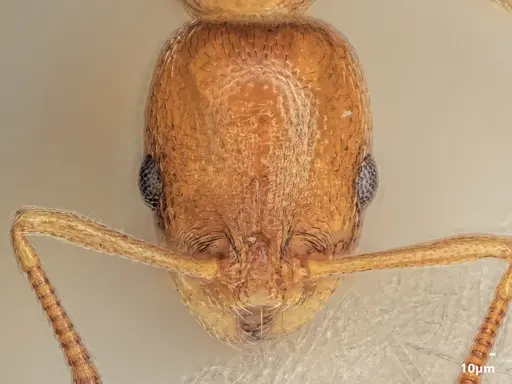
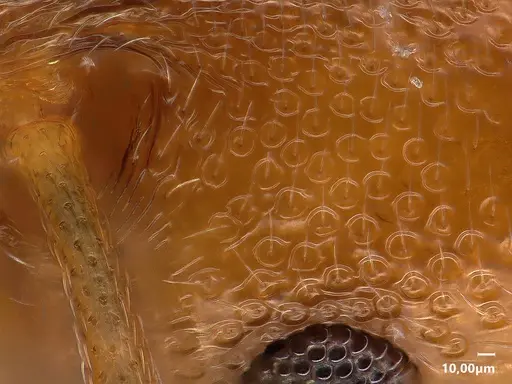
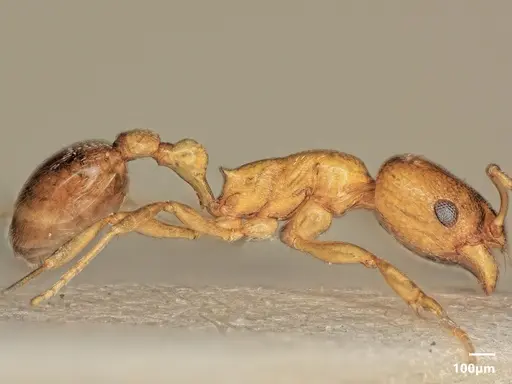
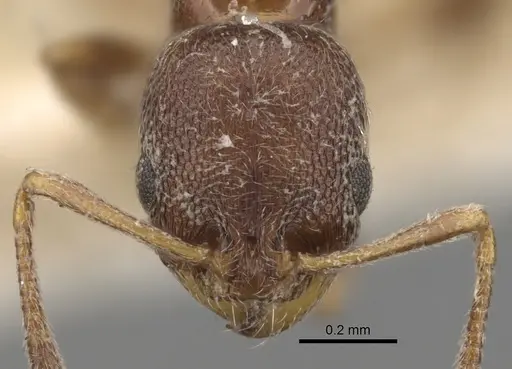
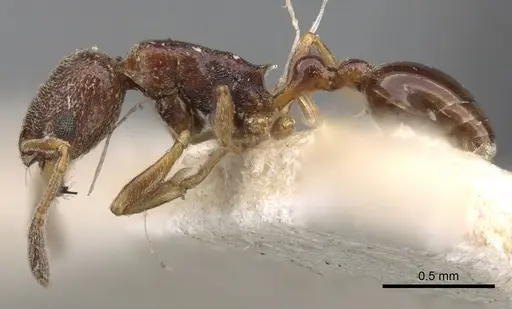
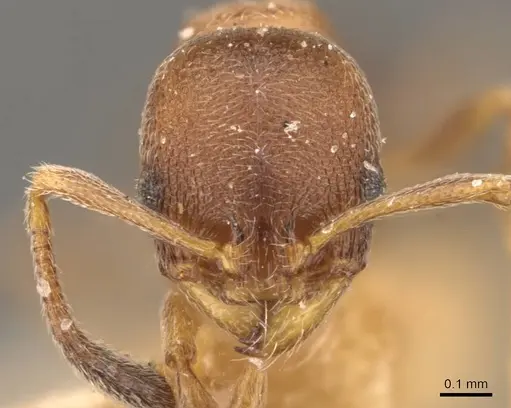
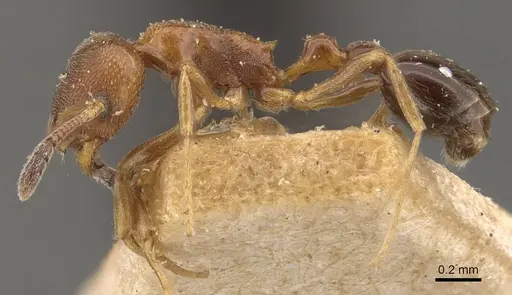
Cardiocondyla parvinoda is a tiny ant from the C. minutior group. Workers measure 2–2.2 mm and are dark reddish‑brown with a moderately elongated head, short triangular spines, and a very small postpetiole (the segment before the abdomen). The top of the thorax is noticeably shiny . Originally described from Pune, India, it has been recorded in India, Thailand, and the Philippines (Luzon), from lowlands up to about 1300 m . Despite being described in 1902,almost nothing is known about its biology, colony structure, or wild behavior . For antkeepers, this means you will be pioneering its captive care, every observation you make will be new information.
Quick Summary
- Difficulty: Medium
- Origin & Habitat: Native to the northern Oriental region (India, Philippines, Thailand) between 14–23°N, from lowlands to about 1300 m. The type locality is Pune (Poona), Maharashtra, India [2][3][1].
- Colony Type: Unconfirmed, colony structure (single‑queen vs multi‑queen) has not been documented for this species [3].
- Size & Growth:
- Queen: Not documented, no queen specimens have been described [3].
- Worker: 2–2.2 mm [1]
- Colony: Unknown, no colony size data exists. Related C. minutior group species typically form small colonies [2].
- Growth: Unknown
- Development: Unknown, no direct measurements exist. Based on typical Cardiocondyla patterns, expect 4–8 weeks at warm temperatures, but this is an estimate. (No development data exists for this species. You will need to establish the timeline through observation.)
- Antkeeping:
- Temperature: Aim for 24–28 °C based on its tropical/subtropical range. A gentle gradient down to 22 °C is fine. Room temperature (20–24 °C) may work, but a small heat mat on one side of the nest helps maintain optimal warmth [2].
- Humidity: Keep the nest substrate moderately moist. These ants come from monsoon regions, so they likely tolerate variable humidity. Provide a water tube and ensure the nest doesn’t dry out completely.
- Diapause: Unknown, no data on overwintering. Given the tropical/subtropical origin, they likely do not require true hibernation, but activity may slow in cooler months.
- Nesting: In nature, Cardiocondyla species typically nest in soil under stones or in rotting wood. A small test tube works well for founding. For an established colony, a Y‑tong (AAC) or plaster nest with tiny chambers (scaled to 2 mm ants) suits them. The very small postpetiole suggests they prefer tight, confined spaces [2].
- Behavior: Nothing specific is known about this species’ behavior. However, like other Myrmicinae, it likely uses a smearing defense mechanism, smearing venom onto attackers with a modified flattened stinger rather than piercing. Cardicondyla ants are generally docile, non‑aggressive, and slow‑moving. Their tiny 2 mm size means they can slip through standard mesh, use fine mesh (≤0.5 mm) or fluon barriers to prevent escape. Alternative male reproductive tactics (winged vs wingless males) are common in the genus, but unstudied in C. parvinoda [4].
- Common Issues: completely unstudied biology, you are pioneering captive care with no established guidelines., tiny 2 mm size requires extremely fine mesh and careful escape prevention., no documented colony structure, you may discover unexpected queen behavior., slow growth and small size make them vulnerable to mold and mite infestations if overfed., lack of data means you have no benchmarks to compare against.
Housing and Setup
Because these ants are only 2 mm [1], you need appropriately scaled housing. For a founding queen, a standard test tube setup works, fill it one‑third with water, plug with cotton, and wrap the front in aluminium foil to create a dark chamber. The queen will seal herself in, but the exact founding method is unconfirmed. For an established colony, use a Y‑tong (AAC) or plaster nest with tight chambers and narrow tunnels. The very small postpetiole measurements documented by Seifert suggest they prefer confined spaces [2]. Escape prevention is critical: use fine mesh (≤0.5 mm) or fluon on barrier surfaces. A small outworld for feeding completes the setup.
Feeding and Diet
No specific dietary studies exist for C. parvinoda [3]. Based on typical Cardiocondyla behavior, they are likely omnivorous, accept sugar water or honey water, plus small protein sources like fruit flies, springtails, or pinhead crickets. In the wild, related species forage for honeydew and small arthropods. Offer a drop of sugar water twice a week and tiny prey items. Remove uneaten prey within 24 hours to prevent mold. Because of their tiny size, prey must be appropriately scaled.
Temperature and Seasonal Care
C. parvinoda comes from tropical to subtropical regions (India, Thailand, Philippines), so it prefers warmth. Aim for 24–28 °C in the nest area. Room temperature (20–24 °C) may be acceptable, but a heating cable on one side can help reach optimal temperatures [2]. No data exists on diapause. Given its geographic origin, it likely does not need true hibernation, but you may see reduced activity in cooler months, that is normal. Avoid temperatures below 18 °C or above 32 °C.
Pioneering a New Species in Captivity
This is the most important section: C. parvinoda has never been kept in captivity before. The scientific literature states that nothing is known of its biology [1][3]. You are genuinely pioneering its husbandry. Document everything, founding behaviour, time to first workers, food acceptance, temperature preferences, and any unusual behaviour. Your observations could become foundational knowledge. Expect a learning curve. Start with just one founding queen if possible, and be ready to adjust care based on the colony’s responses.
Related Species and What We Can Infer
While C. parvinoda itself is unstudied, it belongs to the C. minutior group. Related species like C. minutior and C. tjibodana form small colonies, often with single queens, though wingless (ergatoid) replacement queens are common in the genus. The genus is famous for alternative male reproductive tactics, some species have both winged disperser males and wingless ergatoid males that stay in the nest and compete for reproduction [5][4]. Whether C. parvinoda shares these traits is unknown. It is the largest species in the C. minutior group, which might hint at slightly faster growth or larger colonies, but that is speculation [2].
Frequently Asked Questions
How long does it take for Cardiocondyla parvinoda to have first workers?
This is unknown, no development data exists. Based on typical Cardiocondyla patterns at 24–28 °C, you might expect first workers (nanitics) in 4–8 weeks, but this is a rough estimate. You will need to establish the timeline by careful observation.
Can I keep Cardiocondyla parvinoda in a test tube?
Yes. A standard test tube with a water reservoir and cotton plug is ideal for a founding queen. The tiny 2 mm size makes it well‑suited for their founding stage [1].
What do Cardiocondyla parvinoda ants eat?
No specific diet data exists. Based on related species, they likely accept sugar water or honey water plus small live prey like fruit flies or springtails. Start with a tiny drop of honey water and small insects, then adjust based on what your colony accepts.
Are Cardiocondyla parvinoda ants aggressive?
Cardiocondyla ants are generally docile and not known for stinging. Nothing specific has been documented for this species, but it is expected to be peaceful like other members of the genus.
Do Cardiocondyla parvinoda need hibernation?
Unknown, no data exists. Given its tropical/subtropical origin (India, Thailand, Philippines), it likely does not require a true hibernation period. Activity may slow during cooler months, but deliberate cooling is probably unnecessary [2][3].
How big do Cardiocondyla parvinoda colonies get?
Unknown, no colony size data exists. Related C. minutior group species typically form small colonies, possibly a few hundred workers at most. Your observations will establish this benchmark [2].
Are Cardiocondyla parvinoda good for beginners?
This species is not recommended for complete beginners because of the complete lack of captive care data. Experienced antkeepers interested in pioneering a new species will find it an exciting challenge. The tiny size requires strict escape prevention [1].
Why are my Cardiocondyla parvinoda dying?
Without established benchmarks, troubleshooting is difficult. Common issues with unstudied species include: incorrect humidity (too dry or too wet), temperature stress, mold from overfeeding, or escape through tiny gaps. Document your conditions and adjust gradually. You are learning alongside the colony.
When should I move Cardiocondyla parvinoda to a formicarium?
Wait until the colony has grown substantially, likely when you have 20+ workers. Their tiny 2 mm size means they can stay in test tubes or small setups longer than larger species. Move them when the test tube becomes crowded or workers avoid the water tube [1].
Do Cardiocondyla parvinoda queens fight?
Unknown, no data exists on queen interactions for this species. Many Cardiocondyla species can be monogyne (single queen), but this is unconfirmed for C. parvinoda. If you obtain multiple founding queens, keep them separate until you understand their social structure [3].
Report an Issue
The current care sheet is based fully on literature. See inconsistencies, or something that's incorrect? Please , it will be resolved after review from an admin. Contributing to the blogs tab also helps providing information, to make us be able to further improve the caresheets. Thank you for your support!
References

Questa scheda di allevamento è concessa in licenza con CC BY-SA 4.0 .
Blog della comunità
ANTWEB1048530
Visualizza su AntWeb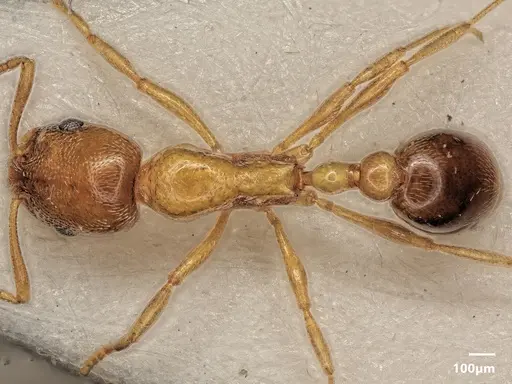
CASENT0281807
Visualizza su AntWeb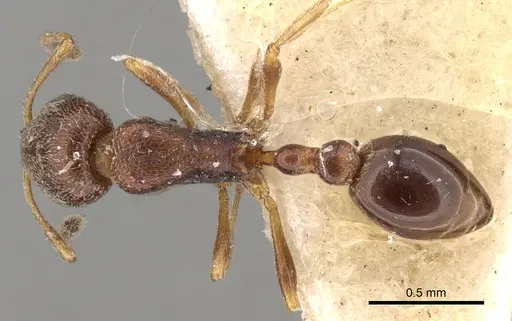
CASENT0908346
Visualizza su AntWeb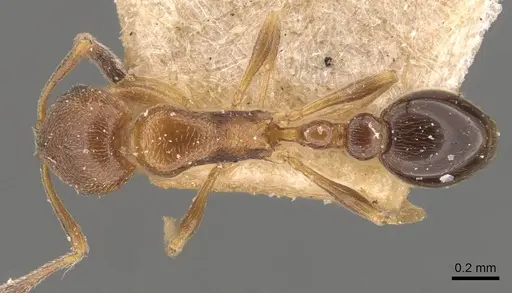
Letteratura
Caricamento mappa di distribuzione...Caricamento prodotti...