
Camponotus fabricator
- Nom. sci.
- Camponotus fabricator
- Sottogenere
- Tanaemyrmex
- Tribù
- Camponotini
- Sottofamiglia
- Formicinae
- Autore
- Smith, 1858
- Distribuzione
- Trovata in 0 paesi
Introduzione
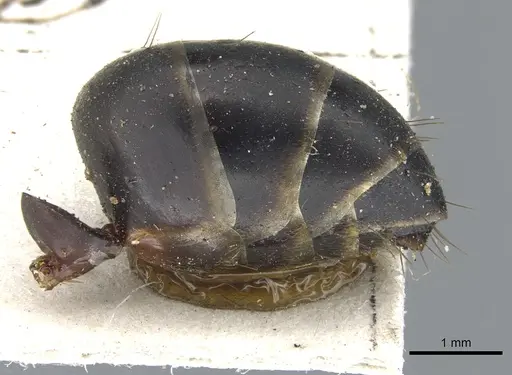
Camponotus fabricator is a carpenter ant originally described from St Helena Island in the South Atlantic. Workers measure approximately 11mm total length, with major workers around 6-7mm and minor workers around 3-4mm . They have a distinctive bicolored appearance: dark brown head, gaster, and upper mesosoma, with brownish-red legs and brownish-yellow antennae. The body has very short, sparse hairs and the tibiae have distinctive erect bristles . This species is historically significant as the only ant species known solely from St Helena, though it may now be extinct in the wild .
Quick Summary
- Difficulty: Unknown, species may be extinct
- Origin & Habitat: St Helena Island, South Atlantic Ocean. Likely an exotic species introduced through imported goods [2]. No natural habitat data exists as the species may be extinct.
- Colony Type: Unconfirmed. Based on typical Camponotus patterns, likely single-queen colonies, but colony structure was never documented.
- Size & Growth:
- Queen: Approximately 5.5 lines (~10mm) based on original description [1].
- Worker: Major workers ~3.5 lines (6-7mm), minor workers ~2 lines (3-4mm). Total length approximately 11mm [1][2].
- Colony: Unknown, no colony size data exists
- Growth: Unknown, no development data exists
- Development: Unconfirmed. Based on typical Camponotus genus patterns, likely 6-10 weeks at optimal temperature, but this is an estimate only. (No direct development data exists for this species. Estimates based on related Camponotus species.)
- Antkeeping:
- Temperature: Unknown for this species. Start around 22-26°C and observe colony activity, adjusting based on behavior.
- Humidity: Unknown. Standard Camponotus care suggests moderate humidity with a moist nest chamber and drier areas available.
- Diapause: Unknown. St Helena has mild subtropical climate with no true winter. Related Camponotus species from similar climates may not require formal hibernation.
- Nesting: No natural nesting data exists. Based on genus patterns, likely nests in wood or under stones. In captivity, standard Camponotus setups (test tubes, Y-tong nests) would be appropriate.
- Behavior: Not documented. Based on typical Camponotus genus behavior, they are likely moderate foragers with standard carpenter ant behavior. Escape risk is moderate given their ~11mm size, standard barriers should suffice but fine mesh is recommended.
- Common Issues: species may be extinct in the wild, no wild populations known to collect from., no biological data exists, all care is based on genus-level inference., historical specimen quality issues make identification uncertain., introduced species status means natural ecology is unknown.
Species Status and History
Camponotus fabricator was originally described by Frederick Smith in 1858 from St Helena Island, making it historically significant as the only ant species known solely from this South Atlantic location [1]. The species has undergone several taxonomic revisions, it was once considered a variety of Camponotus sylvaticus and a subspecies of Camponotus maculatus before being elevated to full species status [2].
Troublingly, the type specimen differs from Smith's original description. He described the species as "smooth and shining" but the existing type specimen is dull with fine reticulate sculpture [2]. This, combined with the species' apparent absence from St Helena in modern surveys, suggests C. fabricator may now be extinct in the wild. Experts believe it was likely an exotic species introduced to St Helena through imported goods, similar to how other Camponotus species have been documented arriving on imported materials [2].
For antkeepers, this species represents a unique opportunity to potentially work with a historically significant but nearly extinct taxon. However, the lack of biological data and uncertain identification means keeping this species carries significant uncertainty.
Identification and Morphology
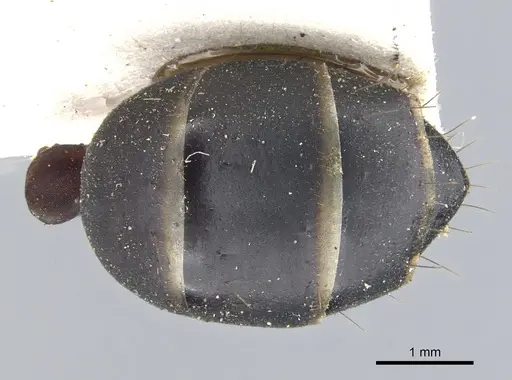
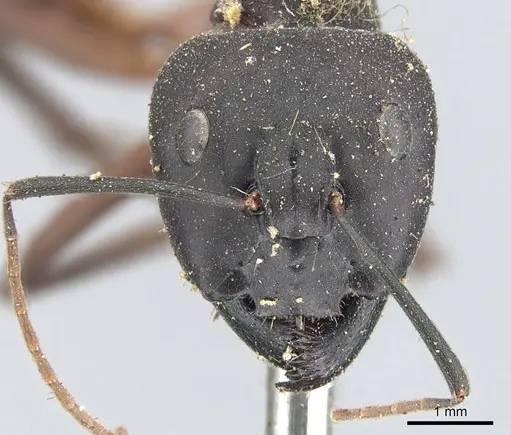
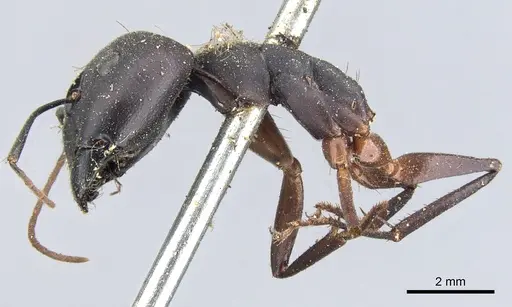
Workers measure approximately 11mm total length, making them medium-sized among Camponotus species [2]. The type specimen shows distinctive coloration: dark brown head, gaster, and upper mesosoma contrasting with brownish-red legs and brownish-yellow funiculus (antenna segments) [2].
The pilosity (long hairs) is poorly developed, only four hairs on the pronotum, three on the propodeum, and about five total hairs on the central part of the abdominal tergites. The body has very short, sparse pubescence (short hairs). The tibiae (lower leg segments) have distinctive erect bristles. The scapes (first antenna segments) are relatively short.
This combination of features, the bicolored body, sparse hairs, and bristly tibiae, does not match any known Camponotus species from Europe, North America, Africa, or India, suggesting either a rare introduced species or potentially an extinct endemic [2].
Care Recommendations
Since no biological data exists for this species, all care recommendations must be based on inference from related Camponotus species. Start with standard Camponotus husbandry: test tube setups for founding colonies, transitioning to formicaria as the colony grows. Temperature should begin around 22-26°C, observe your colony's activity levels and adjust accordingly. If workers cluster near heat sources, increase slightly, if they avoid heated areas, reduce temperature.
Humidity should be moderate, keep the nest chamber moist but allow some drier areas for the ants to regulate their own conditions. Feed standard Camponotus diet: sugar water or honey as constant energy source, with protein (insects, mealworms) offered 2-3 times weekly. Given the uncertain status of this species in captivity, detailed notes on your colony's preferences would be scientifically valuable.
Escape prevention should be standard for medium-sized ants, tight-fitting lids and barrier gel or fluon on enclosure edges should prevent escapes.
Scientific Significance
Camponotus fabricator represents an unusual case in myrmecology, a species known only from historical specimens that may no longer exist in the wild. The original type specimen from 1858 remains the primary reference point, and even it has discrepancies from the original description [2].
For antkeepers, this species offers a chance to work with a potentially unique genetic lineage that might otherwise be lost. However, the lack of confirmed biological data means significant uncertainty in care. If you maintain a colony of what appears to be C. fabricator, careful documentation of behavior, development, and colony structure would contribute valuable scientific knowledge about this mysterious species.
The possibility that C. fabricator represents an introduced exotic that never established, or a species that went extinct shortly after introduction, makes each captive colony potentially significant for understanding the species' true identity and requirements.
Report an Issue
The current care sheet is based fully on literature. See inconsistencies, or something that's incorrect? Please , it will be resolved after review from an admin. Contributing to the blogs tab also helps providing information, to make us be able to further improve the caresheets. Thank you for your support!
References

Questa scheda di allevamento è concessa in licenza con CC BY-SA 4.0 .
Blog della comunità
CASENT0903602
Visualizza su AntWeb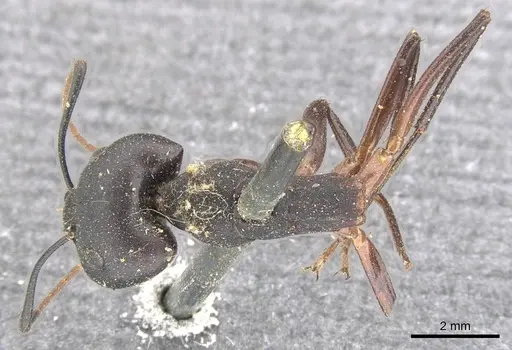
Letteratura
Caricamento mappa di distribuzione...Caricamento prodotti...