
Camponotus adustus
- Nom. sci.
- Camponotus adustus
- Sottogenere
- Myrmamblys
- Tribù
- Camponotini
- Sottofamiglia
- Formicinae
- Autore
- Viehmeyer, 1916
- Distribuzione
- Trovata in 0 paesi
Introduzione
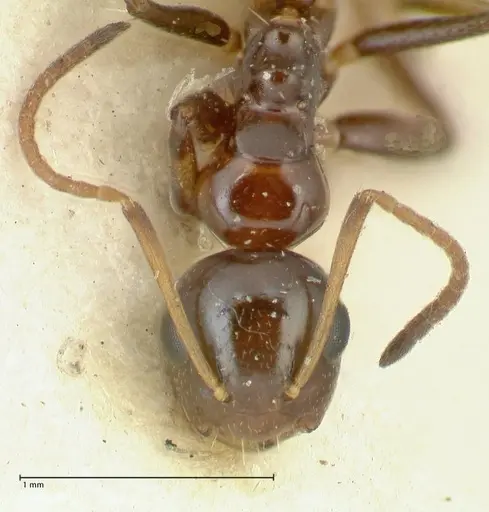
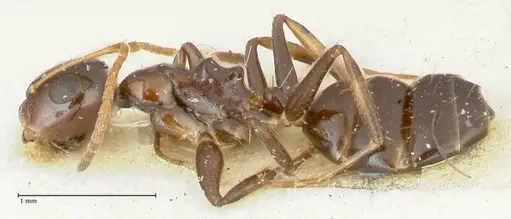
Camponotus adustus is a small to medium-sized carpenter ant native to Singapore in the Indomalaya region. Workers have a predominantly shiny body with sparse standing hairs - typically just one pair of long setae on the mesonotum and another pair at the junction of the propodeum's dorsal and declivitous faces. The minor worker has a distinctive appearance with striking anterior and posterior protuberances on the propodeum, and both the dorsal and declivitous faces appear notably concave when viewed from the side . This species was originally described as a subspecies of Camponotus bellus but was elevated to full species status in 2021, where it co-occurs with C. bellus in Singapore . Very limited biological data exists for this species - only the worker caste has been described, and nothing is known about their colony structure, founding behavior, or specific care requirements in captivity.
Quick Summary
- Difficulty: Medium
- Origin & Habitat: Singapore in the Indomalaya region [2]. Specific habitat details are not documented, but typical Camponotus species in this region nest in rotting wood, under bark, or in soil cavities in forested areas.
- Colony Type: Unconfirmed. Likely single-queen (monogyne) colonies based on typical Camponotus patterns, but this has not been directly studied for this species.
- Size & Growth:
- Queen: Estimated 8-12mm based on typical Camponotus genus dimensions, inferred from genus patterns
- Worker: Estimated 4-8mm based on typical Camponotus minor worker size, inferred from genus patterns
- Colony: Unknown for this species. Based on similar Singapore Camponotus species, likely reaches several hundred workers.
- Growth: Moderate, typical for Camponotus genus
- Development: Estimated 6-10 weeks based on typical Camponotus development at warm temperatures, inferred from genus patterns (Development time is estimated from related species, actual timeline for C. adustus has not been documented. Warmer temperatures within the suitable range may accelerate development.)
- Antkeeping:
- Temperature: Keep around 24-28°C with a slight gradient. Singapore is a tropical environment, so these ants prefer warm, stable conditions. A heating cable on one side of the nest can help maintain warmth without overheating.
- Humidity: Moderate to high humidity (60-80%). Keep the nest substrate consistently moist but not waterlogged. Provide a water tube for drinking access.
- Diapause: No true diapause required given their tropical origin. Some reduced activity during cooler months may occur, but they do not require hibernation like temperate species.
- Nesting: In captivity, Y-tong (AAC) nests, plaster nests, or naturalistic setups with rotting wood work well. They prefer tight, dark chambers. Avoid overly dry conditions.
- Behavior: Typical Camponotus temperament, generally calm and not overly aggressive, but will defend the nest if threatened. Workers are moderate foragers and search for honeydew, nectar, and protein sources. Escape risk is moderate, use standard barrier methods but no special escape prevention required beyond typical Camponotus care.
- Common Issues: very limited species-specific information means care is largely inferred from genus patterns, no documented founding behavior, queen may be claustral like other Camponotus but this is unconfirmed, wild-caught colonies may be difficult to source as the species has a very restricted range, tropical origin means they may be sensitive to temperature drops, keep warm year-round, colony growth may be slow initially as they establish their first workers
Nest Preferences
In the wild, Camponotus species in tropical Singapore typically nest in rotting wood, under loose bark, or in soil cavities in forested areas. For captive care, Y-tong (AAC) nests work very well as they provide the dark, tight chambers these ants prefer. Plaster nests or naturalistic setups with pieces of rotting wood can also work. The key is providing chambers that are appropriately sized for their body size, not too large or open. Keep the nest in a quiet location with minimal vibration and avoid direct sunlight. A small outworld connected to the nest allows workers to forage for food.
Feeding and Diet
Like other Camponotus species, C. adustus likely accepts a varied diet including sugar sources (honey water, sugar water, nectar) and protein (insects, mealworms, crickets). Carpenter ants are omnivorous and will collect honeydew from aphids if available. Feed sugar water constantly using a cotton swab or small container, and offer protein prey 2-3 times per week. Remove uneaten prey after 24-48 hours to prevent mold. Fresh fruit can occasionally be offered as a sugar source. Based on typical Camponotus patterns, they are not specialized predators and will readily accept most standard ant foods.
Temperature and Care
As a tropical species from Singapore, C. adustus requires warm conditions. Keep the nest area at 24-28°C (75-82°F). A heating cable placed on top of the nest (never underneath where it can dry out the substrate) can help maintain warmth, especially in cooler rooms. Room temperature in most homes may be sufficient if kept in a warm room, but monitor with a thermometer. They do not require hibernation and should be kept warm year-round. Sudden temperature drops should be avoided. Maintain moderate humidity (60-80%) in the nest substrate.
Behavior and Temperament
Camponotus ants are generally known for being calm and manageable in captivity. Workers are moderately active and will forage in the outworld for food. They are not particularly aggressive toward keepers but will defend the nest if disturbed. The major workers (if present) have powerful mandibles but are unlikely to bite unless handled roughly. Escape prevention should be standard, these ants are not particularly small, so standard barriers like fluon on test tube rims or formicarium edges work well. They are primarily nocturnal or crepuscular foragers in nature, so activity may be higher during evening hours.
Frequently Asked Questions
How long does it take for Camponotus adustus to produce first workers?
The exact timeline is unconfirmed for this species, but based on typical Camponotus development, expect 6-10 weeks from egg to first worker at warm temperatures (around 26°C). The queen will remain sealed in her founding chamber until the first workers (nanitics) emerge.
What do Camponotus adustus ants eat?
They likely accept standard ant foods: sugar water or honey as a constant carbohydrate source, and protein like mealworms, crickets, or other insects offered 2-3 times weekly. They are omnivorous like other carpenter ants.
What temperature do Camponotus adustus ants need?
Keep them warm at 24-28°C (75-82°F). As a tropical species from Singapore, they do not tolerate cool temperatures well. A heating cable can help maintain warmth.
Is Camponotus adustus a good species for beginners?
This species is not well-documented in the antkeeping hobby, so it may be challenging for beginners due to limited species-specific information. However, following standard Camponotus care guidelines should work well. The difficulty is moderate, not the easiest species but not the most demanding either.
How big do Camponotus adustus colonies get?
The maximum colony size is unknown for this species. Based on similar regional Camponotus species, colonies likely reach several hundred to a thousand workers over several years.
Do Camponotus adustus ants need hibernation?
No, they do not require hibernation. As a tropical species from Singapore, they should be kept warm year-round. Some reduced activity during cooler periods may occur, but they do not need a diapause period.
What type of nest is best for Camponotus adustus?
Y-tong (AAC) nests work very well for this species. They prefer tight, dark chambers. Plaster nests or naturalistic setups with rotting wood are also suitable. Avoid nests that are too dry or have overly large, open chambers.
Can I keep multiple Camponotus adustus queens together?
This has not been studied for this species. Based on typical Camponotus behavior, single-queen colonies are most common. Combining unrelated foundress queens is not recommended without evidence they can coexist peacefully.
Where is Camponotus adustus found?
This species is known only from Singapore in the Indomalaya region. It was elevated from subspecies to species status in 2021 and co-occurs with Camponotus bellus in that location.
Report an Issue
The current care sheet is based fully on literature. See inconsistencies, or something that's incorrect? Please , it will be resolved after review from an admin. Contributing to the blogs tab also helps providing information, to make us be able to further improve the caresheets. Thank you for your support!
References

Questa scheda di allevamento è concessa in licenza con CC BY-SA 4.0 .
Blog della comunità
FOCOL2281
Visualizza su AntWeb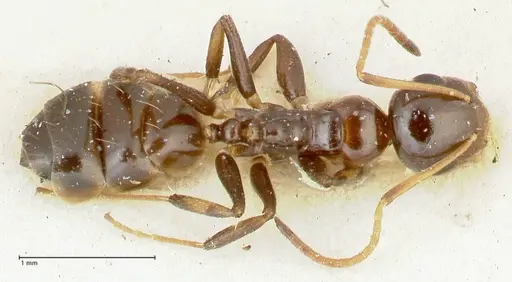
Letteratura
Caricamento mappa di distribuzione...Caricamento prodotti...