
Brachyponera brevidorsa
- Nom. sci.
- Brachyponera brevidorsa
- Tribù
- Ponerini
- Sottofamiglia
- Ponerinae
- Autore
- Xu, 1994
- Distribuzione
- Trovata in 0 paesi
Introduzione
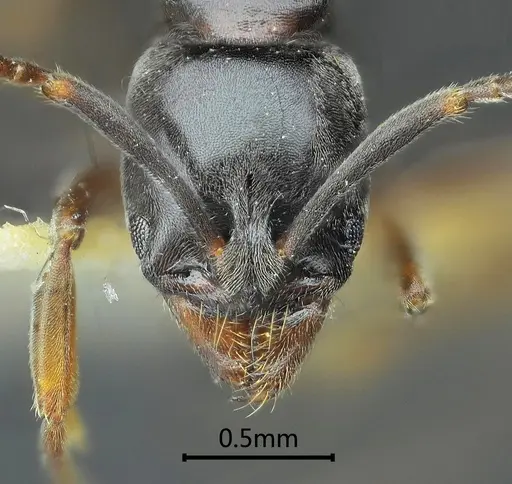
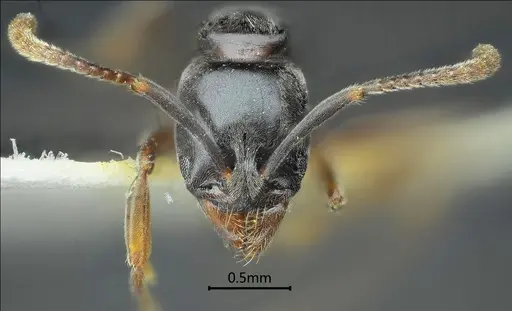
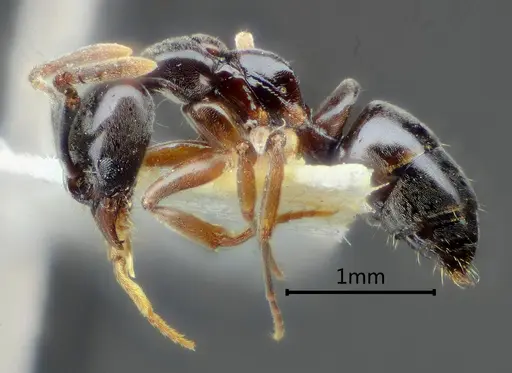
Brachyponera brevidorsa is a small ponerine ant native to southern China, measuring 3.6-4.0mm in total body length . Workers have an entirely black body with yellowish-brown mandibles, antennae funiculus, and legs . The head is roughly trapezoidal with a straight occipital margin, and the propodeum is notably lower than the pronotum and mesonotum, with the dorsal surface clearly shorter than the declivity . This species was described from Yunnan Province at elevations around 1800m and is known from multiple locations in southwestern China including Yunnan, Guizhou, and Guangxi . As a member of the subfamily Ponerinae, these ants possess a functional stinger and are predatory in nature.
Quick Summary
- Difficulty: Medium
- Origin & Habitat: Native to southwestern China, specifically Yunnan, Guizhou, and Guangxi provinces. Found at elevations of 1800-1880m in mountainous regions [1][2]. The type locality in Baoshan, Yunnan experiences moderate temperatures typical of high-altitude subtropical areas.
- Colony Type: Colony structure is unconfirmed.
- Size & Growth:
- Queen: Size data unavailable, queen measurements not documented in available literature
- Worker: 3.6-4.0mm total length [1]
- Colony: Maximum colony size is unknown, no documented worker counts for this species
- Growth: Growth rate is unconfirmed
- Development: Timeline is unconfirmed for this species (Development data not available in current literature.)
- Antkeeping:
- Temperature: Keep at 22-26°C. Based on the Yunnan origin in subtropical highlands, they prefer warm but not hot conditions. A heating cable on one side of the nest creates a gradient allowing workers to self-regulate.
- Humidity: Maintain moderate humidity. Keep the nest substrate moist but not waterlogged. These ants come from a region with moderate moisture levels.
- Diapause: Diapause requirements are unconfirmed for this species.
- Nesting: Use a nest that retains moisture well, Y-tong (AAC), plaster nests, or test tube setups work well. Provide a small outworld for foraging. Given their small size, ensure escape prevention is adequate.
- Behavior: Ponerine ants are typically more defensive than many other ant subfamilies due to their functional stingers. Workers are active foragers and likely hunt small invertebrates. They may be more aggressive when defending the nest. Escape risk is moderate given their small size, standard barriers should suffice but fine mesh is recommended.
- Common Issues: small colony fragility, Ponerine colonies often grow slowly and stress easily, stinger defense, workers may sting when threatened, causing mild pain, humidity management, too dry causes brood death, too wet risks mold, slow growth, beginners may lose patience and overfeed, leading to mold problems, escape risk, their small size means they can slip through standard barriers
Nest Preferences
In the wild, Brachyponera brevidorsa nests in soil or under stones in mountainous regions of Yunnan [1]. For captive care, a moisture-retaining nest works best, Y-tong (AAC) nests or plaster nests maintain the humid conditions these ants prefer. Test tube setups can work for founding colonies but monitor moisture levels carefully. The nest should have chambers scaled to their small size. Provide a small outworld connected to the nest for foraging. Ensure the setup allows for proper humidity control without becoming waterlogged.
Feeding and Diet
As a Ponerinae ant, Brachyponera brevidorsa is predatory and will hunt small invertebrates. Offer small live prey such as fruit flies, pinhead crickets, mealworms, and other small insects. They likely accept protein-rich foods readily. Sugar sources may be accepted but are not a primary dietary need for this group, focus on providing regular protein prey. Feed small amounts 2-3 times per week, adjusting based on colony size and consumption. Remove uneaten prey within 24 hours to prevent mold.
Temperature and Care
Maintain nest temperatures around 22-26°C based on their Yunnan origin in subtropical highlands [1]. A heating cable on one side of the nest creates a temperature gradient allowing workers to regulate their own exposure. Avoid high temperatures above 30°C as this can stress the colony. Monitor colony activity, workers clustering near heat sources indicates they need more warmth.
Behavior and Temperament
Brachyponera brevidorsa workers are active foragers with a defensive nature typical of Ponerinae ants. They possess a functional stinger and may use it when threatened or handling prey. Workers will hunt and subdue prey, then carry it back to the nest. The colony may be more aggressive in defending brood and queen compared to more docile ant genera. Handle with care during nest maintenance, these ants are more likely to sting than many common ant pets.
Growth and Development
Ponerine ants typically develop more slowly than many common ant genera. The first workers (nanitics) will be smaller than mature workers. Colony growth is gradual, expect several months before seeing significant numbers of workers. The queen will remain in the nest chamber caring for the initial brood. Once the first workers emerge, they will take over foraging and brood care duties. Patience is essential with this species as rapid growth should not be expected.
Frequently Asked Questions
How long does it take for Brachyponera brevidorsa to produce first workers?
The specific development timeline for this species is not documented. Expect several months for the first workers to emerge at optimal temperatures.
Do Brachyponera brevidorsa ants sting?
Yes. As a member of the subfamily Ponerinae, they possess a functional stinger. The sting causes mild pain similar to a bee sting. They are more likely to use their stinger when threatened compared to many common ant pets.
What do Brachyponera brevidorsa eat?
They are predatory ants that hunt small invertebrates. Feed them small live prey like fruit flies, pinhead crickets, and mealworms. They likely accept protein-rich foods readily. Sugar water may be accepted but protein should be the primary food source.
Are Brachyponera brevidorsa good for beginners?
They are rated as medium difficulty. They require more specific humidity and temperature conditions than hardy genera like Lasius. Their slower growth and defensive nature (stinger) require more patience and careful handling. They are better suited for keepers with some ant-keeping experience.
What temperature do Brachyponera brevidorsa need?
Keep the nest at 22-26°C. They come from moderate subtropical highlands in Yunnan, China, so they prefer warmth but not extreme heat. A heating cable on one part of the nest creates a gradient for self-regulation.
Do Brachyponera brevidorsa need hibernation?
Diapause requirements are unconfirmed for this species. Their temperate origin in southwestern China suggests they may benefit from a winter rest period, but specific requirements are not documented.
How big do Brachyponera brevidorsa colonies get?
Maximum colony size is unknown, no documented worker counts exist for this species. They are not known for massive colony sizes.
Can I keep multiple Brachyponera brevidorsa queens together?
Not recommended without documented evidence. Combining unrelated queens of this species has not been studied. Colony structure is unconfirmed.
What size enclosure do Brachyponera brevidorsa need?
A small formicarium or test tube setup works for founding colonies. As the colony grows, a small to medium enclosure with a proper nest chamber and foraging area is sufficient. They do not require large spaces.
Why is my Brachyponera brevidorsa colony dying?
Common causes include: improper humidity (too dry or too wet), temperature stress (too hot or too cold), mold from overfeeding, and stress from excessive disturbance. Check environmental conditions first. Ponerine colonies are sensitive to suboptimal conditions.
Report an Issue
The current care sheet is based fully on literature. See inconsistencies, or something that's incorrect? Please , it will be resolved after review from an admin. Contributing to the blogs tab also helps providing information, to make us be able to further improve the caresheets. Thank you for your support!
References

Questa scheda di allevamento è concessa in licenza con CC BY-SA 4.0 .
Blog della comunità
ANTWEB1060500
Visualizza su AntWeb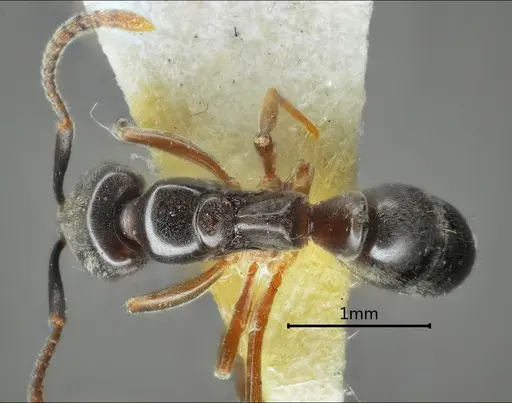
Letteratura
Caricamento mappa di distribuzione...Caricamento prodotti...