
Aenictus raptor
- Nom. sci.
- Aenictus raptor
- Sottofamiglia
- Dorylinae
- Autore
- Forel, 1913
- Distribuzione
- Trovata in 0 paesi
Introduzione
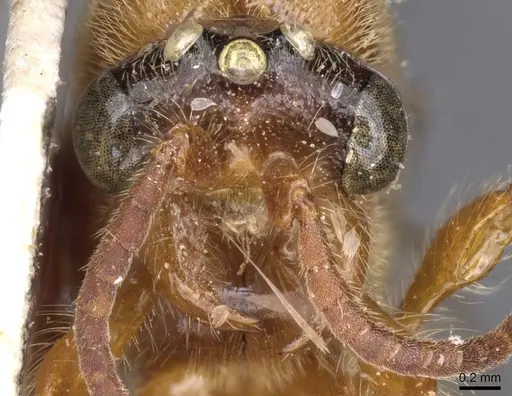
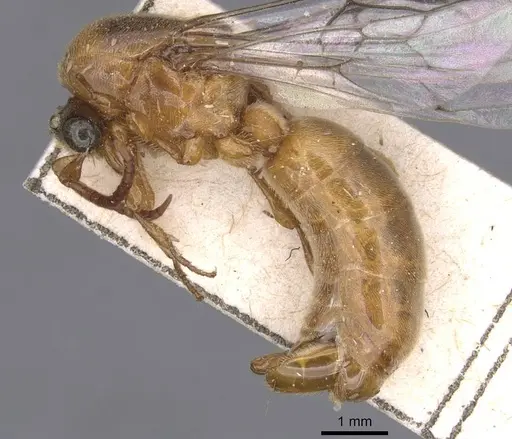
Aenictus raptor is an army ant species recorded only in the Democratic Republic of Congo, specifically in the Haut-Katanga province . This is one of the few documented records for this species, suggesting it has a limited known distribution in central Africa. Army ants like this species live a nomadic lifestyle quite different from typical ants. They do not build permanent nests in soil or wood. Instead, they form temporary living structures called bivouacs by clustering together as a group, and they move frequently to raid other ant colonies and termite nests for food. This biology makes them extremely challenging to maintain in captivity and they are not recommended for ant keepers.
Quick Summary
- Difficulty: Expert
- Origin & Habitat: Democratic Republic of Congo, Haut-Katanga province [1]. Tropical forest environment based on location.
- Colony Type: Army ant colonies, exact colony structure unconfirmed for this species. Most Aenictus species contain multiple queens and reproduce by colony fission.
- Size & Growth:
- Queen: Size data unavailable for this species.
- Worker: Size data unavailable for this species.
- Colony: Colony size data unavailable for this species.
- Growth: Growth rate data unavailable.
- Development: Development timeline unconfirmed for this species. (Army ant development is typically fast in tropical conditions.)
- Antkeeping:
- Temperature: Keep warm, roughly 24-28°C, based on tropical Congo climate [2].
- Humidity: High humidity required, maintain consistently moist nest material.
- Diapause: No, tropical species do not hibernate [2].
- Nesting: Cannot use standard nests, requires space for bivouac formation and large foraging area [2].
- Behavior: Aggressive predators that hunt in swarms. They raid other ant nests and termite colonies for food. Highly nomadic with constant movement patterns. Escape prevention is critical due to exploratory swarming behavior [2].
- Common Issues: standard ant farms are completely unsuitable, colonies need massive space for thousands of workers., require enormous quantities of live prey daily, primarily other ants and termites., colonies reproduce by fission (splitting), making containment difficult., high escape risk due to constant exploratory swarming behavior., cannot be contained in test tubes or small formicaria, will die or escape immediately.
The Army Ant Lifestyle
Aenictus raptor belongs to the true army ants (subfamily Dorylinae), which live very differently from typical garden ants. They do not dig permanent nests in soil or wood. Instead, they form temporary camps called bivouacs by linking their bodies together around the queen and brood. These bivouacs last only a few days before the colony moves again [2].
The colony cycles between nomadic phases (constant movement) and statary phases (temporary settlement). During the nomadic phase, the colony moves daily to new hunting grounds. They send out massive swarms of workers to raid other ant nests, termite colonies, and other insects. This hunting style requires huge amounts of prey and vast foraging areas that cannot be replicated in standard ant farms [2].
Why Standard Ant Keeping Fails
You cannot keep Aenictus raptor in a test tube, plaster nest, or acrylic formicarium. These setups are far too small and static for army ants. The colony needs space to form bivouacs and room for thousands of workers to forage simultaneously [2].
Standard nests also lack the ventilation and space needed for the massive prey intake these ants require. A colony can consume thousands of prey items per day. Without constant access to live food and room to swarm, the colony will starve or die from stress. The humidity and temperature gradients in small setups also cannot support the bivouac structure they need [2].
Feeding Requirements
These ants are obligate predators. They do not eat sugar water, honey, or seeds. They hunt live prey, primarily other ants and termites. In captivity, you would need to provide massive quantities of live insects daily, likely hundreds or thousands of prey items [2].
The workers hunt by swarming and overwhelming prey through sheer numbers. They do not scavenge dead insects. This means you must maintain cultures of feeder ants or termites specifically to feed them. The logistical challenge of providing enough live food makes these ants unsuitable for all but the most specialized research facilities [2].
Colony Reproduction by Fission
Unlike most ants where a single queen starts a new colony, Aenictus species reproduce by fission (splitting). When the colony grows large enough, it divides into two or more groups, each taking part of the workers and brood. New queens are produced within the colony and remain there [2].
This means you cannot start a colony from a single queen in a test tube. You would need to obtain an entire established colony section. It also means the colony will constantly try to split and expand, making containment nearly impossible in a home setup. The colony will eventually outgrow any reasonable captive space [2].
Housing Challenges
If you were to attempt keeping these ants, you would need a massive naturalistic enclosure, essentially a room-sized setup with soil, leaf litter, and constant access to live prey. The enclosure would need perfect humidity control (tropical conditions) and no small gaps where thousands of tiny workers could escape [2].
Even with perfect conditions, the colony's nomadic instinct drives them to move constantly. They will climb walls, cross barriers, and swarm out of any opening. Army ants are known for overcoming obstacles through sheer persistence and numbers. Standard escape prevention like Fluon or baby powder barriers will not stop a determined army ant colony [2].
Frequently Asked Questions
Can I keep Aenictus raptor in a test tube?
No. Test tubes are completely unsuitable for army ants. They need massive space to form bivouacs and forage, and they require constant access to large amounts of live prey that cannot be provided in a test tube setup [2].
What do Aenictus raptor eat?
They are obligate predators that eat live insects, primarily other ants and termites. They do not accept sugar water, honey, or dead insects. You would need to provide hundreds of live prey items daily [2].
How long until first workers for Aenictus raptor?
This question does not apply to army ants. They do not found colonies from single queens. New colonies form by splitting (fission) from existing colonies. You would need to start with an established colony section containing workers, brood, and queens [2].
Can I keep multiple Aenictus raptor queens together?
Army ant colonies naturally contain multiple queens. However, you cannot simply put unrelated queens together. They must come from the same colony (fission) or they will fight [2].
Are Aenictus raptor dangerous?
They bite aggressively but are not life-threatening to humans. However, they can overwhelm and kill other pets or insects in your home if they escape. The main danger is the logistical nightmare of thousands of escaped army ants in your home [2].
How big do Aenictus raptor colonies get?
Colony size data is unavailable for this specific species. Typical Aenictus colonies can reach thousands of workers [2].
Do Aenictus raptor need hibernation?
No. They come from tropical Congo and do not hibernate. They remain active year-round at warm temperatures [1].
Why are my Aenictus raptor dying?
They are likely dying from inadequate space, lack of proper bivouac formation, insufficient live prey, or escape attempts. These ants are extremely difficult to keep alive in captivity and are not recommended for ant keeping [2].
Report an Issue
The current care sheet is based fully on literature. See inconsistencies, or something that's incorrect? Please , it will be resolved after review from an admin. Contributing to the blogs tab also helps providing information, to make us be able to further improve the caresheets. Thank you for your support!
References

Questa scheda di allevamento è concessa in licenza con CC BY-SA 4.0 .
Blog della comunità
RMCAENT000017714
Visualizza su AntWeb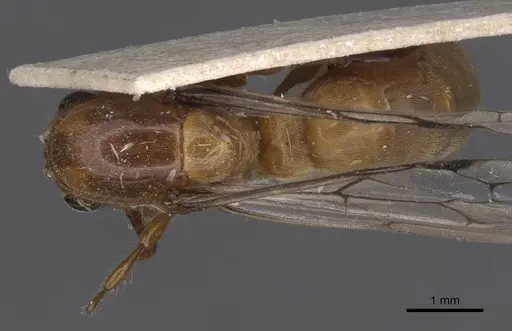
Letteratura
Caricamento mappa di distribuzione...Caricamento prodotti...