
Tetramorium tyrion
- Nama Ilmiah
- Tetramorium tyrion
- Tribe
- Crematogastrini
- Subfamili
- Myrmicinae
- Penulis
- Hita Garcia & Fisher, 2012
- Distribusi
- Ditemukan di 0 negara
Pendahuluan
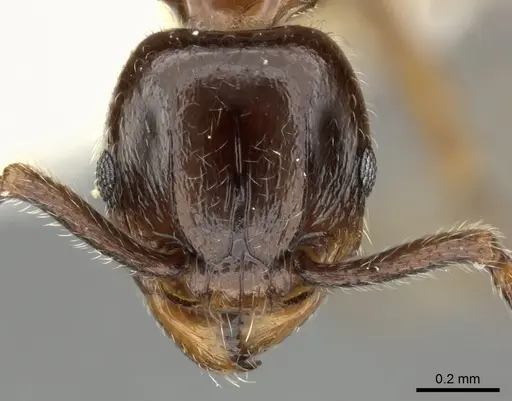
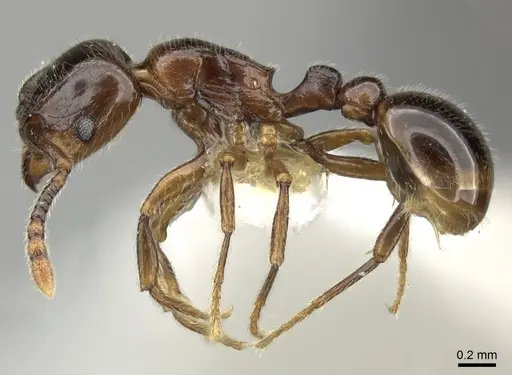
Tetramorium tyrion is a tiny ant species native to Madagascar, known only from a single worker specimen collected near the Tsingy de Bemaraha National Park . Workers are uniformly brownish with very minute propodeal teeth and short, fine erect hairs on the first gastral tergite . It belongs to the Tetramorium tsingy species group and was named after Tyrion Lannister from Game of Thrones due to its small but distinctive appearance . Almost nothing is known about its biology, colony structure, or captive care requirements - it represents one of the most poorly documented ants in the hobby.
Quick Summary
- Difficulty: Expert
- Origin & Habitat: Known only from Beroboka, close to Tsingy de Bemaraha National Park in central western Madagascar (Tulear region) [1]. The habitat characteristics at the type locality have not been documented.
- Colony Type: Unconfirmed, colony structure has not been studied. Most Tetramorium species are monogyne (single queen) but this has not been verified for T. tyrion.
- Size & Growth:
- Queen: Unknown, no queen specimens have been described [1]
- Worker: size unknown, inferred from Tetramorium genus (~2-3 mm)
- Colony: Unknown, only a single worker specimen has ever been collected [1]
- Growth: Unknown
- Development: Unknown, estimated 4-8 weeks based on typical Tetramorium development patterns (Development timeline is unconfirmed. Tetramorium species typically develop from egg to worker in 4-8 weeks at optimal temperatures.)
- Antkeeping:
- Temperature: Estimated 22-26°C based on Madagascar's tropical climate. Provide a gentle temperature gradient and monitor colony activity.
- Humidity: Estimated 60-80% relative humidity. Keep substrate moderately moist but not waterlogged. Provide a moisture gradient so ants can choose their preferred zone.
- Diapause: Unknown, likely minimal or no diapause given the tropical origin, but this has not been studied.
- Nesting: Natural nesting behavior is unconfirmed. Most Tetramorium species nest in soil or under stones. A small test tube setup or Y-tong nest with appropriately scaled chambers would be suitable.
- Behavior: Behavior has not been documented. Based on related Tetramorium species, they are likely ground-nesting and may form small to moderate colonies. Their tiny size means excellent escape prevention is critical, they can squeeze through standard mesh barriers. As a member of the Crematogastrini tribe, they likely use a smear-type defense: wiping venom onto enemies rather than stinging directly. Foraging style is unknown but likely involves ground-level foraging for small prey and honeydew.
- Common Issues: this species has never been kept in captivity, no established care protocols exist, only a single wild specimen has ever been collected, making all care recommendations speculative, tiny size creates extreme escape risk, standard barriers may be insufficient, completely unknown whether they accept captive diet, experimental feeding required, no information on queen founding behavior or colony development, risk of inadvertently keeping a species that may have specialized requirements
Species Background and Identification
Tetramorium tyrion is an extremely rare ant species described in 2012 by Hita Garcia and Fisher [1]. It belongs to the Tetramorium tsingy species group, which contains several endemic Madagascar species. The species is named after Tyrion Lannister from Game of Thrones, the describer was a fan of the series and noted the ant's small but distinctive appearance. Workers are tiny (inferred from genus, roughly 2-3 mm total length) with uniformly brownish coloration. The most distinctive features are the very minute propodeal teeth and short, fine erect hairs on the first gastral tergite [1]. This species is not likely to be confused with other Tetramorium species due to this unique character combination [1].
Why This Species is Extremely Challenging
This is one of the most difficult ants to keep because virtually nothing is known about its biology [1]. Only a single worker specimen has ever been collected in the wild, from Beroboka near Tsingy de Bemaraha National Park in Madagascar [1]. No queen has ever been described, no colony has been observed, and no ecological studies exist. Every aspect of captive care, from temperature and humidity preferences to diet acceptance, must be estimated from related species or general Tetramorium biology. This makes T. tyrion an experimental species suitable only for advanced antkeepers who understand the risks of keeping an undocumented species. You should not acquire this species expecting to follow established care protocols, you will essentially be conducting research.
Housing and Nest Setup
Since natural nesting behavior is unconfirmed, use a setup based on typical Tetramorium preferences. A small test tube setup works well for founding colonies, with a Y-tong or plaster nest for established colonies. The chambers must be appropriately scaled to the ant's tiny size, standard chambers designed for larger ants may be too large and stressful. Ensure excellent escape prevention: their small size means they can squeeze through standard mesh barriers. Use fine mesh (0.5mm or smaller) or apply Fluon to all edges. Provide a moisture gradient by placing a water tube on one side so ants can self-regulate their humidity needs.
Temperature and Humidity
Based on Madagascar's tropical climate, estimate optimal temperature around 22-26°C. Provide a gentle temperature gradient so the colony can choose its preferred zone. Start in the middle of this range and adjust based on colony behavior, if workers seem sluggish, slightly increase temperature, if they avoid the warm area, reduce it. For humidity, aim for 60-80% relative humidity. Keep the nest substrate moderately moist but not waterlogged. A moisture gradient is recommended, some areas slightly damper, others slightly drier. Monitor for mold, which indicates excessive moisture.
Feeding and Diet
Diet is completely unconfirmed for this species. Based on typical Tetramorium behavior, they likely accept small protein sources (fruit flies, pinhead crickets, mealworms) and sugar sources (honey water, sugar water). However, since this is an undocumented species, you must experiment cautiously. Start with small amounts of varied foods and observe what gets consumed. Remove uneaten food after 24-48 hours to prevent mold. Do not rely on any single food source until acceptance is confirmed through repeated trials. Given their tiny size, prey items must be appropriately scaled, springtails or fruit fly pupae may be more suitable than larger insects.
Colony Development and Growth
No data exists on colony development for T. tyrion. From related Tetramorium species, founding queens are likely claustral (they seal themselves in and live off stored fat reserves until first workers emerge). Expect first workers (nanitics) to appear 4-8 weeks after founding at optimal temperature, though this is an estimate based on genus-level patterns, not species-specific data. Growth rate is unknown but likely moderate. Colonies probably remain small, possibly a few hundred workers at maturity based on related species. Do not expect rapid colony growth, and do not attempt to accelerate it through overfeeding or overheating, as this may harm the colony.
Frequently Asked Questions
Is Tetramorium tyrion available in the antkeeping hobby?
This species is extremely rare in the hobby. It has only been collected once in the wild and no captive breeding colonies are known to exist [1]. You are very unlikely to find this species for sale.
How do I care for Tetramorium tyrion?
Care is entirely unconfirmed since this species has never been kept in captivity [1]. All recommendations are speculative estimates based on related Tetramorium species. Only experienced antkeepers should attempt this species, and only with the understanding that they are pioneering captive care for a completely undocumented species.
What does Tetramorium tyrion look like?
Workers are tiny (inferred from genus, roughly 2-3 mm total length) with uniformly brownish coloration. The most distinctive features are the very minute propodeal teeth on the rear of the mesosoma and short, fine erect hairs on the first gastral tergite (the front part of the abdomen) [1].
Where does Tetramorium tyrion come from?
This species is only known from Beroboka in central western Madagascar, near the Tsingy de Bemaraha National Park [1]. The exact habitat characteristics at the collection site are not documented.
How big do Tetramorium tyrion colonies get?
Colony size is unknown, only a single worker has ever been collected [1]. Based on related species, colonies likely reach a few hundred workers at most. Do not expect large colonies.
Do Tetramorium tyrion ants sting?
Stinging behavior has not been documented for this species. As a Myrmicinae member and part of the Crematogastrini tribe, they likely possess a stinger adapted for smear defense, but whether it is functional or used is unknown.
What should I feed Tetramorium tyrion?
Diet is unconfirmed. Based on typical Tetramorium behavior, offer small protein sources (fruit flies, springtails, tiny crickets) and sugar sources (honey water). Experiment cautiously and remove uneaten food promptly. Acceptance of any captive diet is completely unknown.
Is Tetramorium tyrion suitable for beginners?
No. This species is absolutely not suitable for beginners. It has never been kept in captivity, no care protocols exist, and every aspect of husbandry must be learned through experimentation. Only expert antkeepers with experience in pioneering care for poorly documented species should consider this ant.
What temperature do Tetramorium tyrion need?
Temperature requirements are unconfirmed. Estimate 22-26°C based on Madagascar's tropical climate. Provide a temperature gradient and adjust based on colony activity. Do not exceed typical tropical ant temperatures.
Does Tetramorium tyrion need hibernation?
Diapause requirements are unknown. Given the tropical origin (Madagascar), a true hibernation is unlikely needed. However, a slight seasonal reduction in temperature may be appropriate. Monitor colony behavior for signs of stress.
Can I keep multiple Tetramorium tyrion queens together?
Colony structure is unconfirmed. Most Tetramorium species are monogyne (single queen), but this has not been verified for T. tyrion. Do not attempt combining queens, there is no data on whether they tolerate multi-queen arrangements.
Why is Tetramorium tyrion so hard to find?
This species is known from only a single specimen collected in 1983 near Beroboka, Madagascar [1]. It has never been rediscovered, suggesting it may be extremely rare in the wild or has a very restricted range. No colonies have ever been found.
Report an Issue
The current care sheet is based fully on literature. See inconsistencies, or something that's incorrect? Please , it will be resolved after review from an admin. Contributing to the blogs tab also helps providing information, to make us be able to further improve the caresheets. Thank you for your support!
References

Lembar perawatan ini dilisensikan di bawah CC BY-SA 4.0 .
Blog Komunitas
CASENT0249085
Lihat di AntWeb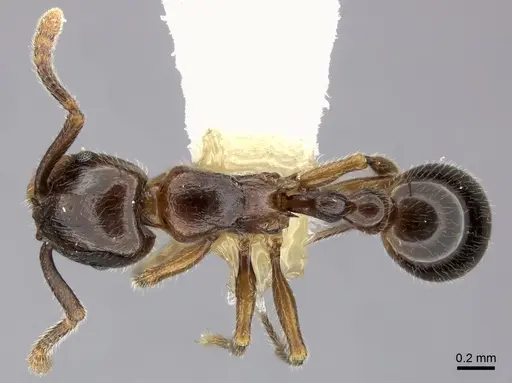
Literatur
Memuat peta distribusi...Memuat produk...