
Tetramorium talpa
- Nama Ilmiah
- Tetramorium talpa
- Tribe
- Crematogastrini
- Subfamili
- Myrmicinae
- Penulis
- Bolton, 1976
- Distribusi
- Ditemukan di 0 negara
Pendahuluan
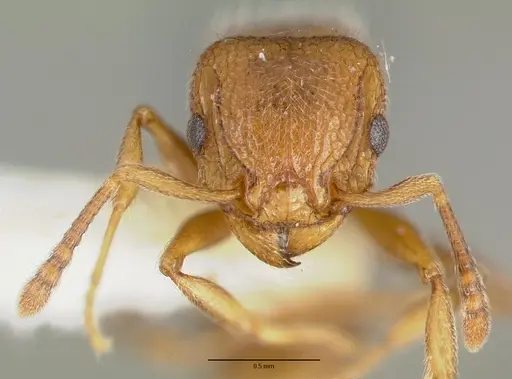
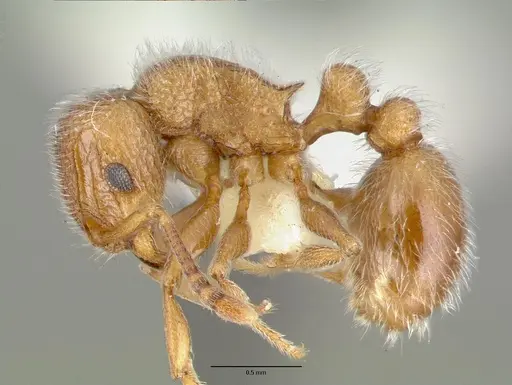
Tetramorium talpa is a small ant species known only from the Kwilu region in the Democratic Republic of Congo . It belongs to the diverse genus Tetramorium, but very little specific information is available about its appearance, behavior, or ecology. The species name 'talpa' means 'mole' in Latin, which may hint at soil-dwelling habits, but this is speculative. Most of what is known comes from its single record; no detailed morphological or biological studies have been published.
Quick Summary
- Difficulty: Hard
- Origin & Habitat: Endemic to the Kwilu region in the Democratic Republic of Congo, Central Africa. Habitat is likely tropical forest, but specifics are undocumented [1].
- Colony Type: Unknown. Based on the genus Tetramorium, single-queen colonies are common, but this is unconfirmed for this species.
- Size & Growth:
- Queen: Size data unavailable, no published measurements exist for this species.
- Worker: Size data unavailable, no published measurements exist for this species.
- Colony: Unknown. The maximum colony size has not been studied.
- Growth: Unknown
- Development: Unknown, no data available. Development time would depend on temperature and is unstudied. (All development timing is speculative, no species-specific research has been conducted.)
- Antkeeping:
- Temperature: As a tropical species, likely requires warm temperatures (around 24-28°C is a reasonable starting point), but exact needs are unknown. Provide a gradient to let the colony self-regulate.
- Humidity: Presumably moderate to high given its tropical origin. Keep the nest substrate consistently moist but not waterlogged. A humidity gradient is recommended.
- Diapause: No (likely, based on tropical origin), but not confirmed. Maintain warm conditions year-round.
- Nesting: In the absence of specific data, provide a setup that allows for burrowing: a soil or Y-tong (AAC) nest with a moisture gradient. Flat stones or bark can serve as cover.
- Behavior: Workers are presumably ground-foraging and may use a spatulate stinger to smear venom (typical of the Crematogastrini tribe), but this is not directly observed for this species. Temperament is unknown, likely non-aggressive, but caution is warranted. Escape prevention is critical due to their small size, use mesh with openings of 0.5mm or smaller.
- Common Issues: lack of species-specific data means most care advice is based on conjecture, monitor colony closely and adjust as needed, small size requires excellent escape prevention, use fine mesh and seal all gaps, tropical species may be sensitive to temperature drops, keep warm and stable, humidity balance is critical: too wet causes mold, too dry leads to desiccation, unknown founding behavior and colony structure make captive breeding uncertain
Temperature and Heating
There is no published temperature preference for Tetramorium talpa. As a tropical ant from Central Africa, it likely requires warm conditions to thrive. A safe starting range is 24-28°C (75-82°F). Use a heating cable on top of the nest (not underneath) to create a gradient, allowing the ants to choose their preferred spot. Avoid temperatures below 20°C for extended periods. Monitor activity, if workers slow down and brood stops developing, the temperature may be too low. Since the exact needs are unknown, adjust based on colony response.
Housing and Nest Setup
Because this species is poorly studied, a flexible setup is recommended. A Y-tong (AAC) nest or plaster nest works well for many Tetramorium. The nest chambers should be small (2-3mm high) to suit the ants' size. Provide a substrate of slightly moist soil or sand if using a naturalistic setup. Always include a water source, a test tube with cotton plug or a water drinker. Escape prevention is non-negotiable: use fluon on the outworld walls and fine mesh (0.5mm holes) on ventilation. Cover any gaps with cotton or silicone.
Feeding and Diet
Dietary preferences have not been studied. Based on the genus Tetramorium, they are probably generalist scavengers. Offer small protein sources (fruit flies, pinhead crickets, mealworm pieces) 2-3 times per week. Provide sugar water, honey, or diluted honey as carbohydrate. Remove uneaten food after 24 hours to prevent mold. Fresh water must always be available. Observe what the colony accepts and adjust accordingly. Avoid overfeeding, start with small amounts.
Colony Development
The founding and colony development of Tetramorium talpa is entirely unstudied. It is unknown whether the queen is claustral or semi-claustral, monogyne or polygyne. If you obtain a queen, the safest approach is to assume claustral founding: place her in a dark test tube setup with water and wait until the first workers appear without disturbing her. The first workers may be smaller (nanitics). Growth rate is unknown, be patient. Do not expect reliable timelines.
Year-Round Care
As a tropical species, Tetramorium talpa almost certainly does not require a diapause period. Maintain warm temperatures (24-28°C) throughout the year. Keep humidity stable, mist the outworld occasionally if the air is dry, but avoid condensation inside the nest. Monitor for mold, especially in moist nests. If mold appears, increase ventilation and reduce humidity slightly. Without specific data, your colony will be a learning experience, document what works.
Frequently Asked Questions
How long does it take for Tetramorium talpa to raise first workers?
This is unknown. There are no published observations. If kept at 24-28°C, it may take several weeks to months, but there is no reliable estimate.
What temperature do Tetramorium talpa ants need?
Specific temperature requirements have not been studied. As a tropical species, likely 24-28°C (75-82°F) is a good starting range. Avoid temperatures below 20°C.
Do Tetramorium talpa ants need hibernation?
Based on their tropical origin, no, they do not require hibernation. Maintain warm temperatures year-round.
What do Tetramorium talpa ants eat?
Diet is unstudied. By genus patterns, offer small insects (fruit flies, cricket pieces) for protein and sugar water or honey for energy. Always provide fresh water.
Can I keep Tetramorium talpa in a test tube?
It is unknown, but test tubes are a safe starting method for any ant queen, regardless of species. Use a water tube with cotton. Once workers appear, the colony can be moved to a larger setup when needed.
How big do Tetramorium talpa colonies get?
No data exists. Tetramorium colonies typically range from fewer than a hundred to several thousand workers, but for this species the maximum is unknown.
Are Tetramorium talpa ants aggressive?
Behavior is unobserved. Most Tetramorium are not particularly aggressive but will defend their nest. Handle with caution until temperament is established.
Do Tetramorium talpa ants sting?
They belong to a subfamily that typically has a modified stinger used for smearing venom rather than piercing. However, no sting data exists for this species. They are not considered dangerous.
Why is escape prevention important for Tetramorium talpa?
Even though exact size is unknown, all small ants (under 3mm) can squeeze through tiny gaps. Use fine mesh (0.5mm or smaller) and seal all openings.
Is Tetramorium talpa good for beginners?
No, this species is rated Hard because almost nothing is known about its care. It should only be attempted by experienced keepers willing to experiment and document results.
Can I keep multiple queens together?
Not recommended. Social structure is unstudied, but many Tetramorium are monogyne. Combining queens typically leads to aggression and death.
Where is Tetramorium talpa found in the wild?
It is known only from the Kwilu region in the Democratic Republic of Congo, Central Africa [1].
Report an Issue
The current care sheet is based fully on literature. See inconsistencies, or something that's incorrect? Please , it will be resolved after review from an admin. Contributing to the blogs tab also helps providing information, to make us be able to further improve the caresheets. Thank you for your support!
References

Lembar perawatan ini dilisensikan di bawah CC BY-SA 4.0 .
Blog Komunitas
CASTYPE12544
Lihat di AntWeb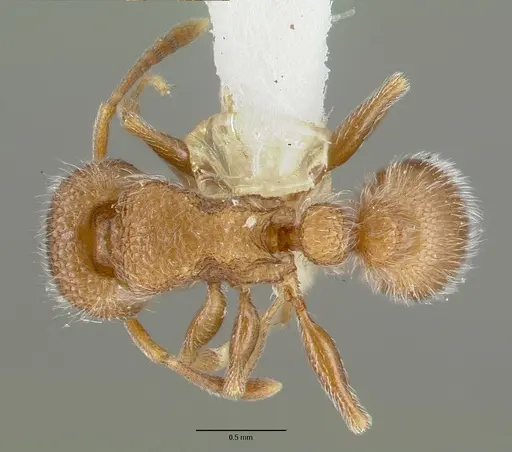
Literatur
Memuat peta distribusi...Memuat produk...