
Tetramorium rogatum
- Nama Ilmiah
- Tetramorium rogatum
- Tribe
- Crematogastrini
- Subfamili
- Myrmicinae
- Penulis
- Bolton, 1980
- Distribusi
- Ditemukan di 0 negara
Pendahuluan
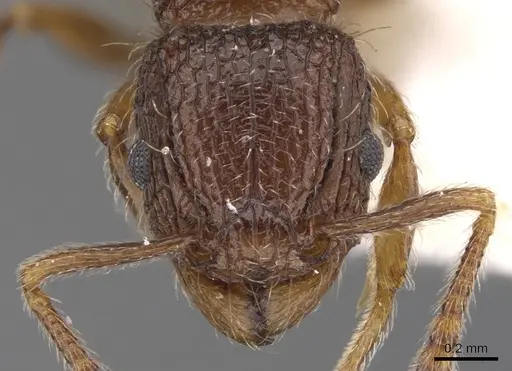
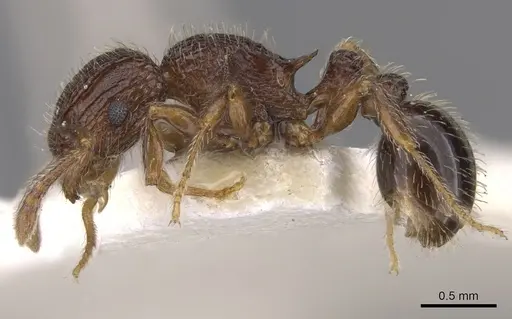
Tetramorium rogatum is a small ant species known only from the type locality in Angola . Workers measure 3.6mm in total length and are mid-brown in color . The most distinctive feature is its unique clavate (club‑shaped) pilosity - it is the only species in the Tetramorium weitzeckeri group with hairs that are thickened and truncated at the tips, especially on the first gastral tergite . Workers also have long propodeal spines and a high nodiform petiolar node . Only the worker caste has been described; queens and males are unknown . This species belongs to the edouardi species complex within the Afrotropical weitzeckeri group . No biological or ecological data exists for T. rogatum, making it one of the least‑known Tetramorium species.
Quick Summary
- Difficulty: Expert
- Origin & Habitat: Angola (Afrotropical region), specifically the type locality Bruco [1]. The natural habitat is not documented, but typical Tetramorium in Africa nest in soil, under stones, or in rotting wood in tropical environments.
- Colony Type: Unconfirmed, no data on colony structure exists. Based on typical Tetramorium genus patterns, presumably single‑queen (monogyne) colonies, but this is speculation.
- Size & Growth:
- Queen: Size unknown, no queen has been described for this species [1].
- Worker: 3.6mm total length [2].
- Colony: Unknown, no data exists. Related Tetramorium species can reach several hundred workers, but this is purely speculative.
- Growth: Unknown, no data exists. Moderately fast is typical for tropical Tetramorium, but unconfirmed.
- Development: Unknown, no data exists. Based on related Tetramorium at optimal temperatures, roughly 6‑10 weeks may be expected, but this is an estimate. (Development time is not documented for this species. The estimate comes from other Tetramorium species and may not apply.)
- Antkeeping:
- Temperature: Not documented for this species. Based on tropical African origin, likely warm (24‑28°C), but specifics unknown. Start at typical room temperature and observe behavior.
- Humidity: Not documented. As a tropical species, moderate to high humidity is likely. Keep nest substrate damp but not waterlogged, and provide a water source.
- Diapause: Likely not required, the species is from a tropical climate without cold winters. Some seasonal slowing may occur if kept at cooler room temperature.
- Nesting: No species‑specific data. Based on typical Tetramorium, soil‑based nests (Y‑tong, plaster, or naturalistic setups) with damp substrate are recommended. Provide chambers suitable for small workers (3.6mm).
- Behavior: No direct behavioral observations exist. Based on the genus Tetramorium, workers are likely moderately aggressive, active foragers that defend their nest. The species has a functional stinger (as do most Myrmicinae) but uses a unique 'smear' mechanism, the stinger is flattened and modified to wipe venom onto enemies rather than piercing flesh. Escape risk is high due to small size (3.6mm), need fluon barriers and tight seals.
- Common Issues: species is known only from the type locality and has never been kept in captivity, all care is guesswork, no queens have ever been collected or described, making captive founding impossible without wild collection, wild‑caught material (if ever found) may carry parasites or fail to adapt to captive conditions, temperature and humidity requirements are purely speculative, wrong conditions could kill the colony, extremely limited availability, obtaining this species would require field work in Angola, which is not recommended
Housing and Nest Preferences
Because no nesting data exists for Tetramorium rogatum, you must rely on general Tetramorium husbandry. Start with a standard test tube setup for any founding attempt. Once workers appear, provide a formicarium with soil or plaster chambers that retain moisture. The small worker size (3.6mm [2]) means nest openings and tunnels must be narrow to prevent escape. Avoid acrylic nests, use Y‑tong, plaster, or a naturalistic soil-based setup. Escape prevention is critical: use fluon barriers on the outworld walls and tightly seal all connections. Provide a moisture gradient: keep one part of the nest damp, allow another part to be drier so the ants can choose. Since this species has never been kept, observe the colony’s behavior and adjust conditions accordingly.
Feeding and Diet
Dietary preferences for Tetramorium rogatum are unknown. Like most Tetramorium, it is probably omnivorous. Offer small protein sources (fruit flies, pinhead crickets, small mealworms) and sugar water or honey. Feed protein 2-3 times per week and keep sugar water available constantly. Remove uneaten prey after 24-48 hours to prevent mold. Because no specific data exists, experiment to see what your colony accepts. Some Tetramorium species have strong preferences for particular insects, so variety is wise.
Environmental Conditions
No species‑specific temperature or humidity data exists for Tetramorium rogatum. Based on its tropical origin (Angola [1]), warm and humid conditions are likely. Aim for a temperature range of 24-28°C, use a heating cable on one side of the nest to create a gradient. Avoid temperatures below 20°C for extended periods. Keep the nest substrate damp but not waterlogged. If the colony becomes sluggish, increase temperature slightly. These are best guesses, monitor your ants and adjust based on their behaviour.
Behavior and Temperament
No behavioral observations exist for Tetramorium rogatum. Based on the genus, workers are likely moderately aggressive and active foragers that defend their territory. They can climb vertical surfaces, so escape prevention is essential, use fluon barriers and check all connections regularly. The stinger is modified for a smear mechanism (typical of the Crematogastrini tribe): instead of piercing, the ant wipes venom onto enemies. This is general tribal knowledge and not specifically confirmed for this species. Colonies are probably fast‑growing once established, but this is speculation. The unique clavate hairs are visible under magnification and help confirm identification [2][1].
Conservation and Ethical Considerations
Tetramorium rogatum is known only from a single locality in Angola [1] and has never been documented in captivity. Collecting wild colonies could threaten an already extremely restricted population. This species should not be collected without thorough ecological assessment. Because no queens are described, captive breeding is currently impossible. If you encounter this ant in the wild, document the find but do not disturb the nest. It is not listed as endangered, but its rarity alone warrants caution.
Frequently Asked Questions
How long does it take for Tetramorium rogatum to raise first workers?
Unknown, no data exists for this species. Based on related Tetramorium species, the egg‑to‑worker period at warm temperatures (24-28°C) is roughly 6-10 weeks, but this is an estimate and may not apply.
Can I keep multiple Tetramorium rogatum queens together?
Unknown. No colonies have been observed and queen morphology is undescribed. Most Tetramorium are monogyne, but polygyny occurs in some species. Do not attempt combining queens without evidence that this species tolerates it.
What do Tetramorium rogatum ants eat?
Not directly known. Like most Tetramorium, they are probably omnivorous. Offer small insects (fruit flies, pinhead crickets) and sugar water. Feed protein 2-3 times per week and keep sugar available.
Do Tetramorium rogatum ants sting?
Yes, as a member of Myrmicinae they have a functional stinger. The sting is modified for a 'smear' mechanism, venom is wiped rather than injected. The pain is likely mild, but no stinging reports exist for this species.
Are Tetramorium rogatum ants good for beginners?
Absolutely not. This species is rated Expert because it has never been kept in captivity and no care data exists. Beginners should start with well‑documented species like Tetramorium caespitum or Lasius niger.
What temperature do Tetramorium rogatum ants need?
Not documented. Based on its tropical origin, try 24-28°C. This is an estimate, observe your ants and adjust. Avoid prolonged temperatures below 20°C.
How big do Tetramorium rogatum colonies get?
Unknown, no data exists. Related Tetramorium can reach several hundred workers, but this is speculation for T. rogatum.
Do Tetramorium rogatum ants need hibernation?
Probably not, it is a tropical species from Angola without cold winters. Some seasonal slowing may occur if temperatures drop, but intentional diapause is not required.
Where can I get Tetramorium rogatum ants?
This species is not available in the antkeeping hobby. It is known only from the type locality in Angola [1] and has never been bred in captivity. Wild collection would require fieldwork and is not recommended due to its extreme rarity.
Why is Tetramorium rogatum special?
It is the only species in the Tetramorium weitzeckeri group with clavate (club‑shaped) hairs, which are thickened and truncated at the tips [1]. It is also one of the rarest Tetramorium species, known only from a single collection in Angola [2][1].
Report an Issue
The current care sheet is based fully on literature. See inconsistencies, or something that's incorrect? Please , it will be resolved after review from an admin. Contributing to the blogs tab also helps providing information, to make us be able to further improve the caresheets. Thank you for your support!
References

Lembar perawatan ini dilisensikan di bawah CC BY-SA 4.0 .
Blog Komunitas
CASENT0901159
Lihat di AntWeb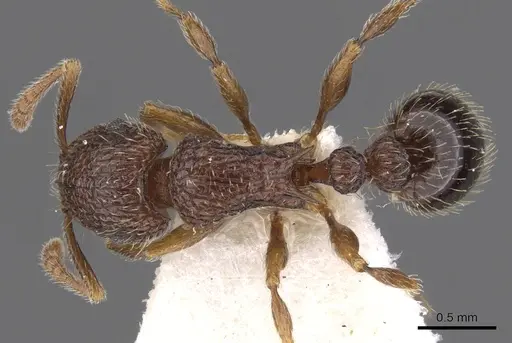
Literatur
Memuat peta distribusi...Memuat produk...