
Tetramorium plumosum
- Nama Ilmiah
- Tetramorium plumosum
- Tribe
- Crematogastrini
- Subfamili
- Myrmicinae
- Penulis
- Bolton, 1980
- Distribusi
- Ditemukan di 0 negara
Pendahuluan
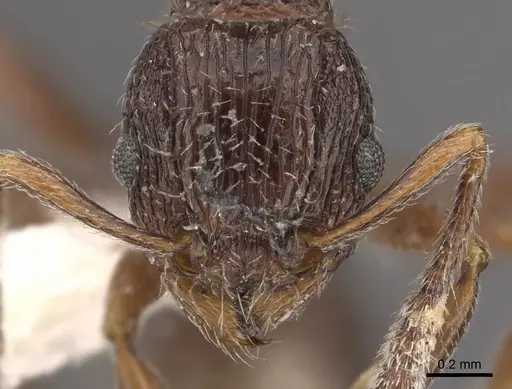
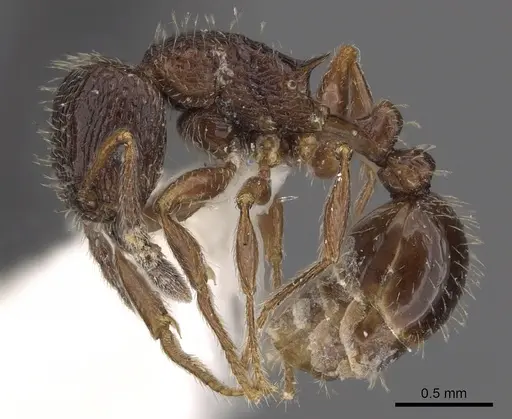
Tetramorium plumosum is a tiny ant species only known from Eswatini (formerly Swaziland) in southern Africa. Workers measure about 3.7 mm and are uniformly brown . What makes this species stand out is its plumose (feathery) hairs covering the head and body – a very rare trait in the entire Tetramorium genus. Only two other African Tetramorium species, T. pinnipilum and T. flabellum, have similar hairs . This species belongs to the grassii-group and is most closely related to T. regulare and T. grassii, but neither of those have the feathery hairs that give T. plumosum its name . Almost nothing is known about its biology. The few known specimens were collected from forest litter in a single location in Eswatini . No queens or males have been described, so colony structure, founding behavior, and full life cycle are unrecorded. Any care advice beyond what is directly observed must be treated as a rough starting point.
Quick Summary
- Difficulty: Hard
- Origin & Habitat: Eswatini (southern Africa) – found in forest litter in a forested habitat [1][2]
- Colony Type: Unconfirmed – no colony data available
- Size & Growth:
- Antkeeping:
- Temperature: Unclear – based on forest habitat, start with 22–26°C and adjust as needed. Avoid extremes.
- Humidity: Likely high given forest litter habitat, but unconfirmed. Keep nest substrate moist but not waterlogged.
- Diapause: Unknown – native range is subtropical, but no data on seasonal cycles.
- Nesting: Unknown – forest litter origin suggests a naturalistic setup with soil, leaf litter, and hiding spots. Y-tong or plaster nests may work if humidity is high.
- Behavior: Very little known. Workers are small (3.7 mm) and likely forage in leaf litter. Escape prevention is critical due to tiny size – use fine mesh (0.5 mm or smaller). Temperament unknown, but Tetramorium are generally not aggressive.
- Common Issues: escape prevention is critical due to their small 3.7 mm size – use fine mesh and tight seals., extremely limited information means most care steps are guesswork., high humidity requirements (if confirmed) can cause mold if ventilation is poor., this species is exceptionally rare in the hobby and may not be available commercially.
Housing and Nest Setup
Because the only known specimens came from forest litter [1][2], a naturalistic setup mimicking that environment is a sensible starting point. Use a substrate mix of soil and small particles, topped with leaf litter, twigs, and moss to create hiding spots and foraging areas. Keep the substrate consistently moist but not waterlogged.
If using a Y-tong (AAC) or plaster nest, include a water reservoir to maintain high humidity. Chambers should be small – these ants are only 3.7 mm. Escape prevention is mandatory: use fine mesh (0.5 mm) on ventilation holes and seal all connections tightly.
Feeding and Diet
No dietary data exists for this species. Most Tetramorium are omnivores, so start with a varied diet: small live prey (fruit flies, springtails, pinhead crickets) and sugar sources (diluted honey or sugar water). Prey must be tiny due to worker size. Feed protein 2–3 times per week and provide constant access to sugar water. Remove uneaten prey within 24 hours to avoid mold.
Temperature and Seasonal Care
Temperature preferences are unknown. Based on typical forest-floor microclimates, maintain 22–26°C and avoid sudden swings. A gentle heating gradient may help workers choose their preferred spot. Whether diapause is needed is unknown – the native range is subtropical, but seasonal changes may occur. If you attempt a rest period, reduce temperatures slowly to 15–18°C for 2–3 months while cutting back feeding, but this is speculative.
Behavior and Colony Dynamics
Almost nothing is recorded about the behavior of T. plumosum. The few collected workers were from forest litter [1]. Based on size and typical Tetramorium behavior, they likely forage in the litter layer and are not aggressive. The unique plumose hairs might help with sensory tasks or movement through debris. Colony growth, founding, and queen behavior are entirely unknown – do not assume claustral or semi-claustral founding.
Frequently Asked Questions
How long does it take for Tetramorium plumosum to raise their first workers?
Unknown. No data exists for this species. Development time would be a guess – do not rely on any timeline.
Can I keep Tetramorium plumosum in a test tube setup?
It might work for short-term housing, but escape prevention is the main challenge due to their tiny size. A test tube with a tight cotton plug can work, but maintaining high humidity in a test tube is easier. However, since no one has successfully kept this species, there's no proven method.
Do Tetramorium plumosum ants sting?
As a Myrmicinae species, they have a stinger, but no observations of stinging behavior exist. Based on their small size and typical Tetramorium temperament, they are unlikely to be aggressive.
What do Tetramorium plumosum eat?
Unknown. As a starting point, offer small live prey like fruit flies or springtails and sugar water. Remove uneaten food promptly.
Are Tetramorium plumosum good for beginners?
No. This species is rated Hard due to the complete lack of care data and extreme rarity. Only experienced keepers should attempt it, and even then success is uncertain.
How big do Tetramorium plumosum colonies get?
Unknown. No colonies have been observed or reported in the wild.
Do Tetramorium plumosum need hibernation?
Unknown. The native range is subtropical, but seasonal temperature changes may occur naturally. There is no data to confirm or deny diapause needs.
Why are my Tetramorium plumosum escaping?
Workers are only 3.7 mm and can squeeze through tiny gaps. Use 0.5 mm mesh, seal all openings, and check for gaps around tubing or lids. Even a small gap is an escape route.
Can I keep multiple Tetramorium plumosum queens together?
Unknown. No data exists on colony structure. It is safest to assume single-queen colonies until proven otherwise.
Where is Tetramorium plumosum found in the wild?
Only known from Eswatini (Swaziland) in southern Africa, collected from forest litter in a forested area [1][2].
Report an Issue
The current care sheet is based fully on literature. See inconsistencies, or something that's incorrect? Please , it will be resolved after review from an admin. Contributing to the blogs tab also helps providing information, to make us be able to further improve the caresheets. Thank you for your support!
References

Lembar perawatan ini dilisensikan di bawah CC BY-SA 4.0 .
Blog Komunitas
CASENT0901186
Lihat di AntWeb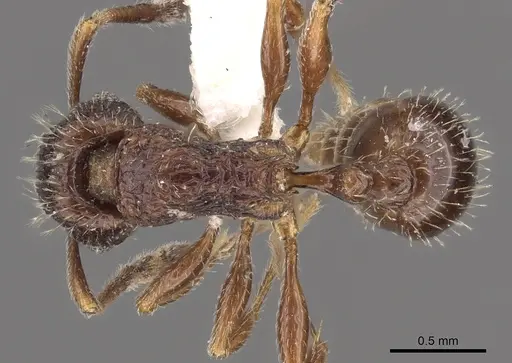
Literatur
Memuat peta distribusi...Memuat produk...