
Temnothorax squamifer
- Nama Ilmiah
- Temnothorax squamifer
- Tribe
- Crematogastrini
- Subfamili
- Myrmicinae
- Penulis
- Roger, 1863
- Distribusi
- Ditemukan di 1 negara
Pendahuluan
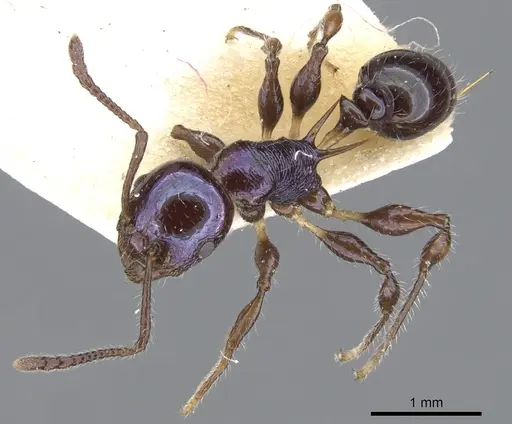
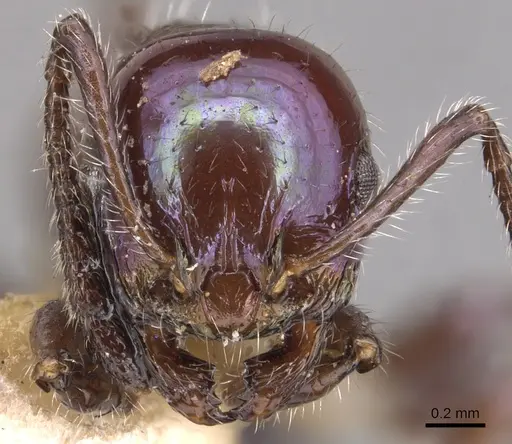
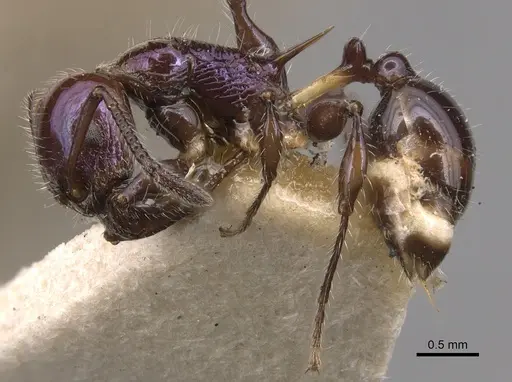
Temnothorax squamifer is a tiny ant species native to Cuba and the Greater Antilles. Its workers are small, typical of the genus, and the species was originally described as Macromischa squamifera before being reclassified to Temnothorax . These ants are part of the sallei-clade, a group of small, tropical Temnothorax species. They nest in dead twigs on the ground . This species is endemic to Cuba and is notable for its restricted range. Like other members of the subfamily Myrmicinae, they possess a sting, but it is modified into a spatulate smearing organ, they wipe venom onto enemies rather than piercing flesh.
Quick Summary
- Difficulty: Unknown
- Origin & Habitat: Cuba and the Greater Antilles, tropical Caribbean islands. In the wild, they nest in dead twigs on the ground [3].
- Colony Type: Unknown, research does not specify whether colonies are monogyne or polygyne. Most Temnothorax species are monogyne, but this is unconfirmed for T. squamifer.
- Size & Growth:
- Queen: Size data unavailable, no measurements have been published.
- Worker: Size data unavailable, no measurements have been published.
- Colony: Unknown, likely small colonies based on typical twig-nesting habits, but no data exists.
- Growth: Unknown
- Development: Unknown, no research data available. (No studies have documented development times for this species.)
- Antkeeping:
- Temperature: Unknown, as a tropical species from Cuba, it likely prefers warm conditions (around 24-28°C), but this has not been studied. Use a gradient if possible.
- Humidity: Unknown, the natural habitat suggests moderate to high humidity, but specific requirements are unstudied. Keep the nest substrate moist but not waterlogged.
- Diapause: Unlikely, tropical origin suggests year-round activity without hibernation, but no data confirms this.
- Nesting: Nests in dead twigs on the ground [3]. Use small‐scale nests that mimic twig cavities, such as Y-tong (AAC) blocks with narrow chambers or test tubes.
- Behavior: Peaceful, workers are tiny and rely on fleeing rather than fighting. Their primary defense is smearing venom, not stinging. Escape prevention is critical due to their minute size.
- Common Issues: escape prevention is difficult because workers are extremely small, use fine mesh and seal all gaps., very little is known about this species in captivity, expect trial and error., limited availability, wild colonies are only known from Cuba and the species is rarely offered by ant suppliers.
Housing and Nest Setup
Because Temnothorax squamifer naturally nests in dead twigs on the ground [3], small-scale housing is essential. Y-tong (AAC) blocks with narrow chambers or test tubes work well to mimic twig cavities. The nest material should retain some moisture without becoming waterlogged. Since the workers are extremely small, even tiny gaps can be escape routes, use very fine mesh (under 0.5mm openings) and apply fluon to barrier edges. A small outworld connected to the nest allows for feeding while maintaining humidity in the nest chamber.
Feeding and Diet
No detailed dietary studies exist for T. squamifer. Based on typical small Temnothorax, offer tiny live prey such as fruit flies (Drosophila) or pinhead crickets, along with sugar water or honey water. Feed small amounts and remove uneaten food after 24 hours to prevent mold. Always provide fresh water via a cotton wick or small dish.
Temperature and Seasonal Care
As a tropical species from Cuba, T. squamifer likely needs warm temperatures year-round. However, no specific temperature data is available. A starting range of 24-28°C is reasonable for tropical ants. Avoid letting temperatures drop below 20°C for long periods. Since the species probably does not require diapause, keep conditions stable throughout the year.
Colony Founding
Founding behavior is unconfirmed for T. squamifer. It may be claustral (queen seals herself in and raises the first brood on body reserves) like many Temnothorax, but this has not been documented. If you have a queen, place her in a small dark tube with a water source and minimal disturbance. Do not feed until the first workers appear, as that is typical of claustral foundresses. But note: this is general assumption, not species-specific knowledge.
Growth and Development
No published data exists on colony growth or development for T. squamifer. Colonies likely remain small, typical of twig-nesting species, but no numbers can be given. Expect slow growth and be patient. Regular feeding of small prey and stable warm conditions may encourage development, but success is not guaranteed.
Frequently Asked Questions
How long does it take for Temnothorax squamifer to have first workers?
Unknown. No research has documented development times for this species. If you are keeping a colony, record your own observations to help the community.
What do Temnothorax squamifer ants eat?
Their wild diet is unstudied. Offer small insects like fruit flies and sugar water, typical for most small Temnothorax.
Do Temnothorax squamifer ants sting?
They are in the subfamily Myrmicinae, whose members possess a sting. However, this species has a modified, spatulate sting used for smearing venom rather than piercing, so it is not a typical stinging ant.
What temperature do Temnothorax squamifer ants need?
Specific requirements are unknown. As a tropical Caribbean species, keep them around 24-28°C and avoid cold drafts.
Are Temnothorax squamifer good for beginners?
No. Their tiny size, unknown care requirements, and limited availability make them unsuitable for beginners. Only experienced keepers with a willingness to experiment should attempt keeping them.
How big do Temnothorax squamifer colonies get?
Unknown. Based on their twig-nesting habit, colonies are probably small (under a few hundred workers), but no data confirms this.
Do Temnothorax squamifer need hibernation?
Probably not, since they are from tropical Cuba, but this has not been studied. Keep them warm year-round.
Can I keep multiple queens together?
Unknown. No research describes colony structure. Avoid combining queens unless you are prepared to isolate them quickly if they fight.
Why are my Temnothorax squamifer escaping?
Their minute size (unknown exact length, but likely under 3mm) allows them to squeeze through gaps that seem solid. Use 0.5mm mesh fluon barriers, and seal all joints.
When should I move my colony to a formicarium?
No standard advice exists. Move the colony when the current nest becomes too small or dirty, but ensure the new nest is escape-proof and appropriately sized.
Report an Issue
The current care sheet is based fully on literature. See inconsistencies, or something that's incorrect? Please , it will be resolved after review from an admin. Contributing to the blogs tab also helps providing information, to make us be able to further improve the caresheets. Thank you for your support!
References

Lembar perawatan ini dilisensikan di bawah CC BY-SA 4.0 .
Blog Komunitas
CASENT0901793
Lihat di AntWeb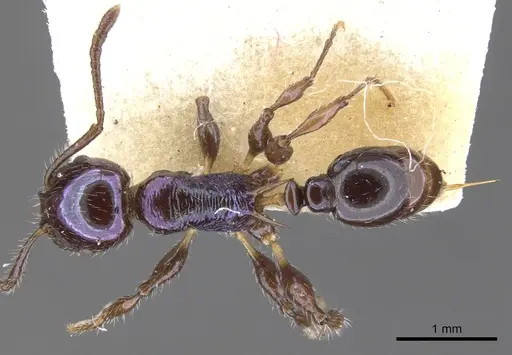
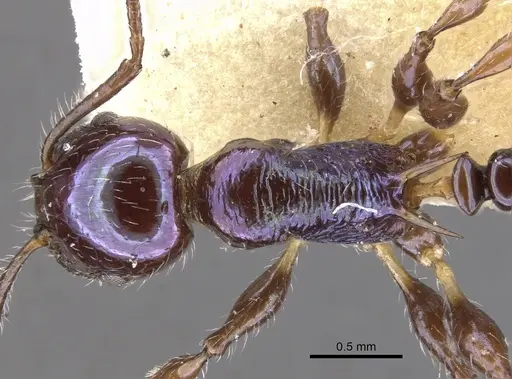
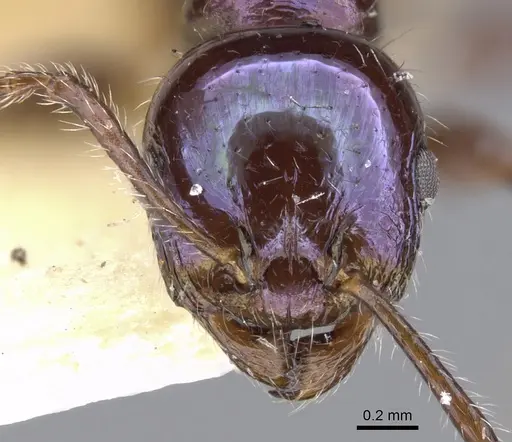
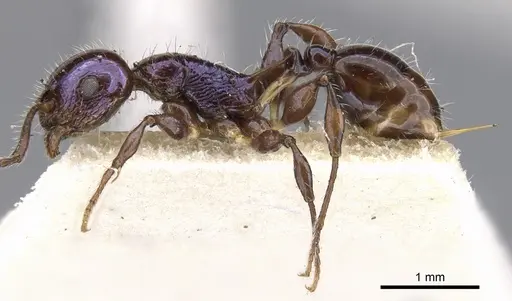
CASENT0904721
Lihat di AntWeb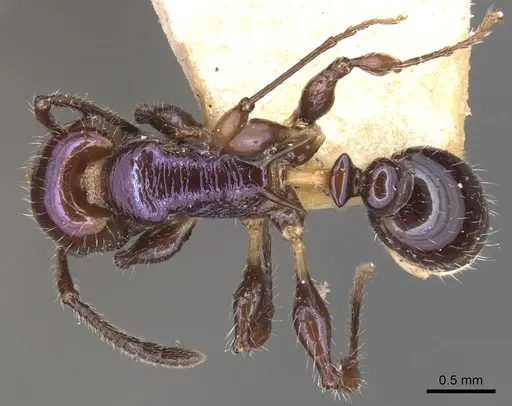
Literatur
Memuat peta distribusi...Memuat produk...