
Temnothorax microreticulatus
- Nama Ilmiah
- Temnothorax microreticulatus
- Tribe
- Crematogastrini
- Subfamili
- Myrmicinae
- Penulis
- Bharti <i>et al.</i>, 2012
- Distribusi
- Ditemukan di 1 negara
Pendahuluan
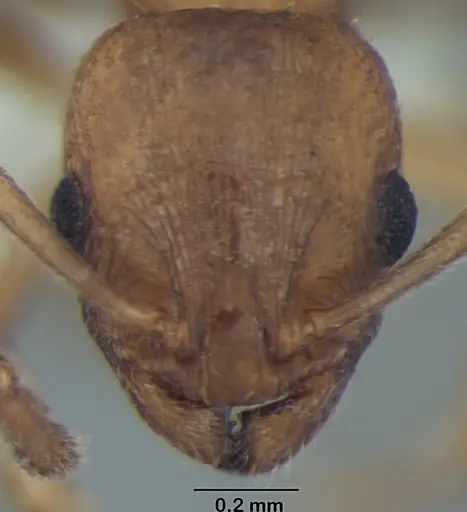
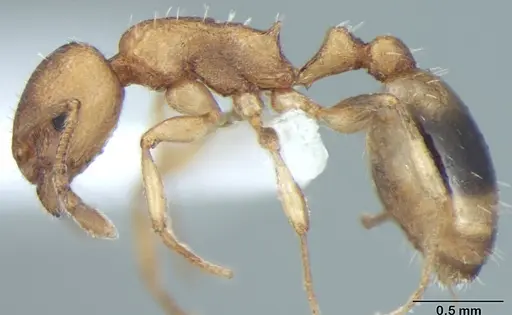
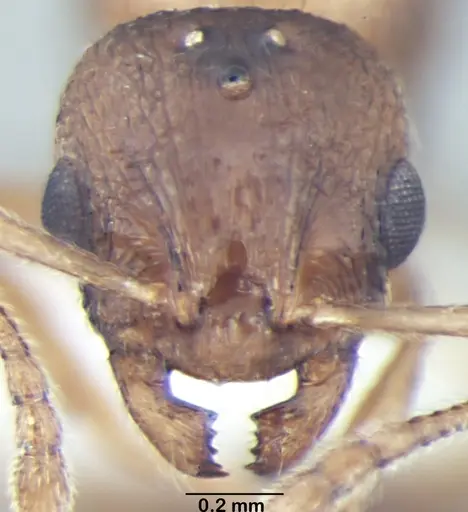
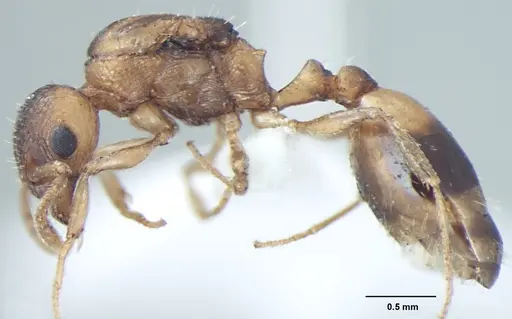
Temnothorax microreticulatus is a tiny ant found in the Himalayas of northern India (Himachal Pradesh) and Pakistan, at elevations between 1700-2100 meters . Workers are 2.8-3.4 mm long , making them one of the smallest ants you might keep - their size means they can slip through standard barrier setups if you're not careful. The species gets its name from the fine net-like (microreticulate) sculpture on its head and thorax, visible under magnification . Their body is light to dark yellow with a reddish tinge, except for a brown patch on the middle of the gaster (abdomen) . This color pattern helps tell them apart from similar species like Temnothorax nordmeyeri, which is uniformly pale yellow . Temnothorax microreticulatus lives in cool, moist forest habitats in the Himalayas - it has been collected from dense pine forests near rivers and from grassy hill slopes, nesting just a few inches deep in soil or under stones . Because it comes from high altitudes, it likely prefers cooler conditions than many common pet ants. Its biology in the wild is only partly known.
Quick Summary
- Difficulty: Medium
- Origin & Habitat: Himalayan region of northern India (Himachal Pradesh) and Pakistan, at elevations 1700-2100 m. Found in moist pine forests beside rivers and on grassy hill slopes, nesting in soil and under stones [1][3]. Endemic to India [4].
- Colony Type: Unknown, no published information on queen number or social structure
- Size & Growth:
- Queen: 3.82 mm [1]
- Worker: 2.8-3.4 mm [1]
- Colony: Unknown, no data on typical colony size
- Growth: Unknown, no detailed data available
- Development: Unknown, specific development times have not been recorded for this species (Based on typical small Myrmicinae patterns, development likely takes several weeks at cool temperatures, but this is unconfirmed)
- Antkeeping:
- Temperature: Cool conditions are strongly recommended given the species' high-altitude origins. Aim for 18-22 °C during the active season, avoid prolonged temperatures above 25 °C. These preferences are inferred from habitat data (1700-2100 m elevation, moist pine forests) [1][3].
- Humidity: Keep the nest substrate moderately moist, mimicking a damp forest floor. Provide a water tube or regularly moisten part of the nest. These ants come from areas with good soil moisture, so they tolerate higher humidity better than dry conditions, this is inferred from their habitat [1][3].
- Diapause: Likely required, as a high‑altitude Himalayan species, a winter rest period of 2-3 months at 5-10 °C is probably necessary for long‑term health. This has not been experimentally confirmed but is inferred from the species' native climate.
- Nesting: Use small, tight‑fitting nests, test tubes work well for founding colonies. For established colonies, a Y‑tong (AAC) or plaster nest with narrow chambers scaled to their tiny 3 mm size is appropriate. They naturally nest in soil a few inches deep and under stones [1][3]. Avoid large open spaces.
- Behavior: These ants are small and generally peaceful. They rely on their size to move through leaf litter and soil rather than on aggression. As a member of the Myrmicinae tribe Crematogastrini, they likely use a spatulate stinger to smear venom rather than sting deeply, but specific observations are lacking. Escape prevention is critical, workers are barely 3 mm long and can squeeze through remarkably small gaps. Foragers are subtle and may not venture far from the nest.
- Common Issues: escape prevention is critical, their tiny 3 mm size means they can slip through standard barriers designed for larger ants, high‑altitude origin means they need cooler temperatures, overheating is a serious risk in warm rooms, winter diapause is likely essential, keeping them active year‑round may weaken the colony, wild‑caught colonies may carry parasites or diseases that cause colony failure in captivity, unknown colony biology (founding type, development time) makes care partly guesswork, be prepared to adapt
Housing and Nest Setup
Because workers are only 2.8-3.4 mm long, standard test tube setups work well for founding colonies, but you must pay extra attention to escape prevention [1]. Pack cotton plugs firmly and consider a thin layer of vaseline around the rim to close any gaps. For larger colonies, a small Y‑tong (AAC) or plaster nest with chambers sized for 3 mm ants is ideal, avoid large, open spaces that make them feel insecure. In the wild they nest in soil a few inches deep and under stones [1], so a naturalistic setup with a thin soil layer and flat stones can mimic their environment. Keep the nest area dark or covered, these ants prefer dim conditions.
Temperature and Seasonal Care
Temnothorax microreticulatus comes from high elevations in the Himalayas (1700-2100 m), so they prefer cooler temperatures than most common ant species [1][3]. Aim for 18-22 °C during the active season. Room temperature above 24 °C may be stressful, if your home is warm, move the colony to a cooler room or use a thermoregulated setup. During winter, a diapause period is probably needed: move the colony to an unheated room or refrigerator (not freezer) at 5-10 °C for 2-3 months. This rest is likely important for colony health, though it has not been experimentally confirmed for this species. Signs that diapause is approaching include workers becoming sluggish and clustering together in late autumn.
Feeding and Diet
Like most small Myrmicinae, these ants are omnivorous. Offer tiny protein sources such as fruit flies, pinhead crickets, or small pieces of mealworm, chop prey to match their 3 mm size. Sugar water, honey, or diluted jam provides energy, some colonies may ignore sweet foods at first. Feed small amounts 2-3 times per week and remove uneaten prey after 24 hours to prevent mold. During founding, the queen will not eat, she relies on stored reserves until the first workers emerge. Once workers appear, they will forage and accept offered food. (No species‑specific feeding studies are available, this advice is based on general Temnothorax care practices.)
Humidity and Water
The natural habitat of this species is moist Himalayan forests [1], so they require higher humidity than typical household ants. Keep the test tube water section filled and the cotton plug consistently damp but not waterlogged. The nest area should feel damp, occasional condensation is fine, but no standing water. A second water tube connected to the nest helps stabilize humidity. In a Y‑tong nest, mist the walls lightly and allow partial drying between mistings. If using a soil substrate, keep it damp to the touch. Provide a moisture gradient so the ants can choose drier spots.
Colony Development
Specific details on colony development for this species are unknown. Based on typical Temnothorax patterns, queens may found colonies claustrally (sealing themselves off and raising the first brood on stored fat reserves), but this has not been observed for Temnothorax microreticulatus. After mating, a queen would lay eggs that develop through larval and pupal stages. The timing from egg to worker is unrecorded, expect at least several weeks at cool temperatures. The first workers are usually smaller than later ones. Colony growth is likely slow. Queens may live for many years, but no lifespan data exists for this species.
Handling and Observation
These tiny ants are best observed through the walls of a test tube or nest, avoid direct handling. They are not aggressive and will simply try to escape if disturbed. Their small size makes them hard to see clearly without magnification, a magnifying glass or macro lens reveals the beautiful microreticulate sculpture that gives them their name [1]. When observing, minimize vibrations and sudden movements. During feeding, watch how workers discover and recruit nestmates, tandem running is common in Temnothorax. Remember that they prefer dim conditions, so bright light may drive them deeper into the nest.
Frequently Asked Questions
How long does it take for Temnothorax microreticulatus to have first workers?
This is not documented for the species. Based on general small Myrmicinae patterns, you might expect nanitics to emerge in 6-10 weeks at about 20 °C, but this is a rough estimate. Monitor the queen and adjust your expectations.
Do Temnothorax microreticulatus sting?
As a Myrmicine ant, it has a functional stinger. The tribe Crematogastrini typically uses a modified spatulate stinger to smear venom rather than injecting it, so a sting would likely be mild. No reports of aggressive stinging exist for this species.
What temperature do Temnothorax microreticulatus need?
Keep them cool, aim for 18-22 °C. They come from high‑altitude Himalayan regions and prefer temperatures lower than most common ant species. Room temperature above 24 °C can be stressful.
How big do Temnothorax microreticulatus colonies get?
Colony size has not been recorded for this species. Given their tiny workers and typical Temnothorax genus patterns, colonies might eventually number a few hundred workers, but this is speculation.
Can I keep multiple queens together?
Not recommended. There is no data on whether this species is polygyne. Most Temnothorax species are monogyne, so unrelated queens would likely fight. If you have more than one queen, house them separately.
Do Temnothorax microreticulatus need hibernation?
Probably yes. As a high‑altitude Himalayan species, a winter rest period (diapause) of 2-3 months at 5-10 °C is likely necessary for long‑term health. This has not been proven, but it matches the natural climate.
What do Temnothorax microreticulatus eat?
They accept small protein sources like fruit flies, small crickets, and mealworms, plus sugar water or honey for energy. Offer small amounts 2-3 times per week. Remove uneaten prey after 24 hours to prevent mold.
Are Temnothorax microreticulatus good for beginners?
They are moderate difficulty. Their small size and escape risk make them challenging, and they need cooler temperatures plus a winter rest. If you have experience with basic ant keeping and can provide cool conditions, they can be rewarding.
Why is my Temnothorax microreticulatus colony dying?
Common causes include: overheating (keep below 22 °C), too‑dry conditions (maintain humidity), lack of winter diapause, mold from overfeeding, or stress from frequent disturbance. Wild‑caught colonies may also carry parasites. Check each factor and adjust.
When should I move my colony to a formicarium?
Wait until the colony has at least a few workers and appears active and stable. Exact timing is not known for this species, let the colony outgrow the test tube before moving. They prefer small, tight spaces, so don't give them a large formicarium too soon.
Report an Issue
The current care sheet is based fully on literature. See inconsistencies, or something that's incorrect? Please , it will be resolved after review from an admin. Contributing to the blogs tab also helps providing information, to make us be able to further improve the caresheets. Thank you for your support!
References

Lembar perawatan ini dilisensikan di bawah CC BY-SA 4.0 .
Blog Komunitas
ANTWEB1008017
Lihat di AntWeb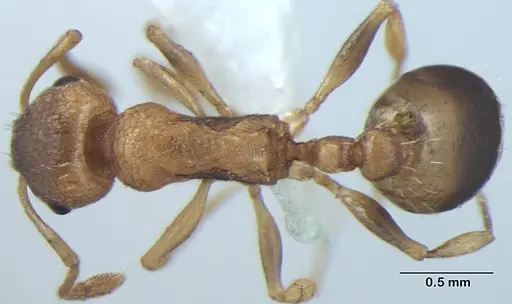
ANTWEB1008018
Lihat di AntWeb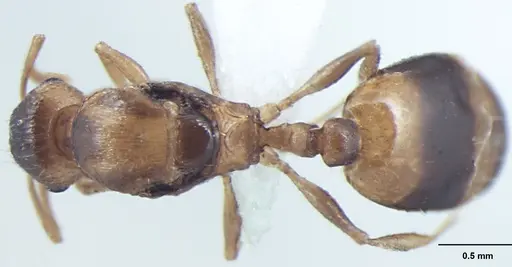
Literatur
Memuat peta distribusi...Memuat produk...