
Temnothorax laestrygon
- Nama Ilmiah
- Temnothorax laestrygon
- Tribe
- Crematogastrini
- Subfamili
- Myrmicinae
- Penulis
- Santschi, 1931
- Distribusi
- Ditemukan di 0 negara
Pendahuluan
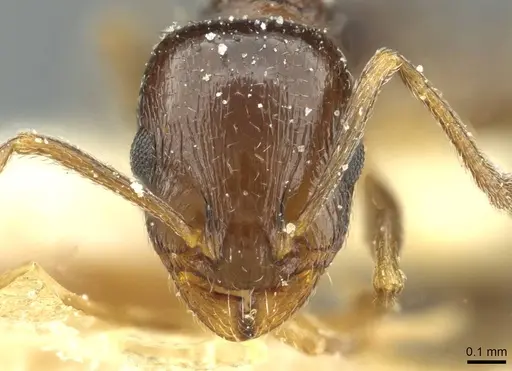
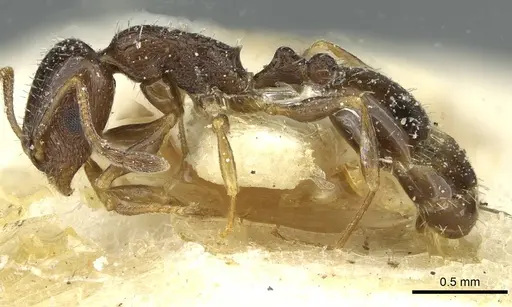
Temnothorax laestrygon is a small, dark-colored ant native to the Mediterranean region . It was originally described from Sicily, Italy, and its range includes Italy (Sicily), Malta, and Turkey . The workers are tiny, measuring about 2-4 mm (inferred from the genus), with a dark body and a triangular petiole that has a distinct crest when seen from the side . This species lives at low elevations under a Mediterranean climate . These ants naturally nest in small cavities, such as hollow stems or under loose bark. They are peaceful and form relatively small colonies. The species was first described as a subspecies of Leptothorax niger before being raised to full species status .
Quick Summary
- Difficulty: Easy
- Origin & Habitat: Mediterranean region: Italy (Sicily), Malta, Turkey. Found at low elevations in areas with a Mediterranean climate [5][3][2].
- Colony Type: Likely monogyne (single queen) based on typical patterns in the genus Temnothorax, though this has not been directly studied for this species.
- Size & Growth:
- Queen: ~4-5 mm, inferred from Temnothorax genus patterns.
- Worker: ~2-4 mm, inferred from Temnothorax genus patterns.
- Colony: Unknown, estimated at under 500 workers based on typical Temnothorax colony sizes.
- Growth: Moderate
- Development: Estimated 6-10 weeks based on related Mediterranean Temnothorax species (not directly studied). (Development time depends on temperature. Mediterranean conditions suggest optimal development around 20-25°C.)
- Antkeeping:
- Temperature: Keep at 20-25°C. A slight temperature gradient is beneficial. Based on the species' Mediterranean origin, they can tolerate warmer temperatures but prefer stable, moderate warmth.
- Humidity: Moderate, keep the nest substrate dry to slightly moist. Too much wetness can cause mold, too dry can desiccate the ants.
- Diapause: Likely benefits from a mild winter rest period of 2-3 months at 10-15°C, as typical for Mediterranean species. Not directly studied.
- Nesting: Small nests with tight chambers work best, Y-tong (AAC) nests or test tube setups. They prefer narrow passages scaled to their tiny size. Avoid large, open spaces.
- Behavior: Peaceful and non‑aggressive. Workers are small but active foragers. They rarely sting and rely on chemical defenses (smear venom). Escape prevention is critical because their tiny bodies can squeeze through very small gaps. Cavity‑nesting specialists that feel secure in tightly enclosed spaces.
- Common Issues: escape prevention is critical due to tiny worker size, use fine mesh and tight-fitting lids, slow colony growth may frustrate beginners, patience is required, overfeeding can lead to mold in small nest setups, wild‑caught colonies may carry parasites that can devastate captive colonies, maintaining proper humidity balance is tricky, too wet causes fungal issues, too dry causes desiccation
Housing and Nest Setup
Temnothorax laestrygon is a cavity‑nesting specialist, so your setup should reflect their natural preference for small, tight spaces [5][2]. A Y‑tong (AAC) nest with narrow chambers works well because it mimics natural hollows. Test tube setups are ideal for founding colonies. Avoid large, open naturalistic setups initially, these tiny ants can feel exposed and may not thrive. If you use a naturalistic setup, provide plenty of small hiding spots and tight spaces. Ensure the formicarium has excellent escape prevention: use fine mesh (at least 0.5 mm) on ventilation holes and make sure lids fit tightly.
Feeding and Diet
As an omnivore, Temnothorax laestrygon eats small protein sources and sugar [5]. Offer appropriately sized prey like fruit flies, pinhead crickets, or tiny mealworms. They also accept sugar water, honey, or diluted maple syrup. In the wild, they forage for small insects and tend aphids for honeydew. Feed protein about twice a week and keep a sugar source available at all times. Because of their small size, start with very small portions and adjust based on consumption. Remove uneaten prey after 24 hours to prevent mold.
Temperature and Seasonal Care
Maintain temperatures around 20-25°C for optimal activity and brood development [5]. As a Mediterranean species, they can tolerate warmer conditions but prefer stability. A heating cable on one side of the nest creates a beneficial gradient. During winter, they likely benefit from a mild diapause of 2-3 months at 10-15°C, though this has not been directly studied. Reduce feeding during this period and gradually lower the temperature to simulate seasonal changes. Resume normal care in spring to trigger renewed activity.
Colony Founding
Founding behavior is unconfirmed, but like most Temnothorax, they likely use claustral founding, the queen seals herself in a small chamber and relies on stored fat reserves until the first workers (nanitics) emerge. This process takes an estimated 6-10 weeks depending on temperature. Keep the founding queen in a dark, quiet spot with no disturbance. After the first workers appear, they will begin foraging for food. At that point, offer tiny amounts of sugar water and small protein items. Avoid disturbing the colony unnecessarily, as stress can cause the queen to abandon or eat brood.
Behavior and Temperament
Temnothorax laestrygon is a peaceful species that rarely shows aggression [5]. Workers are small but active, constantly patrolling and foraging. They are not known to sting and pose no danger to keepers. Their small size makes them excellent escape artists, even tiny gaps can lead to escapes. They are cavity‑nesting specialists and feel most secure in tight, enclosed spaces. Colonies grow slowly relative to more popular species, so patience is essential. Workers communicate via chemical trails and may recruit nestmates through tandem running.
Frequently Asked Questions
How long does it take for Temnothorax laestrygon to produce first workers?
From egg to first worker (nanitics), expect approximately 6-10 weeks at optimal temperatures of 20-25°C. This is an estimate based on related Mediterranean Temnothorax species, as it hasn't been directly studied for this species.
What do Temnothorax laestrygon ants eat?
They are omnivorous. Offer small live prey like fruit flies, tiny crickets, or small mealworms appropriately sized to their ~2-4 mm workers. They also readily accept sugar water, honey, or maple syrup. Feed protein roughly twice weekly and keep sugar available at all times [5].
Can I keep Temnothorax laestrygon in a test tube?
Yes, test tubes work well, especially for founding colonies. These are cavity‑nesting ants that prefer tight spaces. Ensure the test tube has a water reservoir but avoid flooding, too much water can drown the colony. Once the colony grows beyond 20-30 workers, consider moving to a small Y‑tong nest.
Do Temnothorax laestrygon ants sting?
No, they are not known to sting and pose no danger to keepers. They are peaceful ants that rely on chemical defenses (smear venom) rather than piercing stings. However, their small size means escape prevention is critical.
How big do Temnothorax laestrygon colonies get?
Based on typical Temnothorax patterns, colonies likely reach under 500 workers at maturity, but this has not been confirmed for this species. They are not large colony builders like Lasius or Formica. Growth is relatively slow.
Do Temnothorax laestrygon need hibernation?
As a Mediterranean species, they likely benefit from a mild winter rest period (diapause) of 2-3 months at 10-15°C. This mimics their natural seasonal cycle. Reduce feeding and gradually lower temperatures in autumn. Resume normal care in spring.
Are Temnothorax laestrygon good for beginners?
Yes, they are considered easy to keep. They are peaceful, don't require special equipment beyond good escape prevention, and tolerate a range of conditions. The main challenges are their tiny size (escape risk) and slower growth compared to more popular species. Patience is key.
What temperature is best for Temnothorax laestrygon?
Keep them at 20-25°C. This Mediterranean species prefers stable, moderate warmth. A slight temperature gradient allowing them to choose their preferred spot is ideal. Avoid extreme temperatures or sudden fluctuations [5].
Why are my Temnothorax laestrygon escaping?
Their tiny 2-4 mm size means they can squeeze through incredibly small gaps. Check all equipment for any potential escape routes. Use fine mesh (at least 0.5 mm or smaller), ensure lids fit tightly, and consider using barrier products like fluon on edges. Inspect connections between nest and outworld carefully.
When should I move my colony to a formicarium?
Move from a test tube to a small nest (like Y‑tong) when the colony reaches roughly 20-30 workers and the test tube setup shows signs of stress (frequent escape attempts, workers clustering at edges, condensation issues). Ensure the new setup has appropriately sized chambers.
Report an Issue
The current care sheet is based fully on literature. See inconsistencies, or something that's incorrect? Please , it will be resolved after review from an admin. Contributing to the blogs tab also helps providing information, to make us be able to further improve the caresheets. Thank you for your support!
References

Lembar perawatan ini dilisensikan di bawah CC BY-SA 4.0 .
Blog Komunitas
CASENT0912954
Lihat di AntWeb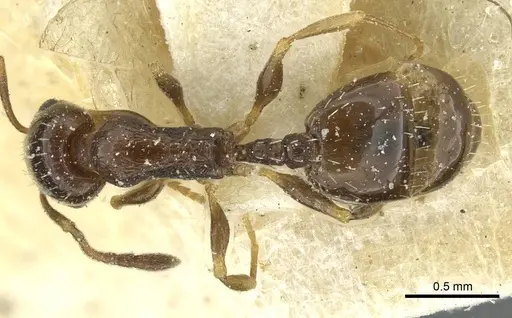
Literatur
Memuat peta distribusi...Memuat produk...