
Temnothorax kirghizicus
- Nama Ilmiah
- Temnothorax kirghizicus
- Tribe
- Crematogastrini
- Subfamili
- Myrmicinae
- Penulis
- Tarbinsky, 1976
- Distribusi
- Ditemukan di 0 negara
Pendahuluan
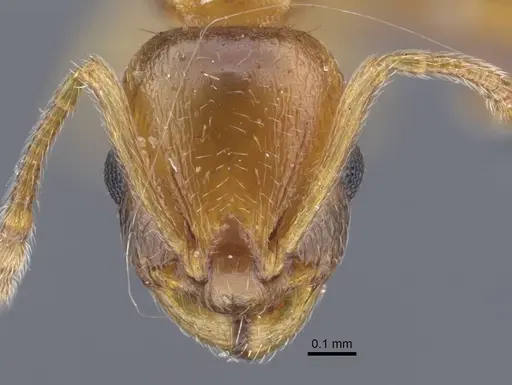
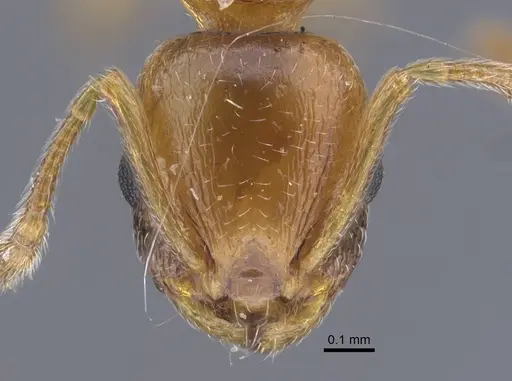
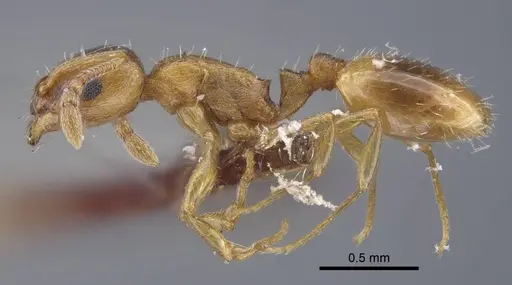
Temnothorax kirghizicus is a small ant species native to Kyrgyzstan in Central Asia. Workers are tiny, typically around 2-4 mm, with the genus known for their compact body and relatively smooth surface. The species was first described as Leptothorax kirghizicus in 1976 and reclassified to Temnothorax in 2003 . Queens were described later in 1995 . It's a Palaearctic species, found only in the mountainous regions of Kyrgyzstan, where the climate has cold winters and warm, dry summers . Like other Temnothorax, these ants are discreet and likely nest in ready-made cavities rather than digging their own. They belong to the subfamily Myrmicinae and tribe Crematogastrini, giving them a unique defense mechanism: they use a modified, flattened stinger to smear venom onto enemies instead of piercing them. This is a shy, non-aggressive species that relies on camouflage and escape rather than confrontation.
Quick Summary
- Difficulty: Easy
- Origin & Habitat: Kyrgyzstan in Central Asia (Palaearctic Region). Inhabits mountainous areas with a continental climate: cold winters and warm, dry summers [2].
- Colony Type: Likely monogyne (single-queen colonies) based on typical Temnothorax genus patterns. No specific data on colony structure for this species.
- Size & Growth:
- Queen: ~5-6 mm, inferred from Temnothorax genus (no direct measurements available) [1].
- Worker: ~2-4 mm, inferred from Temnothorax genus (no direct measurements available) [1].
- Colony: Colony size is unknown but probably small, related species reach up to 500 workers.
- Growth: Moderate, typical for temperate-clade Temnothorax
- Development: Estimated 6-10 weeks at optimal temperature based on related temperate Temnothorax species. (Development is temperature‑dependent, cooler conditions will slow it down. These numbers are genus‑level estimates, no species‑specific data exist.)
- Antkeeping:
- Temperature: Keep at room temperature (18-22°C) with a slight gradient. This mountain species prefers cool conditions, avoid anything above 25°C. Recommended range based on its ecology.
- Humidity: Moderate, keep the nest substrate slightly moist but not waterlogged, and provide a dry zone for choice. Mountain habitats have seasonal moisture, so a gradient is best.
- Diapause: Yes, likely required. The cold winters of Central Asia make a winter rest period advisable. Reduce temperature to 10-15°C for 2-3 months in winter (November to February in the Northern Hemisphere).
- Nesting: Prefers small, pre‑formed cavities. Y‑tong (AAC) nests with narrow chambers, small test tube setups, or flat stone naturalistic nests work well. They do not excavate, provide ready‑made chambers.
- Behavior: Generally calm and non‑aggressive. Workers are tiny and forage individually or in small groups. Their defense is a smearing venom, not a piercing sting, they rarely use it on humans. Due to their size (under 4 mm), escape prevention is critical: use tight‑fitting lids and very fine mesh. They are likely visual foragers active during daylight.
- Common Issues: escape is a major risk due to tiny size, use extremely fine mesh and seal any gaps., overheating can be fatal, avoid temperatures above 25°C, which can stress the colony., colony growth is slow and stays small, don't expect rapid population increases., skipping winter diapause may weaken or kill the colony, provide a cold rest period if possible., species‑specific care details are scarce, most advice is based on related Temnothorax, not direct observation.
Housing and Nest Setup
Temnothorax kirghizicus does best in compact nests that match their small size. Y‑tong (AAC) nests with narrow chambers work great, as do small test tube setups. These ants don't dig, they move into ready‑made cavities, so give them pre‑formed chambers. A flat stone setup with a suitable cavity underneath also mimics their natural home. Keep the nest on the smaller side, too much space can make them feel insecure. The nest should be kept moderately moist (but not wet) with good air flow to stop mold. Double‑check all seals, workers can squeeze through tiny gaps [1].
Feeding and Diet
These ants are omnivores with a taste for protein. Offer small prey like fruit flies, tiny crickets, or pieces of mealworm. They'll also take sugar water or honey water, but protein should be the main food. Feed small amounts 2‑3 times a week, and remove leftovers after 24 hours. Portions should be tiny, one fruit fly feeds several workers. Always provide fresh water, either through a test tube water source or a small dish with a sponge [1].
Temperature and Seasonal Care
Keep the colony at a cool room temperature,18‑22°C, with a slight gradient so workers can choose. They come from high, cool mountains, so anything above 25°C can hurt them. During winter, they need a diapause: lower the temperature to 10‑15°C for 2‑3 months (roughly November to February). This rest period is important for long‑term health. While in diapause, stop feeding and leave the colony alone. In spring, warm them up slowly back to normal temps [1].
Colony Development and Growth
Colonies grow at a moderate pace, like most temperate Temnothorax. After the queen raises her first brood alone (likely claustral founding), the first tiny workers (nanitics) appear in about 6‑10 weeks at good temperatures. These workers are smaller than mature ones. Growth is steady but never explosive, don't expect huge numbers. Maximum colony size is probably under 500 workers. Be patient, this species is built for sustainability, not speed [1].
Defense and Behavior
Temnothorax kirghizicus is a shy ant. It doesn't bite or stinger much, instead, it uses a unique defense: a flattened stinger that smears venom onto attackers. This comes from its family (Myrmicinae, tribe Crematogastrini). Workers are small and prefer to flee or hide rather than fight. In the nest, they are calm and easy to observe if not disturbed. Their tiny size makes escape a real risk, always use the finest mesh you can find.
Frequently Asked Questions
How long does it take for Temnothorax kirghizicus to produce first workers?
From egg to first worker, expect about 6‑10 weeks at room temperature (20°C). This is typical for temperate Temnothorax. The first workers (nanitics) will be very small [1].
Do Temnothorax kirghizicus ants need hibernation?
Yes, they likely need a winter diapause. Since they come from Central Asia with cold winters, give them 2‑3 months at 10‑15°C during winter. Skipping it may harm the colony [1].
What temperature is best for Temnothorax kirghizicus?
Keep them at 18‑22°C. They prefer cooler conditions, avoid temperatures above 25°C. A gradient helps them regulate [1].
How big do Temnothorax kirghizicus colonies get?
Colony size is not known for this species, but related Temnothorax usually have small colonies, up to a few hundred workers. Expect a modest, slow‑growing population [1].
Can I keep multiple queens together in Temnothorax kirghizicus?
There's no data, but most Temnothorax are monogyne (single queen). Keeping multiple queens together will likely cause fighting. It's not recommended [1].
What do Temnothorax kirghizicus ants eat?
They eat small insects (fruit flies, tiny crickets) and sweet liquids (honey water, sugar water). Give protein 2‑3 times a week in very small amounts [1].
Are Temnothorax kirghizicus ants good for beginners?
Yes, they're easy. They stay calm, need cool temperatures, and don't need huge space. The main challenge is preventing escape because they are so small, use fine mesh and tight lids [1].
Do Temnothorax kirghizicus ants sting?
They have a stinger, but it's used to smear venom rather than pierce. They are not aggressive and their venom is very mild. Not dangerous to humans [1].
What type of nest is best for Temnothorax kirghizicus?
A compact nest with small chambers: Y‑tong (AAC), a small test tube, or a flat stone nest with a cavity. They need pre‑formed spaces, not digging material [1].
Why are my Temnothorax kirghizicus dying?
Common causes are overheating (above 25°C), improper moisture (too wet or too dry), skipped winter diapause, or escape due to their small size. Check each point and adjust. If the nest is too big, they may feel unsafe [1].
Report an Issue
The current care sheet is based fully on literature. See inconsistencies, or something that's incorrect? Please , it will be resolved after review from an admin. Contributing to the blogs tab also helps providing information, to make us be able to further improve the caresheets. Thank you for your support!
References

Lembar perawatan ini dilisensikan di bawah CC BY-SA 4.0 .
Blog Komunitas
CASENT0917444
Lihat di AntWeb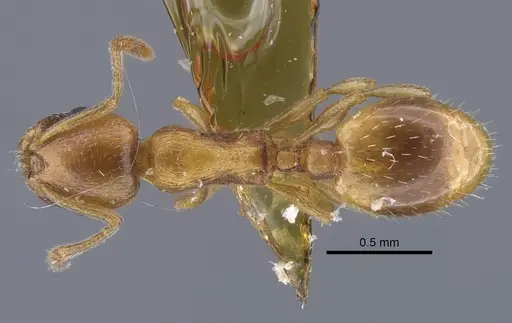
Literatur
Memuat peta distribusi...Memuat produk...