
Temnothorax elmenshawyi
- Nama Ilmiah
- Temnothorax elmenshawyi
- Tribe
- Crematogastrini
- Subfamili
- Myrmicinae
- Penulis
- Sharaf <i>et al.</i>, 2019
- Distribusi
- Ditemukan di 0 negara
Pendahuluan
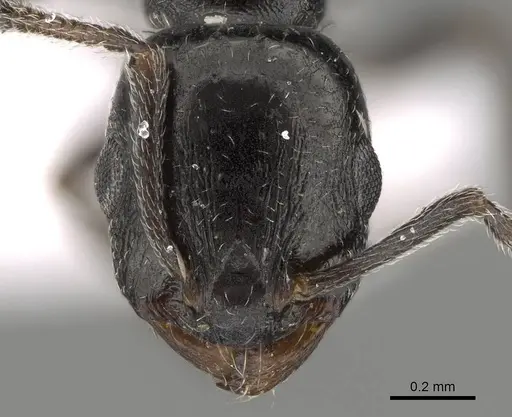
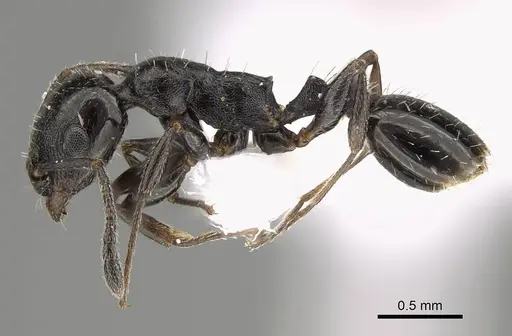
Temnothorax elmenshawyi is a tiny, uniformly black ant species recently described from the Asir Mountains in southwestern Saudi Arabia . Workers are very small; total length is unmeasured in the literature, but inferred from genus patterns at roughly 2.5-3.5mm. They have a distinctively elongated head and moderately large eyes . The species stands out among Arabian Temnothorax by its short, acute propodeal spines, a distinct metanotal groove, and the mostly unsculptured, shiny surface on the back half of the head . This ant lives in one of the last remaining dense juniper forests (Juniperus procera) on the Arabian Peninsula, at about 2578 meters elevation . T. elmenshawyi is one of the rarest documented ant species - only two workers have ever been collected, despite extensive sampling with over 220 pitfall traps over two years . Queens and males are completely unknown, and no observations exist on colony structure, founding, or daily activities . Keeping this species means pioneering its care from scratch.
Quick Summary
- Difficulty: Unknown, biology unstudied, recommend Expert level
- Origin & Habitat: Asir Mountains, Saudi Arabia, at 2578m elevation in dense juniper forest remnants [1]
- Colony Type: Unknown, only workers described, queen caste unknown [1]
- Size & Growth:
- Queen: Unknown, queen not yet described [1]
- Worker: Total length unmeasured, inferred from genus patterns at approximately 2.5-3.5mm (no direct TL given in literature) [1]
- Colony: Unknown, only two workers ever collected [1]
- Growth: Unknown
- Development: Unknown, no biological studies exist (Based on typical Temnothorax patterns, expect 6-10 weeks from egg to first worker at optimal temperature)
- Antkeeping:
- Temperature: Likely prefers cool conditions given high-elevation mountain habitat (2578m). Inferred from habitat: aim for 18-22°C with a gentle gradient. Monitor colony activity to fine-tune.
- Humidity: Mountain juniper forest environment suggests moderate to high humidity needs. Keep nest substrate consistently moist but not waterlogged, with some drier areas available.
- Diapause: Unknown, likely requires winter rest given temperate-mountain origin, but no direct data exists
- Nesting: No specific nesting data exists. Inferred from genus patterns and tiny worker size: likely nests in small cavities under stones or in rotting wood. A Y-tong (AAC) nest with tight chambers or a small naturalistic setup would be appropriate starting points.
- Behavior: Behavior is completely unstudied. Based on typical Temnothorax patterns, these are likely peaceful ants that nest in small colonies. Their tiny size means excellent escape prevention is critical, they can squeeze through standard test tube barriers. Expect non-aggressive temperament typical of the genus.
- Common Issues: escape prevention is critical due to tiny worker size, use fine mesh and tight-fitting barriers, no biological data exists, keepers must pioneer care methods through observation, colony may fail if kept at room temperature without understanding their actual needs, wild-caught colonies may be extremely difficult to obtain given their rarity
Discovery and Rarity
Temnothorax elmenshawyi was only described in 2019,making it one of the most recently discovered Arabian ant species [1]. The species is named in honor of the late Egyptian Qur'an reader Mohamed Siddiq El-Menshawy (1920-1969) [1]. What makes this species extraordinary is its extreme rarity, researchers placed over 220 pitfall traps across the Asir Mountains over two years and only captured two workers [1]. This suggests T. elmenshawyi is a regional endemic, possibly found only in this specific juniper forest habitat [1]. The Asir Mountains extend into Yemen, so the species may also occur there, but no specimens have been documented [1]. For antkeepers, this means acquiring this species would be exceptionally difficult and ethically questionable given how little exists in the wild.
Identification and Appearance
Workers are uniformly black with pale brown tibiae and tarsi, making them distinctive among Arabian Temnothorax species which are typically yellowish [1]. The head is longer than broad with a nearly straight posterior margin and rounded corners. They have moderately large eyes with about 16 ommatidia in the longest row. The propodeal spines are short, acute, and broadly based. The petiole lacks a peduncle entirely, the anterior face forms a shallow concavity and meets the node at a right angle. The postpetiole is globular and trapezoidal when viewed from above, about 1.2-1.3 times broader than long [1]. These morphological details are important for identification but also suggest a small, compact ant suited for life in tight nest cavities.
Habitat and Environmental Conditions
The type locality is Raydah in the Asir Province, about 10km west of Abha city at coordinates 18.201583°N,42.408933°E [1]. This area sits at approximately 2578 meters elevation and contains one of the last remaining dense juniper forests (Juniperus procera) on the Arabian Peninsula [1]. This high-elevation, relatively cool and moist environment provides clues about care requirements. Juniper forests at this altitude experience cooler temperatures than lowland Arabia and likely maintain higher humidity. The extreme elevation suggests this species is adapted to cooler conditions than typical tropical ants, keepers should aim for the cooler end of typical room temperature ranges.
Care Recommendations
Since no biological data exists for this species, care must be based on inference from the genus and habitat. Start with a small nest setup, Y-tong (AAC) or a small plaster nest with tight chambers scaled to their tiny size. Temperature should be cool compared to most ants, aim for 18-22°C, possibly lower given their 2578m elevation origin. Humidity should be moderate to high, mimicking the moist juniper forest floor. Because they are so small, escape prevention must be excellent, standard test tube cotton barriers may not suffice. Use fine mesh and check for gaps regularly. Feed small protein sources like fruit flies, small mealworms, or similar micro-prey. Since nothing is known about their acceptance of sugar, offer honey water or sugar water but do not rely on it as a primary food source. The most important advice is to observe your colony carefully and document your findings, you may be contributing to the first biological knowledge of this species. [1]
Research Gaps and What We Don't Know
This species represents a blank slate in ant biology. Queens have never been described, we don't know their size, morphology, or whether they have wings. Males are equally unknown. Colony structure is completely unstudied, we don't know if they are single-queen (monogyne) or multi-queen (polygyne) colonies. Founding behavior is unconfirmed [1]. Nuptial flight timing and behavior are unknown. Development time from egg to worker is unmeasured. This is both a challenge and an opportunity for antkeepers, caring for this species means pioneering husbandry methods for an ant that has never been observed in captivity.
Frequently Asked Questions
How big do Temnothorax elmenshawyi workers get?
Workers are very small. Total length is unmeasured in the literature, but based on typical Temnothorax patterns they are estimated at about 2.5-3.5mm [1].
What do Temnothorax elmenshawyi ants eat?
Diet is completely unstudied. Based on typical Temnothorax genus behavior, they likely accept small live prey like fruit flies, springtails, and other micro-arthropods. Sugar acceptance is unknown, offer honey water or sugar water occasionally but do not rely on it as a primary food source.
What temperature do Temnothorax elmenshawyi ants need?
No specific data exists, but their high-elevation mountain habitat (2578m in the Asir Mountains) suggests they prefer cool conditions. Based on habitat inference, aim for 18-22°C with a gentle gradient. Start cooler and adjust based on colony activity [1].
Are Temnothorax elmenshawyi ants good for beginners?
No. This species is not recommended for beginners. Biology is completely unstudied, no information exists about colony structure, founding behavior, temperature preferences, diet, or any basic husbandry requirements. Keeping this species requires the ability to experiment and document findings without established care guidelines [1].
How long does it take for Temnothorax elmenshawyi to develop from egg to worker?
Development timeline is completely unmeasured. Based on typical Temnothorax genus patterns, expect approximately 6-10 weeks from egg to first worker at optimal temperature. This is an estimate only, actual development time for this species may differ significantly.
Do Temnothorax elmenshawyi ants sting?
Stinging ability is not documented for this specific species. As Myrmicinae ants, they have stingers, and based on subfamily tribe Crematogastrini, the primary defense mechanism is 'smear', they use a modified flattened stinger to wipe or smear venom onto enemies rather than piercing skin. Temnothorax species are typically non-aggressive, and their tiny size means any sting would be minimal.
Can I keep multiple Temnothorax elmenshawyi queens together?
Unknown, colony structure has not been studied. We don't know if they are single-queen (monogyne) or multi-queen (polygyne) colonies. Combining unrelated queens is not recommended given the complete lack of data on their social structure [1].
Do Temnothorax elmenshawyi ants need hibernation?
Likely yes, given their temperate mountain origin at 2578m elevation. However, no direct data exists on diapause requirements. Based on similar high-elevation Temnothorax species, expect a winter rest period at cool temperatures (5-10°C) for several months. More observation is needed to confirm [1].
Where is Temnothorax elmenshawyi found?
Only known from the Asir Mountains in southwestern Saudi Arabia, specifically the Raydah area about 10km west of Abha city at 2578m elevation [1]. The species may also occur in Yemen due to extension of the Asir Mountains, but this is unconfirmed [1].
Why is Temnothorax elmenshawyi so rare?
Only two workers have ever been collected despite extensive sampling with over 220 pitfall traps over two years [1]. This extreme rarity likely reflects both genuine low population density and very restricted habitat, they appear to live only in the remaining juniper forest patches in the Asir Mountains [1]. This makes them one of the rarest documented ant species.
Report an Issue
The current care sheet is based fully on literature. See inconsistencies, or something that's incorrect? Please , it will be resolved after review from an admin. Contributing to the blogs tab also helps providing information, to make us be able to further improve the caresheets. Thank you for your support!
References

Lembar perawatan ini dilisensikan di bawah CC BY-SA 4.0 .
Blog Komunitas
CASENT0922350
Lihat di AntWeb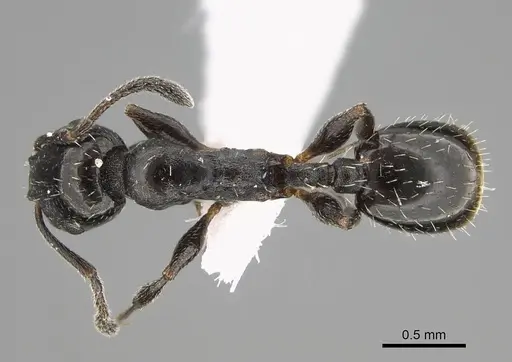
Literatur
Memuat peta distribusi...Memuat produk...