
Temnothorax canescens
- Nama Ilmiah
- Temnothorax canescens
- Tribe
- Crematogastrini
- Subfamili
- Myrmicinae
- Penulis
- Santschi, 1908
- Distribusi
- Ditemukan di 0 negara
Pendahuluan
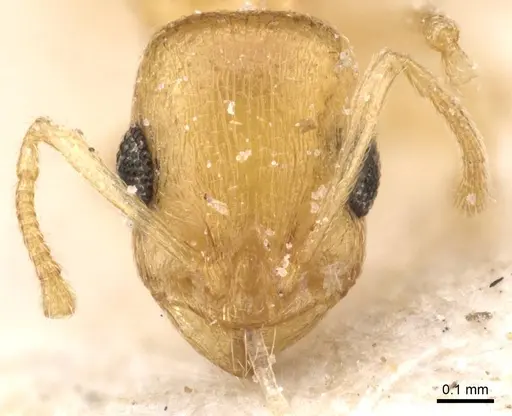
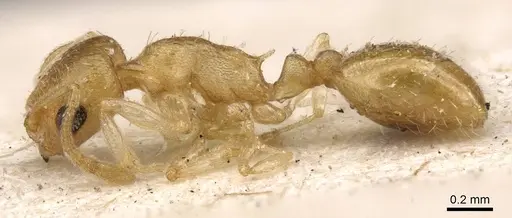
Temnothorax canescens is a tiny, pale yellow ant native to the Canary Islands, a subtropical archipelago off the coast of Africa . Workers and queens are uniformly yellow with well‑developed ocelli, short scapes, and long propodeal spines . One notable feature is their relatively large eyes compared to darker, diurnal relatives - a likely adaptation for activity during low‑light conditions such as dawn, dusk, or night . The species is a Canarian endemic, evolving in the isolated volcanic habitats of the islands. Like most Temnothorax, this ant nests in small, pre‑existing cavities - under stones, in rotting wood, or among leaf litter. Their tiny size allows them to occupy spaces that larger ants cannot use. The pale coloration is accompanied by enlarged eyes, a pattern seen in other nocturnal or crepuscular ants . Because so little is known about their specific biology, many care recommendations are inferred from related species.
Quick Summary
- Difficulty: Easy
- Origin & Habitat: Canary Islands, Spain (Palaearctic Region), endemic to this Macaronesian archipelago [1][2]. Distribution: Canary Islands.
- Colony Type: Unknown, no direct documentation exists. Based on typical Temnothorax patterns, colonies are likely monogyne (single queen) and relatively small, but this is unconfirmed.
- Size & Growth:
- Queen: Size data unavailable, inferred from Temnothorax genus (queens typically ~3-4 mm). No species‑specific total length recorded.
- Worker: Size data unavailable, inferred from Temnothorax genus (workers typically 2-3 mm).
- Colony: Not documented for this species. Inferred from related Temnothorax: mature colonies probably contain up to a few hundred workers.
- Growth: Not directly studied, inferred as slow to moderate, typical for small Myrmicinae with limited colony size.
- Development: Not documented, based on related Temnothorax,6-8 weeks at optimal temperatures (~22 °C). (Development time is inferred from genus‑level data, exact timeline depends on temperature and colony health.)
- Antkeeping:
- Temperature: Maintain at mild, stable temperatures typical of a subtropical island: 20-24 °C. Avoid direct heat sources or direct sunlight, which can overheat small nests. Slight cooling to 15-18 °C during winter months (Nov-Feb) may be beneficial, but true diapause is not expected [3].
- Humidity: Keep the nest substrate slightly moist but not waterlogged. Provide a moisture gradient, one area moist, another drier, so ants can choose their preferred conditions. Overly dry setups can harm founding queens [1].
- Diapause: Unlikely to require true diapause given subtropical origin. A brief, mild cooling (15-18 °C for 4-6 weeks) in winter is optional and may help simulate natural seasonal slowdown.
- Nesting: Use small, tight chambers. Y‑tong (AAC) nests or plaster nests with narrow galleries work well. Provide fine substrate (e.g., sand mixed with clay) for humidity control. Acrylic nests are not recommended. Avoid large, open spaces, these ants feel secure in compact cavities.
- Behavior: Likely peaceful and shy, like most Temnothorax. Workers forage individually or in small groups, hunting tiny prey and collecting honeydew. Their tiny size (under 3 mm) makes escape a constant risk, gaps that seem sealed are often passable. Use fine mesh, tight seals, and a fluon barrier on container rims. The modified stinger is used for smearing venom, not piercing, so stings are not a concern for humans.
- Common Issues: escape prevention is critical, workers can slip through any gap larger than ~0.5 mm, so seal all connections and use fine mesh., small colony size means each loss is significant, avoid disturbing founding queens or small colonies., overheating kills quickly, keep the nest away from windows, heating cables, and direct sunlight., wild‑caught colonies from the Canary Islands may carry parasites or pathogens not adapted to captive conditions., dry conditions cause founding queens to fail, ensure the nest substrate never dries out completely.
Housing and Nest Setup
Because Temnothorax canescens is so tiny, housing must be scaled to match. A test tube setup with a small‑diameter tube and cotton water reservoir works well for founding colonies. For growing colonies, Y‑tong (AAC) or plaster nests with narrow chambers are ideal. These ants naturally live in tight cavities under stones or in decayed wood, so they feel secure in compact spaces with small entrances [1].
Escape prevention is the biggest challenge. Workers can push through cotton bungs and squeeze through gaps that appear sealed. Use fluon or PTFE barriers on container rims, fine mesh (e.g.,0.5 mm) on ventilation holes, and check joints regularly. Never assume a gap is too small.
Feeding and Diet
Like most Temnothorax, this species is omnivorous. Offer tiny protein sources: fruit flies, pinhead crickets, or small pieces of mealworms. Sugar is equally important, provide drops of honey water, sugar water, or honey. In the wild they likely collect honeydew from aphids. Feed small amounts every 2-3 days once workers are present, and remove uneaten food after 24 hours to prevent mold [1]. Founding queens do not need feeding until the first workers appear.
Temperature and Seasonal Care
Keep the colony at mild, stable temperatures, 20-24 °C suits their subtropical origin. Room temperature is often sufficient, but in cooler months a heating cable under part of the nest can create a gradient. Monitor actual nest temperature, not just room air. Direct sunlight and heating pads can overheat tiny nests quickly, avoid both [3].
True winter diapause is probably not needed, but a gentle cooling (15-18 °C) for 4-6 weeks in winter may help cycle the colony. Reduce feeding during this period. If you choose to skip cooling, maintain normal temperatures year‑round.
Colony Founding
Founding behavior has not been directly observed for this species. Based on typical Temnothorax patterns, queens are likely claustral: after mating they seal themselves in a small chamber, lay eggs, and raise the first workers without foraging, using stored fat reserves [1]. Do not disturb a founding queen for at least 4-6 weeks. Check only by observing from outside the setup. If you must peek, do it during a brief light check, too much disturbance can cause the queen to eat her brood. Wait until you see workers before offering food.
Behavior and Observation
Workers are pale yellow with enlarged eyes, a trait that suggests they are active during low‑light conditions such as dawn, dusk, or night [3]. They move cautiously and are not aggressive. Their defense relies on smearing venom from a modified stinger, not on piercing, stings are not a concern for humans. Foraging appears to be solitary or in small groups. These ants make excellent subjects for observation of claustral founding and brood care, though their tiny size requires a magnifier or close‑up photography.
Frequently Asked Questions
How long does it take for Temnothorax canescens to raise first workers?
Not documented for this species. In related Temnothorax, queens produce workers in 6-8 weeks at 20-24 °C. The exact timing depends on temperature and how often the queen is disturbed.
Can I keep Temnothorax canescens in a test tube?
Yes. A small‑diameter test tube with a cotton water reservoir is ideal for founding. Cover the opening with a cotton plug and apply fluon to the rim of the container to prevent escapes. Once the colony reaches about 20-30 workers, transfer to a more spacious Y‑tong or plaster nest.
Do Temnothorax canescens sting?
They have a modified stinger used to smear venom onto attackers, but it cannot pierce human skin. The venom is not dangerous, but it may cause minor irritation. Their bite is negligible due to their tiny size.
What do Temnothorax canescens eat?
They eat small insects (fruit flies, pinhead crickets, mealworm pieces) for protein, and sugary liquids (honey water, sugar water, honey) for energy. Provide both once workers are present. Founding queens do not need food.
Are Temnothorax canescens good for beginners?
Yes, their simple care and peaceful nature make them suitable. However, their tiny size means escape prevention is critical, not a challenge for absolute beginners. Use fine barriers and stay vigilant.
How big do Temnothorax canescens colonies get?
Not directly recorded. Based on related Temnothorax, mature colonies likely contain up to a few hundred workers. They are not large colony formers.
Do Temnothorax canescens need hibernation?
Probably not. Being from a subtropical climate, they do not require a cold diapause. A brief cooler period (15-18 °C for 4-6 weeks) in winter is optional and may help health, but is not essential.
Why are my Temnothorax canescens escaping?
Their tiny size lets them slip through gaps that seem too small. Use fluon on container rims, fine mesh for ventilation (0.5 mm or smaller), and seal all tube connections. Replace cotton plugs regularly as they can be pushed aside.
Can I keep multiple Temnothorax canescens queens together?
Not recommended. The species is likely monogyne (single queen per colony). Pairing unrelated queens often results in fighting. Let each queen found her own colony.
Where is Temnothorax canescens native to?
The Canary Islands, Spain, a subtropical island chain off the coast of northwest Africa [1][2]. They are endemic to these islands.
Report an Issue
The current care sheet is based fully on literature. See inconsistencies, or something that's incorrect? Please , it will be resolved after review from an admin. Contributing to the blogs tab also helps providing information, to make us be able to further improve the caresheets. Thank you for your support!
References

Lembar perawatan ini dilisensikan di bawah CC BY-SA 4.0 .
Blog Komunitas
CASENT0912917
Lihat di AntWeb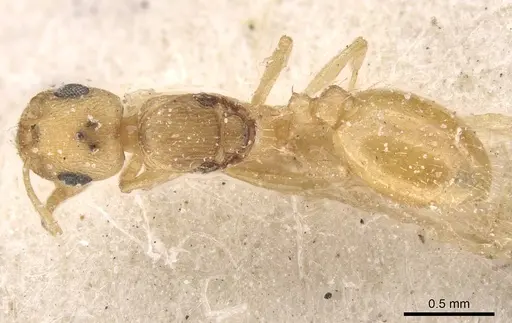
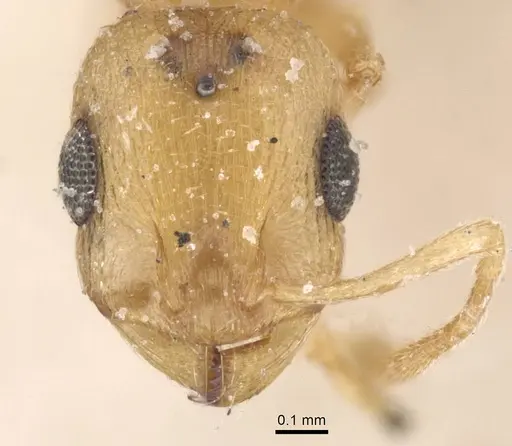
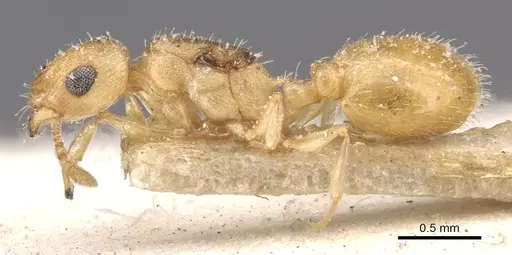
CASENT0912918
Lihat di AntWeb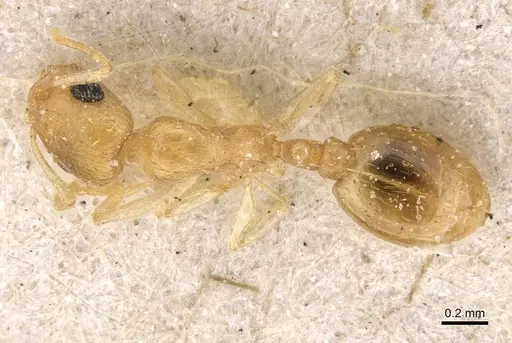
Literatur
Memuat peta distribusi...Memuat produk...