
Temnothorax baeticus
- Nama Ilmiah
- Temnothorax baeticus
- Tribe
- Crematogastrini
- Subfamili
- Myrmicinae
- Penulis
- Emery, 1924
- Distribusi
- Ditemukan di 1 negara
Pendahuluan
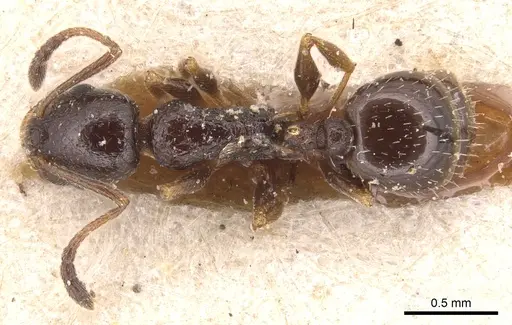
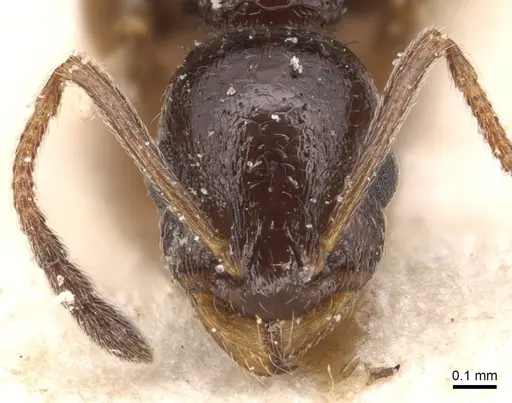
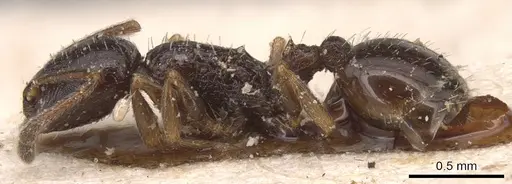
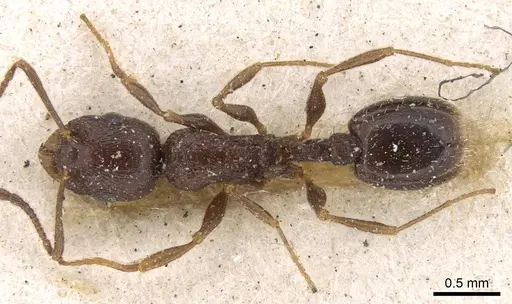
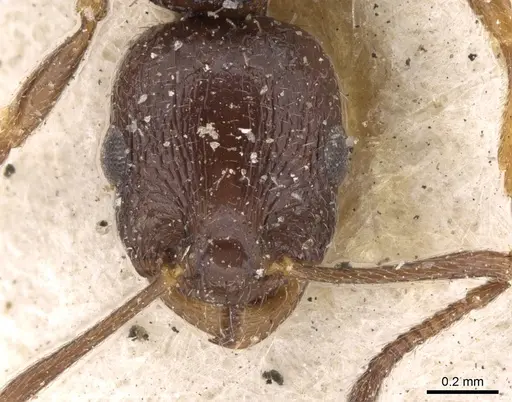
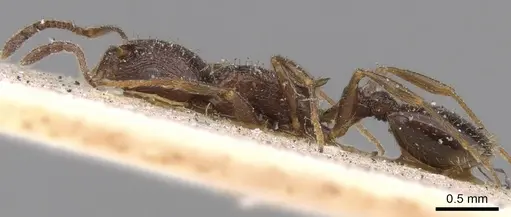
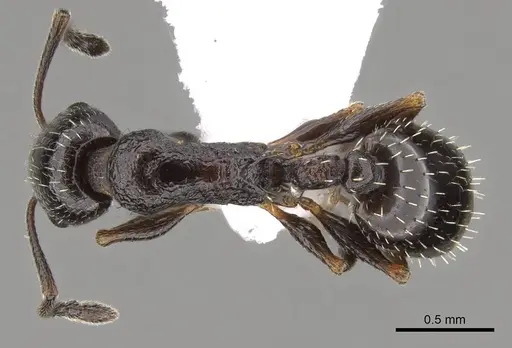
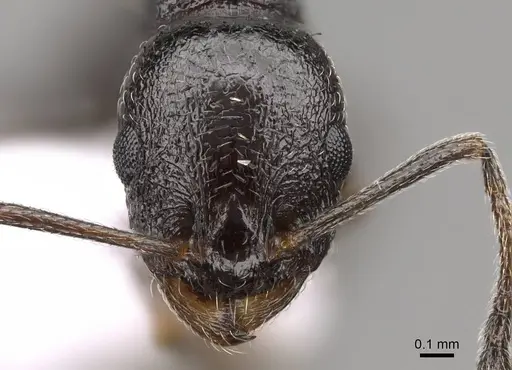
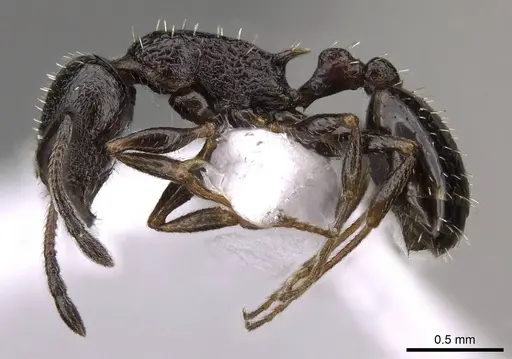
Temnothorax baeticus is a small ant in the Myrmicinae subfamily, found in southern Spain and Gibraltar . It was originally described as Leptothorax baeticus by Emery in 1924 based on workers . The queen and male were later described by Santschi (1931) and Tinaut (1989) . As a member of the Crematogastrini tribe, it uses a modified stinger to smear venom onto enemies rather than piercing. In its Mediterranean habitat, it nests in pre-existing cavities like hollow stems, rotting wood, or under stones.
Quick Summary
- Difficulty: Easy
- Origin & Habitat: Iberian Peninsula, Gibraltar, southern Spain [1]. Inhabits Mediterranean habitats with dry summers and mild, wet winters.
- Colony Type: Unconfirmed, based on typical Temnothorax patterns, likely monogyne (single queen).
- Size & Growth:
- Queen: Inferred from genus: ~5-7 mm
- Worker: Inferred from genus: ~2-4 mm
- Colony: Up to a few hundred workers, typical for Temnothorax
- Growth: Moderate
- Development: Estimated 6-10 weeks based on related species, but unconfirmed for this species (Development time depends on temperature, warmer conditions speed growth.)
- Antkeeping:
- Temperature: 20-25°C, provide a slight gradient so workers can choose their preferred spot.
- Humidity: Moderate, keep the nest substrate slightly moist in one area but allow a dry zone to avoid waterlogging.
- Diapause: Likely required, inferred from its temperate origin. Cool the colony to 10-15°C for 2-3 months in winter.
- Nesting: Small, tight chambers mimicking natural cavities. Y-tong (AAC), plaster, or test tube setups work well.
- Behavior: Non‑aggressive and calm. Uses a smear defense (applies venom with a flattened stinger), not harmful to humans. Alert foragers, but their tiny size makes escape prevention critical.
- Common Issues: escape prevention is vital, workers can fit through gaps under 1 mm., slow colony growth may test your patience., wild-caught colonies may carry parasites., test tube water reservoirs must be checked regularly to prevent flooding., overheating in direct sun or above 30°C can harm the colony.
Housing and Nest Setup
Temnothorax baeticus does well in small, compact nests that mimic natural cavities like hollow stems or spaces under rocks. A Y-tong (AAC) nest with narrow chambers or a test tube with a water reservoir are good options. Avoid large, open spaces, these ants feel secure in tight quarters. Connect a small outworld for feeding. Because workers are only 2-4 mm, seal every connection with fine mesh or foam, they squeeze through the tiniest gaps.
Feeding and Diet
Like most Temnothorax, this species is omnivorous with a preference for protein. Offer small prey such as fruit flies, springtails, or tiny cricket parts. They also accept honey- or sugar-water. Cut mealworms into small pieces. Feed small portions every 2-3 days and remove leftovers after 24 hours to prevent mold. Keep a constant supply of sugar water but replace it every few days.
Temperature and Seasonal Care
Maintain 20-25°C for active growth. A slight temperature gradient (warmer near the nest, cooler in the outworld) helps workers regulate conditions. Avoid extremes above 30°C. For winter, provide a mild diapause, slowly drop to 10-15°C over 2-3 months. Reduce feeding and don't disturb the colony much. In spring, warm them back up gradually over 1-2 weeks.
Behavior and Colony Dynamics
Temnothorax baeticus is a peaceful, non‑aggressive ant. Its primary defense is a modified stinger that smears venom, not a piercing sting, it poses no threat to humans. Workers are active foragers and likely use tandem running to recruit nestmates to food. When the nest is disturbed, they quickly move brood to deeper chambers, this is normal. Queens are believed to found colonies alone (unconfirmed), sealing themselves in a cavity and raising the first workers on body reserves.
Frequently Asked Questions
How long does it take for Temnothorax baeticus to produce first workers?
Based on typical Temnothorax development, expect the first workers after roughly 6-10 weeks at 22-25°C. Warmer temperatures shorten this, cooler temperatures lengthen it. Exact timing for this species is unknown.
What size colony does Temnothorax baeticus reach?
Temnothorax species usually form small to moderate colonies. For T. baeticus, expect up to a few hundred workers. Growth is moderate, the colony expands over several years.
Do Temnothorax baeticus ants sting?
They have a functional stinger, but it is modified to smear venom rather than pierce skin. The sting is very mild and rarely felt by humans. They are not aggressive.
Can I keep multiple queens together in one colony?
This species is likely monogyne (single queen based on genus patterns). Keeping multiple unrelated queens together is risky, they may fight. If you have a colony with multiple queens, it's best to separate them.
What temperature range is best for Temnothorax baeticus?
Keep them at 20-25°C with a gradient. They can tolerate brief periods slightly outside this range, but avoid long exposure below 15°C (except during hibernation) or above 30°C.
Does Temnothorax baeticus need hibernation?
Yes, a mild winter rest of 2-3 months at 10-15°C is recommended, reflecting its Mediterranean origin. Reduce feeding and disturbance during this period. This mimics natural seasonal rhythms and supports long-term health.
Are Temnothorax baeticus good for beginners?
Yes, they are a good beginner species, easy care, peaceful, and tolerant of a range of conditions. The main challenges are their tiny size (needs good escape prevention) and slower colony growth compared to fast-growing species.
What do Temnothorax baeticus eat?
They are omnivorous, offer small insects (fruit flies, springtails) and sugar water. Cut mealworms into tiny pieces. Feed small amounts every 2-3 days.
When should I move my colony to a formicarium?
Move from a test tube to a Y-tong or similar nest when the colony has around 30-50 workers and the test tube seems cramped. The new nest should have small chambers, a too‑big nest can stress them. Always leave a test tube with water attached.
Why are my Temnothorax baeticus dying?
Common causes: escape (they are tiny), improper humidity (too wet or dry), temperature stress (too hot or sudden changes), mold from overfeeding, parasites from wild‑caught colonies, or oversized enclosures. Check each factor and adjust.
Report an Issue
The current care sheet is based fully on literature. See inconsistencies, or something that's incorrect? Please , it will be resolved after review from an admin. Contributing to the blogs tab also helps providing information, to make us be able to further improve the caresheets. Thank you for your support!
References

Lembar perawatan ini dilisensikan di bawah CC BY-SA 4.0 .
Blog Komunitas
Literatur
Memuat peta distribusi...Memuat produk...