
Temnothorax angustifrons
- Nama Ilmiah
- Temnothorax angustifrons
- Tribe
- Crematogastrini
- Subfamili
- Myrmicinae
- Penulis
- Csősz <i>et al.</i>, 2015
- Distribusi
- Ditemukan di 2 negara
Pendahuluan
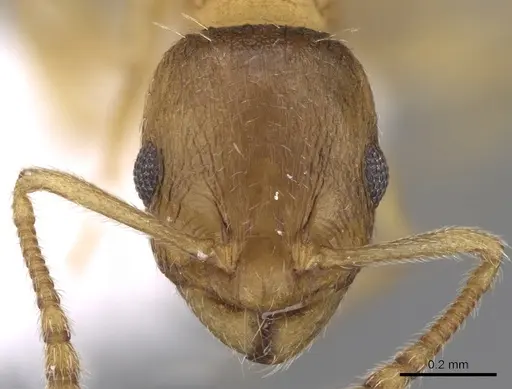
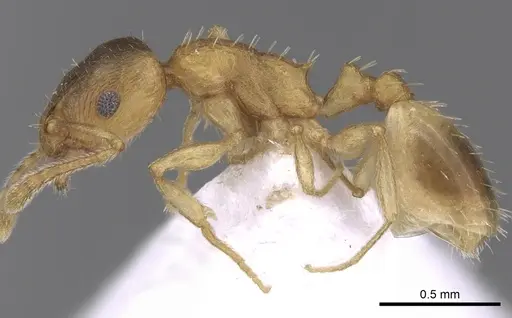
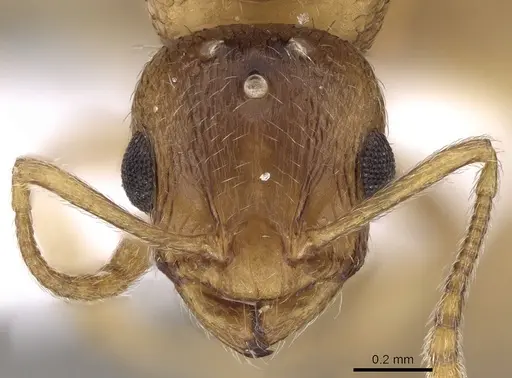
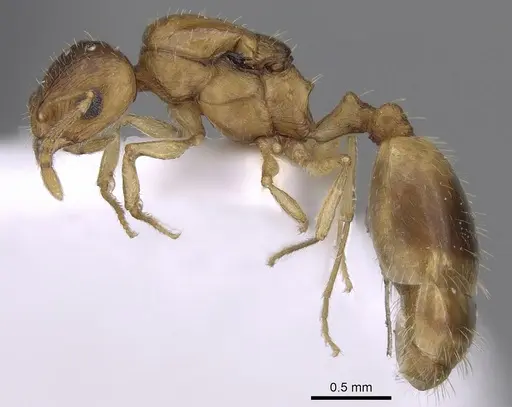
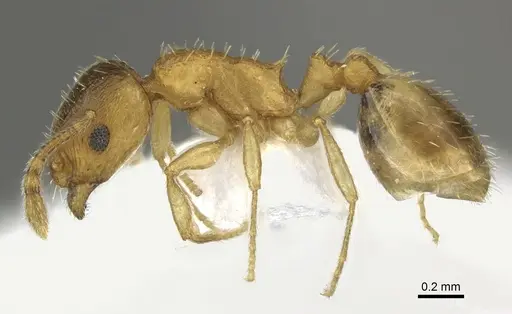
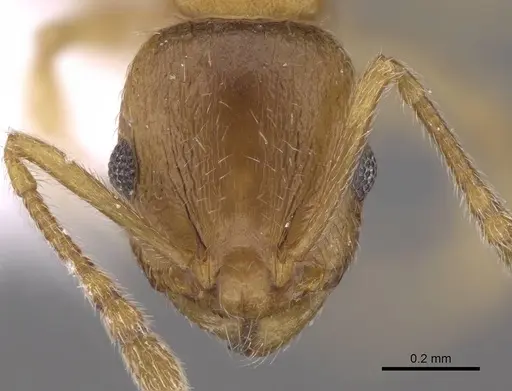
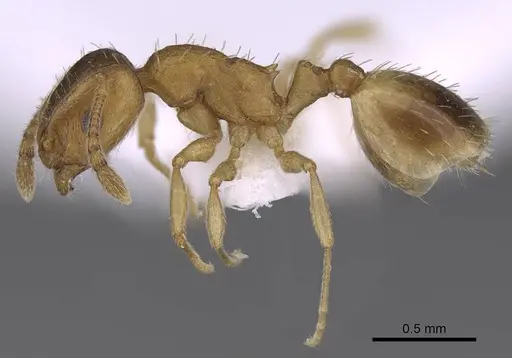
Temnothorax angustifrons is a tiny yellow ant from the Temnothorax nylanderi species group. Workers have a striking yellow body - the mesosoma, antennae, legs, and waist are lighter than the head and rear of the abdomen . This species was only described in 2015,so it's a relatively new addition to antkeeping. Queens are slightly larger and have a dark yellow to orange body . Its name comes from the narrow frons (area between the eyes), which helps tell it apart from close relatives . These ants are very common in their home range - on Samos island, they are the most widespread Temnothorax species in all forest types .
Quick Summary
- Difficulty: Easy
- Origin & Habitat: Native to Western Anatolia (Turkey) and Greek islands including Samos, Lesbos, and Sterea Ellas. They live in shady forests, nesting under moss on stones near streams or under tree canopies [1][3][2].
- Colony Type: Not documented for this species. Most Temnothorax nylanderi group species are monogyne (single queen), but colony structure for T. angustifrons is unconfirmed.
- Size & Growth:
- Queen: Data unavailable, only head and mesosoma measurements are reported, not total body length [2].
- Worker: Data unavailable, only head size measurements are reported, not total body length [1].
- Colony: Unknown, not documented in research.
- Growth: Moderate
- Development: Estimated 6-10 weeks based on related Temnothorax species at room temperature, specific timing not documented (This timeline is an educated guess, actual development may differ.)
- Antkeeping:
- Temperature: Room temperature (18-24°C) is suitable. Avoid overheating above 26°C. Based on its Mediterranean origin, cool conditions are best [4].
- Humidity: High humidity is critical. These ants nest under moss on damp stones near streams. Keep the nest substrate consistently moist but not waterlogged, with a drier area available [3][2].
- Diapause: Likely requires a winter rest period (diapause) of 2-3 months at 5-10°C. This follows typical temperate Mediterranean ant patterns, but hasn't been specifically studied for this species.
- Nesting: Use Y-tong (AAC), plaster, or soil nests that hold moisture well. Avoid dry materials. Provide a shaded, cool spot, replicate the damp microhabitat under moss [3][2][5].
- Behavior: Docile and non‑aggressive, they prefer to flee rather than fight. Due to their tiny size, escape prevention is vital, use fine mesh and seal all gaps. Workers belong to a subfamily with a modified stinger used for smearing venom, but they are harmless to humans and rarely try to defend.
- Common Issues: escape prevention is critical because workers are under 3mm and can squeeze through tiny gaps, dry conditions quickly lead to colony decline, monitor humidity closely, overheating above 26°C can be lethal, keep away from heat sources, wild‑caught colonies may carry mites or other parasites that can kill the colony, growth can seem slow, but this is normal for the species, patience is needed
Housing and Nest Setup
Start small, test tubes work well for founding colonies. As the colony grows, move to a Y-tong (AAC) or plaster nest with narrow chambers suited for tiny ants. High humidity is the key requirement: these ants naturally nest under moss on stones in shady, damp spots near streams [3][2]. Keep the nest substrate consistently moist by connecting a water reservoir or using damp plaster. Avoid direct sunlight and heat sources. A naturalistic setup with a thin layer of moist soil and a piece of moss on top can help recreate their environment.
Feeding and Diet
Like most small ants, they accept tiny insects (e.g., fruit flies, pinhead crickets, springtails) and sugary liquids. Offer a drop of honey water or sugar water once or twice a week, plus small protein sources. Because of their size, food items should be appropriately small. Remove uneaten prey after 24 hours to prevent mold. They will forage actively and recruit nestmates once a food source is found.
Temperature and Seasonal Care
Keep them at room temperature (18-24°C). As a Mediterranean species, they don't like tropical heat, avoid sustained temperatures above 26°C. During winter, offer a diapause period of 2-3 months at 5-10°C. You can move the colony to an unheated garage or basement. Provide some moisture during diapause (a damp cotton ball) but reduce feeding. Gradually return to room temperature in early spring to stimulate regrowth.
Colony Development
The queen lays eggs and the first workers (nanitics) appear after several weeks, depending on temperature. Specific development times are not documented for this species. Colonies grow slowly and remain modest in size, a few dozen to perhaps a hundred workers under good conditions, based on patterns in related Temnothorax species. Do not expect rapid expansion, this is a small species that prioritizes stability over speed.
Frequently Asked Questions
Can I keep Temnothorax angustifrons in a test tube?
Yes, test tubes work well for a founding queen and early colony. Keep the water reservoir full and the tube shaded to mimic their natural shaded habitat.
How long until first workers appear?
Not specifically documented for this species. Based on related Temnothorax, expect first workers roughly 6-10 weeks after the queen starts laying, assuming room temperature (~20-24°C).
Do Temnothorax angustifrons ants sting?
They have a modified stinger used to smear venom, but they are not aggressive and do not sting humans in the usual way. If threatened, they are more likely to flee or play dead.
Are Temnothorax angustifrons good for beginners?
Yes, they are easy to keep because of their calm nature and modest space needs. The main challenges are escape prevention (tiny size) and maintaining high humidity.
Do Temnothorax angustifrons need hibernation?
Likely yes, as a temperate Mediterranean species. Provide 2-3 months of cool temperatures (5-10°C) in winter to maintain natural rhythms. This is recommended based on related species, but not specifically confirmed for this one.
Why are my Temnothorax angustifrons dying?
Most common causes are dry nest substrate, overheating above 26°C, or escape through small gaps. Check humidity, lower temperature, and seal any cracks. Wild‑caught colonies may also carry parasites.
When should I move to a formicarium?
Move when the colony has outgrown the test tube, typically when you see 20-30 workers. Use a Y-tong or plaster nest that supports high humidity.
How big do Temnothorax angustifrons colonies get?
Unknown, not documented in research. Based on related species, likely a few dozen to a few hundred workers at most.
Report an Issue
The current care sheet is based fully on literature. See inconsistencies, or something that's incorrect? Please , it will be resolved after review from an admin. Contributing to the blogs tab also helps providing information, to make us be able to further improve the caresheets. Thank you for your support!
References

Lembar perawatan ini dilisensikan di bawah CC BY-SA 4.0 .
Blog Komunitas
CASENT0906013
Lihat di AntWeb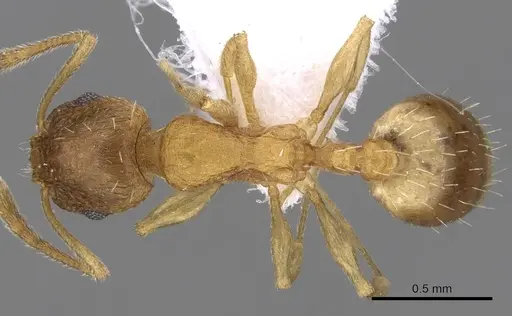
CASENT0906014
Lihat di AntWeb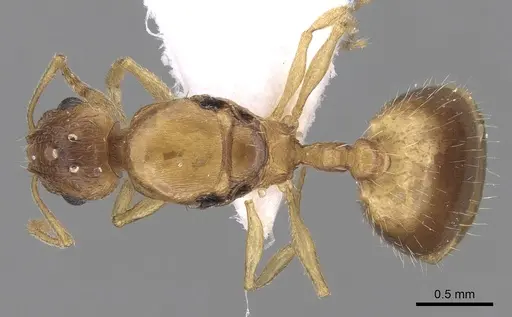
CASENT0906696
Lihat di AntWeb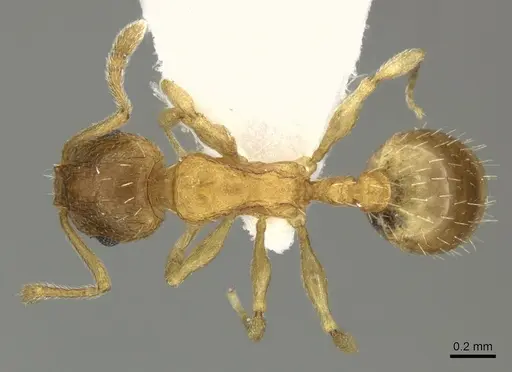
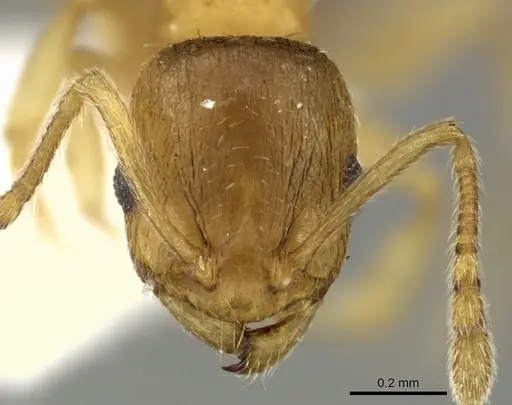
CASENT0914693
Lihat di AntWeb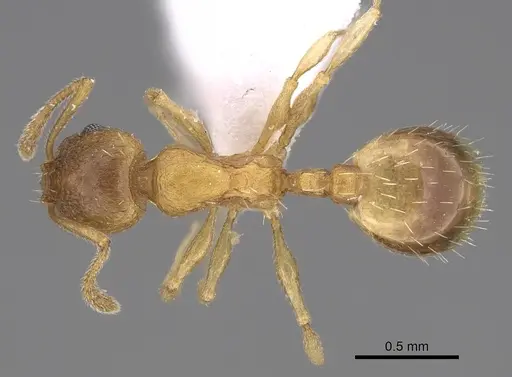
Literatur
Memuat peta distribusi...Memuat produk...