
Technomyrmex myops
- Nama Ilmiah
- Technomyrmex myops
- Tribe
- Tapinomini
- Subfamili
- Dolichoderinae
- Penulis
- Bolton, 2007
- Distribusi
- Ditemukan di 0 negara
Pendahuluan
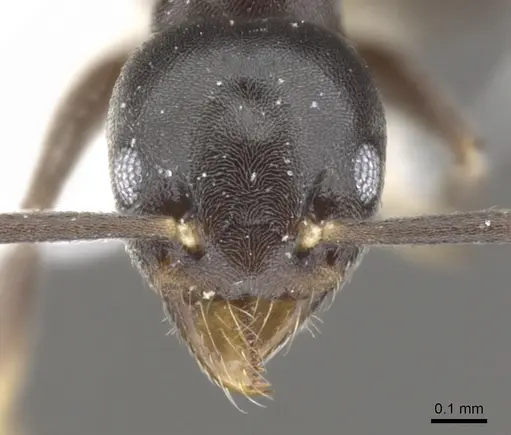
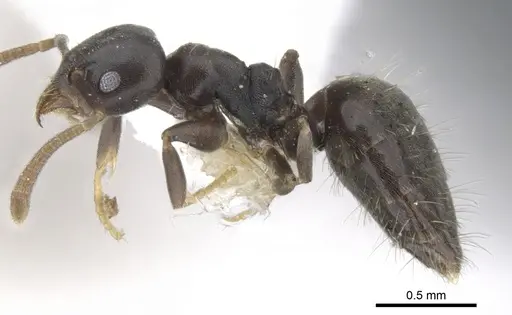
Technomyrmex myops is a tiny dark brown ant native to West Malaysia, with workers measuring just 2.2-2.5mm . It belongs to the Technomyrmex albipes group and is recognizable by its small eyes, short antennae (scapes), and the numerous long curved hairs (setae) covering its abdomen, these hairs are much longer than in related species . As a member of the subfamily Dolichoderinae, it lacks a stinger and instead exudes sticky, foul-smelling compounds from an anal gland for defense.
Quick Summary
- Difficulty: Unknown
- Origin & Habitat: West Malaysia (Indomalaya Region), recorded from Pasoh Forest Reserve in Negeri Sembilan [1]. The broader Technomyrmex genus spans tropical and subtropical areas across the Indomalayan and Australasian regions, typically in forested environments [2].
- Colony Type: Unknown, colony structure has not been documented for this species. Many Technomyrmex species are polygynous (multiple queens), but T. myops specifically has not been studied.
- Size & Growth:
- Queen: Undescribed, no queen caste has been documented [1].
- Worker: 2.2-2.5mm [1].
- Colony: Unknown, no colony size data exists for this species.
- Growth: Unknown
- Development: Unknown, no development data exists for this species. (Development timeline has not been studied. Related tropical Technomyrmex species probably develop faster than temperate ants, but specific timelines are unknown.)
- Antkeeping:
- Temperature: Unknown for this species. Based on its West Malaysian origin (tropical rainforest climate), aim for warm conditions around 24-28°C. Monitor colony activity and adjust accordingly.
- Humidity: Unknown, no specific humidity data exists. As a forest-dwelling species from Malaysia, expect moderate to high humidity (60-80% relative humidity). Keep the nest substrate consistently moist but not waterlogged.
- Diapause: Unknown, no seasonal data exists. Given its tropical origin, this species likely does not require diapause, though related species from higher elevations or seasonal areas may show reduced activity periods.
- Nesting: Unknown, natural nesting behavior has not been documented. Many Technomyrmex species nest in rotting wood, under bark, or in soil cavities. For captivity, a small test tube setup or Y-tong (AAC) nest with appropriately sized chambers would work given their tiny worker size.
- Behavior: Behavior is unstudied. As a tiny Dolichoderine ant, they likely forage actively and may tend honeydew-producing insects. Their small size (2.2-2.5mm) means escape prevention must be excellent, they can squeeze through remarkably small gaps. They will exude sticky, foul-smelling compounds when threatened rather than sting. Exercise caution with colony introductions as many Technomyrmex species can be aggressive or competitive.
- Common Issues: completely unknown biology means all care is speculative, monitor colony health closely, tiny size makes escape prevention critical, use fine mesh and tight-fitting lids, no data on founding behavior, queen may be claustral or semi-claustral, unknown if they accept sugar sources, offer honey/sugar water but observe acceptance, no information on whether they need live prey or can accept dead protein
Identification and Appearance
Technomyrmex myops workers are tiny at just 2.2-2.5mm, making them one of the smaller ant species you might encounter [1]. They are dark brown throughout the head, mesosoma (middle body section), petiole, and abdomen (gaster), with brown legs except for yellow trochanters and tarsi (the leg segments near the feet) [1]. The most distinctive feature is the numerous long curved hairs covering the abdomen, these are significantly longer than typical for related species in the Technomyrmex albipes group [1]. They have small eyes positioned toward the front of the head and short antennae (scapes) that don't extend far beyond the back of the head [1]. As Dolichoderinae ants, they lack a stinger and instead possess an anal gland that exudes sticky, foul-smelling compounds for defense.
Distribution and Habitat
This species is known only from West Malaysia, specifically recorded from Pasoh Forest Reserve in Negeri Sembilan state [1]. The broader Technomyrmex genus extends across the Indomalayan and Australasian regions, with species found from Southeast Asia through to Australia and various Pacific islands [2]. While T. myops specifically hasn't been studied in detail, related species in this genus typically inhabit forested environments. The Indomalayan region (covering Malaysia, Indonesia, and surrounding areas) features tropical rainforest climates with high year-round humidity and temperatures.
Care Recommendations
Since nothing is known about the biology of Technomyrmex myops specifically, all care recommendations are based on inference from related species and general antkeeping principles. Keep them warm at 24-28°C given their tropical origin. Maintain moderate to high humidity (60-80%) and keep the nest substrate moist but not saturated. Their tiny 2.2-2.5mm size means you must use excellent escape prevention, fine mesh barriers and tightly fitting lids are essential. For nesting, a small test tube setup or a Y-tong (AAC) nest with appropriately sized chambers would work well. Feed a varied diet including sugar sources (honey or sugar water) and protein (small insects), but monitor closely for acceptance since their specific dietary needs are unknown. As Dolichoderinae, they exude sticky, foul-smelling compounds when disturbed.
Challenges and Considerations
The biggest challenge with keeping Technomyrmex myops is the complete lack of species-specific biological data. Unlike more commonly kept ants, we don't know their colony structure (monogyne vs polygyne), founding behavior (whether the queen seals herself in or must forage), development timeline, or exact dietary preferences. This makes them a poor choice for beginners who benefit from well-documented species with known care requirements. If you obtain this species, plan to experiment carefully and document your observations. Their tiny size also presents practical challenges, they can escape through gaps that would hold back larger ants, and finding appropriately sized prey items may be difficult. Consider them an experimental species where your observations could contribute valuable knowledge to the antkeeping community.
Frequently Asked Questions
How long does it take for Technomyrmex myops to develop from egg to worker?
Unknown, no development data exists for this species. Related tropical Technomyrmex species may develop faster than temperate ants, but specific timelines have not been studied. You will need to observe and document your colony's development.
What do Technomyrmex myops ants eat?
Unknown specifically. Based on general Dolichoderinae behavior, they likely accept sugar sources (honeydew from aphids, nectar, sugar water) and small protein sources (insects). Offer both and monitor acceptance, but be prepared to experiment.
Are Technomyrmex myops good for beginners?
No, this species is not recommended for beginners. The complete lack of documented biology means all care is speculative, and beginners benefit from species with well-established care requirements. Choose a more documented species like Lasius niger or Camponotus floridanus.
How big do Technomyrmex myops colonies get?
Unknown, no colony size data exists for this species. Related Technomyrmex species can form colonies ranging from dozens to thousands of workers, but T. myops specifically has not been studied.
Can I keep multiple Technomyrmex myops queens together?
Unknown, colony structure has not been documented for this species. Many Technomyrmex species are polygynous (multiple queens), but we don't know if T. myops is one of them. Do not attempt combining unrelated queens without documented evidence that this is safe.
Do Technomyrmex myops need hibernation?
Unlikely, given their tropical origin in West Malaysia, they probably do not require a diapause period. However, no seasonal behavior has been documented for this species specifically.
What temperature should I keep Technomyrmex myops at?
No specific data exists, but aim for 24-28°C based on their tropical Malaysian origin. Monitor your colony's activity levels and adjust if workers seem sluggish (too cold) or overly active/clustered away from heat sources (too warm).
How do I prevent Technomyrmex myops from escaping?
Their tiny 2.2-2.5mm size means they can squeeze through remarkably small gaps. Use fine mesh (at least 0.5mm or smaller), ensure all lid connections are tight, and consider using fluon or other barriers. Check all ventilation holes and tube connections carefully.
Is Technomyrmex myops a difficult species to keep?
Unknown difficulty level, this cannot be assessed because no biological or husbandry data exists for this species. It should be considered an experimental species only for experienced antkeepers willing to document their findings.
Report an Issue
The current care sheet is based fully on literature. See inconsistencies, or something that's incorrect? Please , it will be resolved after review from an admin. Contributing to the blogs tab also helps providing information, to make us be able to further improve the caresheets. Thank you for your support!
References

Lembar perawatan ini dilisensikan di bawah CC BY-SA 4.0 .
Blog Komunitas
CASENT0903036
Lihat di AntWeb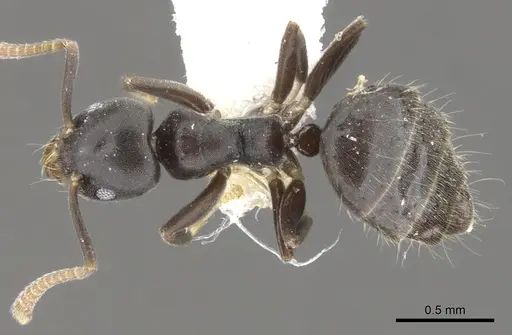
Literatur
Memuat peta distribusi...Memuat produk...