
Strumigenys uichancoi
- Nama Ilmiah
- Strumigenys uichancoi
- Tribe
- Attini
- Subfamili
- Myrmicinae
- Penulis
- Brown, 1957
- Distribusi
- Ditemukan di 0 negara
Pendahuluan
Strumigenys uichancoi is one of the rarest ant species in the world, known from only a single worker ever collected . That specimen was found in 1957,hiding inside a fern plant that passed through the U.S. Plant Quarantine Office in Honolulu, Hawaii. The plant had come from the Philippines . Since then, the species has never been found again, despite searches in its presumed home range . Workers are tiny, measuring just 2.1 mm total length, with the characteristic trap-jaw mandibles typical of the genus. It belongs to the Strumigenys godeffroyi group, signeae complex, and is closely related to Strumigenys rofocala and its allies .
Quick Summary
- Difficulty: Expert
- Origin & Habitat: Philippines (Indomalaya region). Habitat details are unknown, but most Strumigenys live in humid leaf litter, rotting wood, and other moist microhabitats in tropical forests [1].
- Colony Type: Unknown, only a single worker has ever been found. Based on related Strumigenys species, colonies are probably small, likely with fewer than 200 workers.
- Size & Growth:
- Queen: Unknown, queen has never been described
- Worker: 2.1 mm total length [1]
- Colony: Unknown, based on typical Strumigenys patterns, colonies likely reach up to a few hundred workers
- Growth: Unknown, estimated as slow to moderate based on genus patterns
- Development: Unknown, from related tropical Strumigenys, an estimate is 6-10 weeks (No direct data, the estimate assumes warm, stable tropical conditions)
- Antkeeping:
- Temperature: Likely 24-28°C, as a tropical species, it needs warm, stable conditions. Avoid drops below 22°C [1].
- Humidity: High humidity required, aim for substrate that feels consistently moist but not waterlogged. Use a gradient: mostly moist with a small drier area [1].
- Diapause: Unknown, as a tropical species, true hibernation is unlikely, but activity may slow during cooler periods
- Nesting: Naturalistic terrariums with moist substrate, small plaster nests, or Y‑tong nests with tight, tiny chambers. Acrylic nests are not recommended. The nest should retain moisture but also allow some ventilation.
- Behavior: Strumigenys ants are shy and non‑aggressive. They avoid threats and rely on their trap‑jaw mandibles for hunting. They also have a tiny functional stinger, but it poses no danger to humans. Due to their extremely small size (2.1 mm), escape prevention is critical, use fine mesh and tight‑fitting lids. Workers forage alone through the substrate, hunting for springtails and other tiny prey.
- Common Issues: virtually never available in the hobby, no live colonies exist in captivity, almost no biological data for this species, all care advice is inferred from related Strumigenys, tiny size makes escape prevention essential, use fine mesh and tight lids, slow colony growth requires patience, do not overfeed or disturb the colony, high humidity must be balanced with ventilation to prevent mold
Species Overview and Rarity
Strumigenys uichancoi is one of the most mysterious ant species out there. It was described in 1957 based on a single worker that hitched a ride inside a fern plant from the Philippines [1]. The plant was intercepted by the U.S. Plant Quarantine Office in Honolulu, Hawaii, and that's the only time this ant has ever been recorded [2]. Despite later searches in the Philippines, nobody has found it again, making it a true ghost species. It belongs to the Strumigenys godeffroyi group, signeae complex, and is thought to be closely related to Strumigenys rofocala [1].
Identification and Morphology
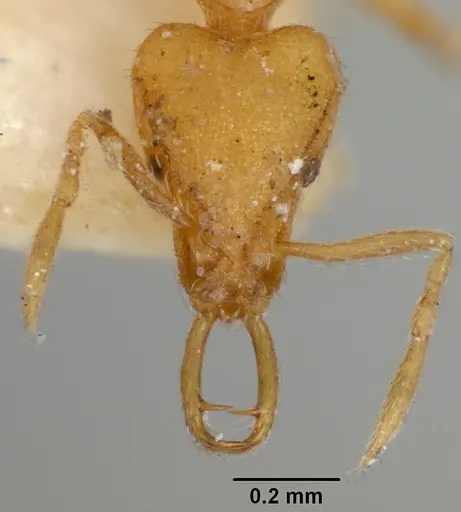
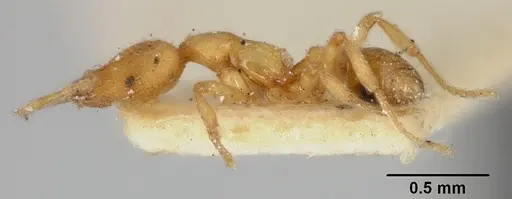
Workers are tiny: total length about 2.1 mm [1]. The head is somewhat longer than wide, with the typical trap-jaw mandibles that snap shut on prey. The antenna has a constricted apical segment. The pronotum is smooth and shiny, while the mesonotum shows weak sculpturing that becomes stronger toward the back. The sides of the thorax (alitrunk) are also smooth and polished. The propodeal teeth are low and follow the slope of the thorax, and the propodeal lamella is broad with a straight rear edge. The first gastral tergite has mostly simple hairs, but some are looped at the tip. These details come from the only known specimen, which may have lost some hairs due to abrasion [1].
Housing and Nest Setup
Since live colonies don’t exist in the hobby, any advice is theoretical. But based on how related Strumigenys are kept, go with a naturalistic setup. Use a small terrarium with a deep layer of moist substrate, a mix of peat, coco fiber, leaf litter, and a bit of rotting wood works well. These ants need tight, tiny chambers that match their size. Small plaster or Y‑tong nests with narrow passages are better than test tubes. Keep the setup humid but vent it enough to stop mold from taking over. Acrylic nests are not recommended, they don’t hold humidity well enough [1].
Feeding and Diet
Strumigenys are specialized predators that hunt tiny arthropods in the leaf litter. Their main prey are springtails (Collembola), you’ll need a steady supply of live springtails as their primary food. They may also take soil mites, tiny booklice, or small fruit fly larvae. Don’t bother with sugar water, honey, or commercial ant foods, they won’t touch them. Feed small live prey every two to three days and remove any leftovers to prevent mold. The trap‑jaw mandibles let them capture prey with incredible speed [1].
Temperature and Humidity Requirements
This is a tropical ant from the Philippines, so it needs warm, humid conditions. Keep temperatures around 24-28°C, and avoid letting it drop below 22°C or spike above 32°C. A gentle heat gradient (using a heat mat on one side) can help. Humidity must stay high, the substrate should feel consistently moist but never waterlogged. Mist the enclosure regularly, but also provide some ventilation to avoid stagnant air and mold. A small, moist area and a slightly drier area gives the ants a choice [1].
Behavior and Temperament
Strumigenys uichancoi is shy and non‑aggressive. Workers will run and hide rather than fight. Their main defense is their trap‑jaw mandibles, which they snap at threats. They also have a tiny functional stinger, but it’s harmless to humans. Foraging is solitary, each worker hunts alone in the leaf litter for springtails and other tiny prey. Because they are only 2.1 mm long, they can squeeze through very small gaps. Seal your enclosure with fine mesh (e.g.,0.5 mm) and use a tight‑fitting lid with a fluon barrier to keep them in [1].
Frequently Asked Questions
Is Strumigenys uichancoi available in the antkeeping hobby?
No. This species is known from only one specimen collected in 1957 and has never been found since. No live colonies exist in captivity [1][2].
How big do Strumigenys uichancoi colonies get?
Colony size is unknown. Based on related Strumigenys, colonies probably reach up to a few hundred workers at most. The single known worker is 2.1 mm long [1].
What do Strumigenys uichancoi ants eat?
They are specialized predators that hunt tiny live prey like springtails. They do not accept honey, sugar water, or dead insects. Live springtails should be their main food [1].
What temperature do Strumigenys uichancoi ants need?
Keep them at 24-28°C. As a tropical species, they need stable warmth, avoid drops below 22°C or spikes above 32°C [1].
Are Strumigenys uichancoi ants good for beginners?
No. The species is rated Expert because it is almost impossible to obtain, has no documented care, and needs live prey. Even experienced keepers would find it challenging [1].
How long does it take for Strumigenys uichancoi to develop from egg to worker?
Exact timing is unknown. From related tropical species, an estimate is 6-10 weeks at optimal temperatures of 26-28°C [1].
Do Strumigenys uichancoi ants need hibernation?
Unknown. As a tropical Philippine species, it likely does not need true hibernation, but may slow down in cooler conditions. If kept at stable warm temperatures year‑round, no diapause is needed [1].
Why is Strumigenys uichancoi so rare?
Only one worker has ever been found, inside a fern plant that was shipped from the Philippines to Hawaii in 1957. Despite searches in the Philippines, no further specimens have been collected, making it one of the world’s rarest ants [2][1].
Can I keep Strumigenys uichancoi in a test tube setup?
Test tubes are not ideal for such tiny ants, they are too large and don’t hold enough humidity. A small plaster nest or a naturalistic terrarium with moist substrate would be better. But since no live colonies are available, this is a theoretical question [1].
What makes Strumigenys uichancoi different from other Strumigenys?
It belongs to the godeffroyi group, signeae complex, and is closely related to Strumigenys rofocala. Its extreme rarity, never seen again after its 1957 discovery, is its main distinguishing trait [1].
Is Strumigenys uichancoi aggressive?
No. Strumigenys ants are shy and non‑aggressive. They avoid threats and use their trap‑jaw mandibles mainly for hunting small prey, not for fighting [1].
Report an Issue
The current care sheet is based fully on literature. See inconsistencies, or something that's incorrect? Please , it will be resolved after review from an admin. Contributing to the blogs tab also helps providing information, to make us be able to further improve the caresheets. Thank you for your support!
References

Lembar perawatan ini dilisensikan di bawah CC BY-SA 4.0 .
Blog Komunitas
USNMENT00532151
Lihat di AntWeb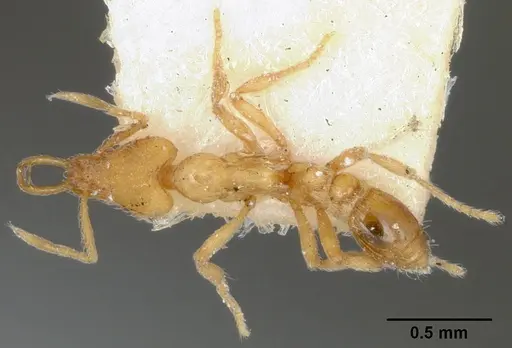
Literatur
Memuat peta distribusi...Memuat produk...