
Strumigenys tanymastax
- Nama Ilmiah
- Strumigenys tanymastax
- Tribe
- Attini
- Subfamili
- Myrmicinae
- Penulis
- Brown, 1964
- Distribusi
- Ditemukan di 1 negara
Pendahuluan
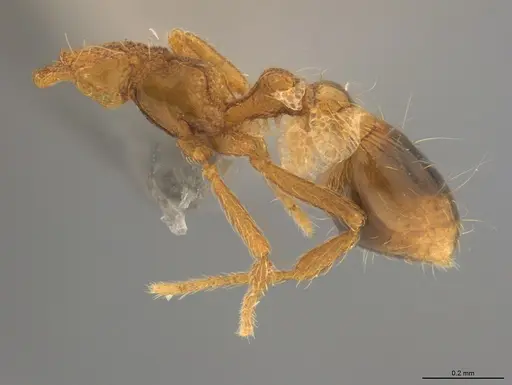
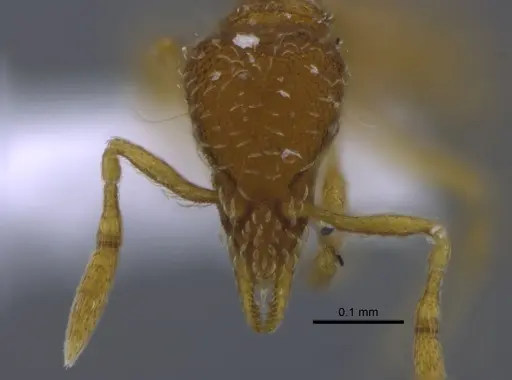
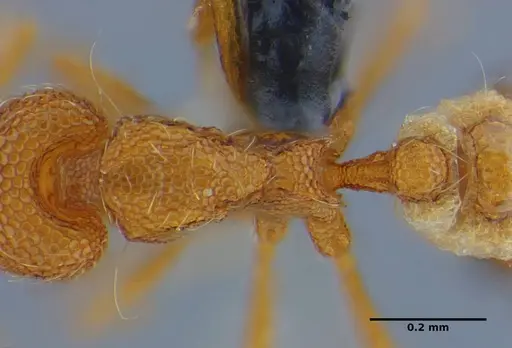
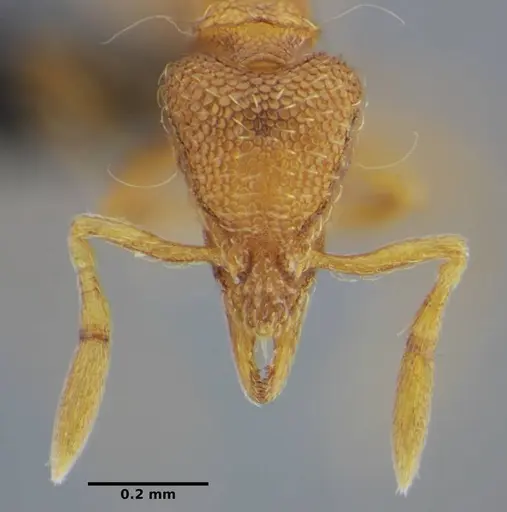
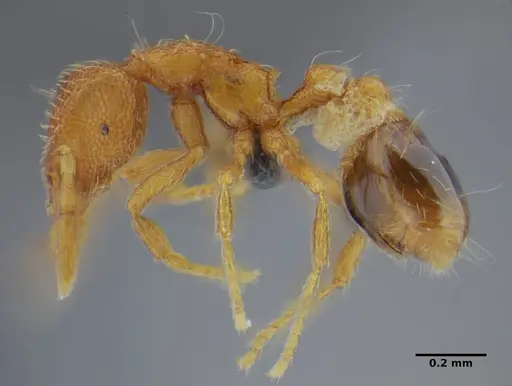
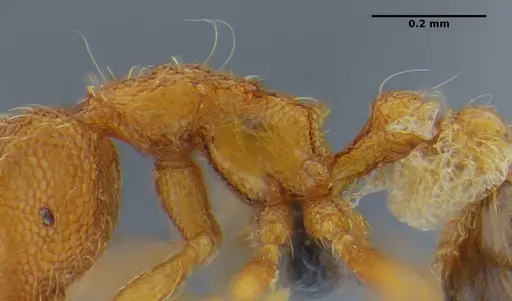
Strumigenys tanymastax is a tiny predatory ant measuring just 1.6-1.8 mm in total length . Workers have distinctive elongated linear mandibles and 6-segmented antennae, with a band of spongiform tissue on the ventral petiole . The head and alitrunk have a rough, pitted texture, while the sides of the thorax (pleurae and propodeum) are smooth and shiny. They carry long curved hairs on the dorsal surfaces. This species is the only member of the Strumigenys tanymastax group and is found across the Neotropical region including Argentina, Brazil, Paraguay, and Venezuela . They inhabit leaf litter in dry chaco and Atlantic Forest fragments at elevations of 300-500 m , where they function as specialist predators hunting small soil invertebrates .
Quick Summary
- Difficulty: Expert
- Origin & Habitat: Neotropical region, Argentina, Brazil, Paraguay, and Venezuela. Found in leaf litter of dry chaco and Atlantic Forest fragments, at elevations of 300-500 m [1][4][5][3].
- Colony Type: Unknown, likely monogyne (single queen) with small colonies based on typical litter‑dwelling specialist predator patterns, but this is unconfirmed.
- Size & Growth:
- Queen: Unknown, not described in available literature
- Worker: 1.6-1.8 mm total length [1]
- Colony: Unknown, but likely under 100 workers, typical for leaf‑litter specialist predators
- Growth: Unknown, likely slow given small colony size
- Development: Unknown, estimated 6-10 weeks based on typical Myrmicinae development at 22-26 °C (No direct data available, estimate from genus patterns for small tropical litter ants)
- Antkeeping:
- Temperature: Aim for 22-26 °C, warm and stable. These ants come from tropical/subtropical forest floors where temperatures are moderate [1][5].
- Humidity: Moderate, they inhabit leaf litter in dry chaco and Atlantic Forest. Keep the substrate lightly moist but not waterlogged, with some drier areas available.
- Diapause: Unlikely, being a tropical species, they probably do not need a diapause period. Keep at stable temperatures year‑round.
- Nesting: Tiny nests required due to their minute size. Test tubes with a small water reservoir work well in early stages. For larger colonies, use a small naturalistic setup with leaf litter substrate. Avoid acrylic nests.
- Behavior: These are specialist predators that hunt small soil invertebrates [4]. They are not aggressive toward humans but possess a functional stinger (though not medically significant). Their tiny size makes them excellent escape artists, you must use fine mesh and tight‑fitting lids. Workers are slow‑moving but efficient hunters, using their elongated mandibles to capture prey. Behavior is poorly studied, no reliable data on activity times.
- Common Issues: escape prevention is critical, they are extremely tiny and can squeeze through standard barrier materials, specialized diet requirements, they need live small prey (e.g. springtails) and may not accept commercial ant foods, slow colony growth, beginners may lose patience with slow‑developing colonies, humidity management, too wet causes mold, too dry causes desiccation, very small colony sizes mean losses have big impact, every worker counts
Housing and Escape Prevention
Strumigenys tanymastax is an extremely small ant, and escape prevention is your top priority. Use fine mesh (0.5 mm or smaller) on any openings, and pack cotton plugs firmly into test tubes. For the founding stage, a small test tube setup with a water reservoir works well. As the colony grows, you can offer a small naturalistic nest with leaf litter substrate, but avoid any gaps larger than 0.5 mm. Keep the outworld minimal, just enough space for a feeding dish and water tube. Red light or low light is best for observation to avoid stressing the colony [1].
Feeding and Diet
This species is a specialist predator that hunts small soil invertebrates [4]. In captivity, their primary food should be live springtails, these are the perfect size and movement triggers their hunting instincts. Other small live prey like booklice (psocids) and tiny isopods may also be accepted. Sugar water or honey is not confirmed as necessary, some keepers offer it but it's optional. Feed every 2-3 days, removing any uneaten prey after 24 hours to prevent mold. A constant water source is essential, a small water tube with a cotton wick works well [4].
Temperature and Humidity
Keep these ants at 22-26 °C, warm and stable. They come from tropical and subtropical regions in South America where temperatures are consistently warm. Avoid temperature fluctuations and keep them away from drafts or air conditioning vents. For humidity, aim for moderate levels, they live in leaf litter which is damp but not saturated. The substrate should feel lightly moist, with some areas allowed to dry slightly. A water tube in the nest provides humidity through evaporation. Avoid condensation buildup, too much moisture leads to mold which can devastate small colonies. Monitor the colony: if workers cluster at the water tube, humidity may be too low, if they avoid it, the nest may be too wet [1].
Colony Establishment
Since so little is known about this species, founding behavior is unconfirmed. When your queen arrives, prepare a small test tube setup with clean water and a cotton plug. Place the queen in complete darkness and wait. Do not disturb her for at least 2-3 weeks. Once workers emerge (nanitics, which will be very small), you can begin offering tiny amounts of live prey. Colony growth will be slow, these are naturally small colonies. Be patient. Do not attempt to move the colony unless absolutely necessary, as disturbance can cause queen abandonment or worker death. The colony may take several months to reach even 10 workers. Document your observations carefully, as captive care records for this species are scarce [1].
Handling and Observation
These ants are best appreciated with minimal disturbance. When you need to check on them, use red light or work quickly under normal lighting to minimize stress. Do not blow on them or tap the nest, this causes significant stress to small colonies. If you need to move them, wait until the colony is in the test tube and gently coax them with a brush if necessary. Never grab or pinch workers. They possess a functional stinger but it is not medically significant to humans. The best approach is to set up the habitat correctly and then observe from a distance [1].
Frequently Asked Questions
How long does it take for Strumigenys tanymastax to produce first workers?
The exact timeline is unknown, but based on typical Myrmicinae development, expect 6-10 weeks from egg to worker at optimal temperature (22-26 °C). The first workers (nanitics) will be very small. Colony growth is slow, don't expect rapid expansion.
Can I keep Strumigenys tanymastax in a test tube?
Yes, test tubes are ideal for this species. Use a small test tube with a water reservoir and cotton plug. The tiny workers do well in the humid micro‑environment a test tube provides. Keep the tube in darkness during founding and minimize disturbances.
What do Strumigenys tanymastax ants eat?
They are specialist predators that need live small prey. Feed live springtails as their primary food, these are the right size and movement triggers their hunting behavior. Other tiny live prey like booklice and micro‑isopods may be accepted. Sugar water is not confirmed as necessary.
Are Strumigenys tanymastax good for beginners?
No, this species is not recommended for beginners. They are extremely tiny (1.6-1.8 mm), require specialized live prey, need excellent escape prevention, and have slow colony growth. They are best suited for experienced antkeepers.
How big do Strumigenys tanymastax colonies get?
Based on typical litter‑dwelling specialist predators, colonies likely remain small, probably under 100 workers at maturity. They are not a large‑colony species.
Do Strumigenys tanymastax need hibernation?
No, they likely do not need hibernation. Being a tropical/subtropical species from South America, they prefer consistent warm temperatures year‑round. Keep them at 22-26 °C without seasonal temperature drops.
Why are my Strumigenys tanymastax escaping?
They are extremely tiny ants that can squeeze through the smallest gaps. Use fine mesh (0.5 mm or smaller), firmly packed cotton in test tubes, and check all connections. Standard fluon barriers may not contain them. Excellent escape prevention is essential.
When should I move Strumigenys tanymastax to a formicarium?
Only move them when the colony is well‑established with at least 20-30 workers and you observe consistent activity. For this tiny species, a small naturalistic nest with leaf litter substrate works better than a large formicarium. Moving too early can stress the colony.
Can I keep multiple queens of Strumigenys tanymastax together?
This has not been documented. Based on typical genus patterns, single‑queen colonies are most likely. Do not attempt to combine unrelated queens, there is no data on pleometrosis (multiple queen founding) for this species.
Report an Issue
The current care sheet is based fully on literature. See inconsistencies, or something that's incorrect? Please , it will be resolved after review from an admin. Contributing to the blogs tab also helps providing information, to make us be able to further improve the caresheets. Thank you for your support!
References

Lembar perawatan ini dilisensikan di bawah CC BY-SA 4.0 .
Blog Komunitas
CASENT0178122
Lihat di AntWeb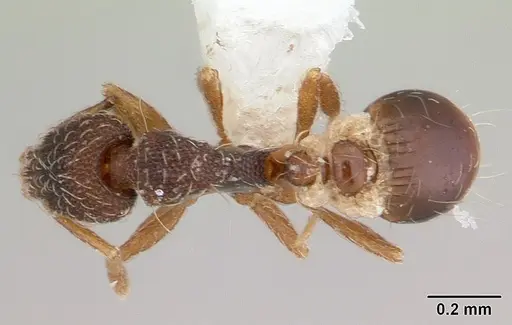
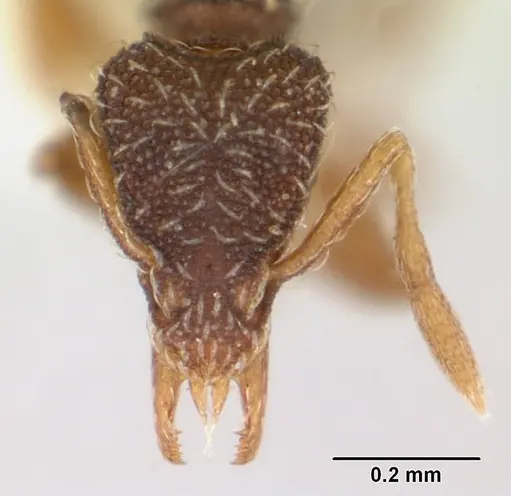
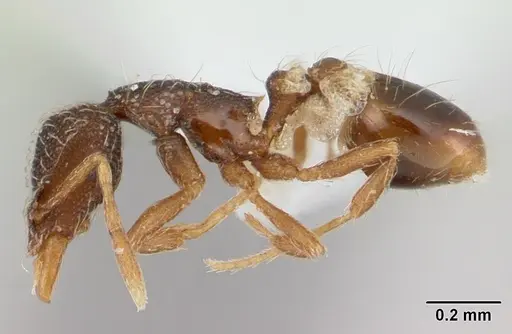
CASENT4036184
Lihat di AntWeb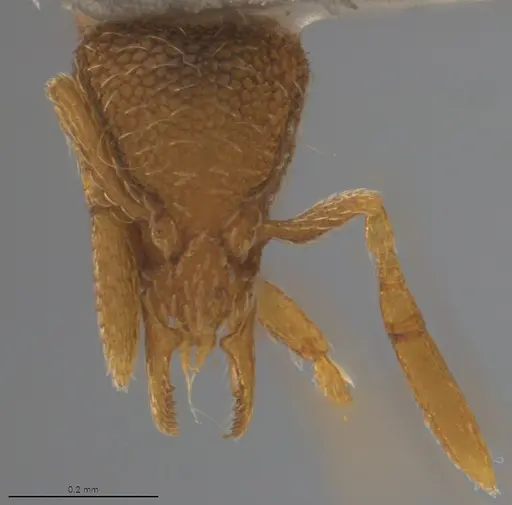
CBUMAGENT41697
Lihat di AntWeb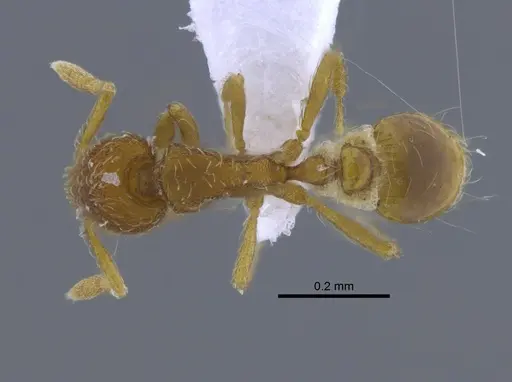
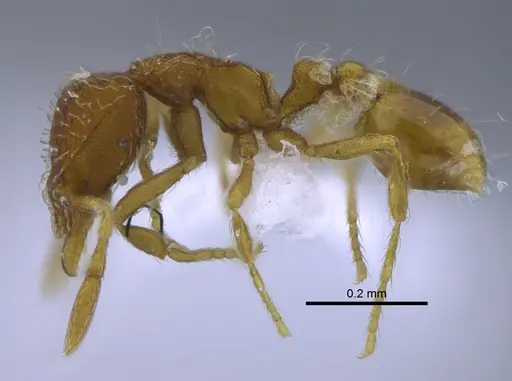
UFV-LABECOL-006722
Lihat di AntWeb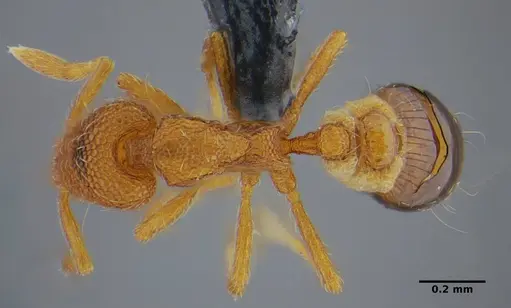
Literatur
Memuat peta distribusi...Memuat produk...