
Strumigenys sublaminata
- Nama Ilmiah
- Strumigenys sublaminata
- Tribe
- Attini
- Subfamili
- Myrmicinae
- Penulis
- Brown, 1959
- Distribusi
- Ditemukan di 2 negara
Pendahuluan
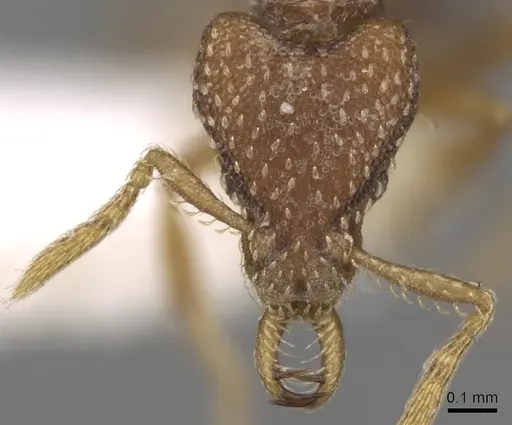
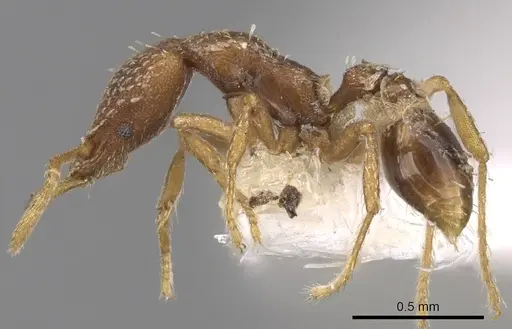
Strumigenys sublaminata is a tiny predatory ant. Workers measure about 2.0 to 2.4 mm and queens about 2.8 mm . It belongs to the Strumigenys godeffroyi group, signeae complex, with distinctive spoon-shaped or paddle-shaped hairs on the body. This species was originally described from Sarawak, Borneo in 1959 . It has been found in litter-samples, rotting wood, and the canopy of lowland dipterocarp forests in rainforest and wet forest habitats across Borneo, Brunei, Indonesia, Malaysia, and Singapore . Most collections consist of only one or two individuals, suggesting naturally small colonies .
Quick Summary
- Difficulty: Expert
- Origin & Habitat: Native to Borneo, Brunei, Indonesia, Malaysia, and Singapore in the Indomalaya region. Found in rainforest and wet forest habitats, particularly in the canopy of lowland dipterocarp forests [2][1].
- Colony Type: Unknown colony structure – only single individuals or pairs have been collected in the wild, suggesting very small colonies [1]. Founding behavior is unconfirmed.
- Size & Growth:
- Queen: ~2.8 mm [1]
- Worker: 2.0–2.4 mm [1]
- Colony: Likely very small – only 1–2 individuals typically found in collections, so colonies probably do not exceed a few dozen workers [1].
- Growth: Unknown – likely slow given tiny colony sizes
- Development: Unknown – estimated 6–10 weeks based on typical Strumigenys patterns in tropical conditions (No direct development data exists for this species. Estimates are inferred from genus-level patterns for small Myrmicinae in tropical rainforest.)
- Antkeeping:
- Temperature: Keep at 24–28°C – this species comes from tropical rainforest habitats with consistently warm temperatures [2]. A slight gradient can be created using a heating cable if needed.
- Humidity: High humidity is essential – these ants come from wet rainforest environments. Keep the nest substrate consistently moist but not waterlogged. The substrate should feel damp to the touch with some condensation visible on the nest walls. Mist the outworld regularly, and consider using a water reservoir.
- Diapause: No diapause required – this is a tropical species from consistent warm, humid conditions [2]. Maintain year-round warmth.
- Nesting: Y-tong (AAC) nests or plaster nests with narrow chambers work well. Provide a naturalistic setup with moist substrate. Their canopy-dwelling nature suggests they may appreciate elevated nest sites.
- Behavior: These are tiny, specialized predators. Strumigenys are generally slow-moving and hunt small prey using their mandibles. They are not aggressive and are harmless to humans – they possess a functional stinger, but it is not medically significant. Their tiny size (2.0–2.4 mm) makes escape prevention critical, they can squeeze through the smallest gaps. Activity level is low – they are ambush predators that spend much time stationary waiting for prey.
- Common Issues: escape prevention is critical due to their very small size – use fine mesh barriers and tight-fitting lids, very small colony sizes in the wild mean colonies may develop slowly and remain modest in captivity, high humidity requirements can lead to mold problems if ventilation is inadequate, specialized predatory diet may be difficult to meet – they need tiny live prey like springtails, limited availability in the antkeeping hobby due to their rarity and canopy-dwelling nature
Housing and Nest Setup
Due to their extremely small size (workers only 2.0–2.4 mm), Strumigenys sublaminata requires careful housing. A Y-tong (AAC) nest with narrow chambers or a small plaster nest works well. The chambers should be appropriately scaled to their tiny body size – avoid tall, open spaces. Because they are canopy-dwelling in the wild, they may benefit from having their nest positioned elevated within the enclosure. High humidity is critical – these ants come from wet rainforest environments. Use a water reservoir or regularly mist to maintain moisture. The outworld should also be kept humid, and you can add live moss or leaf litter to help maintain stable conditions. Excellent escape prevention is mandatory – these tiny ants can squeeze through gaps that larger species cannot. Use fine mesh (at least 0.5 mm) on any ventilation holes and ensure all connections are sealed tightly. [2][1]
Feeding and Diet
Strumigenys are specialized predatory ants that hunt small arthropods. In captivity, their primary food should be live springtails – these are the ideal size for such tiny ants and are readily accepted. Other tiny live prey such as booklice, grain mites, and small fruit fly larvae may also be accepted. Do not rely on sugar sources or honey – while some Strumigenys will occasionally take honeydew or sugar water, their primary diet is protein from small invertebrates. Feed small amounts of live prey every few days, removing any uneaten prey after 24 hours to prevent mold. The hunting behavior of Strumigenys is fascinating to observe – they are ambush predators that remain stationary until prey comes within range of their specialized mandibles. [1]
Temperature and Humidity
Maintain temperatures between 24–28°C year-round. This species comes from tropical Borneo where temperatures are consistently warm. A slight temperature gradient is beneficial – use a heating cable on one side of the nest to create a warm zone (around 28°C) and a cooler zone (around 24°C) on the other. This allows the ants to regulate their body temperature. Humidity should be high – aim for 70–85% relative humidity within the nest. The substrate should remain consistently moist but never waterlogged. Condensation on the nest walls is a good indicator of adequate humidity. Poor humidity leads to desiccation and colony failure. Since this is a tropical species with no diapause requirement, maintain these conditions consistently throughout the year without seasonal drops. [2]
Colony Establishment and Growth
Establishing a colony of Strumigenys sublaminata is challenging due to their rarity in the wild and the difficulty of locating them. If you obtain a founding queen, she should be housed in a small test tube setup with moist cotton as a water source. The founding chamber should be appropriately sized for a 2.8 mm queen – a standard test tube setup works well. Expect slow development – the first workers (nanitics) will likely take 6–10 weeks to emerge (an unconfirmed estimate), and they will be even smaller than normal workers. Colonies appear to remain very small in nature (likely just a few dozen workers), so do not expect rapid colony growth. Patience is essential. Do not disturb the queen during the founding period – if claustral founding is typical, queens may seal themselves in, but this is unconfirmed for this species. [1]
Behavior and Temperament
Strumigenys sublaminata is a calm, non-aggressive species. They are specialized ambush predators that do not forage actively like many ants. Instead, they remain stationary and wait for small prey to wander within striking distance of their mandibles. This hunting strategy means they are not particularly active ants – you may observe them remaining still for extended periods. They pose no significant threat to humans – they do have a functional stinger, but it is not medically important. Their tiny size makes them vulnerable – they should be kept away from other, larger ants that might prey on them. The workers are slow-moving compared to many ant species. Their most interesting behaviors relate to their specialized predatory morphology – they have unusual mandible structures adapted for catching small prey. [1]
Frequently Asked Questions
How long does it take for Strumigenys sublaminata to produce first workers?
The exact timeline is unconfirmed for this species, but based on typical Strumigenys patterns in tropical conditions, expect 6–10 weeks from egg to first worker. The first workers (nanitics) will be very small – even smaller than the already tiny 2.0–2.4 mm normal workers.
Can I keep Strumigenys sublaminata in a test tube?
Yes, a test tube setup is appropriate for a founding queen and early colony. Use a small test tube with a water reservoir (cotton ball) to maintain humidity. Ensure the tube is sealed with fine mesh to prevent escapes – their tiny size means they can squeeze through standard cotton plugs.
What do Strumigenys sublaminata ants eat?
They are specialized predators that need live tiny prey. Feed them live springtails as their primary food – these are the ideal size for their tiny mandibles. Other small live prey like booklice, grain mites, and fruit fly larvae may also be accepted. Sugar sources are not a reliable food source for this species.
Are Strumigenys sublaminata ants dangerous?
No, they pose no significant danger to humans. They are tiny, non-aggressive ants. They do have a functional stinger, but it is not medically significant.
Do Strumigenys sublaminata need hibernation?
No, this is a tropical species from Borneo with no diapause requirement. Maintain warm, humid conditions year-round without seasonal temperature drops.
How big do Strumigenys sublaminata colonies get?
Based on collection data showing only 1–2 individuals in most samples, colonies likely remain very small – probably just a few dozen workers at most. This is a naturally rare species with modest colony sizes.
Why are my Strumigenys sublaminata dying?
Common causes include: low humidity (they need consistently moist conditions), escape (their tiny size means they can slip through tiny gaps), improper feeding (they need live tiny prey, not sugar), and temperature issues (they need 24–28°C warmth). Check all these parameters first.
Is Strumigenys sublaminata good for beginners?
No, this is an expert-level species. Their tiny size makes housing and escape prevention challenging, they require high humidity, they need specialized live prey, and colonies grow very slowly. This species is best suited for experienced antkeepers familiar with tropical rainforest species.
When should I move my colony to a formicarium?
Move to a small formicarium or larger setup once the colony has established and shows regular activity – for example, when you consistently see multiple workers foraging. Before that, a modified test tube setup or small container is more appropriate. The transition should include a small outworld area and continue to maintain high humidity.
What temperature range is ideal for Strumigenys sublaminata?
Keep them at 24–28°C. This tropical species from Borneo requires consistently warm conditions. Use a heating cable on one side of the nest to create a gentle gradient if your room temperature is below this range.
Report an Issue
The current care sheet is based fully on literature. See inconsistencies, or something that's incorrect? Please , it will be resolved after review from an admin. Contributing to the blogs tab also helps providing information, to make us be able to further improve the caresheets. Thank you for your support!
References

Lembar perawatan ini dilisensikan di bawah CC BY-SA 4.0 .
Blog Komunitas
CASENT0280744
Lihat di AntWeb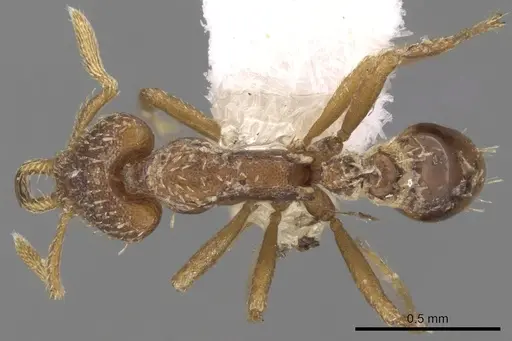
Literatur
Memuat peta distribusi...Memuat produk...