
Strumigenys podarge
- Nama Ilmiah
- Strumigenys podarge
- Tribe
- Attini
- Subfamili
- Myrmicinae
- Penulis
- Bolton, 2000
- Distribusi
- Ditemukan di 0 negara
Pendahuluan
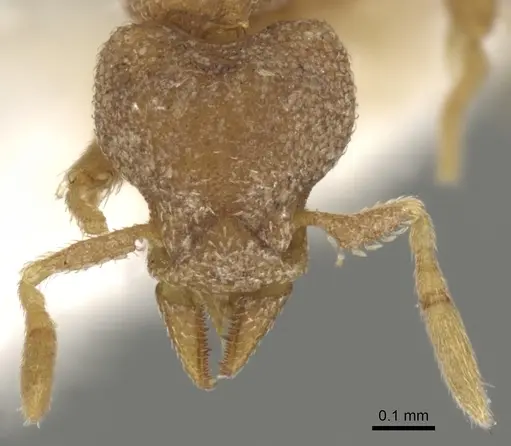
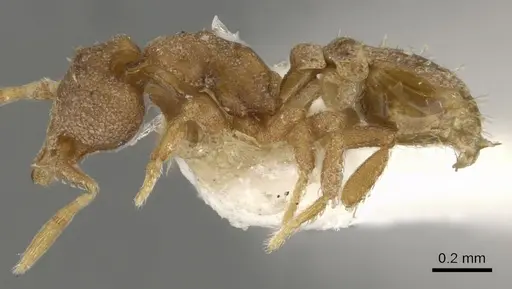
Strumigenys podarge is a tiny ant, workers measuring 1.8-1.9 mm . They have a distinctive look: a long hair juts out from the angle of the antenna (scape), the upper body has a rough, pitted texture, and the waist segments are unusually broad. This species belongs to the *Strumigenys extemena* group and was first described as *Pyramica podarge* before being moved to *Strumigenys* . Only a handful of collections exist – from Nepal (Godawari at 1700 m elevation in oak forest) and India (Himachal Pradesh) . Like other *Strumigenys*, this ant is probably a specialized hunter of springtails and other tiny soil arthropods. Because of its rarity, minute size, and unknown captive requirements, it is an expert-only species.
Quick Summary
- Difficulty: Expert
- Origin & Habitat: Recorded from Nepal (Lalitpur district, Godawari,1700 m, oak forest) and India (Himachal Pradesh) [2][3]. The high altitude suggests a cool, shaded environment.
- Colony Type: Colony structure is unconfirmed. Based on typical *Strumigenys* patterns, colonies are likely single-queen (monogyne) and small.
- Size & Growth:
- Queen: Undescribed. Workers are 1.8-1.9 mm [1].
- Worker: 1.8-1.9 mm [1].
- Colony: Unknown – likely under 100 workers based on typical *Strumigenys* colony sizes.
- Growth: Unknown – likely slow.
- Development: Unconfirmed – probably 6-10 weeks based on related species. (No specific data exists for this species. Estimates are based on genus-level patterns.)
- Antkeeping:
- Temperature: Keep cool, around 18-22°C, based on the 1700 m elevation collection site [2]. Avoid temperatures above 25°C.
- Humidity: These tiny ants desiccate easily. Keep the nest substrate consistently moist but not waterlogged, and maintain high ambient humidity. Condensation on nest walls is a good sign.
- Diapause: Likely yes. Given the temperate Himalayan origin, provide a cool period of 4-6 weeks at 10-15°C during winter [2].
- Nesting: Use very small, tight chambers. Test tubes with fine mesh or miniature plaster nests work best. Standard formicarium passages are far too large.
- Behavior: Very docile – their only defense is escape. Escape risk is EXTREMELY HIGH because they are only 1.8 mm and can squeeze through gaps invisible to the naked eye. Apply Fluon to all rims and use mesh ≤0.5 mm on any openings.
- Common Issues: desiccation from low humidity is the most common killer – monitor moisture daily., escape through tiny gaps – use extreme barrier measures (Fluon, fine mesh)., starvation due to lack of live micro-prey – you must culture springtails., slow growth and tiny colony means losses are hard to recover from., wild-caught colonies may be stressed and fail to establish.
Housing and Escape Prevention
Housing Strumigenys podarge is tricky because of its tiny size. Standard test tubes can work if you take strict escape measures. Apply Fluon (polytetrafluoroethylene) to all rim edges and use fine mesh (at most 0.5 mm) on any ventilation holes. Some keepers wrap parafilm around connection points between the nest and outworld. The nest chambers should be very small – a miniature plaster nest or a test tube with a narrow water section is better than a large formicarium. Keep the setup in a quiet spot with minimal vibration, as these tiny ants are easily stressed [1].
Feeding and Diet
Strumigenys podarge is a specialized predator that almost certainly needs live micro-prey. In the wild, Strumigenys are known to hunt springtails (Collembola) and other tiny soil arthropods. In captivity, you must culture live springtails as a primary food source. Other tiny live prey such as pot worms (Enchytraeidae), very small mites, and fruit fly larvae may be accepted. Sugar sources are unlikely to be taken – this is not a sugar-feeding species. Offer small prey every 2-3 days and remove leftovers after 24 hours to prevent mold. The challenge is that prey must be small enough for these 1.8 mm ants to handle – items over 1 mm are probably too large. Success depends on keeping a thriving springtail culture.
Temperature and Seasonal Care
Based on the collection data from 1700 m elevation in Nepalese oak forest, Strumigenys podarge likely prefers cooler conditions than most tropical ants [2]. Aim for temperatures between 18-22°C. Avoid overheating – temperatures above 25°C may stress or kill the colony. During winter, provide a cool period of 4-6 weeks at 10-15°C to mimic the seasonal conditions of their Himalayan habitat. This cool period may trigger normal colony development in spring. Monitor activity: if workers become lethargic or cluster tightly, the temperature may be too low. Room temperature (20-24°C) in most homes is usually suitable, but keep the colony away from heaters or direct sunlight.
Humidity and Water
Maintaining proper humidity is critical. These tiny ants have a large surface-area-to-volume ratio and lose water very quickly. The nest substrate should feel consistently moist – like a wrung-out sponge – but never waterlogged. Use a water reservoir connected to the nest to keep humidity steady. Condensation on the nest walls is a good sign that humidity is adequate. In dry conditions, workers quickly become lethargic and the colony can collapse. You can also place a moist cotton ball in the outworld as an extra water source. Monitor closely during the first few weeks, as humidity needs may vary with your local climate and setup.
Colony Establishment
Establishing a colony is challenging because Strumigenys podarge is very rare in collections [2]. If you obtain a queen, house her in a small setup with high humidity and offer live micro-prey (springtails). Founding behavior is unconfirmed, so observe carefully. First workers (nanitics) will be very small and may take several months to appear. Colony growth is likely slow. Do not disturb the founding chamber until at least 6-8 weeks after you see the first workers. Patience is essential – these ants work on a slower timescale than faster-growing species.
Frequently Asked Questions
How long does it take for Strumigenys podarge to develop from egg to worker?
The exact development time is unconfirmed for this species. Based on related Strumigenys, expect 6-10 weeks from egg to worker at around 20°C. Growth is slow, so don't expect rapid expansion.
Can I keep Strumigenys podarge in a test tube?
Yes, test tubes can work, but only if you have excellent escape prevention – apply Fluon to the rim and use fine mesh on ventilation. The tube should be horizontal with the water end creating a humid zone. Many keepers prefer tiny acrylic or plaster nests with chambers sized for these ants.
What do Strumigenys podarge ants eat?
They need live micro-prey, mainly springtails (Collembola). This is a specialized predator, not a sugar-feeder. You must culture springtails as the main food, tiny pot worms, mites, or fruit fly larvae may also be accepted.
Are Strumigenys podarge good for beginners?
No. This is an expert-level species because of its minute size, specialized diet (live springtails), high humidity needs, and extreme escape risk. Beginners should start with larger, more forgiving species like Lasius niger or Camponotus.
How big do Strumigenys podarge colonies get?
Colony size is unconfirmed but likely remains small – probably under 100 workers at maturity. This is typical for the genus Strumigenys.
Do Strumigenys podarge need hibernation?
Likely yes. Given their origin in the Himalayan region at 1700 m elevation, provide a cool period of 4-6 weeks at 10-15°C during winter to simulate their natural seasonal conditions [2].
Why are my Strumigenys podarge dying?
Common causes: desiccation from low humidity (most likely), starvation due to lack of appropriate live prey, escape through tiny gaps, stress from disturbance, or temperature extremes. Double-check all environmental parameters and ensure humidity is high.
When should I move Strumigenys podarge to a formicarium?
Only move when the colony has at least 20-30 workers and the test tube is causing humidity or space problems. Many keepers keep them in modified test tubes or small setups for the colony's entire life because they prefer tight spaces.
Can I keep multiple queens of Strumigenys podarge together?
This has not been documented. Based on typical Strumigenys behavior, single-queen colonies are most likely. Do not combine unrelated queens without evidence that they can coexist.
Report an Issue
The current care sheet is based fully on literature. See inconsistencies, or something that's incorrect? Please , it will be resolved after review from an admin. Contributing to the blogs tab also helps providing information, to make us be able to further improve the caresheets. Thank you for your support!
References

Lembar perawatan ini dilisensikan di bawah CC BY-SA 4.0 .
Blog Komunitas
CASENT0900142
Lihat di AntWeb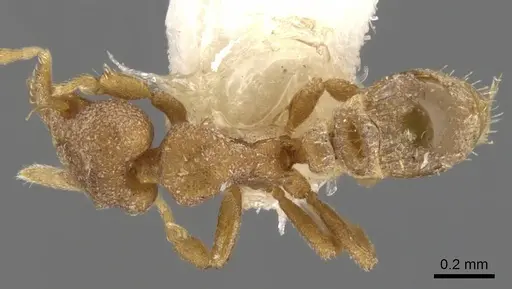
Literatur
Memuat peta distribusi...Memuat produk...