
Strumigenys orchibia
- Nama Ilmiah
- Strumigenys orchibia
- Tribe
- Attini
- Subfamili
- Myrmicinae
- Penulis
- Brown, 1953
- Distribusi
- Ditemukan di 0 negara
Pendahuluan
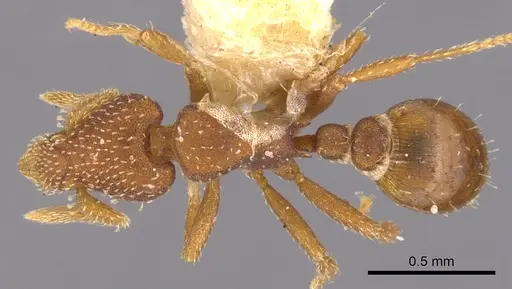
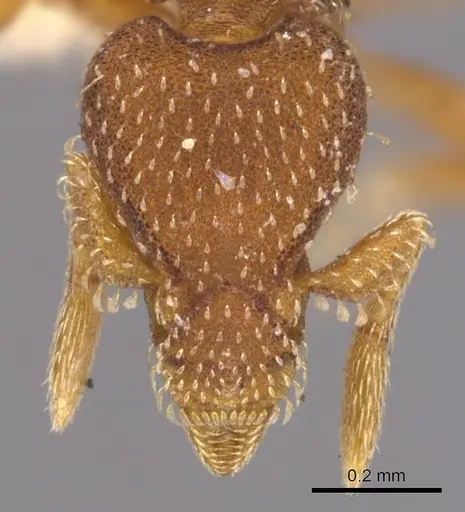
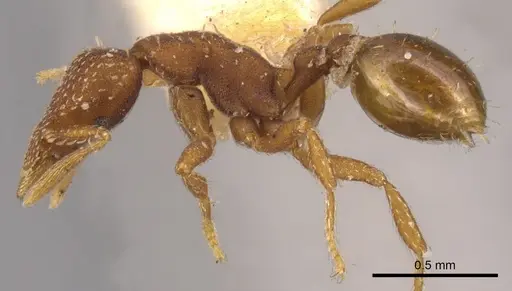
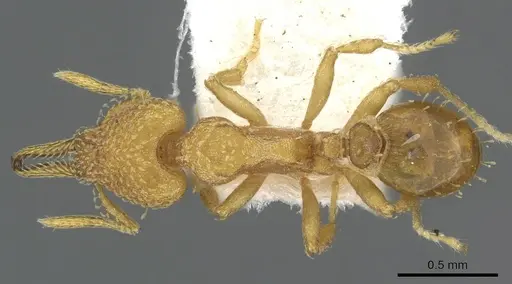
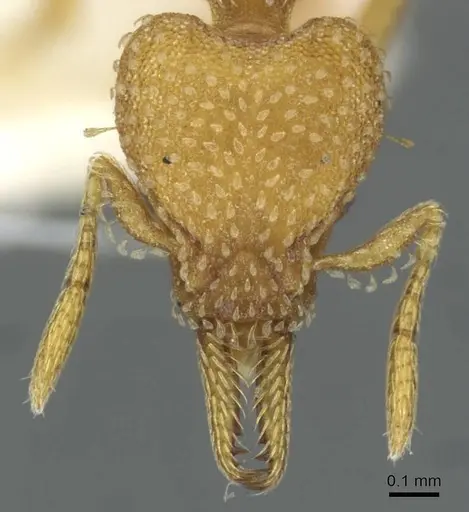
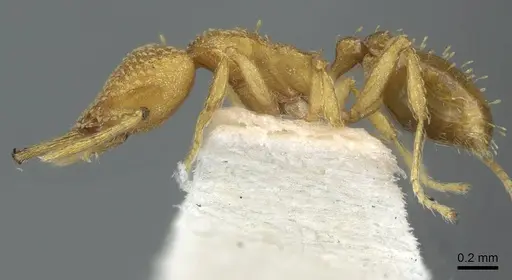
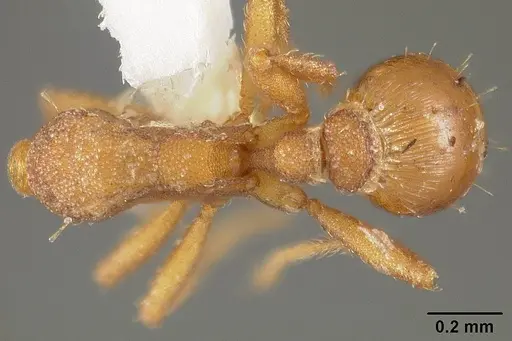
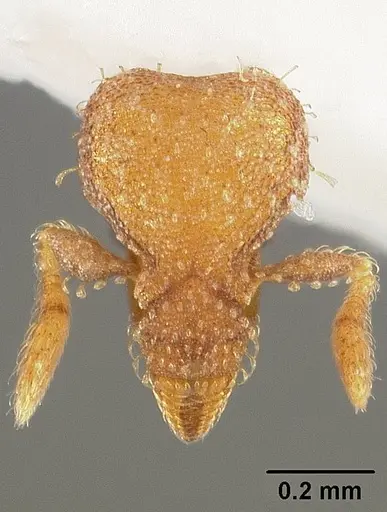
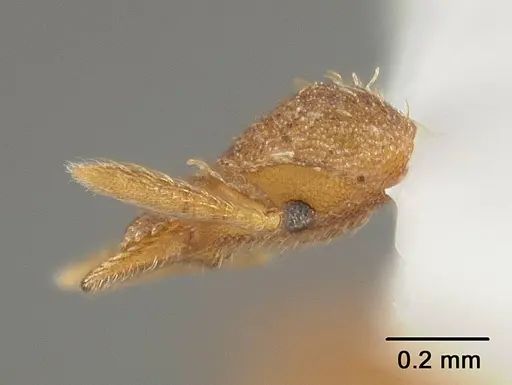
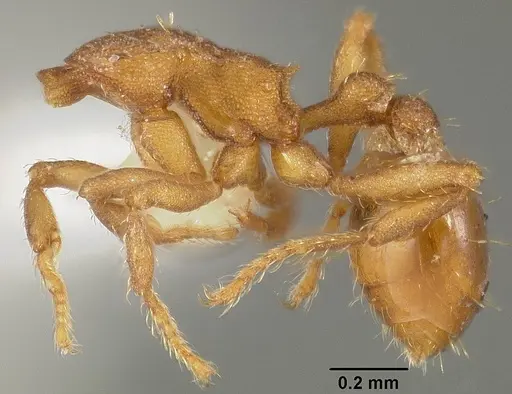
Strumigenys orchibia is a tiny predatory ant from the Myrmicinae subfamily, tribe Attini. Workers measure 2.2-2.4mm in total length, making them one of the smallest ants you can keep . They have distinctive trap-like mandibles with five triangular teeth, strongly flattened antennae, and very fine, dense basigastral costulae (striations) covering the basal half of the gaster. The head has a unique pattern of four long erect hairs behind the highest point of the vertex, contrasting with small, closely applied ground hairs . This species lives in Neotropical cloud forests across Venezuela, Colombia, and Brazil. It was originally described from specimens found in orchids (Cattleya mossiae and C. mendelii) shipped from Venezuela and Colombia and intercepted under quarantine in the US . Populations have been recorded in both the Amazon and Atlantic Forest biomes, with slight morphological differences between them, the Atlantic Forest form is smaller and has less dense pilosity .
Quick Summary
- Difficulty: Medium
- Origin & Habitat: Neotropical region, Venezuela, Colombia, and Brazil (Amazon and Atlantic Forest biomes). Found in cloud forest habitats, originally collected from orchid plants (Cattleya mossiae and C. mendelii) [2][3].
- Colony Type: Social structure is unconfirmed for this species. Based on typical Strumigenys patterns, colonies are likely single-queen, but this has not been directly studied.
- Size & Growth:
- Queen: Unconfirmed, likely around 3-4mm based on genus patterns. Direct measurements are not available.
- Worker: 2.2-2.4mm total length [1]
- Colony: Likely under 100 workers, typical for small Strumigenys species, but maximum colony size has not been documented.
- Growth: Slow
- Development: Estimated 8-12 weeks at optimal temperature (based on typical Attini development patterns) (Development is slow. Expect a extended founding period.)
- Antkeeping:
- Temperature: Keep around 22-26°C. They come from tropical cloud forests and need warmth but not extreme heat. Avoid temperatures below 18°C or above 30°C [2].
- Humidity: High humidity is preferred, think of a damp forest floor. Keep the nest substrate consistently moist but not waterlogged. Ensure good airflow to prevent mold.
- Diapause: No, being tropical, they do not require winter dormancy. Keep warm conditions year-round.
- Nesting: Use small chambers, these ants are only 2-4mm and need appropriately scaled spaces. Test tubes with a cotton-plug water reservoir work well for founding. For larger colonies, choose small plaster, Y-tong, or 3D-printed nests. Keep the nest dark and humid.
- Behavior: Strumigenys orchibia are specialized predators that hunt micro-arthropods using their trap-like mandibles. Workers are small and slow-moving, docile and non-aggressive, they prefer to flee rather than fight. They have a functional stinger (as is typical for the tribe Attini). Their small size makes escape prevention critical, they can slip through gaps that seem impossible. Watch for captured springtails and other tiny prey being carried back to the nest.
- Common Issues: escape prevention is critical, their tiny size means they can squeeze through standard barrier gaps., slow growth can frustrate beginners, colonies may take many months to show significant growth., they require live small prey, they cannot survive on sugar sources alone like many ants., high humidity needs can lead to mold problems if ventilation is poor., wild-caught colonies may be stressed or carry internal parasites.
Housing and Nest Setup
Strumigenys orchibia are tiny and need appropriately scaled housing. A test tube setup works well for founding colonies, use a small tube with a water reservoir sealed with cotton to provide humidity. Keep the tube dark (wrap with aluminum foil or use an opaque container) since these forest-dwelling ants prefer the dark. For established colonies, use small plaster, Y-tong, or 3D-printed nests with tight chambers sized for 2-4mm ants. Whatever setup you choose, escape prevention must be excellent. Apply fluon on the rim of test tubes and seal all connections between the outworld and nest. These ants can squeeze through gaps that seem impossible [1].
Feeding and Diet
Strumigenys orchibia are specialized predators of micro-arthropods. In captivity, their main food should be live small prey, springtails are ideal. You can also offer booklice (psocids), tiny fruit flies, and very small pieces of mealworms. They are not typically attracted to sugar water or honey, as they are obligate predators. Feed small prey every 2-3 days, adjusting based on colony size. Remove uneaten prey after 24-48 hours to prevent mold. A well-fed colony will have plump workers. Never rely on sugar sources alone, these ants need protein from live prey [4].
Temperature and Humidity
Keep your colony at 22-26°C. They come from tropical cloud forests and need warmth but not extreme heat. Avoid temperatures below 18°C, which can slow their already-slow metabolism and potentially harm the colony. A simple way to maintain temperature is to keep the ant room warm or use a gentle heating cable on one side of the nest only. For humidity, aim for damp conditions, the nest substrate should feel consistently moist but never waterlogged. You can achieve this with a test tube water reservoir or by misting the nest area occasionally. Good ventilation is important to prevent mold, but avoid excessive airflow that dries them out. Being tropical, they do not require any diapause or winter cooling period [2].
Colony Development and Growth
Strumigenys colonies grow slowly, that is normal for the genus. A newly mated queen seals herself in a small chamber and lays eggs, raising the first workers (nanitics) on her stored reserves. The first workers will be smaller than mature workers and may take 8-12 weeks to develop from egg to adult at optimal temperature. After the first workers emerge, the colony grows gradually. Expect slow growth in the first months, this is not a sign of problems. Colony size likely maxes out under 100 workers for this species, as is typical for small Strumigenys. Be patient, these ants are marathon growers, not sprinters. Do not overfeed in an attempt to speed growth, as excess food only creates mold problems.
Behavior and Temperament
Strumigenys orchibia are docile, non-aggressive ants. Workers are small and slow-moving, typically foraging individually or in small groups. They are not territorial and will flee rather than fight. They possess a functional stinger, a trait shared with other Attini tribe members, but it is not considered medically significant to humans. The most interesting behavior is their hunting: they use their trap-like mandibles to snap shut on unsuspecting micro-prey. Watch for workers returning to the nest with captured springtails. They are not escape artists by nature, but their tiny size means they will escape if given any opportunity, excellent barrier maintenance is essential.
Frequently Asked Questions
How long does it take for Strumigenys orchibia to get their first workers?
Expect 8-12 weeks from egg to first worker at optimal temperature (22-26°C). Strumigenys are slow-growing ants, so be patient during the founding phase. The first workers (nanitics) will be smaller than mature workers, and the colony will grow gradually after that.
What do Strumigenys orchibia eat?
They are specialized predators that need live small prey. Feed them springtails (ideal), booklice, tiny fruit flies, or small pieces of mealworms. They are not typically interested in sugar water or honey. Remove uneaten prey after 24-48 hours to prevent mold.
Can I keep Strumigenys orchibia in a test tube?
Yes, test tubes work well for founding colonies. Use a small test tube with a water reservoir sealed with cotton to provide humidity. Keep the tube wrapped or in a dark location since they prefer dark conditions. Ensure excellent escape prevention, these tiny ants can squeeze through very small gaps.
Do Strumigenys orchibia need hibernation?
No, they do not need hibernation. Being tropical ants from cloud forests in Venezuela, Colombia, and Brazil, they require consistent warm temperatures year-round. Keep them at 22-26°C without seasonal cooling.
How big do Strumigenys orchibia colonies get?
Colony size is likely under 100 workers. This is typical for small Strumigenys species, they are tiny ants (2.2-2.4mm) that invest heavily in each individual rather than producing large worker numbers.
Are Strumigenys orchibia good for beginners?
They are intermediate difficulty. While docile and fascinating to watch, they have specific needs: high humidity, live prey feeding, and excellent escape prevention is critical. Their slow growth can also test patience. They are better suited for keepers who have successfully kept at least one other ant species first.
Why are my Strumigenys orchibia escaping?
Their tiny size (2.2-4mm) allows them to squeeze through gaps that seem impossible. Check all barriers carefully, standard fluon may not be enough. Use tight-fitting lids, check for any gaps in connections, and consider using finer mesh if you've used any screen barriers. Even a tiny crack is an escape route for these ants.
What temperature is best for Strumigenys orchibia?
Keep them at 22-26°C. This matches their cloud forest origin in Venezuela, Colombia, and Brazil. Avoid temperatures below 18°C or above 30°C. A simple room-temperature setup works if your room stays in this range, otherwise, use a gentle heat source on one side of the nest.
Can I keep multiple Strumigenys orchibia queens together?
Not recommended. While colony structure is not fully studied for this specific species, Strumigenys are typically monogyne (single-queen). Combining unrelated queens has not been documented and would likely result in fighting.
Report an Issue
The current care sheet is based fully on literature. See inconsistencies, or something that's incorrect? Please , it will be resolved after review from an admin. Contributing to the blogs tab also helps providing information, to make us be able to further improve the caresheets. Thank you for your support!
References

Lembar perawatan ini dilisensikan di bawah CC BY-SA 4.0 .
Blog Komunitas
Literatur
Memuat peta distribusi...Memuat produk...