
Strumigenys naberia
- Nama Ilmiah
- Strumigenys naberia
- Tribe
- Attini
- Subfamili
- Myrmicinae
- Penulis
- Bolton, 2000
- Distribusi
- Ditemukan di 1 negara
Pendahuluan
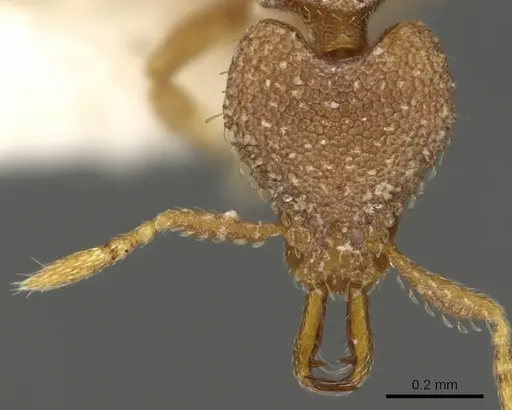
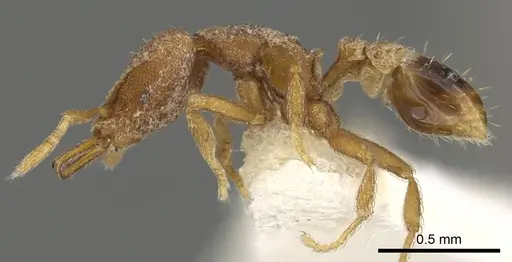
Strumigenys naberia is a tiny ant species from the rainforests of Borneo, Indonesia, and Malaysia. Workers are just 2.1-2.2 mm total length, making them one of the smaller leaf litter ants. They belong to the Strumigenys koningsbergeri group (ebbae-complex) and are the only species in this complex with short, spoon-shaped hairs on the upper scrobe margins and leading edges of the scapes . Their mandibles have a conical preapical tooth and a sharp-edged crest, specialized for hunting small prey. They were collected in mixed dipterocarp forest and kerangas (heath forest) from soil cores and leaf litter . Their high trophic position (δ15Ncor = 7.04) confirms they sit near the top of the leaf litter food chain, actively hunting tiny arthropods rather than scavenging . This makes them challenging to keep, you need a steady supply of live micro-prey.
Quick Summary
- Difficulty: Hard
- Origin & Habitat: Borneo, Indonesia, and Malaysia. Found in tropical rainforests, including mixed dipterocarp forest and kerangas (heath forest), in leaf litter and soil cores [1].
- Colony Type: Likely monogyne (single queen) based on typical Strumigenys patterns, but not confirmed. Colony size is small, Strumigenys colonies typically stay modest, likely under 100 workers given their predatory lifestyle.
- Size & Growth:
- Queen: Undescribed, queens have not been documented in scientific literature [1]
- Worker: 2.1-2.2 mm total length [1]
- Colony: Likely under 100 workers, inferred from typical Strumigenys colony sizes and their specialized predatory lifestyle
- Growth: Slow, inferred from genus patterns
- Development: Unknown, no direct data exists. Based on tropical Strumigenys patterns, estimate 2-4 months at warm temperatures (24-28°C). This is an inference. (Tropical species with likely year-round activity. Development is probably slower than temperate species due to stable rainforest conditions.)
- Antkeeping:
- Temperature: Keep warm at 24-28°C. As a tropical rainforest species, they need consistently warm conditions without temperature drops. Use a small heating cable on one side of the nest to create a gentle gradient [1].
- Humidity: High humidity is essential, these ants come from Borneo’s humid rainforests. Keep the nest substrate consistently moist but not waterlogged. Aim for damp forest floor conditions. Use a hydration system that maintains humidity without condensation.
- Diapause: No, as a tropical species from near the equator, they do not require hibernation. Keep warm year-round.
- Nesting: Use a small plaster nest, Y-tong (AAC), or 3D-printed nest with tight chambers scaled to their tiny size. Avoid large open spaces, they are leaf litter ants that feel secure in confined spaces. Do not use acrylic nests.
- Behavior: These ants are specialized predators with mandibles adapted for hunting tiny prey. They are shy and reclusive, spending most of their time in the nest or hunting in the substrate. They have a functional stinger but it is very small and not medically significant to humans. Their tiny size (2 mm) makes escape prevention critical, they can squeeze through standard barrier setups. They are not aggressive and will flee rather than fight.
- Common Issues: tiny size makes escape prevention challenging, use fine mesh (0.5 mm) and tight-fitting lids, requires constant supply of live tiny prey, colonies often fail because keepers cannot provide enough springtails or other micro-arthropods, slow colony growth, months to establish, which can be frustrating, unconfirmed founding behavior, queens may take long to produce workers, and colony failure is common, humidity must be carefully balanced, too wet invites mold, too dries out the ants
Housing and Nest Setup
Strumigenys naberia needs an enclosure that matches their natural leaf litter habitat. Because they are only 2 mm, they need tight chambers and narrow passages, large open spaces stress them. Use a small plaster nest, Y-tong (AAC), or 3D-printed nest with small chambers. The nest must maintain high humidity while allowing some ventilation to prevent mold. Place a water reservoir or hydration system that keeps the substrate consistently moist without flooding. Connect a small outworld for feeding. Because of their tiny size, use fine mesh (at least 0.5 mm) on ventilation holes and ensure all connections are secure, they can escape through gaps that seem impossibly small [1].
Feeding and Diet
These ants are specialized predators and require live prey to survive. Their diet consists almost entirely of tiny arthropods, springtails, minute soil mites, tiny beetles, and other micro-arthropods found in leaf litter. They will not accept dead prey or sugar sources. In captivity, you must maintain a culture of springtails (collembola) to provide a constant food source. Other small live prey like fruit fly larvae, newly hatched pinhead crickets, or tiny waxworms may be accepted, but springtails should be the primary food. Feed small amounts frequently, a few springtails every few days, rather than large prey items. Remove any uneaten prey to prevent mold. Do not expect them to accept honey, sugar water, or other typical ant foods, they are obligate predators [2][1].
Temperature and Humidity
As a tropical rainforest species from Borneo, Strumigenys naberia needs warm, humid conditions year-round. Keep temperatures between 24-28°C, they do not tolerate cooler conditions and may become sluggish or die below 22°C. Use a small heating cable or mat on one side of the nest to maintain warmth, but avoid direct heat that could dry out the nest. Humidity is critical: aim for 70-85% relative humidity inside the nest. The substrate should feel consistently damp but never waterlogged. Use a hydration system (like a water tube or moist cotton) and check regularly that the nest material stays damp. If you see constant condensation, there is too little ventilation, if the substrate dries out quickly, add more moisture. A small digital hygrometer near the nest helps monitor conditions [1].
Colony Establishment and Growth
Establishing a colony requires patience. If you acquire a queen (rare, they are not commonly bred), founding behavior is unconfirmed. Based on genus patterns, she will likely seal herself in a small chamber and lay eggs without foraging (claustral founding). The first workers (nanitics) will be very small and may take 2-4 months to emerge. Once established, colony growth is slow. A mature colony may reach only 50-100 workers, small by ant standards. Do not disturb the queen during founding, stress causes many colonies to fail. Once workers emerge, they will begin hunting for prey. The key to success is providing a constant supply of tiny live prey from the very first workers [1].
Behavior and Temperament
Strumigenys naberia is shy and reclusive, avoiding confrontation. They are not aggressive and will flee when threatened. They have a functional stinger but it is very small and not medically significant to humans, they pose no danger to keepers. In the nest, workers actively hunt tiny prey using their specialized mandibles. They do not tend aphids or collect honeydew, their ecological niche is predation. Workers may be active day or night, adjusting activity to prey availability. They do not form large trails or forage in the open like larger species. Their tiny size makes escape prevention essential [1].
Frequently Asked Questions
How long does it take for Strumigenys naberia to produce first workers?
The exact timeline is unconfirmed for this species, but based on typical Strumigenys patterns and their tropical origin, expect 2-4 months from founding to first workers emerging at warm temperatures (24-28°C). Patience is essential [1].
What do Strumigenys naberia ants eat?
They are obligate predators that eat only live tiny prey. Their primary food should be live springtails (collembola). They will not accept dead prey, sugar water, honey, or other typical ant foods. You must maintain a thriving springtail culture to keep this species alive [2][1].
Can I keep Strumigenys naberia in a test tube?
A test tube can work for a small colony if it has a water reservoir, but the key issue is humidity, test tubes dry out quickly. You will need a hydration system and regular monitoring. A small plaster or Y-tong nest is often better for maintaining proper humidity [1].
Are Strumigenys naberia good for beginners?
No, this species is considered difficult to keep. They require a constant supply of tiny live prey (springtails), high humidity, warm temperatures, and excellent escape prevention due to their small size. They are best suited for experienced keepers who can provide specialized care [1].
How big do Strumigenys naberia colonies get?
Colony size remains small, likely under 100 workers at maturity. This is typical for leaf litter ants with specialized predatory lifestyles [1].
Do Strumigenys naberia need hibernation?
No, as a tropical species from near the equator, they do not require hibernation or winter rest. Keep them warm (24-28°C) year-round. Temperature drops below 22°C can be harmful [1].
Why are my Strumigenys naberia dying?
Common causes include: lack of live prey (they starve without springtails), incorrect humidity (too dry or too wet/moldy), temperatures below 22°C, or escape (they can squeeze through tiny gaps). Check all these parameters and ensure a thriving springtail culture [1].
Can I keep multiple queens together?
This has not been documented for this species. Based on typical Strumigenys behavior, single-queen colonies are most likely. Do not attempt to combine unrelated queens, they will likely fight [1].
When should I move Strumigenys naberia to a formicarium?
Wait until the colony has at least 20-30 workers and is actively hunting. Moving too early stresses the colony. Ensure your formicarium can maintain high humidity and has appropriately sized chambers for their tiny workers [1].
Report an Issue
The current care sheet is based fully on literature. See inconsistencies, or something that's incorrect? Please , it will be resolved after review from an admin. Contributing to the blogs tab also helps providing information, to make us be able to further improve the caresheets. Thank you for your support!
References

Lembar perawatan ini dilisensikan di bawah CC BY-SA 4.0 .
Blog Komunitas
CASENT0900883
Lihat di AntWeb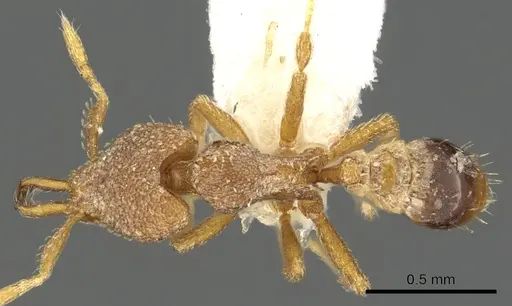
Literatur
Memuat peta distribusi...Memuat produk...