
Strumigenys murshila
- Nama Ilmiah
- Strumigenys murshila
- Tribe
- Attini
- Subfamili
- Myrmicinae
- Penulis
- Bolton, 1983
- Distribusi
- Ditemukan di 0 negara
Pendahuluan
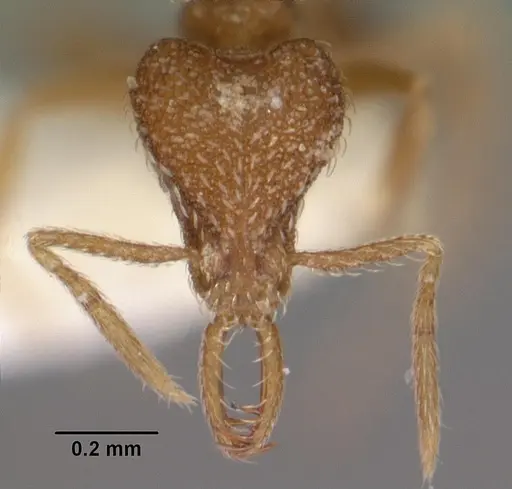
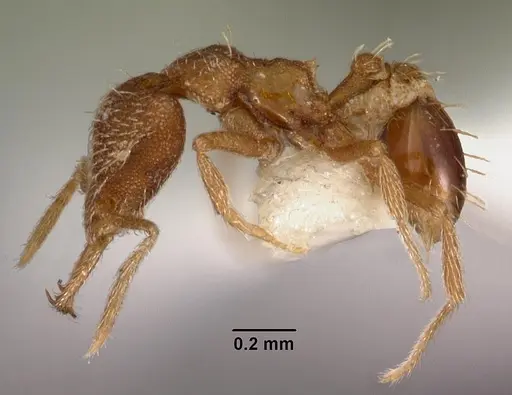
Strumigenys murshila is an extremely rare dwarf ant species known only from a single worker collected in Rwanda, East Africa. Workers are tiny at just 2.3mm total length, with a distinctive appearance featuring very small eyes (only 5-6 ommatidia), slender mandibles that bow slightly outward, and a longitudinally costulate-rugulose postpetiole. Their coloration is brownish yellow. This species belongs to the Strumigenys scotti group and was originally described in 1983 by Bolton, with no additional specimens or biological observations recorded since . Nothing is known about this species' biology in the wild or how it behaves in captivity. As a Strumigenys, it likely shares traits with related species - these are specialized predators that use their trap-jaw mandibles to capture tiny prey like springtails. The fact that only one specimen has ever been collected from Rwanda's highlands at 1800m elevation suggests this may be a rare or localized species .
Quick Summary
- Difficulty: Expert
- Origin & Habitat: Rwanda, East Africa, known only from the type locality at Rangiro (elevation 1800m). The specific habitat type at this collection site is not documented [2].
- Colony Type: Unknown, only a single worker specimen has ever been collected. Colony structure (single-queen vs multi-queen) is unconfirmed. No data exists on whether colonies are monogyne or polygyne.
- Size & Growth:
- Queen: Unknown, only workers have been described. Based on related Strumigenys species, queens would likely be slightly larger than workers, but no data exists [1].
- Worker: 2.3mm total length [1].
- Colony: Unknown, no colony samples have been documented.
- Growth: Unknown, no development data exists for this species.
- Development: Unknown, no direct observations. (No developmental data exists for this species.)
- Antkeeping:
- Temperature: Likely prefers moderate temperatures. Based on Rwandan highland location (1800m elevation), room temperature (20-24°C) is likely appropriate. Avoid overheating.
- Humidity: Likely requires moderate to high humidity, similar to other Strumigenys species. Keep substrate consistently moist but not waterlogged.
- Diapause: Unknown, no data on overwintering requirements. Rwanda has mild temperatures year-round, so this species may not require a diapause period.
- Nesting: In nature likely nests in rotting wood, leaf litter, or soil. In captivity, a small test tube setup or naturalistic terrarium with moist substrate would be appropriate starting points.
- Behavior: Completely unstudied in captivity. Based on related Strumigenys species, these ants are likely predatory on tiny arthropods (especially springtails) using their trap-jaw mandibles. They are likely shy and not aggressive. Escape prevention is important given their tiny 2.3mm size, they can easily escape through small gaps.
- Common Issues: no biological data exists, this is one of the least-studied ant species in the world, only known from a single specimen collected in 1973, no information on diet, founding behavior, or colony structure, captive care is entirely speculative based on genus-level patterns, very small size means escape prevention must be excellent
Species Overview and Identification
Strumigenys murshila is an exceptionally rare ant species described by Barry Bolton in 1983 from a single worker collected in Rwanda. The species measures just 2.3mm in total length, making it one of the smaller ant species in the genus. Key identification features include very small eyes with only 5-6 ommatidia (most ants have many more), slender mandibles that bow slightly outward, and a distinctive longitudinally costulate-rugulose postpetiole (the segment between the waist and gaster has ridge-like sculpturing). The species belongs to the Strumigenys scotti group, which contains several similar African species [1].
This species is considered likely endemic to Rwanda, meaning it may only exist in that country. The only known specimen was collected at Rangiro in 1973 at an elevation of 1800 meters. No additional specimens have been found despite subsequent ant surveys in the region [2].
Natural History and Biology
Nothing is known about the biology of Strumigenys murshila. No observations exist on colony size, queen behavior, nesting habits, diet, reproduction, or any other aspect of their natural history. This is one of the least-documented ant species in the world, with only the original type specimen ever collected [1].
However, we can make educated guesses based on related Strumigenys species. The genus Strumigenys contains over 850 species worldwide, and most are specialized predators that hunt tiny arthropods, particularly springtails (Collembola). They possess trap-jaw mandibles that can snap shut rapidly to capture prey. In captivity, related species typically accept small live prey like springtails, fruit flies, and other tiny insects [1].
The Rwandan collection site at 1800m elevation suggests this species may prefer cooler, highland conditions compared to lowland tropical Strumigenys. However, without any field observations, this remains speculative [2].
Housing and Care Recommendations
Since no captive care information exists for this species, recommendations must be based entirely on what works for related Strumigenys species. Start with a small test tube setup or a small naturalistic terrarium. Keep the nest substrate consistently moist but not waterlogged, these ants come from humid forest floor environments.
Temperature should be moderate, around 20-24°C. Given the highland Rwandan origin (1800m elevation), this species may prefer slightly cooler conditions than typical tropical Strumigenys. Avoid temperatures above 28°C.
For feeding, offer small live prey items, springtails are the ideal choice based on what related species accept. Other tiny live prey like fruit fly larvae, pinhead crickets, or small mealworms may also be accepted. Sugar sources are unlikely to be important, as Strumigenys are primarily predatory.
Escape prevention is critical due to the tiny 2.3mm worker size. Use fine mesh on any ventilation holes and ensure all connections are sealed [1].
Challenges and Uncertainties
Keeping Strumigenys murshila presents extreme challenges due to the complete lack of biological data. This is not a species for beginners, it should only be attempted by expert antkeepers who understand genus-level Strumigenys care and can adapt when the ants don't behave as expected.
The biggest uncertainty is diet. While related Strumigenys species specialize in springtail predation, we don't know if this species accepts the same foods. You may need to experiment with various tiny live prey items.
We also don't know if this species can form colonies in captivity or what triggers reproduction. Queen behavior, founding, and colony development are entirely unknown. Any successful captive colony would represent the first-ever biological observation of this species.
Given how rare this species appears to be in the wild (only one specimen in over 50 years of ant research), it may prove very difficult to acquire founder queens. If you do obtain a colony, document your observations carefully, any information would be scientifically valuable for this essentially unknown species. [1]
Frequently Asked Questions
How do I care for Strumigenys murshila ants?
No captive care information exists for this species. Based on related Strumigenys species, provide a small test tube or naturalistic setup with consistently moist substrate. Keep temperatures moderate (20-24°C) and offer small live prey, especially springtails. This is an expert-level species due to complete lack of biological data.
What do Strumigenys murshila eat?
Unknown for this specific species. Related Strumigenys are specialized predators on tiny arthropods, especially springtails. Offer small live prey like springtails, fruit flies, and other tiny insects. Sugar sources are unlikely to be important.
How big do Strumigenys murshila colonies get?
Unknown, no colony samples have ever been documented. The fact that only a single specimen has ever been collected suggests this may be a naturally rare or localized species.
Where is Strumigenys murshila found?
This species is known only from Rwanda, East Africa. The only specimen was collected at Rangiro in 1973 at an elevation of 1800 meters. It may be endemic to Rwanda, meaning it might only exist in that country.
Is Strumigenys murshila a good species for beginners?
No. This is an expert-level species due to the complete lack of biological data. No information exists on their diet, founding behavior, temperature preferences, or any aspect of captive care. Only attempt this species if you have extensive experience with Strumigenys or other tiny predatory ants.
How long does it take for Strumigenys murshila to develop from egg to worker?
Unknown, no developmental observations exist for this species.
Do Strumigenys murshila need hibernation or diapause?
Unknown. Rwanda has mild temperatures year-round at 1800m elevation, so this species may not require a diapause period. However, no observations exist on their seasonal behavior. Monitor your colony for natural slowing of activity and adjust care accordingly.
Can I keep multiple Strumigenys murshila queens together?
Unknown, no data exists on colony structure or queen behavior. The single known specimen provides no information on whether this species is single-queen (monogyne) or multi-queen (polygyne). Do not attempt combining unrelated queens without evidence they will accept each other.
Why is Strumigenys murshila so rarely collected?
This species is known from only a single specimen collected in 1973. Possible reasons include: the species is genuinely rare or localized, it lives in microhabitats rarely sampled by researchers, or it has been overlooked due to its tiny size and resemblance to other Strumigenys. No one knows for certain.
Report an Issue
The current care sheet is based fully on literature. See inconsistencies, or something that's incorrect? Please , it will be resolved after review from an admin. Contributing to the blogs tab also helps providing information, to make us be able to further improve the caresheets. Thank you for your support!
References

Lembar perawatan ini dilisensikan di bawah CC BY-SA 4.0 .
Blog Komunitas
CASENT0102568
Lihat di AntWeb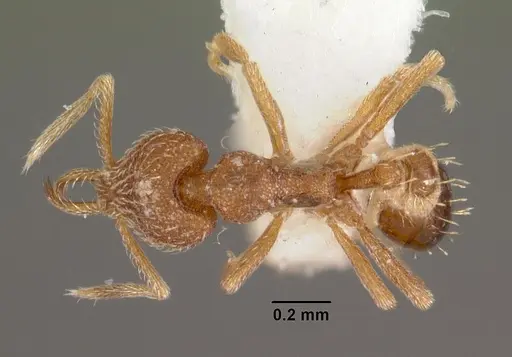
Literatur
Memuat peta distribusi...Memuat produk...