
Strumigenys mnemosyne
- Nama Ilmiah
- Strumigenys mnemosyne
- Tribe
- Attini
- Subfamili
- Myrmicinae
- Penulis
- Bolton, 2000
- Distribusi
- Ditemukan di 0 negara
Pendahuluan
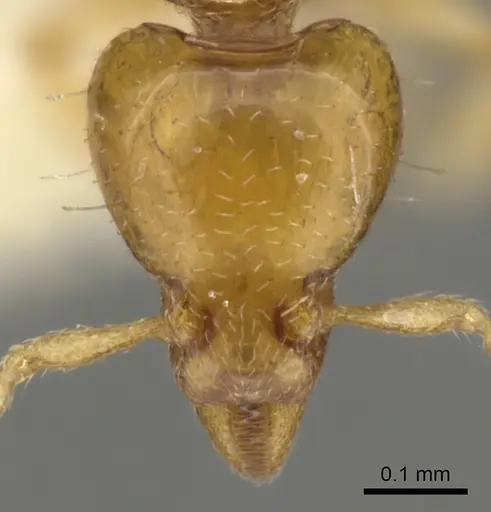
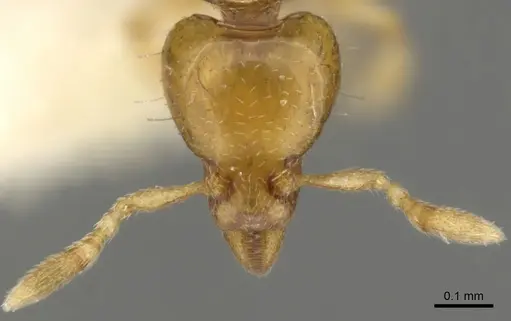
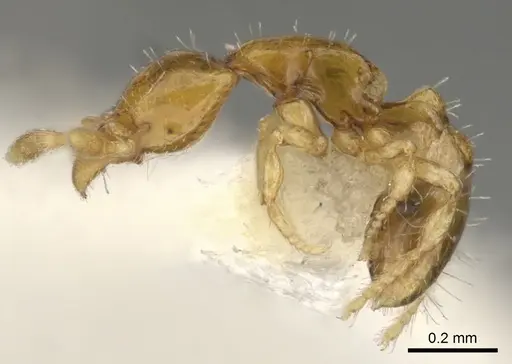
Strumigenys mnemosyne is an exceptionally rare tiny ant species known only from four localities in Borneo, specifically Sabah and Sarawak in East Malaysia . Workers measure just 1.4mm in total length, making them among the smallest ants you can keep . They belong to the mnemosyne species group and are morphologically very close to Strumigenys marmorata, with both species lacking standing setae on their scapes and sculpture on their head and mesosomal dorsum . These ants can be identified by their erect simple setae on the head, mesosome, and petiole, along with significantly longer setae on the posterior of the first gastral tergite . In full-face view, their head displays four freely projecting setae that extend beyond the lateral margins . What makes this species particularly interesting is its extreme rarity - it's only known from leaf litter extractions in lowland rainforest habitats, meaning it's a specialized leaf-litter dweller that rarely appears in standard collection methods . The scape (antenna segment) is heavily constricted near the base, a distinctive morphological feature . As a member of the tribe Attini, this species is predatory on micro-arthropods rather than fungus-growing, which defines its care requirements.
Quick Summary
- Difficulty: Expert
- Origin & Habitat: Borneo (Sabah and Sarawak, East Malaysia) in lowland rainforest leaf litter at elevations including Long Pala, Maliau Basin, Deramakot Forest Reserve, and Poring Hot Spring [1]
- Colony Type: Unknown colony structure, only four worker specimens have ever been collected [1]
- Size & Growth:
- Queen: Undescribed, no queen specimens have been collected [1]
- Worker: 1.4mm total length [1]
- Colony: Unknown, only single workers have been collected [1]
- Growth: Unknown
- Development: Unknown, no breeding biology has been documented [1] (Development timeline is unconfirmed due to the species being known only from four worker specimens collected in leaf litter extractions)
- Antkeeping:
- Temperature: Tropical species requiring warm conditions, aim for 24-28°C based on its Bornean lowland rainforest origin [2]
- Humidity: Requires high humidity consistent with Bornean leaf litter habitats, keep substrate consistently moist but not waterlogged [2]
- Diapause: No, being a tropical species from Borneo, no hibernation period is needed [2]
- Nesting: Natural nesting occurs in leaf litter on the forest floor. In captivity, a naturalistic setup with fine substrate or a small test tube setup with high humidity works best. Their tiny size means they need very small chambers and passages [2]
- Behavior: These are extremely small, cryptic leaf-litter ants that are rarely encountered. They are predatory on micro-arthropods like springtails. Their tiny size makes them excellent escape artists, escape prevention must be excellent using fine mesh and tight-fitting lids. Temperament is non-aggressive given their size. Foraging occurs in the substrate and on surfaces. Activity level is moderate, with workers moving slowly through leaf litter areas.
- Common Issues: escape prevention is critical due to their extremely small 1.4mm size, no breeding biology is known, founding and colony development are complete mysteries, only four specimens have ever been collected in the wild, so captive husbandry is entirely experimental, high humidity requirements can lead to mold if ventilation is inadequate, prey acceptance is uncertain, they likely need live micro-arthropods but specific preferences are unstudied
Housing and Nest Setup
Because Strumigenys mnemosyne is a leaf-litter species from Borneo [2], you'll need to create a humid, naturalistic setup that mimics the forest floor. A small naturalistic terrarium with a layer of moist leaf litter and fine soil works well. The substrate should be kept consistently moist but never waterlogged, think damp forest floor, not swamp. You can also use a small test tube setup with a water reservoir, but the chambers must be tiny given the workers are only 1.4mm [1]. Escape prevention is absolutely critical, these ants are tiny enough to squeeze through standard barrier setups. Use fine mesh (at least 0.5mm or smaller) on all openings and apply fluon to any smooth surfaces. A small outworld area connected to the nest allows for feeding. Because so little is known about this species [1], observation is key, watch how your colony uses the space and adjust accordingly.
Feeding and Diet
Strumigenys ants are predators of micro-arthropods [2], primarily springtails and other tiny soil invertebrates. For this species, you should offer small live prey such as springtails, which are the most reliable food source for Strumigenys in captivity. Other micro-arthropods like tiny soil mites may also be accepted. Feed small prey items every few days, removing any uneaten prey after 24 hours to prevent mold. Sugar sources are generally not accepted by Strumigenys species, they are obligate predators. The prey should be appropriately sized for these tiny ants, anything larger than 1mm may be too challenging for them to tackle. Some keepers have success offering freshly killed prey, but live prey is preferred. Monitor your colony closely to determine feeding frequency based on consumption rates.
Temperature and Humidity
Being a Bornean lowland rainforest species [1], Strumigenys mnemosyne requires warm and humid conditions. Aim for temperatures in the range of 24-28°C [2], which matches their natural habitat in Sabah and Sarawak. Room temperature may be sufficient if your home is naturally warm, otherwise use a small heating cable on one side of the setup to create a gentle gradient. Humidity should be high, the substrate should feel consistently moist. Mist the setup occasionally, but avoid creating standing water. Good ventilation is important to prevent mold while maintaining humidity. A hygrometer helps monitor conditions. If you see excessive condensation or mold, increase ventilation slightly. The key is balance: humid enough to prevent desiccation but with enough airflow to prevent stagnation.
Understanding the Challenge
This is genuinely one of the most challenging ant species to keep because virtually nothing is known about its biology in captivity. Only four worker specimens have ever been collected in the wild, all from leaf litter extractions in Borneo [1]. No queens have been described, no colony samples exist, and nuptial flight behavior is completely unknown. What you're attempting is essentially pioneering captive husbandry for a species that has barely been studied. Expect a steep learning curve and be prepared for experimental approaches. Success may require significant trial and error. The species is not recommended for beginners, you need experience with other Strumigenys species or similarly challenging micro-ants before attempting S. mnemosyne. Even basic questions like whether they'll accept captive prey or how they establish colonies remain unanswered. Document your observations carefully, as any captive breeding success would represent a significant contribution to antkeeping knowledge.
Frequently Asked Questions
How long does it take for Strumigenys mnemosyne to go from egg to worker?
The egg-to-worker timeline is completely unknown. No breeding biology has been documented for this species, in fact, no queen or colony has ever been collected. Only four worker specimens exist in museum collections, all from leaf litter extractions in Borneo [1].
Can I keep Strumigenys mnemosyne in a test tube?
Yes, a small test tube setup can work, but the chambers must be appropriately sized for these tiny 1.4mm workers [1]. The key requirements are high humidity and escape prevention, use fine mesh and fluon barriers. A naturalistic setup with moist leaf litter may be more suitable given their natural habitat [2].
Are Strumigenys mnemosyne good for beginners?
No. This species is not recommended for beginners. Only four workers have ever been collected in the wild, and no queen or colony has ever been documented. There is no captive husbandry knowledge base, you would be pioneering entirely experimental care. Even experienced antkeepers should approach this species with caution [1].
What do Strumigenys mnemosyne eat?
Based on related Strumigenys species, they are predators of micro-arthropods [2]. Offer small live springtails as a primary food source. Other tiny soil invertebrates may also be accepted. Sugar sources are generally not accepted by Strumigenys species, they are obligate predators on small live prey [2].
Do Strumigenys mnemosyne need hibernation?
No. Being a tropical species from Borneo, they do not require a hibernation or diapause period. Keep them warm year-round at 24-28°C [2].
How big do Strumigenys mnemosyne colonies get?
Colony size is completely unknown. Only four individual workers have ever been collected, all from separate leaf litter samples. No colony has ever been found. Related Strumigenys species typically have small colonies, but there's no specific data for this species [1].
Why are my Strumigenys mnemosyne dying?
Without any established captive husbandry knowledge, diagnosing problems is extremely difficult. Potential issues include: temperature too low or too high, humidity wrong (too dry or too wet causing mold), escape leading to lost ants, prey not being accepted, or stress from handling. Document everything and try adjusting one variable at a time. Given the experimental nature of keeping this species, some colony loss may be inevitable [1].
Can I keep multiple Strumigenys mnemosyne queens together?
This is unknown. No queen has ever been documented for this species, let alone colony structure observations. Combining unrelated queens of this species has not been studied. Given the complete lack of biological data, keeping a single queen (if you ever obtain one) is the safest approach until more is learned [1].
When should I move Strumigenys mnemosyne to a formicarium?
There's no established guidance for this species. Given their leaf-litter nature, a naturalistic setup with moist substrate may be more appropriate than a traditional formicarium [2]. If your colony thrives in a test tube setup, there's no need to move them. Only consider moving if the colony is clearly too large for the current setup or if conditions become unmanageable.
What temperature is best for Strumigenys mnemosyne?
Keep them at 24-28°C based on their Bornean lowland rainforest origin [1]. This is warmer than most temperate ant species require. Use a heating cable on one side of the setup to create a gentle gradient if your room temperature is below this range [2].
Report an Issue
The current care sheet is based fully on literature. See inconsistencies, or something that's incorrect? Please , it will be resolved after review from an admin. Contributing to the blogs tab also helps providing information, to make us be able to further improve the caresheets. Thank you for your support!
References

Lembar perawatan ini dilisensikan di bawah CC BY-SA 4.0 .
Blog Komunitas
CASENT0900146
Lihat di AntWeb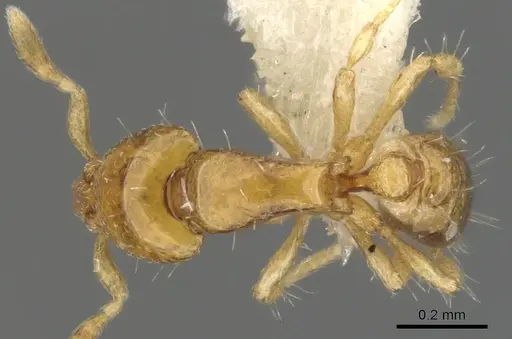
Literatur
Memuat peta distribusi...Memuat produk...