
Strumigenys lacunosa
- Nama Ilmiah
- Strumigenys lacunosa
- Tribe
- Attini
- Subfamili
- Myrmicinae
- Penulis
- Lin & Wu, 1996
- Distribusi
- Ditemukan di 0 negara
Pendahuluan
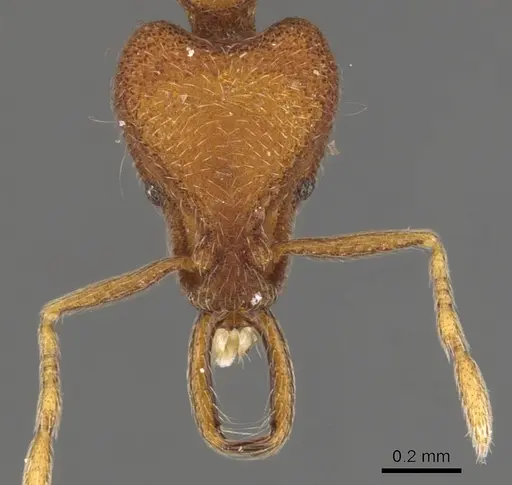
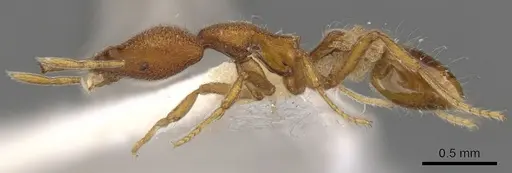
Strumigenys lacunosa is a tiny predatory ant measuring 2-3.1 mm in total length, native to Taiwan and the Ryukyu Islands of Japan . Workers have a distinctive appearance with abundant long flagellate (hair-like) hairs covering their body, and among Japanese Strumigenys they are unique in lacking subapical teeth on their mandibles . The species name refers to the lacunose (pitted) sculpturing on the head, mesosoma, petiole, and postpetiole . This rare species has only been recorded once in Japan, from the floor of a broadleaf forest in northern Okinawa Island . As a member of the dacetine tribe (Attini), these ants are specialized predators that hunt tiny arthropods such as springtails.
Quick Summary
- Difficulty: Hard
- Origin & Habitat: Found in Taiwan and the Ryukyu Islands (Japan), recorded from broadleaf forest floors in northern Okinawa Island (Mt. Nishime-dake) and multiple locations in Taiwan including Taipei (Chuchih), Nantou (Chitou, Lienhuachih), Taitung (Lichia), and Orchid Island [1][3][2].
- Colony Type: Colony structure in the wild is not well documented. In captivity, parthenogenetic reproduction has been observed, unfertilized queens can produce offspring, but only males, not new workers or queens [4].
- Size & Growth:
- Queen: Not reported in available literature, queens are likely slightly larger than workers (worker TL 2-3.1 mm).
- Worker: 2-3.1 mm (TL) [1][2]
- Colony: Colonies appear to stay very small. In one 6‑month study, a colony produced only 7 workers and 5 males [4].
- Growth: Slow
- Development: No direct data available. Based on typical development rates for small Myrmicinae, likely 8-12 weeks at optimal temperature, but this is an estimate. (Development time depends on temperature and food availability.)
- Antkeeping:
- Temperature: 22-26°C is recommended. These ants come from subtropical Taiwan and Okinawa, where temperatures rarely drop below 15°C even in winter [1]. Avoid prolonged temperatures below 20°C.
- Humidity: High humidity is essential, think damp forest‑floor conditions. Keep the nest substrate consistently moist but not waterlogged, and provide a test‑tube water reservoir.
- Diapause: Unlikely. Being subtropical, they probably do not require a true hibernation period, though activity may slow in winter.
- Nesting: In nature, they nest in soil and rotting wood on the forest floor [2]. In captivity, a small test‑tube setup is ideal for founding colonies. For established colonies, use a small plaster or Y‑tong nest with tight, narrow chambers, they dislike large open spaces.
- Behavior: These are extremely small, slow‑moving ants that specialize in hunting micro‑arthropods like springtails. They are not aggressive towards humans, their primary defense is to remain still or flee. When at rest, workers hold their mandibles almost closed and antennae at an angle under 180 degrees. During hunting or when threatened, they extend both mandibles and antennae to 180 degrees or more, and the antennae tilt upward, exposing the ventral scape gland [5]. They belong to a subfamily with a functional stinger, but due to their tiny size it poses no significant threat to people. Escape prevention is critical, use fine mesh (0.5 mm or smaller) on all openings.
- Common Issues: escape prevention is critical, their tiny size (2-3 mm) lets them squeeze through standard test‑tube barriers., they require live micro‑prey (springtails) which can be difficult to culture reliably., slow colony growth may lead to overfeeding and mold if uneaten prey is not removed promptly., parthenogenesis produces mostly males, establishing a productive colony is challenging [4]., high humidity needs can cause mold if ventilation is inadequate.
Housing and Setup
Because Strumigenys lacunosa is so tiny (2-3 mm), all enclosures must be scaled down. A standard test‑tube setup works well for a founding queen, use a tube with a tight cotton plug and a water reservoir, and make sure there are no gaps. For established colonies, a small plaster or Y‑tong nest with narrow, tight chambers is best. They feel exposed in large open spaces, so keep the nest area compact. The outworld should also be small and have a dark, covered section. Escape prevention is critical: use fine stainless‑steel or plastic mesh with openings no larger than 0.5 mm on any ventilation holes. These ants cannot climb smooth surfaces well, but they will find any tiny gap. Keep the nest dark or covered, they prefer dim conditions like their native forest‑floor habitat [2].
Feeding and Diet
Strumigenys lacunosa is a specialized predator of micro‑arthropods. In captivity, their primary food should be live springtails (Collembola), you must maintain a continuous culture. Other tiny live prey may be accepted, such as minute soil mites or fruit‑fly larvae, but springtails should be the staple. They are unlikely to take sugar water or honey, their diet is almost entirely protein. Do not offer insects larger than themselves, their mandibles cannot handle large prey. Feed small amounts every 2-3 days and remove any leftover prey quickly to prevent mold. No specific diet studies exist for this species, so these recommendations are based on the habits of related dacetine ants.
Temperature and Seasonal Care
Maintain temperatures between 22-26°C for optimal colony activity and development. These ants come from subtropical Taiwan and Okinawa, where winter temperatures rarely fall below 15°C [1]. A small heating cable placed under part of the nest can help, but avoid direct heat that dries out the substrate. Room temperature (20-24°C) is usually acceptable. They do not require a winter diapause, though activity may slow in cooler months, this is normal, and they should not be artificially cooled. Keep humidity high by ensuring the water reservoir is always full and the nest substrate stays damp.
Colony Reproduction
Strumigenys lacunosa exhibits unusual reproductive biology: it can reproduce by parthenogenesis, but unlike some other Strumigenys species that produce workers without mating, this species only produces males from unfertilized queens [4]. In a 6‑month laboratory study, a colony with a single queen produced 7 workers and 5 males, but no new queens [4]. This means colony growth is very limited. Mated queens have been found with sperm in their spermatheca, confirming that normal mating occurs in the wild [4]. If you obtain a dealate queen, expect very slow growth and a high chance of male production.
Behavior and Defense
These ants are gentle and non‑aggressive. They rely on camouflage and rapid retreat rather than confrontation. When at rest, workers hold their mandibles almost closed and their antennae at an angle under 180 degrees [5]. When hunting or defending, they extend both mandibles and antennae to 180 degrees or more, and the antennae tilt upward to expose the ventral scape gland, thought to be involved in chemical communication with prey or enemies [5]. As a member of the subfamily Myrmicinae, they possess a functional stinger, but it is unlikely to be used against humans due to their tiny size and timid nature. Their main defense is hiding among leaf litter. In captivity, they will quickly flee to the darkest corner of the nest when disturbed. Do not house them with larger or more aggressive species.
Frequently Asked Questions
Can I keep Strumigenys lacunosa in a test tube?
Yes, a small test‑tube setup works well for founding colonies. Use a tube with a tight‑fitting cotton plug and ensure all gaps are sealed, these tiny ants can squeeze through surprisingly small openings. Keep the tube horizontal so the queen can retreat to the dark end.
How long until first workers in Strumigenys lacunosa?
Exact timing is unknown. Based on typical development of small Myrmicinae, expect roughly 8-12 weeks from egg to first worker at optimal temperature (22-26°C). Colony growth is very slow, in one study it took 6 months to produce just 7 workers [4].
What do Strumigenys lacunosa eat?
They are specialized predators that require live springtails (Collembola) as their primary food. Other tiny live prey like soil mites or fruit‑fly larvae may be accepted, but a steady springtail culture is essential. They are unlikely to accept sugar sources or dead insects.
Are Strumigenys lacunosa good for beginners?
No, this is a challenging species. They require live springtail prey, impeccable escape prevention, high humidity, and stable temperatures. Their parthenogenic reproduction produces mostly males, making colony growth extremely slow [4]. Not recommended for beginners.
Do Strumigenys lacunosa need hibernation?
No, they do not require hibernation. Being from subtropical Taiwan and Okinawa, they are active year‑round, though activity may slow in winter. Room temperature is generally suitable.
Why are my Strumigenys lacunosa dying?
Common causes include: escape through tiny gaps (use fine mesh), starvation from lack of springtails, low humidity causing desiccation, temperatures below 20°C, or mold from overfeeding. These ants are sensitive and need pristine conditions.
How big do Strumigenys lacunosa colonies get?
Based on limited data, colonies remain very small, likely well under 100 workers. One experimental colony produced only 7 workers over 6 months [4]. They are not a rapidly expanding species.
Can I keep multiple queens together?
This has not been documented. Given their rarity and the parthenogenetic reproduction that produces mostly males from single queens, combining queens is not recommended. Single‑queen colonies are the standard approach.
When to move to a formicarium?
Move to a small formicarium (plaster or Y‑tong) only when the colony reaches at least 20-30 workers and the test tube becomes crowded. These ants prefer tight spaces and should not be placed in large open nests prematurely.
Report an Issue
The current care sheet is based fully on literature. See inconsistencies, or something that's incorrect? Please , it will be resolved after review from an admin. Contributing to the blogs tab also helps providing information, to make us be able to further improve the caresheets. Thank you for your support!
References

Lembar perawatan ini dilisensikan di bawah CC BY-SA 4.0 .
Blog Komunitas
CASENT0900797
Lihat di AntWeb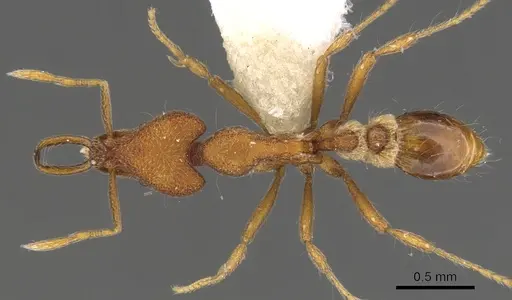
Literatur
Memuat peta distribusi...Memuat produk...