
Strumigenys hemisobek
- Nama Ilmiah
- Strumigenys hemisobek
- Tribe
- Attini
- Subfamili
- Myrmicinae
- Penulis
- Bolton, 2000
- Distribusi
- Ditemukan di 0 negara
Pendahuluan
Strumigenys hemisobek is an extremely tiny ant, with workers measuring just 1.8 mm in total length . It belongs to the Strumigenys murphyi group (five species, formerly placed in the genus Epitritus) and is the most westerly member of that group yet discovered . The species is known from Nepal and India (Kerala and Sikkim) . The type specimen was collected from moss on a wet bank in Nepal at about 2000 m elevation . The most striking feature of this ant is its near-total blindness: Nepalese workers have no eyes at all, while Indian workers have only tiny, diffused dark spots that represent rudimentary eyes .
Quick Summary
- Difficulty: Hard
- Origin & Habitat: Native to the Oriental region (Nepal and northern India). The holotype was collected from moss on a wet bank at around 2000 m in Nepal, suggesting moist, cool microhabitats at higher elevations [4][2].
- Colony Type: Unconfirmed, based on the Strumigenys genus pattern, likely monogyne (single queen). Colony structure has not been directly documented.
- Size & Growth:
- Queen: Unknown, queen has not been described
- Worker: 1.8 mm total length [1]
- Colony: Unknown, Strumigenys colonies are generally small, but no data exists for this species
- Growth: Slow, inferred from related Strumigenys species
- Development: Unknown, estimates from related Strumigenys suggest 8-12 weeks at optimal temperature (Development timeline is estimated from genus-level patterns, species-specific studies are lacking)
- Antkeeping:
- Temperature: Unknown, based on the high‑elevation, wet habitat, likely prefers cool to moderate temperatures around 20-24 °C. Avoid temperatures above 28 °C.
- Humidity: High humidity is essential, the natural habitat is moss on wet banks. Keep the substrate consistently damp but not waterlogged.
- Diapause: Probably required. The species originates from Himalayan foothills where winter temperatures drop, if the colony slows in winter, provide a rest period at 10-15 °C for 2-3 months. Not confirmed.
- Nesting: Unknown, based on Strumigenys needs, a Y‑tong (AAC) or plaster nest with a water reservoir works well for maintaining high humidity. A test tube setup may suffice for small colonies. Include moss or leaf litter to mimic the natural habitat.
- Behavior: Like other Myrmicinae tribe Attini, Strumigenys hemisobek possesses a functional stinger, but it is tiny and not medically significant to humans. These ants are specialized predators with rapid‑jaw (trap‑jaw) mandibles used to catch small soil arthropods. Workers are cryptic, slow‑moving, and non‑aggressive. Due to their extremely small size (1.8 mm), escape prevention is critical, they can pass through gaps as small as 1 mm.
- Common Issues: escape prevention is critical because workers are only 1.8 mm long, use fine mesh and tight barriers on all openings, high humidity requirements can lead to mold if ventilation is poor, add small air holes or increase ventilation slightly, slow colony growth may test your patience, avoid frequent disturbance, specialized diet (live springtails) may be hard to source consistently, unknown founding and queen biology means rearing new colonies from a single queen is risky
Housing and Nest Setup
Because Strumigenys hemisobek naturally lives in moss on wet banks, the nest needs to stay consistently damp. A Y‑tong (AAC) nest with a built‑in water reservoir or a plaster nest works well. You can also use a test tube with a water plug and a small outworld for feeding. Add 1-2 cm of moist soil or coco fiber, and place pieces of moss or leaf litter on top to simulate the natural habitat. All connections between the nest and outworld must be sealed with fine mesh or cotton, these ants are only 1.8 mm long and will escape through any gap larger than 1 mm. [2][4][1]
Feeding and Diet
Strumigenys species are specialized predators of tiny soil arthropods. In captivity, you must provide live springtails as the main food, this is essential for their health. You can culture springtails at home or buy them. Small fruit flies (Drosophila) can be offered occasionally as backup, but springtails are preferred. Do not rely on sugar water or honey, these ants are not adapted to sugary foods and will not thrive on them alone. Offer small prey every 2-3 days and remove leftovers after 24 hours to prevent mold.
Temperature and Seasonal Care
The natural habitat at around 2000 m elevation in Nepal suggests this species prefers cool, stable conditions. Keep the colony at 20-24 °C and avoid exposing it to temperatures above 28 °C. Room temperature is often fine, but if your home gets very cold in winter, you can use a small heating cable on one side of the nest to create a gradient. During winter, if the colony slows down, provide a rest period at 10-15 °C for 2-3 months (this is likely necessary but not fully confirmed). Stop feeding during hibernation and keep humidity stable. Return to normal temperatures gradually in spring. [4][1]
Handling and Colony Maintenance
These ants are extremely small and fragile. When moving or inspecting the nest, work slowly and gently to avoid crushing workers. Use a soft‑bristled brush to guide them if needed. Do not disturb the colony during the founding stage or when the queen has just laid eggs, stress can cause queen abandonment or egg‑eating. Colonies grow slowly, so patience is essential. Monitor for mold, which thrives in the high‑humidity environment. If mold appears, remove affected areas and improve ventilation slightly while keeping humidity high. Watch for mites or other parasites that can overwhelm small colonies.
Frequently Asked Questions
How long does it take for Strumigenys hemisobek to produce first workers?
The exact timeline is unknown for this species. Based on related Strumigenys species, it likely takes 8-12 weeks from egg to worker at around 22 °C. Be patient, growth is slow.
Can I keep Strumigenys hemisobek in a test tube?
Yes, a test tube setup can work if you maintain high humidity. Keep the cotton moist (not soaking wet) and use fluon or fine mesh over the opening to prevent escapes. Connect the test tube to a small outworld for feeding. A naturalistic setup with moist soil and moss often gives better long‑term results.
What do Strumigenys hemisobek eat?
They are specialized predators that need live springtails as their primary food. This is essential, they will not survive on sugar water or dead insects alone. Offer small fruit flies occasionally as variety. Remove uneaten prey after 24 hours.
Are Strumigenys hemisobek good for beginners?
No, this species is not recommended for beginners. Their tiny size makes escape prevention difficult, they require high humidity (which can promote mold), they need live springtails as food, and they grow very slowly. They are best suited for experienced antkeepers.
Do Strumigenys hemisobek need hibernation?
Yes, hibernation is likely needed. The species comes from higher elevations in Nepal where temperatures drop in winter. Provide a 2-3 month rest period at 10-15 °C during winter, and reduce or stop feeding during that time.
Why are my Strumigenys hemisobek dying?
Common causes include: escapes (check all barriers thoroughly), humidity too low (substrate should be damp), temperature wrong (too hot or too cold), mold from excess moisture, or lack of live springtail prey. Also check for parasites. Review each parameter and adjust.
How big do Strumigenys hemisobek colonies get?
Maximum colony size is unknown for this species. Strumigenys colonies generally stay small, probably under 200 workers even at maturity. They are not large colony builders.
When should I move Strumigenys hemisobek to a formicarium?
Wait until the colony has at least 20-30 workers before moving. Strumigenys do best in stable, humid conditions, so only move when the colony is well established. A Y‑tong or plaster nest with moisture is ideal.
Can I keep multiple queens together?
This has not been documented for this species. Based on typical Strumigenys behavior, colonies are likely monogyne (single queen). Do not attempt to combine unrelated queens, they will likely fight.
Report an Issue
The current care sheet is based fully on literature. See inconsistencies, or something that's incorrect? Please , it will be resolved after review from an admin. Contributing to the blogs tab also helps providing information, to make us be able to further improve the caresheets. Thank you for your support!
References

Lembar perawatan ini dilisensikan di bawah CC BY-SA 4.0 .
Blog Komunitas
CASENT0900139
Lihat di AntWeb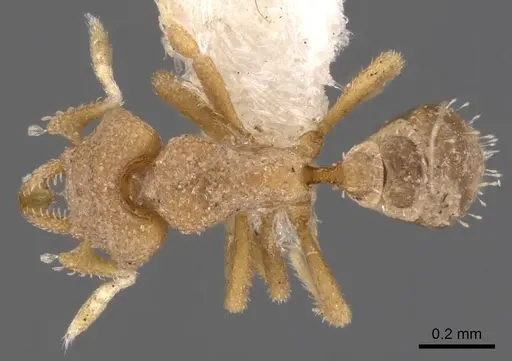
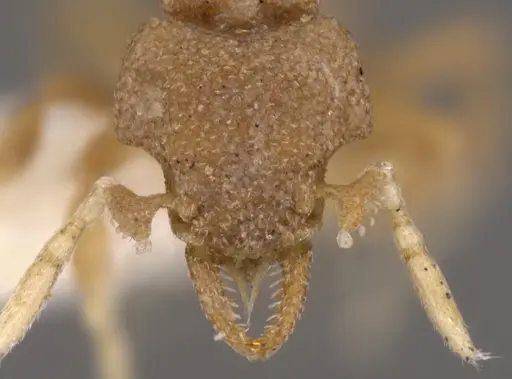
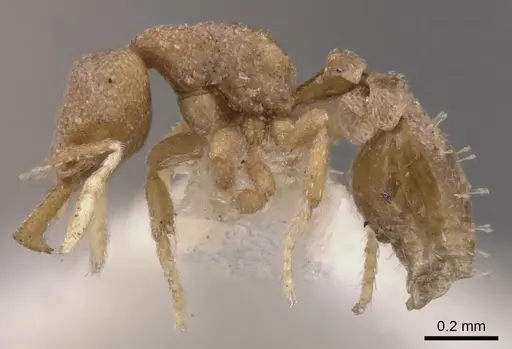
Literatur
Memuat peta distribusi...Memuat produk...