
Strumigenys deinomastax
- Nama Ilmiah
- Strumigenys deinomastax
- Tribe
- Attini
- Subfamili
- Myrmicinae
- Penulis
- Bolton, 2000
- Distribusi
- Ditemukan di 2 negara
Pendahuluan
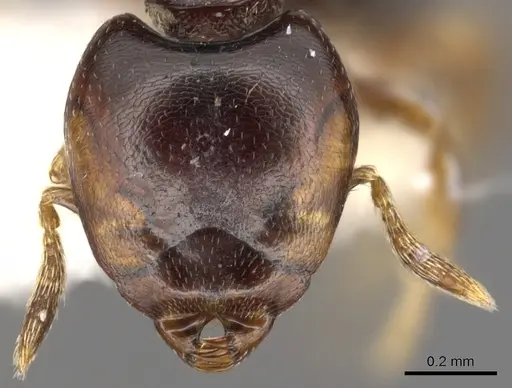
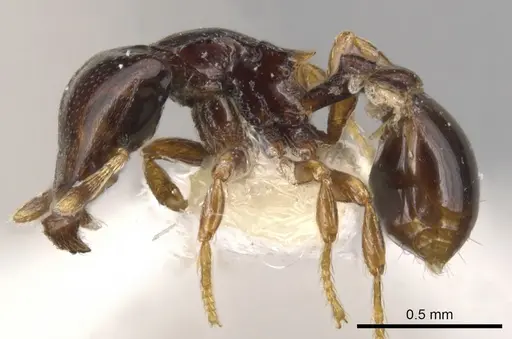
Strumigenys deinomastax is an exceptionally tiny ant species, with workers measuring just 2.0-2.2 mm total length . It belongs to the Myrmicinae subfamily and the Attini tribe, and is a member of the Strumigenys appretiata group. The species is easily recognized within that group because it lacks any hairs on the pronotal humeri and mesonotum, and has fine reticular patterning on the first gastral tergite . Originally described as Pyramica deinomastax, it was later transferred to Strumigenys . It has only been recorded from the Neotropical region: Brazil (Amazonas, Manaus) and French Guiana, where it inhabits pristine rainforest leaf-litter environments . Almost nothing is known about the biology of this species . It has only ever been collected as individual workers from leaf-litter samples, and no queens, males, nests, or behaviors have been described. This makes it one of the least known ant species in terms of natural history. For antkeepers, the species represents an extreme challenge because even basic husbandry requirements (diet, nest structure, colony size, founding method) are completely unstudied.
Quick Summary
- Difficulty: Expert
- Origin & Habitat: Native to the Neotropical region: Brazil (Amazonas, Manaus) and French Guiana. Collected from pristine rainforest leaf-litter in Liana forest and Transition forest types at lowland elevations [2][3].
- Colony Type: Unconfirmed, only the worker caste has been described, so colony structure is completely unknown [1].
- Size & Growth:
- Queen: Not described, unknown [1]
- Worker: 2.0-2.2 mm total length [1]
- Colony: Unknown, only a handful of workers have ever been collected in scientific surveys
- Growth: Unknown
- Development: Unknown, no data available for this species or any closely related species (No life history information exists.)
- Antkeeping:
- Temperature: Unknown, based on its tropical rainforest origin, likely needs warm, stable conditions (roughly 24-28°C). Avoid temperatures below 22°C or above 30°C.
- Humidity: Unknown, based on its leaf-litter habitat, likely requires very high humidity (substrate consistently moist but not waterlogged).
- Diapause: No diapause required, as a tropical species, it likely does not need a winter rest period.
- Nesting: Unknown, no nests have ever been described. Based on its tiny size and leaf-litter habitat, it likely needs small, dark, humid chambers with fine substrate. Y-tong or plaster nests with very small cells or deep test tube setups may work, but nothing is confirmed.
- Behavior: Unknown, the species has only been collected from leaf-litter samples, so no behavioral observations exist. Based on subfamily (Myrmicinae, tribe Attini), workers possess a functional stinger, but it is not considered medically significant to humans.
- Common Issues: complete lack of biological knowledge makes captive care impossible to optimize, no established husbandry protocols exist, tiny size (2 mm) requires extreme escape prevention, workers can squeeze through standard mesh and gaps, unknown diet, likely a specialist predator of micro-arthropods, but prey preferences are unconfirmed, no queens or founding colonies have ever been collected, so colony establishment is purely speculative
Housing and Escape Prevention
Housing Strumigenys deinomastax is challenging because almost nothing is known about its nesting preferences. Workers are only 2 mm long, so they can easily squeeze through standard cotton plugs, mesh, and Fluon gaps. Use the smallest available mesh (0.5 mm or smaller) for ventilation, and apply Fluon or PTFE barriers to all outworld edges. Test tubes with small diameters or Y-tong nests with tiny cells may work, but no specific setup has been tested. Given the species' leaf-litter origin, providing a deep layer of moist leaf litter or soil substrate might encourage natural behavior. Keep the nest area dark and covered, as most leaf-litter ants prefer dim conditions [1].
Feeding and Diet
The diet of Strumigenys deinomastax is completely unknown. Strumigenys species are generally specialized predators of tiny soil arthropods (such as springtails and mites), but this has not been confirmed for deinomastax. In captivity, you will likely need to provide a constant supply of live micro-prey like springtails, booklice, or fly larvae of appropriate size. Sugar sources (honey water, sugar water) may be ignored or only occasionally accepted. Feed small prey items every 2-3 days and remove uneaten food to prevent mold. Because the natural diet is unknown, you may need to experiment with different prey types [1].
Temperature and Humidity
No specific temperature or humidity requirements have been documented for this species. Based on its occurrence in Amazonian rainforest leaf-litter, it likely requires warm (24-28°C), stable temperatures and very high humidity (substrate consistently moist but not waterlogged). Avoid temperatures below 22°C or above 30°C. Use a water reservoir in the nest setup to maintain humidity through evaporation, mist the outworld occasionally without flooding the nest. Stable conditions are essential, tropical leaf-litter ants desiccate quickly in dry air. No hibernation or diapause is needed [2][3].
Colony Establishment
Establishing a captive colony of Strumigenys deinomastax is currently impossible because no founding queens or mature colonies have ever been collected. The species is known only from a few worker specimens in leaf-litter samples, and its founding behavior, colony structure, and reproductive biology are entirely unstudied [1]. If you obtain a founding queen in the future, provide a small, humid, dark chamber and be extremely patient, Strumigenys species are known for slow development, but no timeline can be estimated. Do not disturb the ant and avoid all unnecessary interference. Because of the complete lack of knowledge, this species cannot be reliably kept or bred in captivity at this time.
Behavior and Observation
Nothing is known about the behavior of Strumigenys deinomastax. All records are from passive leaf-litter sampling methods (Winkler extraction), so no direct observations of foraging, nest defense, or social behavior exist [2][3]. Based on subfamily, workers have a functional stinger, but it is not considered medically significant to humans. If you manage to keep a colony, expect very cryptic, slow-moving ants that spend most of their time hidden in substrate. They are likely non-aggressive and will try to escape rather than fight. However, these are all inferences, the species might behave differently. Keep noise and vibration to a minimum, and use red light or minimal disturbance for observation.
Frequently Asked Questions
How do I start a colony of Strumigenys deinomastax?
You cannot reliably start a colony of this species because no queens or nests have ever been collected. The species is known only from a few worker specimens. Unless you have access to a wild queen that you can identify, there is no known method to obtain a founding colony.
What do Strumigenys deinomastax ants eat?
The diet is completely unknown. Strumigenys species are generally specialized predators of tiny soil arthropods, but this has not been confirmed for deinomastax. In captivity, you will likely need to offer live micro-prey such as springtails, booklice, or very small fly larvae. Sugar sources may not be accepted.
Are Strumigenys deinomastax good for beginners?
No, this species is rated Expert difficulty. Almost nothing is known about its biology, so captive care is entirely experimental. Their tiny size (2 mm) makes escape prevention extremely difficult, and they require high humidity that is hard to maintain. Only experienced antkeepers with a willingness to experiment should consider them, and even then success is far from guaranteed.
How do I prevent Strumigenys deinomastax from escaping?
Escape prevention is critical due to their tiny size. Use fine mesh with openings no larger than 0.5 mm for ventilation. Apply Fluon or PTFE barriers to all container edges. Ensure cotton plugs in test tubes are packed very tightly. A small, well-contained outworld with smooth walls reduces escape risk. Double-check all seals daily.
Do Strumigenys deinomastax need hibernation?
No, they are tropical ants from Brazil and French Guiana and do not require a diapause or hibernation period. Keep temperatures stable between 24-28°C year-round and avoid exposure to temperatures below 20°C.
How big do Strumigenys deinomastax colonies get?
Completely unknown, only individual workers have ever been collected. There is no information on colony size, and it is not even known whether colonies are monogyne or polygyne.
Can I keep multiple queens together?
This has not been documented for this species, and no queens have ever been described. Do not attempt to combine queens without evidence that they will tolerate each other.
Why are my Strumigenys deinomastax dying?
Common causes likely include desiccation (too dry), starvation (unknown diet), temperature stress, or escape. Given the complete lack of husbandry knowledge, any captive attempt may fail for unknown reasons. Review humidity, temperature, and food sources immediately, but understand that the species' requirements are not established.
What humidity do Strumigenys deinomastax need?
Specific humidity requirements are unknown, but based on tropical rainforest leaf-litter habitat, very high humidity (substrate consistently moist but not waterlogged, roughly 80-90% relative humidity) is likely necessary. Keep the nest setup humid and avoid dry air.
Report an Issue
The current care sheet is based fully on literature. See inconsistencies, or something that's incorrect? Please , it will be resolved after review from an admin. Contributing to the blogs tab also helps providing information, to make us be able to further improve the caresheets. Thank you for your support!
References

Lembar perawatan ini dilisensikan di bawah CC BY-SA 4.0 .
Blog Komunitas
CASENT0900199
Lihat di AntWeb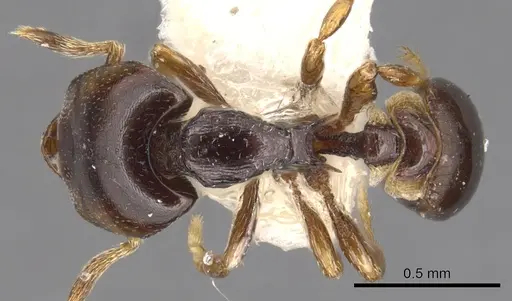
Literatur
Memuat peta distribusi...Memuat produk...