
Strumigenys caniophanoides
- Nama Ilmiah
- Strumigenys caniophanoides
- Tribe
- Attini
- Subfamili
- Myrmicinae
- Penulis
- De Andrade, 2007
- Distribusi
- Ditemukan di 0 negara
Pendahuluan
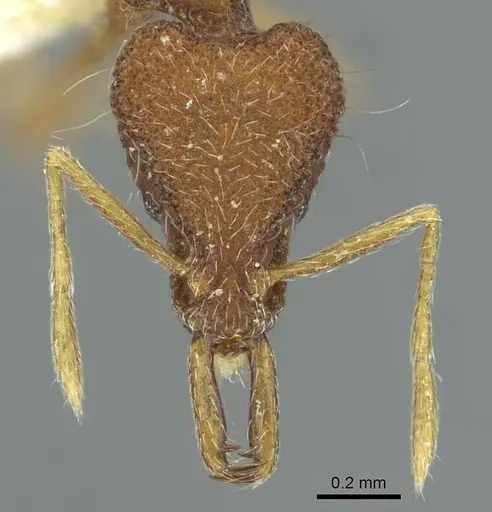
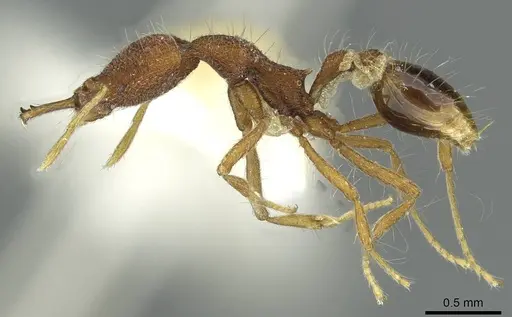
Strumigenys caniophanoides is a tiny, reddish-brown predatory ant with workers measuring 3.38-3.42 mm in total length . It belongs to the Strumigenys caniophanes group and was originally described from Bhutan, with additional records from Nepal . Like other Strumigenys, this species has specialized trap‑jaw mandibles that snap shut at lightning speed to capture prey. It can be identified by a preapical denticle on the mandibles and more than five hairs projecting from the head’s dorsolateral margin . Practically nothing is known about its specific biology, but Strumigenys ants are specialized predators that primarily hunt springtails and other tiny arthropods.
Quick Summary
- Difficulty: Hard
- Origin & Habitat: Native to the Indomalaya region, recorded in Bhutan and Nepal at elevations from 200 to 1100 m [3][2]. Known locations include Phuntsholing, Bhutan, and the Sankhuwasabha district, Nepal.
- Colony Type: Unknown colony structure. Strumigenys species typically form small colonies with single queens, but this has not been confirmed for caniophanoides.
- Size & Growth:
- Queen: Undescribed, no queen caste has been documented for this species.
- Worker: 3.38-3.42 mm total length [1]
- Colony: Unknown, Strumigenys colonies are typically small, often under 100 workers.
- Growth: Unknown, likely slow based on genus patterns.
- Development: Unknown, estimated 6-10 weeks based on related Strumigenys species. (No direct development data exists for this species. Estimates are based on typical Strumigenys genus patterns.)
- Antkeeping:
- Temperature: Unknown for this species, start around 22-25°C and observe colony activity. Strumigenys prefer stable, warm conditions.
- Humidity: Keep the nest substrate consistently moist but not waterlogged. Aim for a humidity gradient so ants can choose their preferred conditions.
- Diapause: Unknown, likely no true diapause given the tropical/subtropical distribution, but activity may decrease in cooler months.
- Nesting: Natural nesting is undescribed. In captivity, use small ytong (AAC), plaster, or soil nests with tight chambers scaled to their tiny size. Provide a moist substrate.
- Behavior: Strumigenys are specialized predators with trap‑jaw mandibles designed for capturing small prey like springtails. They are generally docile toward humans and non‑aggressive, though they do possess a functional stinger that is not medically significant. Their tiny size (under 4 mm) makes them excellent escape artists, barrier prevention is critical. They are slow‑moving compared to many ants but can strike quickly when hunting.
- Common Issues: tiny size means escapes are likely without fine mesh barriers., no biological data makes care challenging, keepers must rely on genus‑level assumptions., slow growth may cause beginners to lose patience or overfeed., predatory diet makes feeding difficult, they need live small prey., high humidity requirements can lead to mold problems if ventilation is poor.
Housing and Nest Setup
Strumigenys caniophanoides is a tiny ant requiring appropriately scaled housing. Use small ytong (AAC) nests, plaster nests, or soil nests with narrow chambers and passages. The chambers should be tight enough that workers feel secure but large enough for colony movement. Standard formicarium chambers will be far too large, consider custom small‑scale setups or modified test tube arrangements. Provide a water reservoir connected to the nest to maintain humidity. Escape prevention is critical, use fine mesh (at least 0.5 mm openings) on any vents, as these ants can squeeze through remarkably small gaps. An outworld area allows for feeding and waste removal [1].
Feeding and Diet
Strumigenys caniophanoides is a specialized predatory ant. In the wild, Strumigenys species primarily hunt springtails (Collembola) and other tiny arthropods using their trap‑jaw mandibles. In captivity, their primary food should be live springtails, this is essential, as they rarely accept dead prey. Other small live prey like booklice (psocids), fruit flies, and minute soil mites may also be accepted. Sugar sources are typically NOT accepted by Strumigenys, they are obligate predators. Feed small prey items every 2-3 days, adjusting based on consumption rate. Remove uneaten prey to prevent mold [1].
Temperature and Humidity
Since nothing is known about the specific temperature requirements of Strumigenys caniophanoides, aim for 22-25°C as a starting point, this aligns with typical Strumigenys preferences. Use a heating cable on one side of the nest to create a gentle gradient, allowing ants to self‑regulate. Monitor colony activity: if workers cluster near the warm end, increase slightly, if they avoid it, reduce temperature. Humidity should be high, keep the nest substrate consistently moist but not waterlogged. Use a moisture gradient so ants can choose their preferred conditions. Poor ventilation combined with high humidity leads to mold, so ensure adequate airflow [1].
Behavior and Temperament
Strumigenys caniophanoides is a docile species that poses little threat to keepers. They possess a functional stinger but it is not medically significant to humans. Their primary defense is escape, when threatened, they will flee rather than fight. The most notable behavior is their hunting technique: they use specialized trap‑jaw mandibles to capture prey with incredible speed. They are not aggressive toward each other and typically form small, peaceful colonies. Activity level is moderate, they are not constantly on the move but will actively forage when hungry. Their minute size makes them fascinating to observe but also demands careful handling [1].
Colony Establishment
Since no queen has been described for this species, establishing a colony in captivity is extremely challenging. If a dealate queen is ever collected, she would likely be claustral, sealing herself in a chamber and living off stored fat reserves until her first workers emerge. The founding process would take several months. Wild colony adoption is unlikely given the species' restricted distribution in Bhutan and Nepal. For now, this species remains a collector's goal for advanced antkeepers who may encounter them in their native range. The lack of any biological data makes captive breeding speculative at best [1].
Frequently Asked Questions
How long does it take for Strumigenys caniophanoides to develop from egg to worker?
The egg‑to‑worker timeline is unknown for this specific species as no biological studies exist. Based on typical Strumigenys genus patterns, estimate 6-10 weeks at optimal temperature (around 24°C). Expect this to vary based on conditions.
Can I keep Strumigenys caniophanoides in a test tube setup?
Yes, a test tube setup can work for founding colonies, but the tube must be appropriately scaled for their tiny size. Use a small test tube with a tight cotton barrier and water reservoir. Transfer to a small formicarium once the colony grows to a size where the tube becomes crowded.
What do Strumigenys caniophanoides eat?
They are specialized predators that require live small prey. Their primary food should be live springtails. They may also accept other tiny live arthropods like booklice, fruit flies, and minute soil mites. They do not typically accept sugar or honey.
Are Strumigenys caniophanoides good for beginners?
No, this species is not suitable for beginners. Almost nothing is known about their biology, they require live prey (difficult to provide), they are tiny and excellent escape artists, and they need specific high‑humidity conditions. This species is for advanced antkeepers only.
How big do Strumigenys caniophanoides colonies get?
Colony size is unknown but likely small, probably under 100 workers. Strumigenys species typically form small colonies compared to many other ants. This is not a species that will produce massive worker numbers.
Do Strumigenys caniophanoides need hibernation?
Diapause requirements are unknown. Given their distribution in Bhutan and Nepal (tropical/subtropical), they likely do not require a true hibernation period. However, they may reduce activity during cooler months.
Why are my Strumigenys caniophanoides dying?
Common causes include: escape (they are tiny and will find any gap), starvation (they need live prey, not dead food), low humidity (keep substrate moist), and mold from poor ventilation. Also ensure temperature is in the 22-25°C range.
When should I move Strumigenys caniophanoides to a formicarium?
Move them when the test tube becomes crowded. Use a small‑scale formicarium with appropriately sized chambers. They do not need large spaces, tight, cozy chambers work better than open areas.
Can I keep multiple queens together?
This is unknown for this species. Strumigenys colony structure has not been documented. Do not attempt combining unrelated queens until more is known about their social behavior.
Report an Issue
The current care sheet is based fully on literature. See inconsistencies, or something that's incorrect? Please , it will be resolved after review from an admin. Contributing to the blogs tab also helps providing information, to make us be able to further improve the caresheets. Thank you for your support!
References

Lembar perawatan ini dilisensikan di bawah CC BY-SA 4.0 .
Blog Komunitas
CASENT0912869
Lihat di AntWeb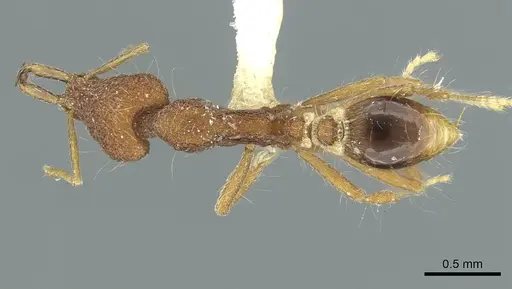
Literatur
Memuat peta distribusi...Memuat produk...