
Strumigenys aduncomala
- Nama Ilmiah
- Strumigenys aduncomala
- Tribe
- Attini
- Subfamili
- Myrmicinae
- Penulis
- De Andrade, 2007
- Distribusi
- Ditemukan di 0 negara
Pendahuluan
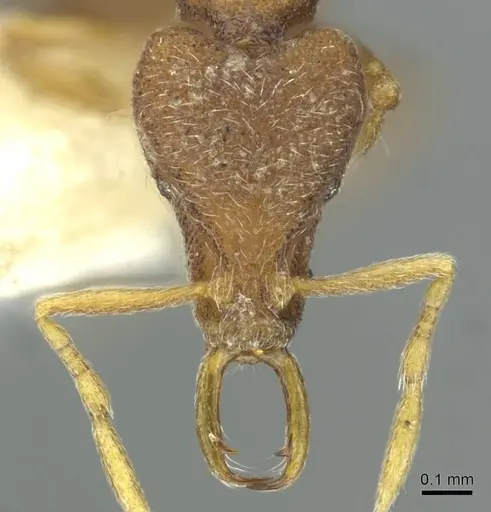
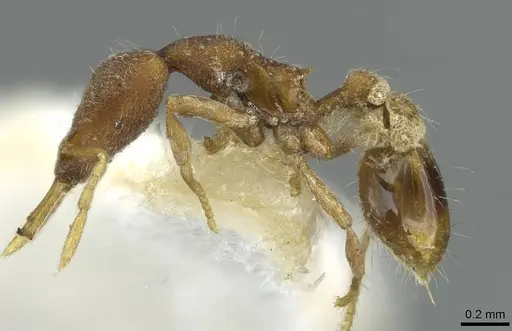
Strumigenys aduncomala is a tiny predatory ant endemic to India, measuring just 2.52 mm in total length . Workers have a light brownish coloration with distinctly curved mandibles (the species name means 'curved mandible' in Latin) and bear several pairs of erect flagellate hairs on the head, mesosoma, and gaster . This species belongs to the Strumigenys caniophanes group and was described in 2007 from a single worker collected at 1900 m elevation in Meghalaya, India . Like other Strumigenys, it is a specialized predator that hunts springtails using fast-snapping mandibles.
Quick Summary
- Difficulty: Expert
- Origin & Habitat: Endemic to India, recorded from Arunachal Pradesh and Meghalaya at high elevations around 1900 m [3]. The type specimen was collected from Upper Shillong in Meghalaya [1].
- Colony Type: Colony structure is unconfirmed. No data exists on queen number or colony size for this species.
- Size & Growth:
- Queen: Unknown, no queen described in the literature [1].
- Worker: 2.52 mm total length (TL) [1].
- Colony: Unknown, no colony data exists.
- Growth: Unknown
- Development: Unconfirmed, no development data exists for this species. Based on related Strumigenys species, expect several months at warm temperatures. (No direct observations of founding or development have been documented.)
- Antkeeping:
- Temperature: Inferred from high-elevation Indian habitat: aim for 22-26°C with stable conditions. Related Strumigenys species prefer warm, humid environments.
- Humidity: Inferred: likely requires high humidity similar to other Strumigenys. Keep the nest substrate consistently moist but not waterlogged.
- Diapause: Unknown, no seasonal data exists. Given the high-elevation origin, a cool period during winter months may be beneficial, but this is unconfirmed.
- Nesting: Inferred: likely nests in soil or rotting wood in natural habitat. In captivity, a small test tube setup or a small Y-tong nest with fine chambers works well for their tiny size. Provide a moist substrate.
- Behavior: Strumigenys are specialized predators that use their fast-snapping mandibles to capture springtails and other micro-arthropods. Workers are active foragers that hunt individually. This species is not aggressive toward humans, but as a member of Myrmicinae it possesses a stinger (not medically significant). Escape prevention is critical due to their very small size, they can squeeze through standard barriers [1].
- Common Issues: complete lack of species-specific data means all care is inferred, expect to adjust conditions based on colony response., very small size makes escape prevention challenging, fine mesh barriers are essential., requires live springtail prey which can be difficult to culture reliably., slow colony growth typical of predatory ants may frustrate beginners., high humidity requirements can lead to mold issues if ventilation is poor.
Species Identification and Background
Strumigenys aduncomala was described by De Andrade in 2007 from a single worker collected in Meghalaya, India [2]. The species name comes from Latin 'aduncus' (curved) and 'mala' (mandible), referring to the distinctly curved shape of the mandibles [1]. This ant belongs to the Strumigenys caniophanes group, which contains about 12 species characterized by specific hair arrangements on the head and body [1]. Among them, S. aduncomala is most similar to Strumigenys lacunosa but differs in having only 2 hairs projecting laterally from the head (instead of 3), a smaller total length of 2.52 mm, and a lower mandibular index (MI 43.7 vs 50) [1]. The species has since been recorded from Arunachal Pradesh in addition to the type locality in Meghalaya [3]. The mandibles bear an apical fork with two spiniform teeth and one intercalary denticle, plus one preapical tooth [1].
Understanding Strumigenys Biology
While no specific biological data exists for Strumigenys aduncomala, the genus Strumigenys is well-studied and consists of specialized predatory ants that hunt almost exclusively on springtails (Collembola) and other tiny arthropods [1]. They possess highly specialized mandibles that can snap shut at extreme speeds to capture prey. Workers are small to very small. Colonies are typically small, often containing only a few dozen to a few hundred workers. These ants are found throughout tropical and subtropical regions worldwide. In captivity, they require live prey and are not sugar-feeding specialists.
Housing and Enclosure Setup
Due to their extremely small size (workers are just 2.52 mm), Strumigenys aduncomala requires careful escape prevention. Standard test tubes work for founding colonies, but you must use fine mesh barriers, these ants can squeeze through gaps that would contain larger species. A small Y-tong nest with chambers scaled to their tiny size works well. The outworld should be small to concentrate prey items and make hunting easier. Provide a moisture source via a water test tube plugged with cotton. Use a layer of substrate (coco fiber, peat, or soil mix) that can hold moisture to maintain humidity. Ensure some ventilation while keeping humidity high. [1]
Feeding and Nutrition
Strumigenys are obligate predators that require live prey, they will not accept dead prey or sugar water. Their primary food should be live springtails (Collembola), which you can culture on damp substrate with decaying leaves. Other small live prey such as booklice (psocids), fruit flies, and tiny isopods may be accepted experimentally. Do not attempt to keep this species without a reliable springtail culture. Feed small prey items every 2-3 days, removing any uneaten prey after 24 hours. [1]
Temperature and Humidity
Based on the high-elevation Indian habitat (1900 m in Meghalaya), this species likely prefers temperatures in the low-to-mid 20s°C range. Aim for 22-26°C as a starting point and observe colony activity. Strumigenys generally require high humidity to thrive. Keep the nest substrate consistently moist but not waterlogged, the substrate should feel damp to the touch. A humidity gradient allows workers to self-regulate. Monitor for mold, which can be problematic in high-humidity setups. If mold appears, reduce humidity slightly and improve ventilation. [3]
Colony Establishment and Growth
No documented colony founding data exists for this species. Based on related Strumigenys, founding queens likely seal themselves in a small chamber (claustral founding) and survive on stored fat reserves until first workers emerge. First workers (nanitics) will be smaller than mature workers. Growth is typically slow, Strumigenys colonies remain small even at maturity, usually under a few hundred workers. Patience is essential. Do not disturb founding colonies unnecessarily. Once workers emerge, they will begin hunting and the colony can gradually expand. Expect the first workers to appear several months after founding, depending on temperature. [1]
Challenges and Common Problems
The biggest challenge with Strumigenys aduncomala is the complete lack of species-specific biological data, all care recommendations are inferred from genus-level patterns and may need adjustment. Escape prevention is critical due to their tiny size. Springtail cultures can crash, leaving your ants without food, maintain backup cultures. High humidity can lead to mold issues. These ants are not suitable for beginners due to their specialized diet and small size. Slow growth can lead to keeper frustration. If colonies fail to thrive, check prey availability, humidity levels, and temperature before assuming other issues. [1]
Frequently Asked Questions
How long does it take for Strumigenys aduncomala to produce first workers?
The egg-to-worker timeline is unconfirmed for this species since no biological studies exist. Based on related Strumigenys species, expect 3-6 months at optimal temperatures (22-26°C). This is an estimate, actual development time may vary.
What do Strumigenys aduncomala ants eat?
Strumigenys are specialized predators that require live springtails and other tiny arthropods. They will not accept dead prey or sugar sources. You must maintain a live springtail culture to keep this species fed successfully.
Can I keep Strumigenys aduncomala in a test tube?
Yes, test tubes work for founding colonies. However, escape prevention is critical due to their very small size (2.52 mm). Use fine mesh barriers and check for gaps regularly. A small Y-tong nest with appropriately sized chambers is also suitable once the colony grows.
How big do Strumigenys aduncomala colonies get?
Colony size data does not exist for this species. Based on related Strumigenys, colonies likely remain small, typically under 200-300 workers at maturity. These are not large colony ants.
Do Strumigenys aduncomala need hibernation?
Diapause requirements are unknown for this species. The high-elevation Indian origin suggests they may tolerate or require cooler temperatures during winter, but no data supports this. If you choose to try a cool period, keep them at 10-15°C for 2-3 months, but this is experimental.
Are Strumigenys aduncomala good for beginners?
No. This species is rated Expert difficulty due to their specialized live-prey diet, tiny size requiring excellent escape prevention, high humidity needs, and the complete lack of species-specific biological data. Beginners should start with easier species like Lasius or Messor.
What temperature do Strumigenys aduncomala need?
Based on their high-elevation Indian habitat, aim for 22-26°C. This is an inference since no thermal data exists for this species. Related Strumigenys prefer warm, stable conditions.
Where is Strumigenys aduncomala found?
This species is endemic to India, specifically recorded from Meghalaya (type locality at 1900 m elevation) and Arunachal Pradesh [3].
Why is Strumigenys aduncomala so hard to keep?
Multiple factors make this species challenging: no biological data exists so all care is inferred, they require live springtail prey which is difficult to culture, their tiny size makes escape likely without fine mesh, and they need high humidity which promotes mold growth. They are not recommended for anyone without experience with predatory micro-ants.
Report an Issue
The current care sheet is based fully on literature. See inconsistencies, or something that's incorrect? Please , it will be resolved after review from an admin. Contributing to the blogs tab also helps providing information, to make us be able to further improve the caresheets. Thank you for your support!
References

Lembar perawatan ini dilisensikan di bawah CC BY-SA 4.0 .
Blog Komunitas
CASENT0912867
Lihat di AntWeb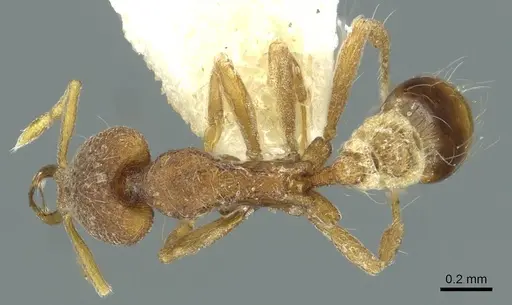
Literatur
Memuat peta distribusi...Memuat produk...