
Stigmatomma reclinatum
- Nama Ilmiah
- Stigmatomma reclinatum
- Tribe
- Amblyoponini
- Subfamili
- Amblyoponinae
- Penulis
- Mayr, 1879
- Distribusi
- Ditemukan di 0 negara
Pendahuluan
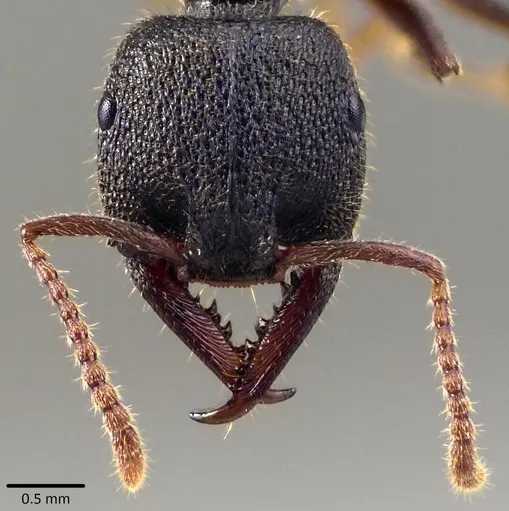
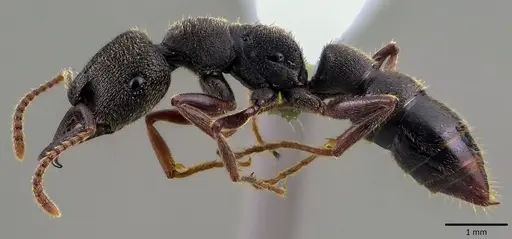
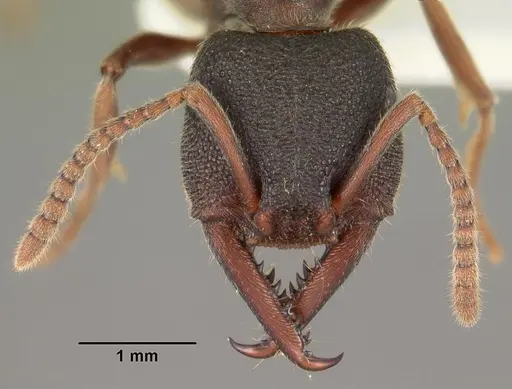
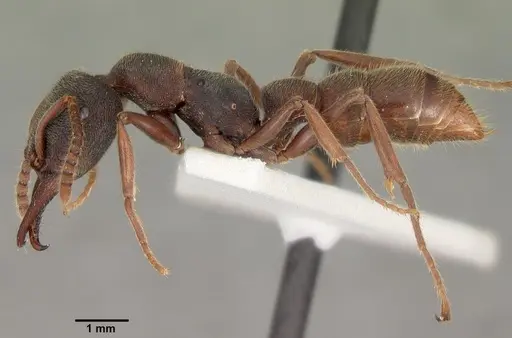
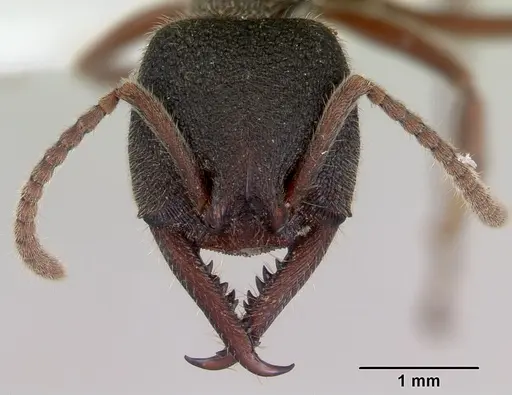
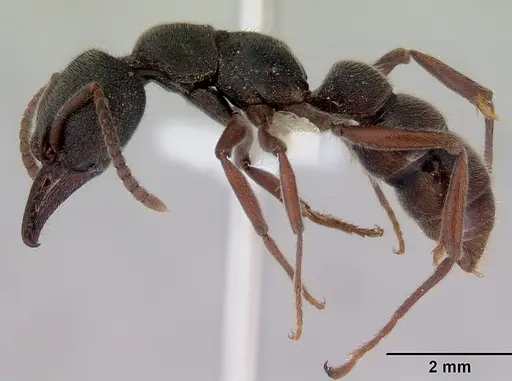
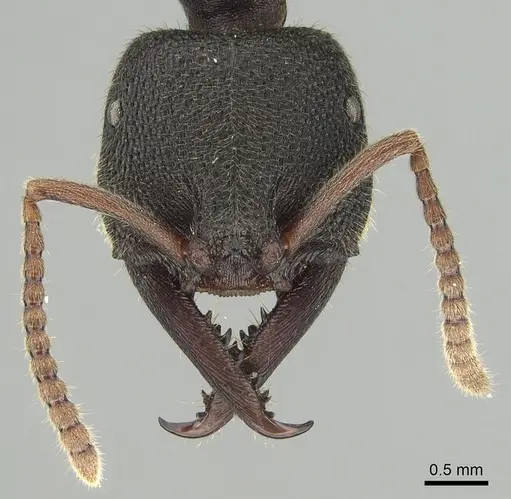
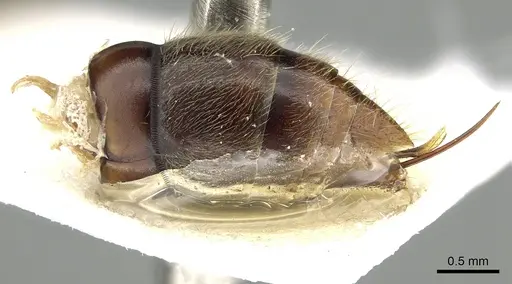
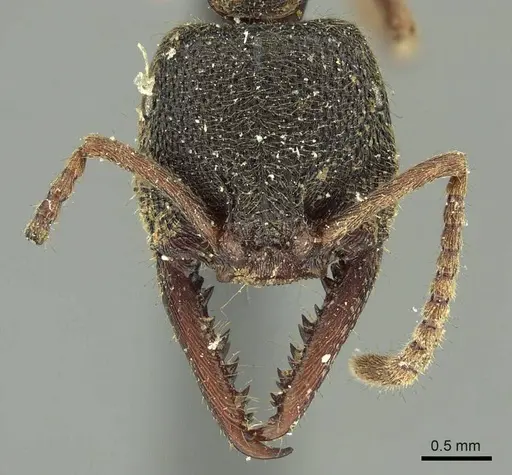
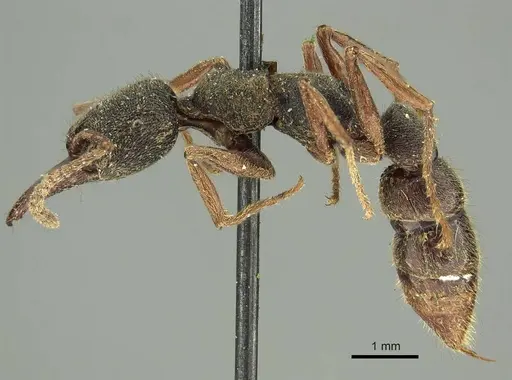
Stigmatomma reclinatum is a medium-sized predatory ant native to Southeast Asia, with records from Indonesia, the Philippines, Thailand, Malaysia, Singapore, and India's Western Ghats . Workers measure 8-8.5 mm and are dark brown with yellowish‑brown on the gaster, petiole, and sometimes the pronotum . Unlike most ants, Stigmatomma reclinatum has no winged queens - reproduction is handled by gamergates, which are mated workers that take over egg‑laying . This makes them one of the more unusual species to keep, as there is no queen to start a colony in the traditional sense.
Quick Summary
- Difficulty: Medium
- Origin & Habitat: Southeast Asia, Indonesia, Philippines, Thailand, Malaysia, Singapore, and India's Western Ghats. Found in leaf litter and soil at the bases of trees in primary and mature secondary forests [4]. They nest in soil [2][5].
- Colony Type: Queenless colonies with gamergates (mated reproductive workers). Multiple gamergates per colony (average 6±5), forming a functional polygyny [3]. Average colony size is around 100 workers [3][6][7].
- Size & Growth:
- Queen: N/A, this species has no winged queens, reproduction is via gamergates [3]
- Worker: 8-8.5 mm [2]
- Colony: Around 100 workers [3][6][7]
- Growth: Moderate
- Development: Unknown, specific development data not available (No direct measurements exist. Based on related Amblyoponinae species, development likely takes several months. This is an estimate inferred from genus‑level patterns.)
- Antkeeping:
- Temperature: Tropical species, keep around 24-28 °C. They come from warm, humid Southeast Asian forests [1]. Use a heating cable on one side of the nest, placed on top to avoid drying out the substrate.
- Humidity: High humidity required, think damp forest floor. Keep the substrate consistently moist but not waterlogged [4].
- Diapause: No, being a tropical species, they do not require hibernation [1]. Maintain warm conditions year‑round.
- Nesting: Soil‑nesting species. A naturalistic setup with moist soil or a plaster/Y‑tong (AAC) nest with a soil chamber works well. They prefer dark, humid nest conditions.
- Behavior: Predatory ants that hunt centipedes and other small arthropods [6][8]. Workers forage solitarily for small prey, but when they encounter large prey they sting it to paralyze it, then return to the nest leaving a trail pheromone from their hindleg footprint glands to recruit nestmates for group retrieval [6][9]. They have a potent sting and should be handled with care. Escape risk is moderate, their 8 mm size means standard barrier methods work well.
- Common Issues: gamergate colonies are harder to establish than queen‑founded colonies, you need an established colony with reproductive workers, tropical species requires constant warmth, cold temperatures will slow or stop brood development, predatory diet means they need live prey, they will not accept sugar water or seed‑based foods, small colony sizes mean slower growth and less forgiving of mistakes, high humidity needs can lead to mold if ventilation is poor
Understanding Gamergate Reproduction
Stigmatomma reclinatum is one of the few ant species where the queen caste has been lost entirely. Instead, reproduction is handled by gamergates, workers that become reproductive and mate with males to lay fertilized eggs [3]. This is called queenless reproduction. Colonies typically have 6±5 gamergates working together (functional polygyny) [3]. For antkeepers, this means you cannot start a colony from a single founding queen. You would need to acquire an established colony with existing gamergates. The colony propagates through budding or fissioning, where some workers and gamergates leave to form a new colony [5]. This is fundamentally different from keeping most ant species and is a key consideration before purchasing.
Feeding and Diet
These are specialized predators. In the wild, their diet consists primarily of centipedes [6][8]. They are not scavengers or sugar‑seekers, they actively hunt live prey. Workers forage alone for small prey, carrying it back to the nest. When they encounter larger prey that cannot be carried alone, the scout stings it to paralyze it, then returns to the nest leaving a trail pheromone from specialized footprint glands in their hindlegs [6]. The number of workers recruited is proportional to the size of the prey [6]. In captivity, they can be raised on Tenebrio molitor (mealworm) larvae [6]. Workers also lay trophic eggs (non‑viable eggs) that are fed to the brood [10]. Offer small live prey regularly. They will not accept sugar water or honey.
Unique Recruitment System
Stigmatomma reclinatum has one of the most unusual recruitment systems in the ant world. The species has specialized footprint glands in their hindlegs that produce trail pheromones, this gland is actually unique to the genus Amblyopone (now Stigmatomma) [6]. When a scout finds large prey, it paralyzes the prey with its sting, then quickly returns to the nest without attempting to carry the prey. On the way back, it deposits trail pheromone by performing a peculiar stepping behaviour where the hindleg pretarsus twists to briefly touch the substrate, leaving discontinuous marks rather than a continuous line [6]. Recruited nestmates follow this trail and jointly drag the prey back to the nest [6]. This elegant system allows them to tackle prey much larger than any individual worker could handle.
Temperature and Care
As a tropical Southeast Asian species, Stigmatomma reclinatum requires warm, humid conditions year‑round. Keep the nest area at 24-28 °C, this is warmer than most room temperatures in temperate climates. A heating cable or mat on one side of the nest can help maintain these temperatures, but place it on top of the nest rather than underneath to avoid drying out the substrate. They are adapted to the warm, humid conditions of tropical forests and will not tolerate cool temperatures [1]. Unlike temperate species, they do not require any winter dormancy or diapause period [1]. Maintain consistent warmth throughout the year.
Nesting and Setup
In the wild, these ants nest in soil, typically between roots at the base of large trees [2]. They prefer dark, humid underground conditions. For captivity, a naturalistic setup with moist soil works well, or you can use a plaster or Y‑tong (AAC) nest with a soil chamber. They are not arboreal and do not need vertical space. The nest should be kept humid but with some ventilation to prevent mold. Because they are predatory and need live prey, the outworld (foraging area) should be simple and easy to clean. Test tubes can work for small colonies but will need upgrading as the colony grows.
Frequently Asked Questions
How do I start a Stigmatomma reclinatum colony?
Unlike most ant species, you cannot start a colony from a single founding queen. Stigmatomma reclinatum has no winged queens, reproduction is handled by gamergates (mated reproductive workers). You will need to purchase an established colony that already contains gamergates. Expect to pay more for these than typical queen‑founded species. Colonies can also be propagated by budding, where a group splits off to form a new colony [5].
Can I keep multiple Stigmatomma reclinatum colonies together?
This species is naturally polygynous with multiple gamergates per colony, but this refers to reproductive workers within the same colony lineage. Combining unrelated colonies or introducing new gamergates from different sources is not recommended and will likely result in aggression.
Do Stigmatomma reclinatum ants sting?
Yes, they can sting and have potent venom. These are predatory ants that use their sting to paralyze prey [6][9]. While their sting is not considered dangerous to healthy humans, it can be painful and may cause allergic reactions in sensitive individuals. Handle with care and avoid direct contact.
What do Stigmatomma reclinatum eat?
They are specialized predators that primarily hunt centipedes in the wild [6][8]. In captivity, they accept mealworm larvae (Tenebrio molitor) [6]. They need live or freshly killed prey, they will not accept sugar water, honey, or seed‑based foods. Offer small prey items regularly.
How big do Stigmatomma reclinatum colonies get?
Colonies typically reach around 100 workers at maturity [3][6][7]. This is relatively small compared to many common ant species. The colony size is maintained through the gamergate reproductive system, which produces fewer offspring than typical queen‑right colonies.
Do Stigmatomma reclinatum need hibernation?
No, they do not require hibernation. Being a tropical species from Southeast Asia, they need warm conditions year‑round [1]. Keep them at 24-28 °C consistently. Cool temperatures will slow their metabolism and can stop brood development entirely.
Are Stigmatomma reclinatum good for beginners?
This species is not ideal for beginners. The gamergate reproductive system means colonies are harder to obtain and more expensive. Their predatory diet requires live prey, and they have specific temperature and humidity needs. Additionally, they can sting. If you are interested in Amblyoponinae, consider starting with more common species that have similar biology but are easier to source.
Why do they have no queen?
Stigmatomma reclinatum belongs to a group of ants that evolved queenless reproduction. The winged queen caste has been lost over evolutionary time, and reproduction is handled by gamergates, workers that become reproductive and mate with males [3]. This is a derived trait found in several genera within the Amblyoponinae subfamily. The colony still functions normally, with gamergates laying eggs and workers caring for brood.
How do they recruit help for large prey?
When a worker finds prey too large to carry alone, it stings the prey to paralyze it, then returns to the nest while depositing trail pheromone from special glands in its hindlegs [6]. The scout does not carry the prey, it leaves a trail and nestmates follow it to the prey, then they work together to drag it back. The number of workers recruited matches the size of the prey [6].
When will my colony produce alates?
In queenless species like Stigmatomma reclinatum, there are no winged queens or males produced in the traditional sense. Instead, new reproductive individuals develop from existing workers becoming gamergates. The colony does not produce alates (winged reproductives) for nuptial flights. If you want to propagate the colony, you would need to split it through budding rather than waiting for nuptial flights [5].
Report an Issue
The current care sheet is based fully on literature. See inconsistencies, or something that's incorrect? Please , it will be resolved after review from an admin. Contributing to the blogs tab also helps providing information, to make us be able to further improve the caresheets. Thank you for your support!
References

Lembar perawatan ini dilisensikan di bawah CC BY-SA 4.0 .
Blog Komunitas
ANTWEB1041819
Lihat di AntWeb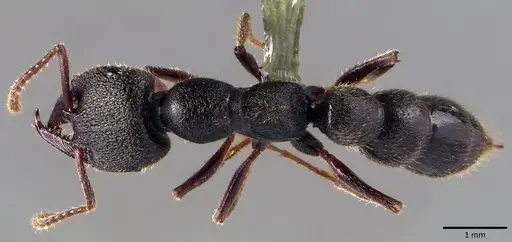
CASENT0102188
Lihat di AntWeb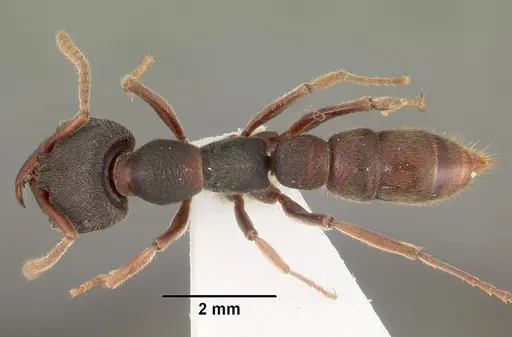
CASENT0172222
Lihat di AntWeb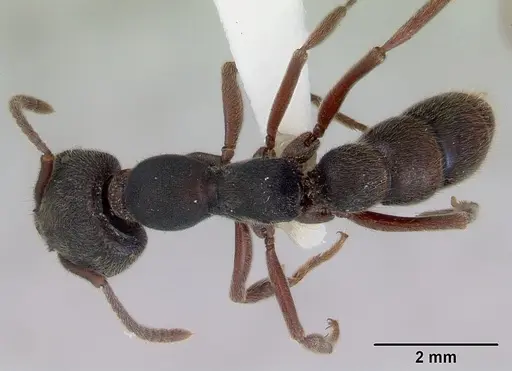
CASENT0172223
Lihat di AntWeb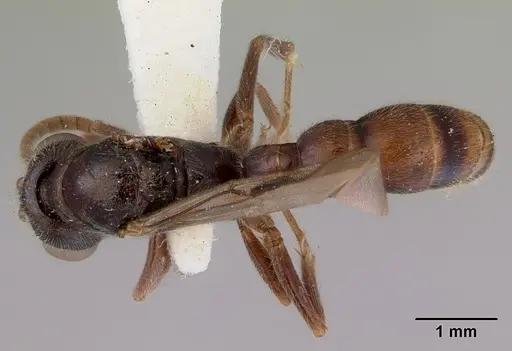
CASENT0280656
Lihat di AntWeb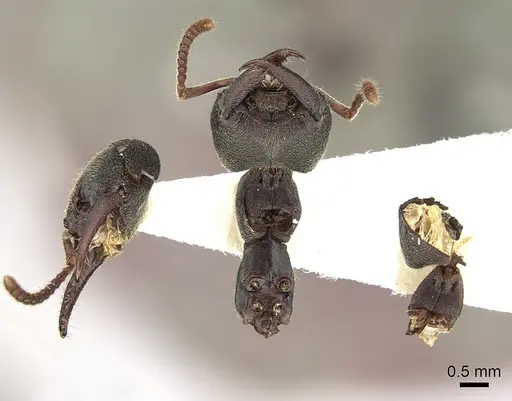
CASENT0915649
Lihat di AntWeb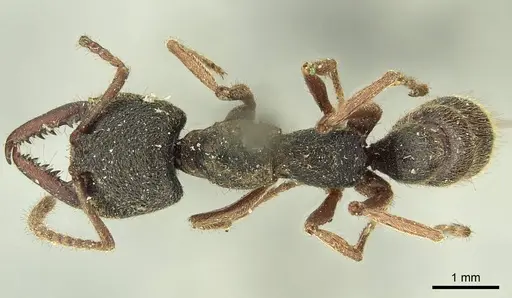
Literatur
Memuat peta distribusi...Memuat produk...