
Stigmacros pusilla
- Nama Ilmiah
- Stigmacros pusilla
- Tribe
- Melophorini
- Subfamili
- Formicinae
- Penulis
- McAreavey, 1957
- Distribusi
- Ditemukan di 1 negara
Pendahuluan
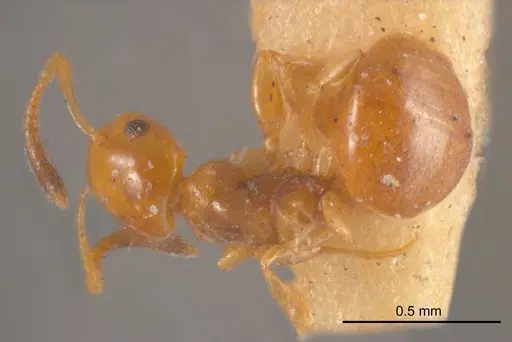
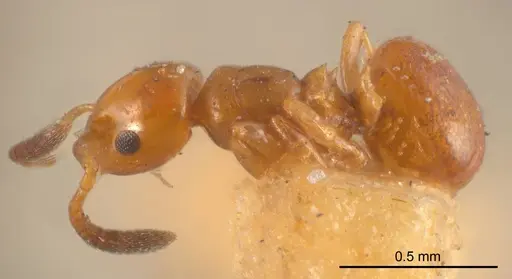
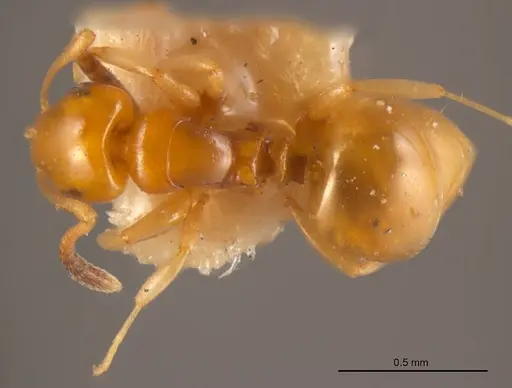
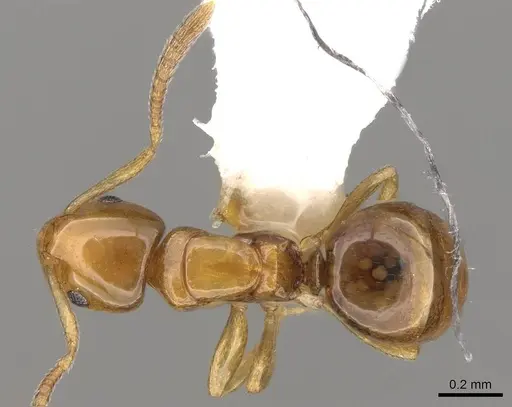
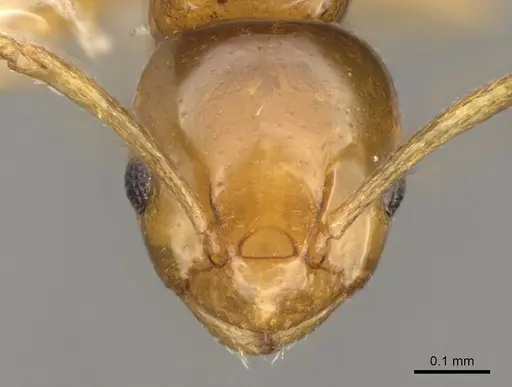
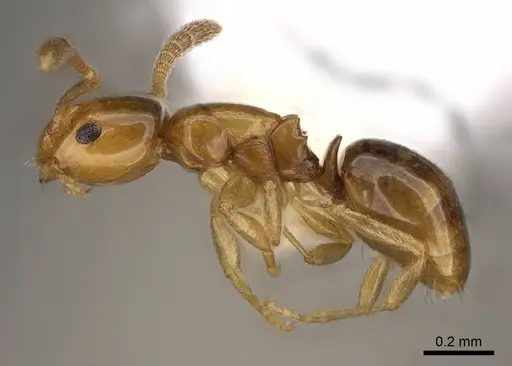
Stigmacros pusilla is a small Australian ant from the subfamily Formicinae . Workers are tiny and are not uncommon in the drier woodlands of the eastern wheatbelt in Western Australia . The species was originally described in 1957 by McAreavey, with Stigmacros minor later recognized as a synonym due to trivial differences in color, scape length, and gastral sculpture . These ants have distinctive propodeal angles that are denticulate and directed vertically, helping separate them from similar species like Stigmacros sp. JDM 115 . Workers have been found foraging on tree trunks, suggesting they are semi-arboreal in their foraging habits .
Quick Summary
- Difficulty: Medium
- Origin & Habitat: Native to Australia, specifically the drier woodlands of the eastern wheatbelt in Western Australia [2][1]. This region has a Mediterranean climate with hot, dry summers and mild, wet winters.
- Colony Type: Colony structure is unconfirmed. Based on typical Melophorini patterns, likely single-queen colonies.
- Size & Growth:
- Queen: Size data unavailable
- Worker: ~2-4mm, inferred from Stigmacros genus typical size
- Colony: Unknown, no colony size data available
- Growth: Moderate, inferred from related Melophorini species
- Development: No documented data (Direct development data unavailable, estimates based on genus-level patterns for similar Australian Formicinae are speculative at best.)
- Antkeeping:
- Temperature: Maintain warm conditions typical of its native drier woodlands. A temperature gradient (e.g.,24-28°C in one area, cooler in another) is recommended. Exact requirements are unconfirmed [2].
- Humidity: Low to moderate, this species comes from drier woodlands. Keep the nest substrate relatively dry with some moisture available. Avoid over-watering. Provide a moisture gradient so ants can choose [2].
- Diapause: Likely required, the species originates from a temperate region with seasonal variation, so a winter rest period may be needed, but specific data is unavailable. Provide cooler temperatures (around 15-18°C) for several weeks in winter if attempting diapause [2].
- Nesting: Naturalistic setup with sandy soil and small rocks works well. Y-tong (AAC) or plaster nests with drier chambers are suitable since they naturally live in dry woodlands. Avoid high-humidity nests. Add vertical surfaces like cork bark for climbing [2].
- Behavior: Generally peaceful and non-aggressive. As Formicinae, they defend with formic acid spray rather than stinging [1]. Workers are small and may escape through tiny gaps, use tight-fitting lids and fine mesh. They have been observed foraging on tree trunks, so provide climbing structures [2].
- Common Issues: limited data makes care requirements uncertain, be prepared to adjust based on colony behavior, escape prevention is important given their small size, drier conditions may be critical, avoid over-humidifying the nest, winter dormancy requirements are unconfirmed but likely necessary for Australian temperate species, slow colony growth may frustrate beginners, patience is key
Housing and Nest Setup
Stigmacros pusilla is a small Australian ant that does well in a naturalistic setup mimicking its drier woodland habitat [2]. Use a mix of sandy soil and small gravel or rocks as substrate, this species prefers drier conditions than many other ants. A Y-tong (AAC) or plaster nest can work well, but include some drier chambers alongside any moist areas. Since workers have been observed foraging on tree trunks [2], add vertical structures like twigs or cork bark for climbing. This semi-arboreal foraging behavior means they will use vertical space. Ensure excellent escape prevention, their small size means they can slip through very small gaps. Use tight-fitting lids and fine mesh on ventilation holes.
Feeding and Diet
Specific dietary data for Stigmacros pusilla is undocumented. Based on typical Formicinae, offer sugar water or honey for energy, and small insects like fruit flies, pinhead crickets, or small mealworms for protein. Because workers are tiny, prey items must be appropriately small. Remove uneaten prey after 24 hours to prevent mold. Sugar sources should be available constantly and replaced every few days.
Temperature and Seasonal Care
As an Australian species from the wheatbelt region [2], Stigmacros pusilla prefers warm conditions. Keep the nest area at 24-28°C during the active season. Use a heating cable on one side to create a gradient, but avoid overheating. The wheatbelt has hot summers and mild winters, so ants are adapted to temperature swings. During winter (June-August in Southern Hemisphere), consider a cooler period (15-18°C) to simulate natural conditions. This dormancy is likely important, though specific diapause requirements are unconfirmed [2].
Behavior and Defense
Stigmacros pusilla workers are small and generally peaceful. As Formicinae, they lack a functional stinger and defend by spraying formic acid [1]. This can be irritating but is not dangerous. They are not particularly aggressive and rarely bite. Their small size and semi-arboreal foraging [2] make them good climbers. Escape prevention is essential, they can slip through tiny gaps. Watch for exploration of vertical surfaces, which reflects natural tree-trunk foraging. Provide climbing structures as enrichment.
Frequently Asked Questions
How long does it take for Stigmacros pusilla to develop from egg to worker?
The exact development time is unknown. No data exists for this species. Based on typical Formicinae, it may take 6-10 weeks at warm temperatures, but this is speculative.
What temperature do Stigmacros pusilla need?
They come from warm, dry woodlands [2]. Maintain temperatures around 24-28°C with a gradient. Exact requirements are unconfirmed, so observe their behavior and adjust.
Are Stigmacros pusilla good for beginners?
This species is rated Medium difficulty. While not the hardest, the lack of specific care information means you may need to adapt. Their small size and specific moisture needs require attention. Beginners should be prepared to research and adjust.
How big do Stigmacros pusilla colonies get?
Colony size is undocumented. Based on related Melophorini, colonies likely reach at most a few hundred workers, but this is unconfirmed.
Do Stigmacros pusilla need hibernation?
Probably yes. The species is from a temperate region with seasonal variation, so a winter rest period is likely needed. Provide cooler temperatures (15-18°C) for several weeks during winter. However, specific diapause data is unavailable [2].
What do Stigmacros pusilla eat?
No dietary studies exist for this species. Based on typical Formicinae, offer sugar water or honey for energy, and small insects (fruit flies, pinhead crickets) for protein. Ensure prey is appropriately sized.
Can I keep multiple Stigmacros pusilla queens together?
Colony structure is unconfirmed. Without evidence of polygyny, it is not recommended to house multiple unrelated queens together. Start with a single queen colony.
Why are my Stigmacros pusilla escaping?
Their small size allows them to escape through tiny gaps. Use tight-fitting lids, fine mesh on all ventilation, and seal any cracks. Check lid edges and tube connections carefully.
What humidity level do Stigmacros pusilla need?
They prefer drier conditions, as they come from drier woodlands [2]. Keep the nest substrate moderately dry with some moisture available. Avoid waterlogging and allow a moisture gradient.
Report an Issue
The current care sheet is based fully on literature. See inconsistencies, or something that's incorrect? Please , it will be resolved after review from an admin. Contributing to the blogs tab also helps providing information, to make us be able to further improve the caresheets. Thank you for your support!
References

Lembar perawatan ini dilisensikan di bawah CC BY-SA 4.0 .
Blog Komunitas
Literatur
Memuat peta distribusi...Memuat produk...