
Stictoponera palamala
- Nama Ilmiah
- Stictoponera palamala
- Tribe
- Ectatommini
- Subfamili
- Ectatomminae
- Penulis
- Lattke, 2004
- Distribusi
- Ditemukan di 0 negara
Pendahuluan
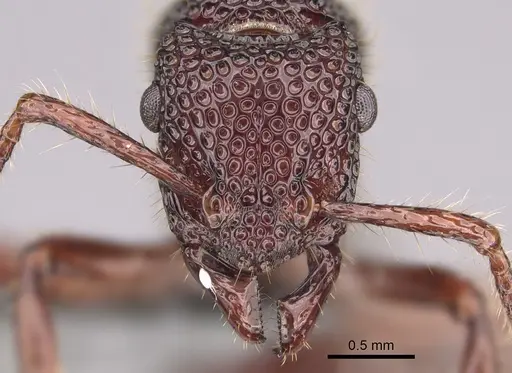
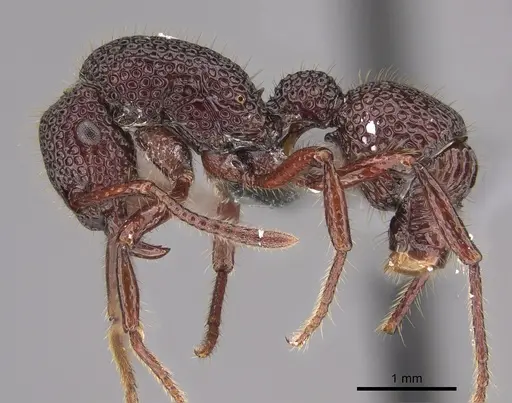
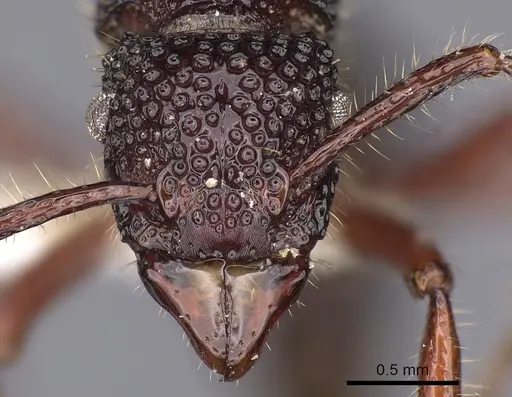
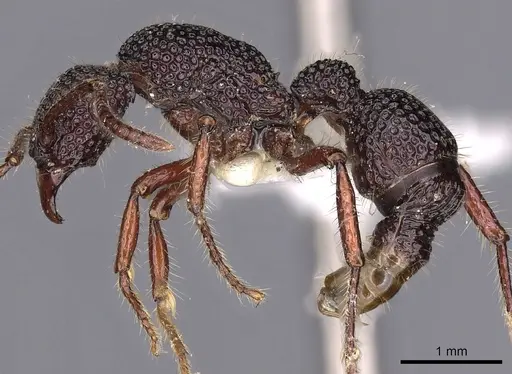
Stictoponera palamala is a small predatory ant known only from the rainforests of Borneo, specifically Gunong Mulu National Park in Sarawak, Malaysia. Workers are small and reddish to dark brown, with a unique shovel-like pair of mandibles that give the species its name (from Latin 'pala' meaning shovel and 'mala' meaning jawbone). The mandibles have a smooth upper surface with scattered punctures and a sharp angle between the chewing edge and inner edge . The fourth abdominal segment has a bulging shape with fine grooves running lengthwise on the front half and crosswise on the back half . These features make it easy to tell apart from other Stictoponera. The species is part of the Ectatomminae subfamily, within the Poneroid clade .
Quick Summary
- Difficulty: Unknown, likely Expert
- Origin & Habitat: Borneo, Malaysia (Sarawak) and Indonesia, found in mixed dipterocarp and alluvial rainforests in Gunong Mulu National Park [1][3]
- Colony Type: Unknown, queen and male remain undescribed, colony structure has not been documented
- Size & Growth:
- Antkeeping:
- Temperature: Inferred: Keep around 24-28°C based on tropical rainforest origin. Borneo lowland rainforest maintains warm, stable temperatures year-round.
- Humidity: Inferred: High humidity (70-85%) preferred, rainforest floor conditions with moist leaf litter. Keep substrate consistently damp but not waterlogged.
- Diapause: Unknown, likely no true diapause given tropical origin, but may have reduced activity during drier seasons
- Nesting: Inferred: Likely nests in soil or rotting wood on the forest floor. In captivity, a naturalistic setup with moist substrate or a plaster/Y-tong nest with high humidity would be appropriate. They were collected using Winkler extraction from leaf litter, indicating they forage in the forest floor layer [3].
- Behavior: Based on their high δ15Ncor values (5.79 and 4.47), these ants are predatory insectivores that hunt small invertebrates in leaf litter [4][3]. As Ectatomminae, they likely have a functional stinger for subduing prey. Their small size and forest floor habitat suggest they are not aggressive toward humans but will defend their nest. Escape prevention should be moderate, they are small but not among the tiniest ants.
- Common Issues: lack of documented care information makes proper husbandry challenging, predatory diet requires live small prey, cannot survive on sugar alone, high humidity requirements can lead to mold issues if ventilation is poor, queen and colony founding behavior is completely unknown, making colony establishment difficult
Identification and Appearance
Stictoponera palamala workers are small ants with a reddish to dark brown body, while the mandibles, antennae, and legs are brown. The most distinctive feature is their shovel-like mandibles, which inspired the species name (from Latin 'pala' meaning shovel and 'mala' meaning jawbone). The mandibular upper surface is mostly smooth with scattered punctures, and the chewing edge is separated from the inner edge by a sharp angle [1]. The fourth abdominal segment has a unique bulging shape with fine grooves running lengthwise on the front half and crosswise on the back half [1]. These identification features make the species relatively easy to distinguish from other Stictoponera in the region.
Distribution and Habitat
This species is known only from Borneo, specifically from Sarawak in Malaysia and Indonesia. The type specimens were collected from Gunong Mulu National Park in the Fourth Division of Sarawak. They were found in mixed dipterocarp forest, which is a dominant forest type in Borneo characterized by diverse tree species. Additional specimens have been collected from alluvial forest habitats using the Winkler method, which involves extracting ants from leaf litter samples [1][3]. This indicates they are leaf litter ants that forage in the forest floor layer rather than in the canopy. The alluvial forest habitat suggests they prefer areas with moist, nutrient-rich soils near water bodies.
Diet and Foraging
Stable isotope analysis reveals that Stictoponera palamala has a high δ15Ncor value of 5.79,with one sample showing 4.47,indicating they are predatory insectivores that feed primarily on other small invertebrates [4][3]. This places them high in the food chain compared to other leaf litter ants. In captivity, you should offer small live prey such as fruit flies, pinhead crickets, small mealworms, and other micro-arthropods. They are unlikely to accept sugar water or honey as a primary food source, though they may occasionally sample sweet liquids. Their hunting strategy likely involves foraging through leaf litter searching for small insects, springtails, and other arthropods. Feed them small live prey items 2-3 times per week, adjusting based on colony consumption.
Nesting and Humidity
In the wild, Stictoponera palamala nests in the forest floor layer, typically in soil or rotting wood within leaf litter. They were collected using Winkler extraction from leaf litter samples, confirming their presence in the top layer of the forest floor [3]. For captive care, provide a naturalistic setup with moist substrate (like a mix of soil and sand) or a plaster/Y-tong nest designed for rainforest species. Maintain high humidity at 70-85%, keeping the substrate consistently damp but not waterlogged. Allow some areas to be slightly drier so the ants can choose their preferred microclimate. Good ventilation is essential to prevent mold while maintaining humidity. Avoid letting the nest dry out completely, as this species is adapted to the constantly moist conditions of the Bornean rainforest floor.
Temperature Requirements
As a tropical species from Borneo, Stictoponera palamala requires warm temperatures similar to their natural habitat. Keep the nest area at 24-28°C, which matches the stable temperatures found in lowland rainforests. Avoid temperature fluctuations and keep them away from air conditioning vents or cold drafts. A heating cable or mat on one side of the nest can create a gentle thermal gradient, allowing the ants to regulate their temperature by moving between warmer and cooler areas. Monitor colony activity, if workers cluster together excessively, the temperature may be too low, if they avoid the heated area, it may be too warm. Room temperature in most homes (22-26°C) should be suitable, but supplemental heating may be needed in cooler climates.
Colony Structure and Reproduction
The colony structure of Stictoponera palamala remains completely unknown. Only worker specimens have been collected and described, the queen and male castes have not been documented [1]. This makes it extremely challenging to establish colonies in captivity, as finding a mated queen would be nearly impossible. If you obtain a colony, it likely would need to be a wild-caught colony with a queen, though such finds are extremely rare. The genus Stictoponera (formerly part of Gnamptogenys) shows various colony structures across species, ranging from single-queen to multi-queen colonies, but no specific data exists for S. palamala. Expect slow colony growth given the lack of documented information about this species.
Defense and Temperament
As a member of the subfamily Ectatomminae, Stictoponera palamala possesses a functional stinger, which they can use for defense and subduing prey. However, given their small size and forest floor lifestyle, they are not considered dangerous to humans. They are likely to be shy and non-aggressive, focusing on hunting small invertebrates rather than defending against larger threats. If their nest is disturbed, they may sting in defense, but the pain level would be minimal due to their small size. They are not known to be aggressive toward humans and are unlikely to bite. As with any ant species, use standard escape prevention measures, though their small size means they can fit through smaller gaps than larger ants.
Frequently Asked Questions
How do I keep Stictoponera palamala ants?
This is extremely challenging as the species is barely known in science, only a handful of workers have ever been collected. You would need a naturalistic setup with moist rainforest-style substrate, high humidity (70-85%), and temperatures around 24-28°C. They require live small prey due to their predatory nature. Finding a queen to start a colony would be nearly impossible since they have never been described. This species is recommended only for advanced antkeepers with experience in establishing colonies of rare, poorly-documented species.
What do Stictoponera palamala ants eat?
Based on stable isotope analysis showing high δ15Ncor values (5.79), they are predatory insectivores that hunt small invertebrates in leaf litter [4]. In captivity, offer small live prey such as fruit flies, small crickets, springtails, and other micro-arthropods. They are unlikely to accept sugar water as a primary food source. Feed them protein prey 2-3 times per week.
Where is Stictoponera palamala found?
This species is known only from Borneo, specifically from Sarawak in Malaysia and Indonesia. The only specimens have been collected from Gunong Mulu National Park in mixed dipterocarp forest and alluvial forest habitats [1][3].
Do Stictoponera palamala ants sting?
As members of the subfamily Ectatomminae, they have a functional stinger. However, given their very small size (workers are only about 2mm), any sting would be minimal and unlikely to cause significant discomfort to humans. They are not considered dangerous.
How big do Stictoponera palamala colonies get?
Unknown, the species is only known from type specimens and no colony size data exists. Based on their small worker size and leaf litter habitat, colonies are likely small, possibly under 100 workers, similar to other leaf litter ant species.
Can I keep multiple Stictoponera palamala queens together?
Unknown, the colony structure of this species has never been documented. The queen caste has not even been described yet. Without this basic biological information, it is impossible to recommend whether multiple queens can be kept together. This is one of many fundamental questions about this species that remains unanswered due to its extreme rarity in scientific collections.
What temperature do Stictoponera palamala ants need?
As a tropical rainforest species from Borneo, keep them at 24-28°C. This matches the stable, warm temperatures of their natural habitat in lowland rainforests. Avoid temperature fluctuations and cold drafts. Room temperature in most homes should be suitable, but you may need supplemental heating in cooler climates.
How long does it take for Stictoponera palamala to develop from egg to worker?
Unknown, this species has never been studied in captivity and the development timeline has not been documented. The queen caste hasn't even been described, so there is no information about founding behavior or development times. Related species in the genus suggest development may take several months, but this is purely speculative for S. palamala.
Are Stictoponera palamala good for beginners?
No, this species is not recommended for beginners or even most experienced antkeepers. It is one of the rarest ant species in the world, known only from a handful of specimens collected decades ago. There is essentially no documented care information, and obtaining a queen to start a colony would be nearly impossible. The few individuals that exist in scientific collections are preserved specimens, not living colonies. This species is best appreciated through scientific literature rather than kept in captivity.
Do Stictoponera palamala need hibernation?
No, as a tropical species from Borneo, they do not require hibernation. The climate in their native habitat remains warm year-round with no cold winter period. They may have reduced activity during drier seasons, but this is not a true diapause. Keep them at stable, warm temperatures year-round.
What makes Stictoponera palamala easy to identify?
Their shovel-like mandibles are the most distinctive feature, the species name literally means 'shovel jaw' from Latin. Additionally, the fourth abdominal segment has a unique bulging shape with fine grooves running lengthwise on the front half and crosswise on the back half. The mandibular upper surface is mostly smooth with scattered punctures, and the chewing edge is separated from the inner edge by a sharp angle [1].
Why is Stictoponera palamala so rare?
This species is known only from the original type specimens collected in 1978 from Gunong Mulu National Park in Sarawak, Malaysia. Despite extensive ant surveys in Borneo over the decades, no additional specimens have been documented. This could indicate genuinely low population densities, very specialized habitat requirements, or simply that they have not been caught in surveys. They may be genuinely rare in the wild, or they could be hiding in microhabitats that standard collecting methods miss.
Report an Issue
The current care sheet is based fully on literature. See inconsistencies, or something that's incorrect? Please , it will be resolved after review from an admin. Contributing to the blogs tab also helps providing information, to make us be able to further improve the caresheets. Thank you for your support!
References

Lembar perawatan ini dilisensikan di bawah CC BY-SA 4.0 .
Blog Komunitas
CASENT0746002
Lihat di AntWeb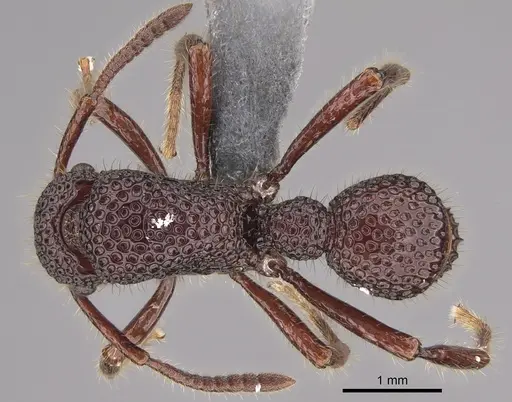
CASENT0900564
Lihat di AntWeb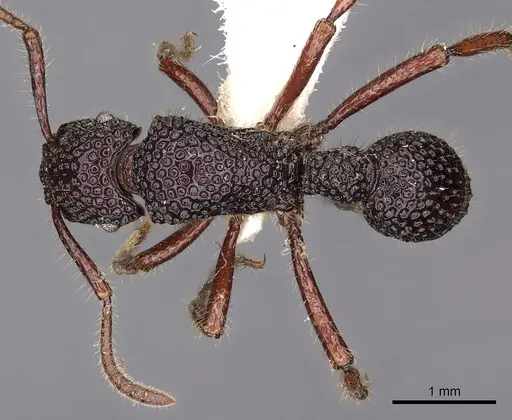
Literatur
Memuat peta distribusi...Memuat produk...