
Solenopsis substituta
- Nama Ilmiah
- Solenopsis substituta
- Tribe
- Solenopsidini
- Subfamili
- Myrmicinae
- Penulis
- Santschi, 1925
- Distribusi
- Ditemukan di 1 negara
Pendahuluan
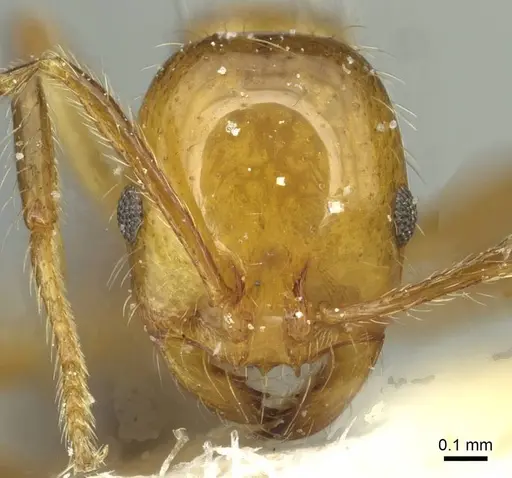
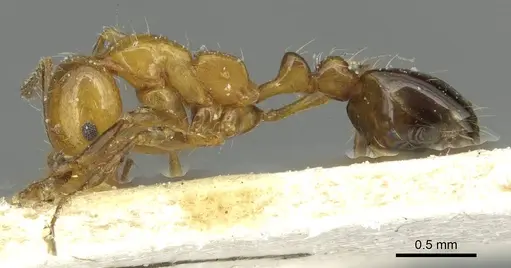
Solenopsis substituta is a small fire ant from the Neotropical region, found across Brazil, Paraguay, and Argentina. Workers are monomorphic (all the same size) and show the typical reddish-brown to dark fire ant coloration. This species belongs to the Solenopsis tridens species group and was originally described as a variety of Solenopsis tridens before being raised to full species status in 1991 . These ants are highly adaptable generalists. They nest in soil and have been found in both natural Cerrado savanna and human-changed landscapes like Eucalyptus plantations and maize fields . They forage on the ground and in trees, including on Caryocar brasiliense trees . One cool thing about this ant is its high magnetic material content, especially in the head and antennae, which might help with navigation using Earth's magnetic field .
Quick Summary
- Difficulty: Medium
- Origin & Habitat: Native to Brazil, Paraguay, and Argentina. Found in Cerrado savanna, Amazon forest edges, and Pantanal wetlands. Also collected in agricultural areas like Eucalyptus and maize [6][9][10][3][4].
- Colony Type: Unconfirmed, likely single queen colony (monogyne) based on typical Solenopsis patterns, but no specific data exists for this species.
- Size & Growth:
- Queen: Unknown, inferred from Solenopsis genus (~5-7 mm)
- Worker: Unknown, inferred from Solenopsis genus (~2-4 mm, monomorphic) [11]
- Colony: Unknown, no specific colony size data available, but they are a dominant species in savannas [12][13]
- Growth: Moderate
- Development: Unknown, estimated 4-6 weeks at warm temperatures based on similar fire ant species (Development speeds up with higher temperatures, avoid cold below 20°C)
- Antkeeping:
- Temperature: Unknown, likely 24-30°C based on tropical origin. Provide a temperature gradient so ants can choose their preferred spot. Avoid temperatures above 35°C.
- Humidity: Keep the nest substrate slightly moist but not waterlogged. These ants live in both wet and dry habitats, so a moisture gradient with one wet area and one dry area works best [6][9].
- Diapause: No true diapause needed. They come from year-round warm areas and stay active all year. A slight cool-down in winter might slow them, but it's not required.
- Nesting: Soil-nesting species. Use a naturalistic setup with moist soil or a plaster nest with dark, humid chambers. A test tube works for founding. They need dark, enclosed spaces for the nest and a foraging area above ground [6].
- Behavior: Fire ants defend their nest with a painful sting that injects venom made of piperidine alkaloids. They are aggressive when disturbed and will swarm out to attack. Workers are active foragers looking for both protein (insects) and sugar (honeydew, nectar). They are generalist omnivores [13]. Because they are tiny (2-4 mm), escape prevention is very important, seal all gaps and use fluon on container rims. Their small size means they can squeeze through tiny cracks.
- Common Issues: escape prevention is critical, these ants are small and will find any gap, stings are painful, use tools when working with the colony, not bare hands, colonies get aggressive when disturbed, work slowly and avoid vibrations, overheating can kill, keep temperatures below 35°C and provide a gradient, mold from too much moisture, ensure good ventilation and don't overwater the nest
Temperature and Heating
Since Solenopsis substituta comes from warm tropical and subtropical South America, they probably need temperatures in the 24-30°C range to do well. But there's no research that tests this directly, so you'll need to watch your colony. Use a heating cable on one side of the nest to create a warm side and a cooler side, so the ants can move around to find their sweet spot. Avoid any temperature above 35°C, which can stress or kill them. If you live in a warm climate, room temperature might be fine, but most keepers need some heating for best growth.
Feeding and Diet
Like other fire ants, Solenopsis substituta eats a wide range of foods. Studies show they are omnivorous, eating whatever is available [13]. In your setup, offer protein sources like small insects (fruit flies, tiny crickets, mealworms) at least twice a week. Give them sugar water or honey water regularly, they really go for it. They also scavenge dead insects and may take seeds. Always provide fresh water. Remove leftover food after a day or two to stop mold from growing.
Nesting and Housing
This ant naturally nests in soil. For your colony, you can use a test tube for starting out, then move them to a formicarium with soil or plaster chambers that stay dark and humid. The outworld should be dry and well-lit for foraging. Because workers are tiny (under 4 mm), make sure all connections between nest and outworld are sealed tight and any air holes are covered with fine mesh. Use fluon on the outworld walls to stop them from climbing out. [6]
Behavior and Defense
Like all fire ants, this species defends itself with a sting that packs venom made of piperidine alkaloids. If you disturb the nest, workers will come boiling out to attack. The sting is painful, it burns, which is why they're called fire ants. Always use tools when working on the colony, never let them get on your bare skin. Move slowly and avoid shaking the nest to keep them calm. Workers are active foragers and will explore every corner of their setup, so make sure all escape points are sealed.
Unique Magnetic Properties
Solenopsis substituta has a surprisingly high amount of magnetic material in its body, especially in the head and antennae [7][8]. Studies found that the head has up to 9 times more magnetic nanoparticles than the thorax, and these particles are oriented in a way that suggests they might work like a biological compass [7]. This could help the ants navigate when they're out foraging. While this doesn't change how you care for them, it's a really interesting feature that makes this species stand out.
Frequently Asked Questions
How long does it take for Solenopsis substituta to produce first workers?
There's no published data for this species, but similar fire ant queens usually produce the first workers in 4-6 weeks if kept warm (around 26-28°C). If it's cooler, it will take longer.
What do Solenopsis substituta ants eat?
They are omnivorous generalists [13]. Offer protein (small insects like fruit flies or pinhead crickets) twice a week and sugar water or honey water regularly. They also scavenge dead insects.
Are Solenopsis substituta good for beginners?
They are rated Medium difficulty. They are hardy once established, but their small size and painful sting mean you need some extra care with escape prevention and handling. Better for someone with a bit of experience.
How big do Solenopsis substituta colonies get?
There's no exact data on colony size for this species. They are a dominant ant in South American savannas, which suggests colonies can be large, but no one has published specific numbers [12][13].
What temperature do Solenopsis substituta need?
No research has tested this directly, but because they come from warm tropical areas, keep them around 24-30°C. Provide a temperature gradient so they can regulate themselves. Avoid anything above 35°C.
Can I keep multiple Solenopsis substituta queens together?
That's unknown for this species. Most fire ants are monogyne (single queen), but some can be polygyne. Since there's no data for S. substituta, it's safest to only keep one queen per colony. If you try pleometrosis (co-founding), watch closely and be ready to separate them if they fight.
Do Solenopsis substituta need hibernation?
No, they do not need true hibernation. These are tropical ants that stay active year-round. They might slow down a bit in cooler months, but a full cold period is not necessary or recommended.
What size are Solenopsis substituta workers?
Workers are monomorphic (all the same size) and estimated at around 2-4 mm based on other fire ants. No exact measurements have been published [11].
Where is Solenopsis substituta found in the wild?
It is native to Brazil, Paraguay, and Argentina. It lives in Cerrado savanna, Amazon forest margins, Pantanal wetlands, and also Eucalyptus plantations and maize fields [6][9][10][3][4].
Why are my Solenopsis substituta dying?
Common causes include temperatures too cold (below 20°C), too much humidity causing mold, or the colony escaping through a tiny gap. Make sure temperature is in the 24-30°C range, keep the nest moderately moist but not wet, and seal all connections tightly. Also avoid disturbing them too much.
When should I move Solenopsis substituta to a formicarium?
Keep founding queens in a test tube until the colony has 20-30 workers or you see workers moving into the water section of the tube. Then transfer them to a larger setup with soil or plaster chambers.
Report an Issue
The current care sheet is based fully on literature. See inconsistencies, or something that's incorrect? Please , it will be resolved after review from an admin. Contributing to the blogs tab also helps providing information, to make us be able to further improve the caresheets. Thank you for your support!
References

Lembar perawatan ini dilisensikan di bawah CC BY-SA 4.0 .
Blog Komunitas
CASENT0913941
Lihat di AntWeb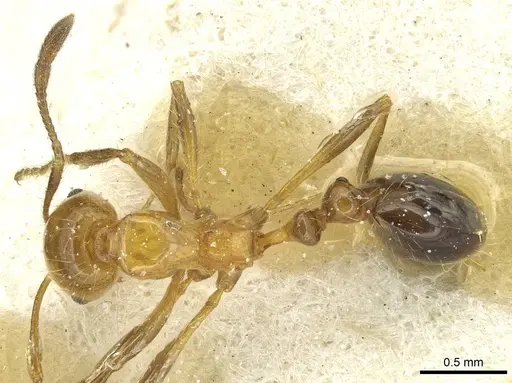
Literatur
Memuat peta distribusi...Memuat produk...