
Solenopsis rosella
- Nama Ilmiah
- Solenopsis rosella
- Tribe
- Solenopsidini
- Subfamili
- Myrmicinae
- Penulis
- Kennedy, 1938
- Distribusi
- Ditemukan di 0 negara
Pendahuluan
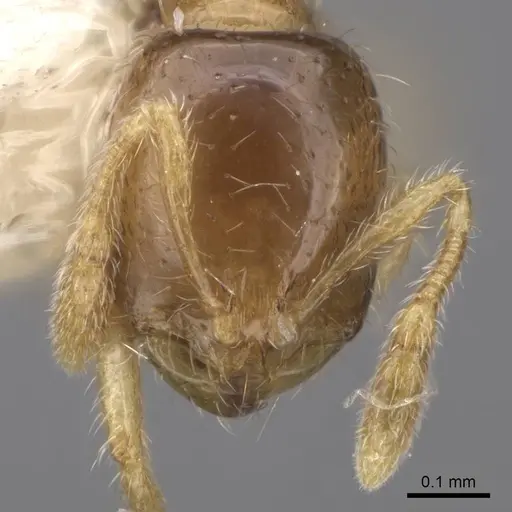
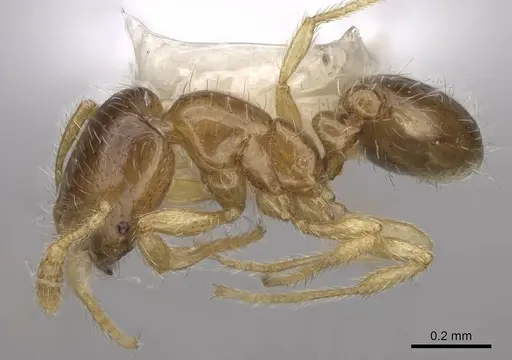
Solenopsis rosella is a tiny thief ant in the Solenopsis molesta species complex . Workers are small and pale yellow, measuring just 1.44 mm in total length, with a head longer than wide and small eyes (about five ommatidia) . Queens are moderately large at 4.44 mm, pale yellow with a distinctive pink gaster when alive (fading to yellow in pinned specimens), and have relatively large eyes that extend past the head margin . This species is extremely rare, known only from Pelee Point and Pelee Island, Ontario, Canada – the most southern point in the country . The entire global range is a single location, making it one of the most geographically restricted ant species in North America. Originally described by Kennedy in 1938,it was later considered a synonym of Solenopsis texana before being reinstated by Pacheco and Mackay in 2013 . Queens are nearly identical to those of Solenopsis molesta but can be told apart by their brighter yellow color and the lack of a large subpeduncular process tooth. Workers look very similar to those of Solenopsis texana, but the two species have non‑overlapping ranges – S. rosella is only in Canada, while S. texana is found in the southwestern and eastern United States .
Quick Summary
- Difficulty: Expert
- Origin & Habitat: Pelee Island and Pelee Point, Ontario, Canada. Lives in coarse moist sand at high beach level, often near nests of other ant species like Forelius pruinosus and Formica pallidefulva [1].
- Colony Type: Colony structure is unconfirmed. Only known from a few old collections, no recent queen or male specimens have been found despite dedicated searches [1].
- Size & Growth:
- Queen: ~4.44 mm [1]
- Worker: ~1.44 mm [1]
- Colony: Unknown – colony size has not been documented [1]
- Growth: Unknown – no development data exists
- Development: Unknown – no direct data exists (No brood development studies have been conducted. Related Solenopsis species typically develop from egg to worker in 4–8 weeks at optimal temperatures.)
- Antkeeping:
- Temperature: Unknown – no thermal studies exist. Based on its Canadian range, it likely tolerates temperate conditions. Related Solenopsis species do well at 20–26°C.
- Humidity: Likely requires moderate to high humidity based on its natural habitat in moist sand near beaches. Keep substrate consistently damp but not waterlogged.
- Diapause: Likely requires hibernation based on its temperate Canadian range. Related temperate Solenopsis species undergo a winter diapause period.
- Nesting: Nests naturally in coarse moist sand at beach level [1]. A setup with fine sand would best match natural conditions. Test tubes might work for founding, but humidity must be carefully maintained.
- Behavior: As a thief ant, this species likely raids the brood of other ant nests [1]. Workers are tiny (1.44 mm), creating a high escape risk – standard barriers may not contain them. Queens have a distinctive pink gaster when alive, which is unusual among North American Solenopsis.
- Common Issues: extreme rarity makes wild collection unethical and likely illegal – do not collect from the wild, tiny 1.44 mm workers require excellent escape prevention – standard barriers may not be enough, no captive breeding populations exist – this species is not available in the hobby, extremely limited range means any collection could threaten wild populations, no development or care data exists – keeping this species would be entirely experimental
Conservation Status and Ethical Considerations
Solenopsis rosella is one of the rarest ants in North America, known only from Pelee Island, Ontario, Canada, at a single location. Despite dedicated searches in 2007 and 2009,researchers could not find new colonies [1]. This species should NEVER be collected from the wild. Its entire global population could be harmed even by minimal collection. There are no captive breeding populations, and the species is not available to hobbyists. If you encounter it in the wild, observe and document it, but leave it in place. This caresheet exists for informational purposes only – this ant should not be kept.
Natural History and Habitat
Solenopsis rosella was discovered in coarse moist sand at high beach level on Pelee Island, Ontario [1]. The original nest (No. 1372) sat about eight inches from a nest of Iridomyrmex analis pruinosa (now Forelius pruinosus) in coarse sand on the west side of a sand‑spit. Later searches in 2007 found them beside a nest of Formica pallidefulva, again on the beach [1]. This association with other ant species matches the thief ant lifestyle – they nest close to other ant colonies and raid them for brood. The habitat is sandy and humid, near Lake Erie.
Identification and Similar Species
Solenopsis rosella belongs to the Solenopsis molesta species complex and can be difficult to tell apart from relatives [1]. Workers look nearly identical to Solenopsis texana, but the two are separated geographically – S. rosella is Canadian, S. texana is from the southwestern U.S. and Virginia [1]. Queens are almost the same as those of Solenopsis molesta, but S. rosella queens are brighter yellow, slightly smaller (4.44 mm versus ~5 mm), and lack a large tooth on the subpeduncular process. The best field mark of living queens is their pinkish gaster, which fades to yellow in preserved specimens. Without queens, identification is very tricky, as workers can be confused with small S. texana workers.
Why This Species Should Not Be Kept
This caresheet exists mainly to explain why Solenopsis rosella should not be kept in captivity. Its entire range is one beach on Pelee Island, Ontario [2]. Multiple searches in recent decades failed to find any queens or males, so the species may be extremely rare or declining. No captive colonies exist anywhere, and no care protocols have been developed. Collecting wild individuals would risk further damage to already fragile populations. If you are interested in Solenopsis thief ants, choose a common species like Solenopsis molesta or Solenopsis texana, which have established care guides and are not of conservation concern.
Frequently Asked Questions
Can I keep Solenopsis rosella ants?
No. Solenopsis rosella should not be kept in captivity. Its global range is just one beach on Pelee Island, Ontario – Canada’s southernmost point [1][2]. No captive colonies exist, and collecting from the wild would endanger an already tiny population.
Where does Solenopsis rosella live?
It is known only from Pelee Point and Pelee Island, Ontario, Canada – the entire global range. It lives in coarse moist sand at high beach level, near nests of other ant species [1][2].
How big are Solenopsis rosella ants?
Workers are very small at 1.44 mm total length. Queens are moderately large at 4.44 mm, and males measure about 3.00 mm. The tiny worker size is typical of thief ants in the Solenopsis molesta complex [1].
What do Solenopsis rosella ants look like?
Workers are small and pale yellow. Queens are also pale yellow, but have a distinctive pink gaster when alive (which turns yellow in preserved specimens). Queen eyes are relatively large and extend past the head margin [1].
Are Solenopsis rosella ants endangered?
Not officially listed, but the species is of serious conservation concern because it is known from only one location in Canada. No new colonies have been found in recent decades despite targeted searches [1][2].
Can I find Solenopsis rosella in the United States?
No. It has only ever been found in Canada, on Pelee Island, Ontario. Searches along the U.S. side of Lake Erie in 2009 were unsuccessful [2].
What is a thief ant?
Thief ants are Solenopsis species that nest near other ant colonies and raid them for brood – larvae and pupae. Solenopsis rosella belongs to the Solenopsis molesta complex, all of which are thief ants [1].
How do I identify Solenopsis rosella?
Identification is hard without queens. Workers look identical to Solenopsis texana, but the ranges do not overlap (S. rosella is Canadian, S. texana is American). Queens are the key: bright yellow, about 4.44 mm, with large eyes and a pink gaster when alive. Location is the best clue – if you find a Solenopsis queen on a Lake Erie beach in Canada, it is likely S. rosella [1].
Are there captive breeding programs for Solenopsis rosella?
No. There are no known captive colonies of this species anywhere. It is too rare and restricted to be available to hobbyists. For keeping thief ants, choose more common species like Solenopsis molesta or Solenopsis texana [2].
Report an Issue
The current care sheet is based fully on literature. See inconsistencies, or something that's incorrect? Please , it will be resolved after review from an admin. Contributing to the blogs tab also helps providing information, to make us be able to further improve the caresheets. Thank you for your support!
References

Lembar perawatan ini dilisensikan di bawah CC BY-SA 4.0 .
Blog Komunitas
CASENT0923110
Lihat di AntWeb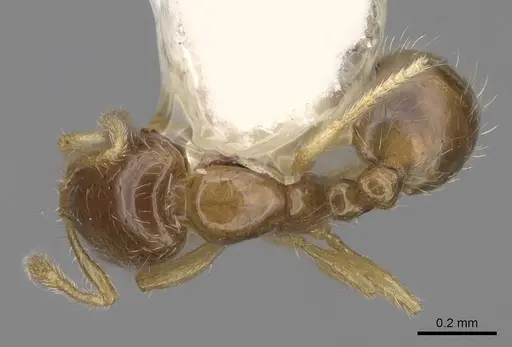
Literatur
Memuat peta distribusi...Memuat produk...